
Cultivating Technical Founders: A University's Blueprint
Universities should prepare founders by emphasizing deep technical skills, fostering a culture where startups are a viable path, and, most importantly, encouraging independent student projects. This "quiet" approach, focusing on building and self-directed work rather than formal "entrepreneurship" programs or business plan competitions, best cultivates the talent needed for impactful tech innovation.
The landscape of technology is continually shaped by innovative startups, often founded by individuals emerging from university programs. As senior developers, we frequently encounter these early-stage ventures and recognize the profound impact founders have on our industry. There's a persistent debate about how universities should prepare the next generation of startup founders. Should it be through specialized "entrepreneurship" courses, or something more foundational? Y Combinator, having evaluated thousands of aspiring founders over two decades, offers a unique perspective akin to a "grad school" for startups. Their findings suggest a surprisingly simple yet often overlooked approach.
The Core Mandate: Deep Technical Acumen
What truly predicts a founder's success? YC partners consistently seek individuals who are adept at building things and possess an ingrained habit of doing so. The toughest challenge in a startup isn't fundraising or management, but rather the product itself: discerning what to build and then possessing the capability to execute. This critical skill set is forged in disciplines like computer science, mechanical engineering, or molecular biology – not in generic business or finance curricula.
Therefore, the most effective way for universities to nurture future founders is to double down on what they already excel at: delivering rigorous education in core technical and scientific fields. While engineering is a strong candidate, the concept of "building" should be interpreted broadly. Expertise in areas like design or even the historical example of Steve Jobs' calligraphy studies, which influenced Apple's desktop publishing dominance, demonstrates that diverse forms of creation can prove invaluable. The key is to seek out powerful ideas, a pursuit naturally attractive to the kind of intellectually curious individuals who often become successful founders. Mark Zuckerberg, for instance, excelled at programming despite majoring in psychology, underscoring that deep skill can be cultivated independent of a major.
Beyond the Classroom: Culture and Independent Projects
Beyond core academic instruction, universities need to implement only two significant changes to optimize founder preparation. Firstly, they must instill in students the belief that starting a startup is a genuinely viable career path. Interest in founding isn't uniformly distributed; cultural norms play a massive role. Harvard, for example, sees twice the startup application rate of Yale or Princeton, suggesting a stronger internal culture. Universities can actively foster this by showcasing real-life founders – not necessarily famous billionaires, but relatable individuals just a few years out of college, perhaps leading moderately successful ventures. Seeing these human, fallible, yet impressive figures makes founding seem both aspirational and attainable.
Secondly, and perhaps more crucially for technical development, universities must actively encourage students to pursue their own independent projects. There are four compelling reasons for this:
- Deep Learning and Mastery: The intrinsic motivation to create something new far surpasses the extrinsic pressure of exam performance, leading to a much deeper understanding of a subject.
- Cofounder Discovery: The best startups often have multiple founders. Working on collaborative projects is the most reliable way to identify compatible co-founders, as evidenced by Apple and Microsoft, both born from existing partnerships.
- Natural Transition to Founding: A startup is a project. Students accustomed to self-directed project work will find the transition to leading a startup, without a boss or teacher, far more natural. They're already skilled at self-management.
- Source of Breakthrough Ideas: The most impactful startup ideas frequently appear implausible or unconventional at first glance. They rarely emerge from deliberate "startup idea generation" sessions. Instead, they often spring from random side projects born out of genuine interest. Young builders are often technological bellwethers; what excites them often points to future value, even if they don't consciously realize its startup potential yet.
Universities may find it challenging to give students more unstructured time, often preferring active measures over passive facilitation. The "reading period" at Harvard, which allowed students like Bill Gates and Mark Zuckerberg the space to launch multi-trillion-dollar companies, highlights the immense value of such free time. Administrators might worry about students wasting this newfound freedom. While some undoubtedly will, the potential gains from empowering the most energetic and ambitious students to innovate are enormous, far outweighing the minimal downsides of the least engaged potentially doing "even worse." Furthermore, these student-led initiatives thrive best when unofficial, as groundbreaking projects often push boundaries or break existing rules, as Gates and Zuckerberg famously did. A university that turns a blind eye to such "untidy" innovation creates fertile ground for disruption.
The Detour: What Not to Do
Crucially, universities cannot effectively teach students how to start a startup. Founding is an experiential discipline, learned only by doing – much like chemistry or painting. A genuine "startup class" would effectively be Y Combinator, requiring full-time commitment and real funding, which is incompatible with a traditional undergraduate curriculum.
Common misguided attempts include business plan competitions. These are not just useless but actively detrimental. They wrongly train aspiring founders to prioritize impressing investors with compelling narratives over building functional products that genuinely appeal to users. Fundraising is a necessary evil; customer satisfaction via prototypes is the true north. The ideal founder should be building prolifically, letting potential startup ideas emerge organically from that work, rather than conceptualizing business plans in a vacuum.
Furthermore, universities should resist the urge to establish "Innovation Centers" or hire "Deans of Entrepreneurship." These initiatives often prove counterproductive, diverting resources and attention from the core mission. If additional funds are available, they are best invested directly into the foundational departments like Computer Science or Mechanical Engineering. Business schools, too, are ill-suited for training founders, having been designed to produce managers for large corporations, not disruptors.
The optimal approach to preparing founders might appear "quiet" from the outside – students deeply engaged in technical studies and eagerly pursuing personal projects. But by steadfastly committing to this authentic model, the resulting organic startup culture and successful alumni will ultimately speak for themselves.
FAQ
Q: Should students still focus on computer science if AI is expected to write much of the code in the future?
A: Absolutely. Computer science remains an inherently valuable subject that teaches fundamental problem-solving skills. Even if AI automates much of the coding process, individuals with a CS background will be better equipped to lead and manage engineering teams, possessing the foundational understanding necessary to guide and evaluate AI-assisted development.
Q: Why is "entrepreneurship" considered a misleading term for describing startup founding?
A: The term "entrepreneurship" broadly refers to starting any kind of business. Startups, however, represent a very specific and microscopically small subset of this world, operating under entirely different rules and aiming for rapid, scalable growth. Conflating the two can lead to a misunderstanding of the unique challenges and requirements of startup creation, potentially guiding aspiring founders down an inappropriate path.
Q: How do business schools fit into the university's role of preparing founders?
A: Business schools are generally not designed to train startup founders. Their historical mandate has been to cultivate managerial talent for large industrial corporations, akin to "West Points of industrial capitalism." While they teach skills useful for managing established companies, these are not the critical ingredients for founding new ones. The essential skills for founding are typically taught in other departments (e.g., engineering, science), and thus, business schools can often introduce misdirection when it comes to founder preparation.
Related articles

AI's Confidence vs. Formal Methods' Rigor: Design Flaws & Verification
While AI accelerates code generation, formal methods remain critical for ensuring system correctness. Languages like TLA+ and tools like Quint enable developers to model and verify system designs before coding, catching subtle flaws. Quint makes formal methods more accessible with developer-friendly syntax and executability. This approach is vital for verifying AI-generated code through trace validation and model-based testing, ensuring reliability against real-world data.

Ephemeral PR Preview Environments on GKE: A Deep Dive
Every development team eventually grapples with the limitations of shared staging environments. The familiar scenario: multiple features deployed simultaneously, database migrations clashing, and the phrase "it works on

Secure Internal API Access for AI Agents with MCP
AI agents accessing internal APIs directly pose significant risks, including identity loss, unrestricted queries, and security bypasses. The Model Context Protocol (MCP) offers a solution by defining explicit tools. A secure architecture involves an MCP server wrapping the API with strict input validation, coupled with a gateway that handles authentication, rate limiting, and audit logging, ensuring safe and accountable access.
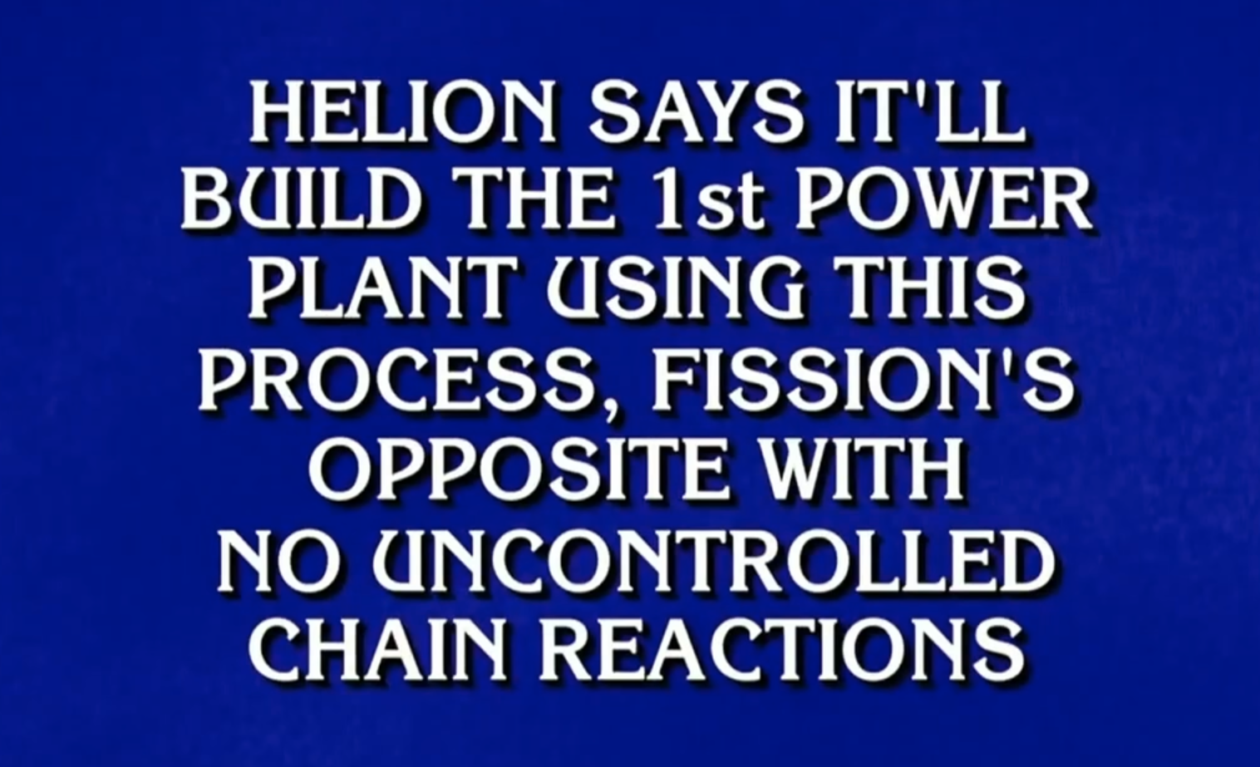
regional: ‘What is fusion?’ Helion Energy harnesses the power of
Helion Energy, the Everett-based fusion startup, gained mainstream attention this week after being featured as a clue on the popular game show "Jeopardy!". The $800 clue, part of a "Y Combinator" category, highlighted Helion's mission to build the first fusion power plant, bringing the concept of clean energy to a wider audience. CEO David Kirtley celebrated the "surreal" moment as a sign that reliable clean power is becoming more accessible.

Flox Intelligence Harnesses AI to Safeguard Wildlife and
Flox Intelligence, a KTH spin-off and TechCrunch Disrupt finalist, is deploying AI-powered edge devices to deter wildlife from critical infrastructure like railways and airports. The system identifies animals and uses species-specific sounds, learning and adapting to prevent costly collisions and delays. With 150 devices deployed globally and $5 million raised, Flox aims to scale significantly with a new Series A round.
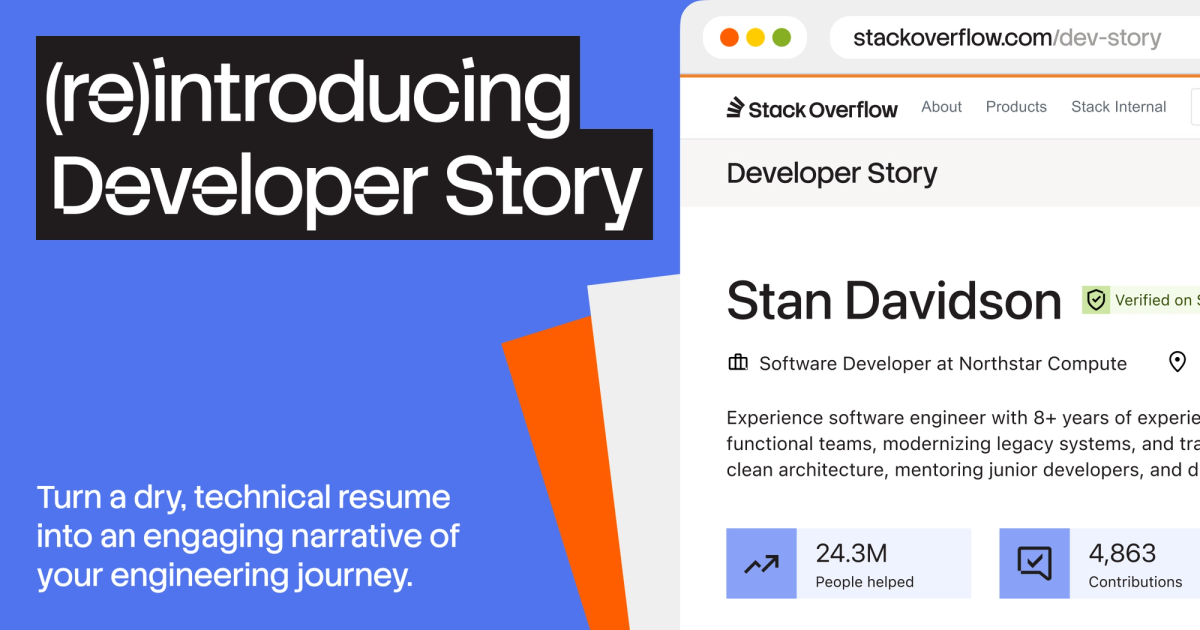
Beyond the Resume Noise: Developer Story Rethinks Tech Hiring
Stack Overflow is addressing the growing challenges in tech hiring, exacerbated by AI's influence leading to untrustworthy and generic resumes. Their solution, the re-introduced Developer Story, offers a platform for developers to authentically showcase their work, expertise, and impact through verifiable contributions and personal projects. This aims to provide hiring teams with more objective insights and help genuine talent stand out in a crowded market.