
Choosing Milwaukee M18 Batteries: Beyond the Amp-Hour Rule
For years, buying a Milwaukee M18 battery was straightforward: the bigger the Amp-hour (Ah) number, the more power and runtime you got. This simple rule guided countless purchases, but Milwaukee has quietly changed the
For years, buying a Milwaukee M18 battery was straightforward: the bigger the Amp-hour (Ah) number, the more power and runtime you got. This simple rule guided countless purchases, but Milwaukee has quietly changed the game. Relying solely on the Amp-hour rating can now lead to overspending or underpowering your tools. This guide will help you navigate Milwaukee's updated battery lineup, ensuring you select the right battery for optimal performance and value.
By the end of this guide, you'll understand the key differences between Milwaukee battery types, how to interpret their power ratings, and how to make informed decisions that save you money and maximize your tool's capabilities. You'll learn to look beyond the Ah number and identify the true power potential of each battery pack.
Understanding the Shift in Battery Technology
For nearly a decade, Milwaukee's M18 battery abbreviations (CP for compact, XC for extended capacity, and HD for high demand) directly corresponded to the number of identical lithium-ion cells inside. A CP pack had 5 cells, an XC had 10, and an HD had 15. More cells meant higher Amp-hours and more current delivery without overheating. Runtime and power output were intrinsically linked to the physical size and Ah rating. This made buying simple: bigger numbers meant better performance.
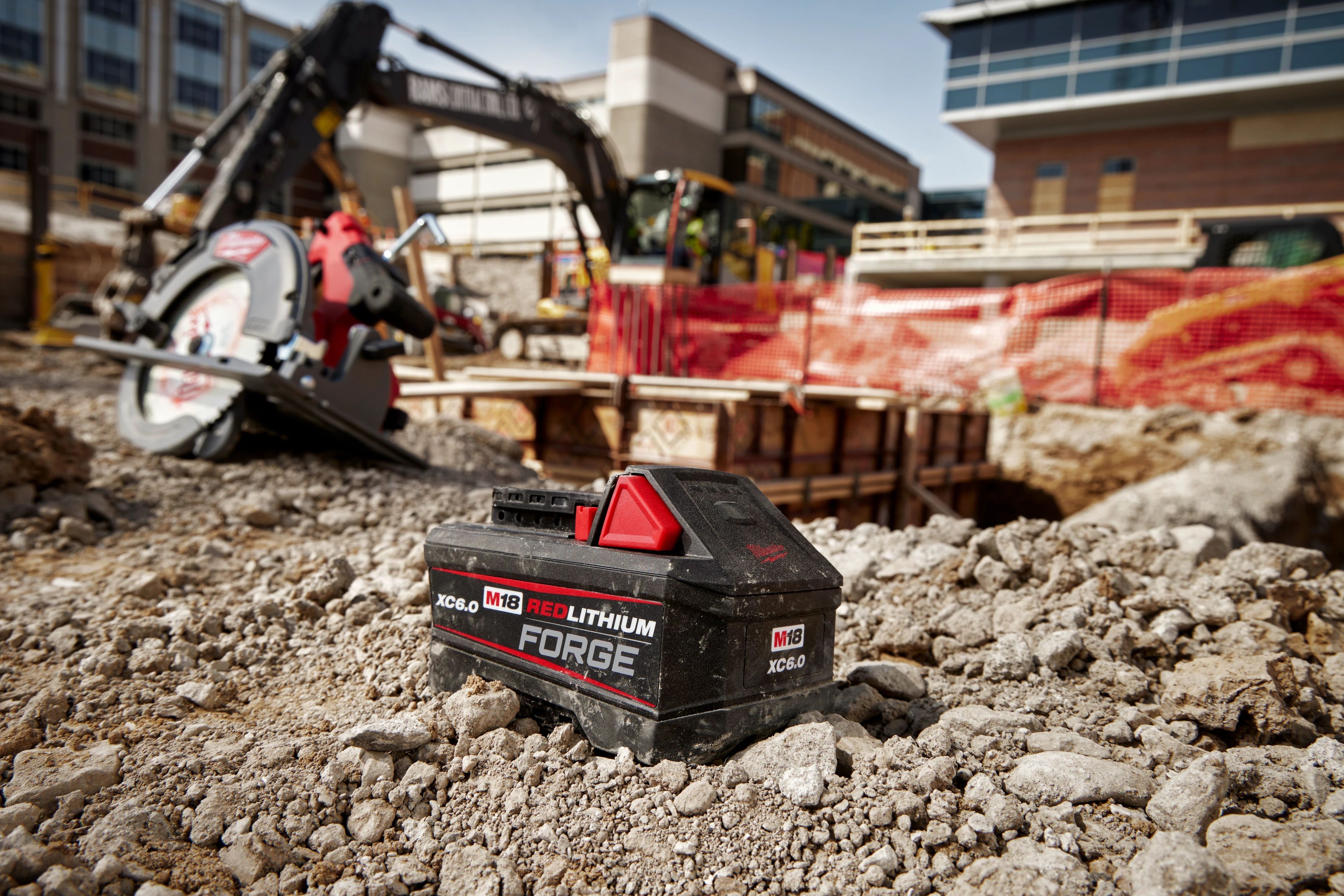
However, advancements in cell technology have introduced new variables. Milwaukee's latest batteries, like the HIGH OUTPUT and REDLITHIUM FORGE series, use fundamentally different internal cell designs. These innovations allow for greater power delivery from fewer cells or smaller packages, breaking the old correlation between Ah, physical size, and raw power output.
The Internal Innovations
Traditional lithium-ion cells funnel all their current through a small metal tab. This tab acts as a bottleneck, increasing internal resistance, generating heat, and causing power sag under heavy loads. Milwaukee's newer technologies address this:
- Pouch Cells (e.g., FORGE XC6.0): Instead of cylindrical cells, these are flat and stacked. Their design provides a more direct and wider path for current, reducing resistance.
- Tabless Connections (e.g., FORGE HD12.0): Even in cylindrical cells, this design allows current to exit along the entire edge of the electrode, rather than a single point. This significantly widens the current path, minimizing resistance and heat generation.
Both innovations mean more current can flow safely and efficiently, translating to more power delivered to your tool, less energy wasted as heat, and often faster charging times. For example, the FORGE XC6.0 can charge to 80% in just 15 minutes on a compatible Super Charger.
Decoding Milwaukee's Power Scale (PWR Tiers)
Milwaukee now uses an internal power scale, from PWR1 to PWR5, which more accurately reflects a battery's actual output capability than Amp-hours alone. This scale is crucial for understanding the true performance of a battery:
- Standard Batteries: An XC5.0 pack, for instance, might sit at PWR2.
- HIGH OUTPUT Batteries: A HIGH OUTPUT XC6.0 typically reaches PWR3.
- High Demand Batteries: A HIGH OUTPUT HD12.0, a larger and heavier pack, registers at PWR4.
- REDLITHIUM FORGE Batteries: This is where the old rule completely breaks. A REDLITHIUM FORGE XC6.0, despite having half the Amp-hours and significantly less weight than a HIGH OUTPUT HD12.0, also sits at PWR4. This means you can get the same power as a 12.0Ah pack in a much smaller 6.0Ah FORGE battery.
- Top Tier: The FORGE HD12.0 is currently Milwaukee's only PWR5 pack, claiming up to 50% more power than the HIGH OUTPUT 12.0, even though both are 12.0Ah.
This system clearly shows that two batteries with identical Amp-hour ratings, or even a smaller Ah rating, can belong to entirely different power tiers. The Ah number now primarily indicates runtime (how long your tool will operate), while the tier name and PWR rating (if available) signify the power output (how hard your tool can pull under load).
Step-by-Step: Choosing the Right Milwaukee Battery
To make an informed decision, follow these steps:
-
Assess Your Tool's Power Demands: Consider the primary tasks for which you'll use the battery. Are you powering a high-demand tool like a grinder, a circular saw making deep cuts, or a heavy-duty impact wrench? Or is it for lighter tasks like drilling, driving screws, or using a flashlight? Tools requiring sustained high current benefit most from higher power tiers.
-
Determine Your Required Runtime (Amp-Hours): Decide how long you need your tool to operate between charges. If you work for extended periods or want to minimize battery swaps, a higher Amp-hour rating (e.g., 8.0Ah, 12.0Ah) is beneficial. If you do quick jobs or have multiple batteries, a smaller Ah might suffice.
-
Identify the Power Tier (Read the Battery Label Carefully): This is the most critical step. Look beyond the Amp-hour number and focus on the battery's specific tier name. Milwaukee labels include terms like:
- CP/XC/HD (Standard): These are the foundational batteries, offering good runtime and decent power.
- HIGH OUTPUT: These batteries provide a significant step up in power delivery and thermal management compared to standard packs of similar Amp-hours.
- REDLITHIUM FORGE: These represent the pinnacle of Milwaukee's M18 battery technology, offering the highest power output, fastest charging, and often a smaller form factor for a given power tier. If available, check the PWR number for an exact comparison.
-
Compare Options Across Tiers for Price and Performance: Don't assume a higher Ah always means better power or value. For instance, a HIGH OUTPUT XC8.0 and a FORGE XC8.0 might cost the same, but the FORGE version will deliver a full tier more power. Similarly, a FORGE XC6.0 can deliver PWR4 power, equivalent to a much larger HIGH OUTPUT HD12.0, often at a comparable price point. Always compare the tier names (Standard, HIGH OUTPUT, FORGE) first, then consider the Amp-hours for runtime.
-
Consider Size and Weight: If portability and reduced fatigue are important, the new FORGE technology is particularly appealing. A FORGE XC6.0 provides high-tier power in a compact and lighter package compared to older, higher-Ah batteries that offered similar power output.
Troubleshooting Common Battery Buying Mistakes
- Mistake: Assuming a larger Amp-hour number always means more power.
- Solution: Remember that Ah primarily indicates runtime. For power, prioritize the battery's tier name (e.g., HIGH OUTPUT, FORGE) and its PWR rating.
- Mistake: Paying premium prices for a high-Ah battery that doesn't deliver the necessary power for demanding tools.
- Solution: Always check the tier. A FORGE 6.0Ah might be a better investment for a high-demand tool than a standard 12.0Ah if they offer similar power output tiers.
- Mistake: Not realizing that two batteries with the same Ah can have vastly different power delivery.
- Solution: Actively compare battery types like a HIGH OUTPUT XC8.0 versus a FORGE XC8.0. They might cost the same but offer different power tiers, with the FORGE being significantly stronger.
Tips for Smart Battery Shopping
- Read Everything: Never just glance at the Amp-hour number. Read the full name on the battery label to understand its technology tier (e.g., REDLITHIUM, HIGH OUTPUT, FORGE).
- Runtime vs. Power: Clearly distinguish between what Amp-hours provide (runtime) and what the tier name indicates (power delivery).
- Industry Trend: This shift in battery technology isn't unique to Milwaukee. Brands like Ryobi and DeWalt are also adopting similar internal cell advancements to boost performance, so this buying principle applies more broadly.
- Compatibility: Rest assured, all M18 batteries remain compatible with all M18 tools. Your investment in the M18 platform is secure, but optimizing performance requires understanding these new distinctions.
FAQ
Q: Do my older M18 batteries still work with newer Milwaukee tools?
A: Yes, Milwaukee maintains full compatibility within its M18 platform. All M18 battery packs, regardless of their generation or technology tier, will fit and power any M18 tool. However, newer tools designed for high power output may perform better with the latest battery technologies like HIGH OUTPUT or FORGE.
Q: Is a higher Amp-hour (Ah) battery always better for my Milwaukee tools?
A: Not necessarily. While a higher Ah rating always means longer runtime, it no longer guarantees superior power output. For tools requiring maximum power and sustained performance under heavy loads, a lower Ah FORGE battery might outperform a higher Ah standard or even HIGH OUTPUT battery. Prioritize the power tier (e.g., FORGE) for demanding applications, and Ah for runtime.
Q: What's the main difference between "HIGH OUTPUT" and "FORGE" Milwaukee batteries?
A: Both HIGH OUTPUT and FORGE batteries represent significant improvements over standard Milwaukee packs in terms of power delivery and thermal management. However, FORGE batteries typically represent the absolute cutting edge, offering the highest power output, fastest charging capabilities, and often more compact designs for a given power tier. The FORGE line utilizes the latest cell technologies (like pouch cells or tabless connections) to push performance boundaries even further than HIGH OUTPUT models.
By adopting these new guidelines, you'll be well-equipped to select the ideal Milwaukee M18 batteries, ensuring your tools operate at their peak performance for every job.
Related articles
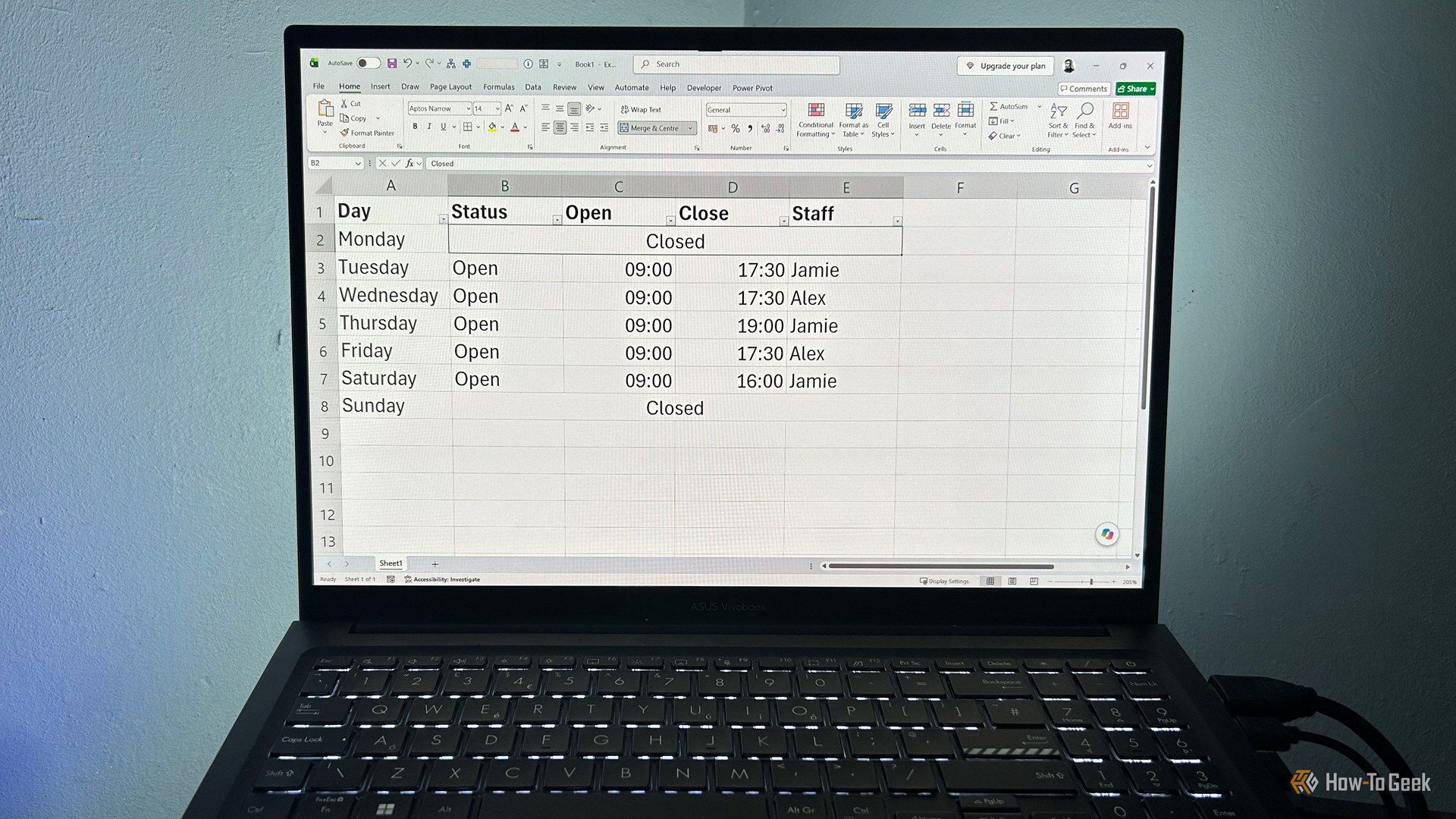
Ditch Merge & Center: The Better Way to Align Text in Excel
Learn to use Excel's "Center Across Selection" to align text across cells without merging, avoiding common data manipulation issues. This guide provides steps to utilize this newly accessible feature and add it to your Quick Access Toolbar.

Enterprise AI Beyond Chatbots: A Vision for Actionable Intelligence
Quick Verdict: Redefining Enterprise AI's Potential TechRadar Pro's opinion piece, "What it takes to move enterprise AI beyond the chatbot," delivers a refreshingly honest and vital perspective on the current state and

Prototype Racing 2030: A Unified Future Driven by Software
Prototype racing is heading towards a unified, LMDh-based rule set by 2030, promising greater stability, cost-effectiveness, and a focus on software-driven innovation for OEMs, despite current economic challenges.

Stop Android Auto Battery Drain: Essential Features to Disable and
Android Auto offers unparalleled convenience, bringing your phone's most useful features directly to your car's display. From navigation and calls to messages and music, it keeps you connected without distracting you

Beyond the Bugs: Conquering Studio Headaches in Indie Dev
This guide, part three in a series on running an indie studio, tackles the crucial but often overlooked aspect of dealing with non-development related issues. It introduces creating a shared 'studio backlog' for collective problems and using the IDS (Identify, Discuss, Solve) framework to address them constructively. The core message is to build powerful habits that keep studios from getting quietly derailed by lingering challenges.
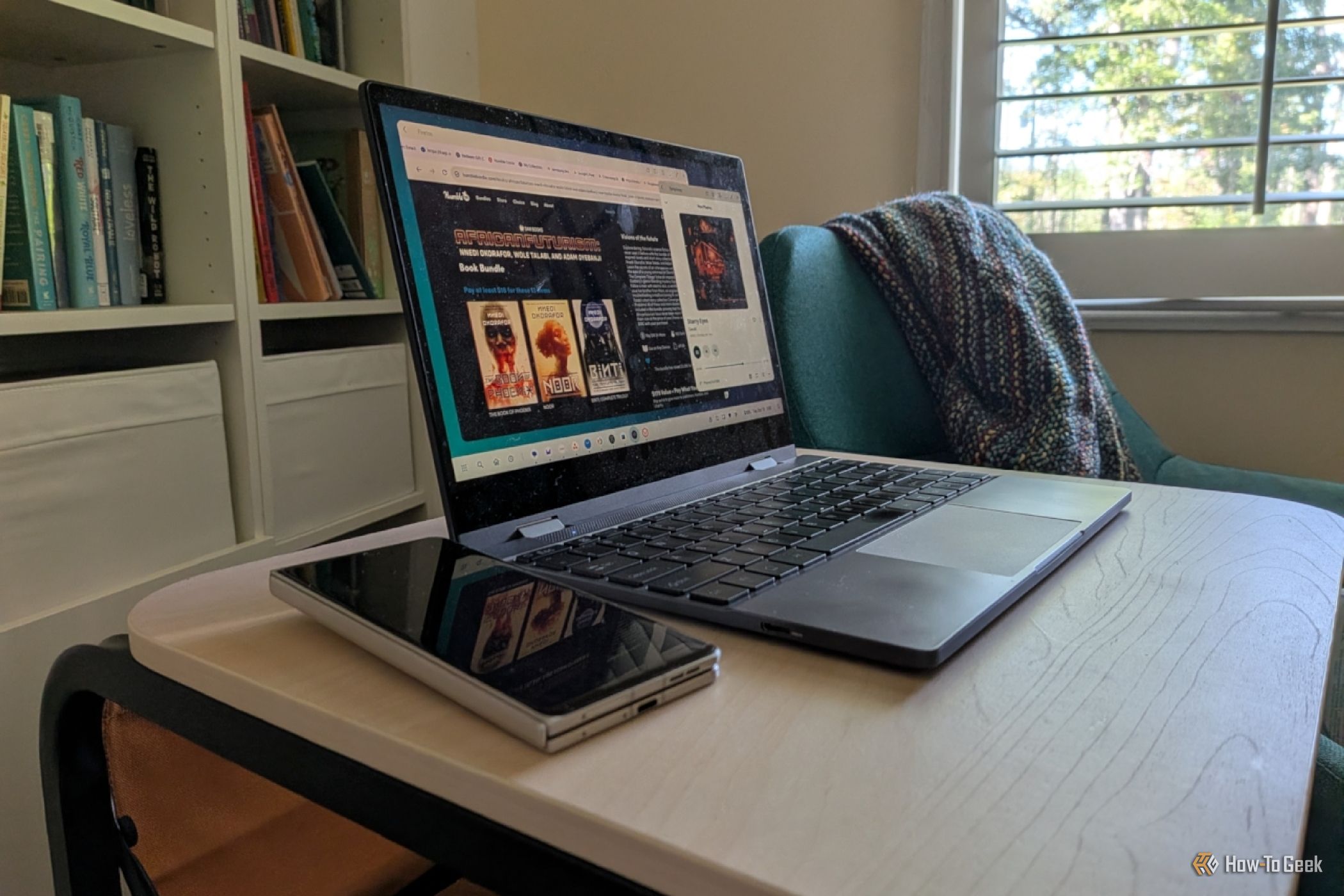
Turn Your Android Phone into a Powerful Desktop Replacement
Learn how to transform your Android phone into a full-fledged desktop computer using external displays and accessories, providing a cost-effective and integrated alternative to new Googlebooks.