
Beyond Vibe Coding: Engineering Quality in the AI Era
The concept of 'vibe coding,' an extreme form of dogfooding where developers avoid inspecting AI-generated code, often leads to significant quality issues. A more effective approach involves actively guiding AI tools to clean up technical debt and refactor, treating them as powerful assistants under human oversight. Ultimately, maintaining high software quality, even with AI, remains a deliberate choice for developers.

The rise of AI in software development brings powerful new tools, but also new methodologies that warrant careful consideration. One such approach, an extreme interpretation of dogfooding dubbed 'vibe coding,' is generating considerable discussion. While dogfooding—using your own product to test and improve it—is a valuable practice, extending it to the point of completely disengaging from the generated code, even to inspect its quality, can lead to significant problems.
Recently, the leaked source code from a prominent AI entity, Claude, revealed substantial internal duplication and other quality issues. This incident sparked debate on how such problems could arise in an AI-powered development workflow. The core issue, as highlighted by Bram Cohen, is an excessive adherence to 'vibe coding' principles: the belief that developers should make no direct contribution to the underlying code, nor even look at it, relying solely on high-level, 'vibe-based' conversations with the AI.
The Illusion of Pure Vibe Coding
At first glance, 'vibe coding' might suggest a utopian future where humans merely articulate high-level ideas, and AI handles all implementation details. However, this is largely a myth. Even in heavily AI-assisted environments, human contribution remains foundational. Developers are still responsible for establishing the infrastructure, defining frameworks, creating 'plan files' (effectively sophisticated to-do lists for the AI), and formulating the initial 'skills' and 'rules' that guide the AI's operations. The AI performs poorly without this structured human input.
Consider the example from the Claude leak: a human reviewing the code discovered significant redundancy where entities were defined as both 'agents' and 'tools.' Such an issue, while seemingly minor, points to a larger systemic problem. It raises the obvious question: why didn't the development team identify and address this? The answer lies in the 'vibe coding' ethos, which discourages direct inspection of the AI-generated or AI-managed code, deeming it 'cheating.' Interactions are limited to abstract discussions, deliberately avoiding the nitty-gritty of the implementation.
This approach becomes particularly illogical when the underlying code is written in a human-readable format, such as English for an LLM's internal thought processes or rule sets. It's not about deciphering complex machine code; it's often about reading plain language and noticing obvious redundancies or inefficiencies that could be easily rectified.
A More Principled Approach to AI-Assisted Development
The good news is that AI is an incredibly powerful tool for improving software quality, especially when it comes to tackling technical debt. Historically, cleaning up existing codebases could consume an entire year's development efforts. With AI, these tasks can be significantly accelerated, sometimes resolved in weeks, or integrated into ongoing feature development.
Instead of shying away from inspecting the AI's output, developers should adopt a collaborative, guided approach. Think of the AI as a highly capable but direction-dependent junior developer. It excels at execution and pattern recognition but struggles with proactive identification of its own architectural flaws or areas for refactoring. This is where human guidance becomes indispensable.
For instance, a developer could initiate a conversation with the AI by pointing out a specific problem: "Let's audit this codebase for unreachable code," or "This function's complexity makes it hard to understand." The process then unfolds as a dialogue:
- Identify the Problem: A human observes an issue, either through direct code inspection (which is encouraged) or by experiencing poor functionality.
- Discuss and Clarify: Engage the AI in a conversation. Provide examples, explain reasoning, and correct any 'sycophantic' agreements from the AI that don't align with the desired outcome.
- Refine Guidelines: Through this back-and-forth, the human clarifies edge cases and potential issues, enabling the AI to grasp the nuances of the task.
- Execute: Once clear guidelines are established and the human is confident the AI understands, instruct it to generate a plan and proceed with the necessary changes. The AI can then rapidly implement solutions that would be tedious for a human.
This method allows the AI to perform the vast majority of the actual writing and refactoring, while the human provides crucial oversight, strategic direction, and quality control. This isn't a violation of using AI; it's leveraging its strengths effectively.
Quality Is a Choice, Not a Consequence
The fundamental takeaway is that poor software quality, even in the age of AI, is a deliberate choice. It's not an inevitable consequence of adopting AI for coding. Teams that choose to engage critically with AI-generated code, guiding it through iterative conversations and inspecting its output, can achieve significantly higher quality standards. Refusing to 'look under the hood' and provide specific direction is a missed opportunity to leverage AI's full potential for improvement. Embracing AI should mean striving for better quality, not settling for less.
FAQ
Q: What is dogfooding in the context of software development?
A: Dogfooding refers to the practice of an organization using its own products internally. The idea is that developers and employees, by actively using what they build, can identify bugs, usability issues, and areas for improvement, thus enhancing the product's quality and ensuring it meets real-world needs.
Q: Why is 'vibe coding' considered problematic when using AI for development?
A: 'Vibe coding' is problematic because it advocates for a hands-off approach where developers avoid inspecting or directly modifying AI-generated code, relying only on high-level instructions. This neglect prevents humans from identifying and guiding the AI to fix quality issues like duplication, inefficiency, or logical errors that the AI itself may not spontaneously detect or prioritize, leading to technical debt and substandard software.
Q: How can developers effectively guide AI to improve code quality?
A: Effective guidance involves a conversational, iterative process. Developers should articulate problems clearly (e.g., "This function needs refactoring"), discuss examples with the AI, provide reasoning, correct misunderstandings, and refine instructions. Once the AI comprehends the task and its constraints, it can then be instructed to generate and implement solutions, with the human performing oversight and final approval.
Related articles

AI's Confidence vs. Formal Methods' Rigor: Design Flaws & Verification
While AI accelerates code generation, formal methods remain critical for ensuring system correctness. Languages like TLA+ and tools like Quint enable developers to model and verify system designs before coding, catching subtle flaws. Quint makes formal methods more accessible with developer-friendly syntax and executability. This approach is vital for verifying AI-generated code through trace validation and model-based testing, ensuring reliability against real-world data.

Ephemeral PR Preview Environments on GKE: A Deep Dive
Every development team eventually grapples with the limitations of shared staging environments. The familiar scenario: multiple features deployed simultaneously, database migrations clashing, and the phrase "it works on
Enterprise AI Beyond Chatbots: A Vision for Actionable Intelligence
Quick Verdict: Redefining Enterprise AI's Potential TechRadar Pro's opinion piece, "What it takes to move enterprise AI beyond the chatbot," delivers a refreshingly honest and vital perspective on the current state and
Secure Internal API Access for AI Agents with MCP
AI agents accessing internal APIs directly pose significant risks, including identity loss, unrestricted queries, and security bypasses. The Model Context Protocol (MCP) offers a solution by defining explicit tools. A secure architecture involves an MCP server wrapping the API with strict input validation, coupled with a gateway that handles authentication, rate limiting, and audit logging, ensuring safe and accountable access.
Beyond the Bugs: Conquering Studio Headaches in Indie Dev
This guide, part three in a series on running an indie studio, tackles the crucial but often overlooked aspect of dealing with non-development related issues. It introduces creating a shared 'studio backlog' for collective problems and using the IDS (Identify, Discuss, Solve) framework to address them constructively. The core message is to build powerful habits that keep studios from getting quietly derailed by lingering challenges.
Beyond the Resume Noise: Developer Story Rethinks Tech Hiring
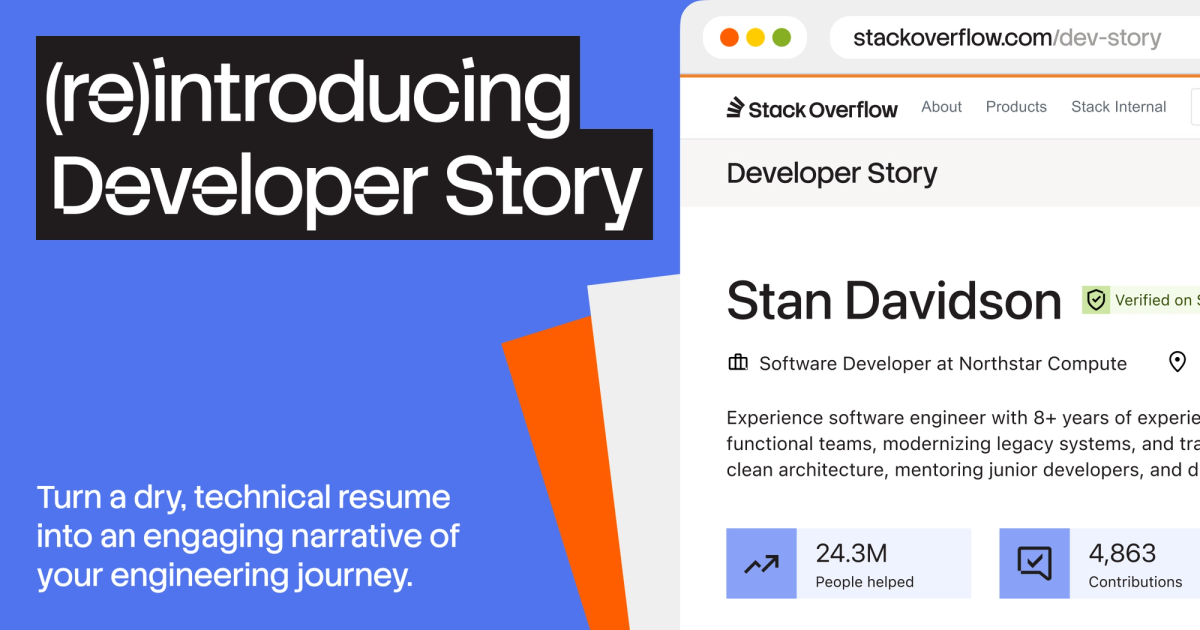
Stack Overflow is addressing the growing challenges in tech hiring, exacerbated by AI's influence leading to untrustworthy and generic resumes. Their solution, the re-introduced Developer Story, offers a platform for developers to authentically showcase their work, expertise, and impact through verifiable contributions and personal projects. This aims to provide hiring teams with more objective insights and help genuine talent stand out in a crowded market.