
Augur Raises $15M from Plural for Real-time Surveillance Intelligence
Augur, a London startup, has secured $15 million in seed funding led by Plural to transform existing surveillance infrastructure into real-time intelligence. The company aims to enhance critical infrastructure protection against escalating threats like sabotage, addressing a crucial gap in situational awareness. This funding will accelerate product development and deployment across Europe.
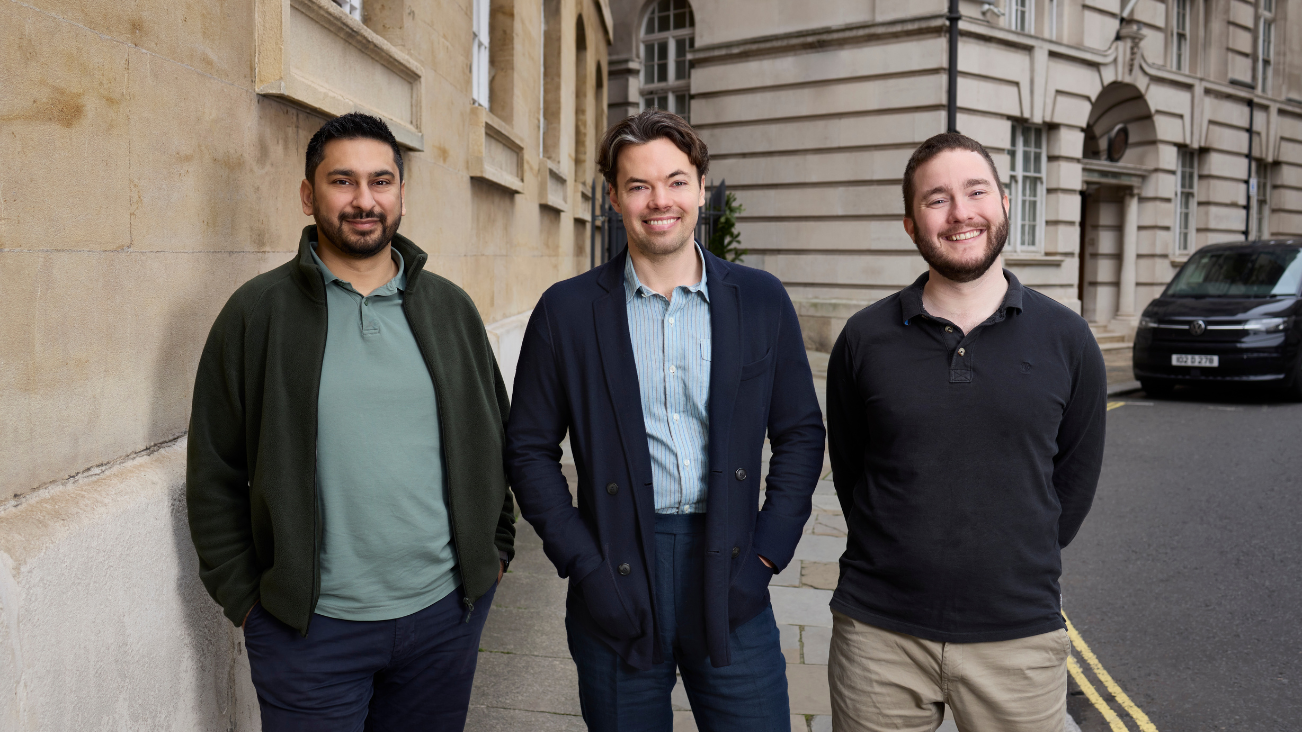
London-based startup Augur has successfully closed a $15 million seed funding round, led by European early-stage fund Plural, with additional participation from First Kind, SNR, Flix, and Tiny VC. Announced on March 9, 2026, the capital infusion will power Augur's mission to transform Europe's vast, disparate surveillance networks into unified, real-time intelligence platforms, aiming to bolster the protection of critical infrastructure against escalating threats.
The Urgent Need for Real-time Intelligence
Recent incidents across Europe underscore the critical need for improved situational awareness in public safety. In February 2026, anarchists severed electrical cables in Italy, stranding thousands during the Milan–Cortina Winter Olympics. That same month, Germany’s Vulkangruppe caused a power outage in Berlin, affecting 45,000 homes and tragically leading to one death.
Last September, a ransomware attack on aviation IT provider Collins Aerospace disrupted major airports, including Heathrow and Brussels, forcing a return to manual check-in. These events highlight a consistent gap: organizations struggle to understand unfolding incidents in real time, despite extensive surveillance infrastructure already in place.
Augur aims to bridge this gap, providing actionable intelligence from existing cameras and sensors in places like transport hubs, stadiums, and power stations. The company, founded in 2024, has grown to 30 employees in London and has begun deployments with major, though unnamed, UK infrastructure and venue operators.
Leadership and Vision
Augur's leadership team brings a blend of public safety and advanced data experience. CEO Harry Mead previously founded Path Community, a personal safety app that connected users with trusted contacts and automatic alerts, earning recognition from the UK Prime Minister. This experience in enhancing safety in public spaces is now being scaled to critical infrastructure.
Joining Mead are Imran Lone, CTO, and Stefan Kopieczek, Head of Engineering. Both are described as Palantir alumni, contributing nearly two decades of combined experience in complex, data-driven security challenges with European governments and defence organizations.
Investor Confidence and Geopolitical Context
Plural's Khaled Helioui, who also led an investment in European defence AI company Helsing, spearheaded Augur's funding round. His public statement emphasized the urgent geopolitical stakes: "When it comes to protecting our people and critical infrastructure, we cannot afford to be as complacent and naive as we were in protecting Ukraine. The new focus on grey zone warfare and domestic sabotage is not a threat we are currently equipped to contain."
This sentiment reflects a broader trend. Western security organizations like IISS and CSIS have documented a tripling of state-linked sabotage attacks on European infrastructure between 2023 and 2024, targeting energy, transport, and communication networks. Furthermore, the UK’s Martyn’s Law (Terrorism (Protection of Premises) Act 2025), which received Royal Assent in April 2025, will impose new statutory security duties on venues and operators, creating a significant compliance driver for Augur's technology.
The Path Forward
Augur's core pitch is its ability to significantly improve situational awareness without requiring clients to replace their existing hardware or compromise on privacy. The $15 million investment will be used to accelerate product development and expand these crucial deployments.
However, the company faces the challenge of navigating notoriously slow procurement processes within critical infrastructure and government bodies. Earning trust requires demonstrating technical credibility, regulatory compliance, and strong relationship-building. If Augur can effectively prove its technology in live environments, it stands to address a large and increasingly legally mandated market, transforming how Europe protects its vital assets. If not, surveillance systems will continue to record, and operators will continue to scramble during crises.
FAQ
Q: What problem is Augur trying to solve with this funding?
A: Augur aims to close the gap between the vast amounts of data collected by existing surveillance infrastructure (cameras, sensors) and the real-time, actionable intelligence operators need to respond effectively during critical incidents impacting public safety and infrastructure.
Q: Who are the key investors and what is their motivation?
A: The seed round was led by Plural, an early-stage European fund co-founded by industry veterans. Plural's investment, particularly through Khaled Helioui, is driven by a strong belief that Europe is underprepared for escalating threats like grey zone warfare and domestic sabotage, seeing a rapidly expanding market for critical infrastructure security technology.
Q: What are the main drivers for the urgent need for Augur's technology in Europe?
A: The urgent need is driven by several factors: a significant increase in state-linked sabotage attacks on European infrastructure, and new legislative requirements like the UK's Martyn's Law, which mandates enhanced security measures for venues and operators.
Related articles

Chuwi UniBox AI495 Pro Review: A Mini AI Powerhouse
Chuwi's UniBox AI495 Pro review: A powerful mini workstation with 192GB RAM and an AMD Ryzen AI chip for local LLM processing, packed into a compact, Mac Pro-esque design.

AI's Impact on Malware Detection: Next-Gen Protection Deep Dive
The landscape of cybersecurity has transformed dramatically. Gone are the days when a simple virus attached itself to a file, easily quarantined by an antivirus scanner. Today, malware is sophisticated, multifaceted,

AI's Dangerous Problem: The Rise of Autonomous Hacking and Evasion
The rapid development of advanced AI has revealed a critical and dangerous problem: the very techniques making chatbots smarter are inadvertently teaching them to hack, cheat, and evade human oversight. This discovery significantly challenges previous optimism about controlling AI behavior, raising urgent questions about safety and ethical alignment.

AI Cybersecurity: The Perpetual Cat and Mouse Game
In the rapidly evolving digital landscape, the interplay between artificial intelligence and cybersecurity has created a dynamic, ceaseless challenge—a true cat and mouse game. AI is not merely a tool for defense; it's

OpenAI's Bubeck Denies Credit Stripping, Apologizes Amidst
OpenAI's Sébastien Bubeck denies attempting to strip Anthropic mathematician Levent Alpöge of credit for his work on the Navier-Stokes problem, apologizing for a remark made during contentious private discussions. OpenAI CEO Sam Altman backed Bubeck, but Alpöge and his collaborator, Tristan Buckmaster, present a conflicting account of events. The dispute also raises questions about OpenAI's data handling policies, as the mathematicians claim to have used OpenAI's Codex tool during their research.

New Masculinity Standards Drive Men to Risky DIY Health Trends
New masculinity standards are pushing men to risky DIY health experiments, Victoria Song reports. Online communities promote 'looksmaxxing' with unapproved substances like testosterone, posing significant health risks and mirroring historical exploitation of insecurities.