
Audi's "Local Cars" Strategy: A Bold Move for a Global Brand
Verdict: A Strategic Pivot Towards Regional Relevance Audi's CEO, Gernot Döllner, has outlined a significant strategic shift for the luxury automaker: maintaining a global brand identity while moving towards 'local
Verdict: A Strategic Pivot Towards Regional Relevance
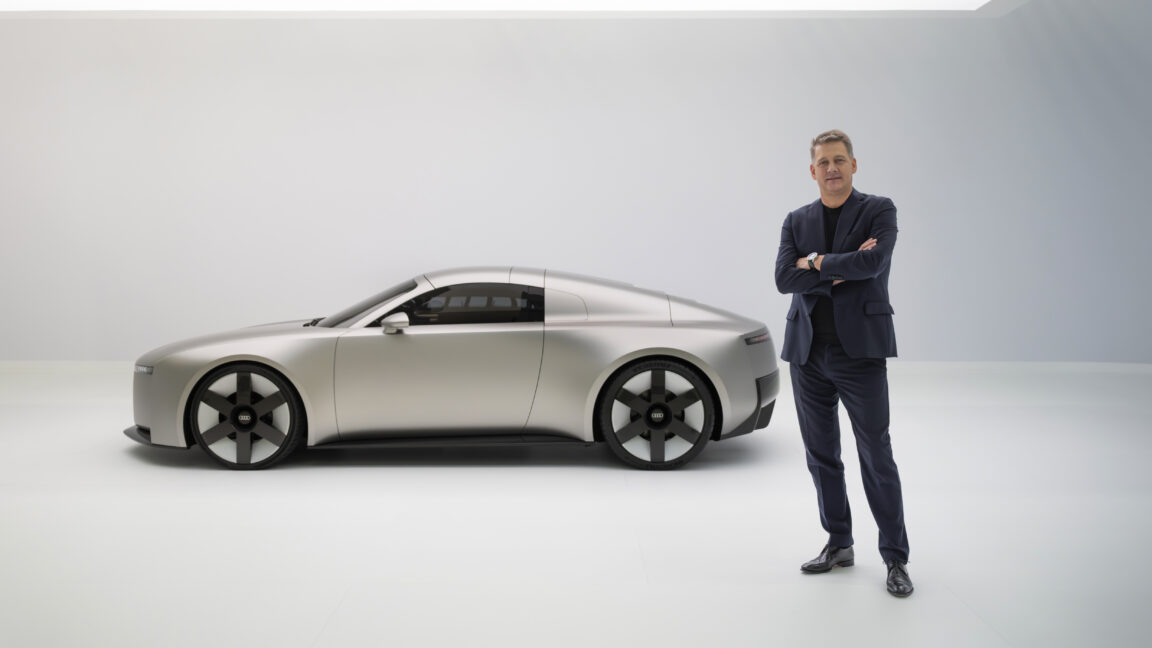
Audi's CEO, Gernot Döllner, has outlined a significant strategic shift for the luxury automaker: maintaining a global brand identity while moving towards 'local cars' tailored to specific regional markets. This departure from the long-standing 'global car' philosophy is a pragmatic response to a changing world, marked by supply chain disruptions, trade disputes, and diverse customer demands. The verdict? This adaptive, market-centric approach appears to be a necessary and potentially smart move, promising more relevant products for consumers, though it introduces a layer of operational complexity for the brand.
Unpacking Audi's New Direction
At the core of Döllner's vision is a commitment to flexibility and responsiveness, moving away from a one-size-fits-all approach. He emphasizes the need for 'regional-specific solutions' and a 'local production system' to ensure a 'future-resistant setup' for the brand.
Prioritizing the American Market
The United States is clearly a focal point for this new strategy. The forthcoming Q9 SUV serves as a prime example, with its development heavily influenced by US customer requirements. Döllner notes that for the Q9, 'US requirements were at the center of the product development process,' marking it as a 'US first' launch with the majority of expected volume coming from America. This localized approach goes beyond mere cosmetic tweaks, translating into tangible user experience improvements such as:
- Enhanced Functionality: Bigger cup holders designed for popular insulated mugs.
- Ergonomic Refinements: A return to dedicated physical switches, optimizing interior cooling, and focusing on seating comfort and roof concepts based on direct customer feedback and JD Power surveys.
Significantly, Döllner believes that products 'perfect for the US' are generally well-received in Europe, suggesting a potential alignment where American preferences lead global product direction for some models, while maintaining overall cohesion for the two markets.
A Unique Path for China
While Europe and the US may share many models, China is being treated as a distinctly separate entity. Döllner unequivocally states that 'the global car for the era of the global product is over' when it comes to the Chinese market. Audi acknowledges the need for 'China-specific solutions from the ecosystem, from the supply chain, from the production system,' highlighting a commitment to deep localization. The AUDI E7X, developed in partnership with SAIC, stands as a testament to this strategy, representing a new model created specifically for China.
The Enthusiast's Glimmer of Hope: R8 and Wagons
Beyond strategic overhauls, Döllner's remarks offered intriguing hints for performance car aficionados and wagon enthusiasts.
-
The Future of the R8: When questioned about a potential third-generation R8, especially given the new V8 in the Lamborghini Temerario (a fellow VW Group brand), Döllner responded positively, acknowledging the Temerario's 'outstanding engine' and Audi's opportunity to 'combine' technical solutions from different platforms. His mention of the 'C Sport' built on a Porsche platform, resulting in a 'clear Audi,' suggests a willingness to leverage group resources for a new supercar. While 'not quite a yes,' it's far from a 'no.'
-
Wagons for the US?: Despite the recent retirement of the RS6 Avant in the US, there's renewed discussion about bringing sporty wagons back. Döllner indicated a 'positive surprise' from dealers 'really asked for the RS models to be brought to the US as wagons as well.' While 'no plans' existed initially, this strong dealer interest seems to have shifted the internal conversation, hinting that 'we are doing that' for performance-oriented Avant models like the RS version of the RS5 Sportback. However, more basic wagon variants are unlikely to cross the Atlantic.
Implications for Consumers: Pros and Cons
Audi's strategic pivot has several potential upsides and considerations for buyers:
Pros:
- Increased Relevance: Products will be more finely tuned to specific regional tastes and needs, potentially leading to higher customer satisfaction and a more intuitive user experience (e.g., Q9's US-centric interior design).
- Market Resilience: Localized production and supply chains could make Audi less vulnerable to global disruptions, potentially improving delivery times and parts availability in key markets.
- Return of Niche Models: Enthusiasts in the US might finally see the return of high-performance wagons and a potential new R8, models that were previously considered 'forbidden fruit' or at risk of extinction.
- Stronger Regional Focus: Audi's increased attention to specific markets like the US and China could lead to more competitive and appealing offerings compared to brands clinging to a global car strategy.
Cons:
- Increased Complexity & Potential Cost: Managing distinct product development, manufacturing processes, and supply chains for different regions can be significantly more complex and potentially lead to higher production costs, though Döllner's focus is on a 'future-resistant setup' which implies long-term efficiency.
- Slower Global Rollouts: For models prioritized for a specific region (like the Q9 for the US), customers in other markets may experience longer waits for introduction.
- Brand Consistency Concerns: While Audi aims to maintain a 'clear Audi' character, a highly localized product portfolio could, over time, subtly dilute the global brand image if not managed meticulously.
Buying Recommendation
For consumers, Audi's new strategy signals a promising future. If you are a buyer in the United States, you can expect future Audi models, particularly SUVs, to be more finely tuned to your local preferences and driving habits. This should translate into a more satisfying and practical ownership experience. For enthusiasts who appreciate performance vehicles and lament the dwindling availability of wagons or supercars, keep a close eye on Audi's announcements. The hints regarding a new R8 and the potential return of RS Avant models to the US market suggest Audi is listening to its most passionate customers. Overall, this strategy positions Audi as a more adaptable and customer-focused premium brand, making its future offerings potentially more appealing than ever before.
FAQ
Q: How will this strategy impact the availability of Audi models in my region? A: For the US, models like the Q9 will be prioritized, meaning a faster rollout tailored to American preferences. For other markets, it may mean a slightly delayed launch for some models, but the aim is still to have products suitable for both Europe and the US. China will see entirely specific models developed locally.
Q: Will Audi cars become more expensive due to this localized production strategy? A: The article does not directly address pricing. While increased complexity in manufacturing and supply chains could put upward pressure on costs, the strategy is presented as a way to create a "future-resistant setup," implying long-term sustainability and market relevance, which could indirectly benefit consumers through better-adapted products.
Q: Does this mean Audi will no longer be a 'global' luxury brand? A: No, CEO Döllner explicitly states Audi will remain "a global brand." The shift is in product development and production—moving towards "local cars" to serve regional markets more effectively, while maintaining a unified global brand identity.
Related articles
Android 17 QPR2 Beta 7.1: The Performance Relief You've Been Waiting
Android 17 QPR2 Beta 7.1: Finally Fixing the QPR1 Performance Woes Verdict: Android 17 QPR2 Beta 7.1 is a crucial and highly anticipated software update for Google Pixel users, specifically targeting and resolving the

DJI Solo Video Setups: Smart Choices for Lone Creators
This review delves into DJI's recommended solo video setups, highlighting the Osmo Pocket 3 Creator Combo as a top pick for its integrated camera, gimbal, and mic. It also covers stabilizers like the Osmo Mobile 8 and RS 4, and the DJI Mic Mini series for enhanced audio, providing honest pros, cons, and clear buying advice.

in-depth: Chicago-Area Cops Helped HSI Spy on Minnesota Anti-ICE
Chicago-area law enforcement, including local police and HSI agents, conducted undercover surveillance on Minnesota anti-ICE activists at an April 2, 2022, talk in Chicago. This operation was part of a federal conspiracy probe into 15 Minnesota activists facing felony charges related to immigration enforcement resistance. Civil liberties advocates have condemned the surveillance as a troubling intrusion into protected political activity.

Ars Technica's Rocket Report: Your Essential Space Industry Briefing
Quick Verdict Ars Technica's Rocket Report, presented by veteran space reporter Stephen Clark, offers an invaluable and meticulously organized weekly (or similar frequency, implied by "Edition 9.15") digest of the most

Apple iPhone Duo: A Daring Debut with Notable Compromises
Apple's highly anticipated iPhone Duo, priced at $2,000, has gone on pre-order. While hailed as "Apple's most exciting device in a decade" for its innovative foldable design and immersive display, it comes with significant drawbacks like the absence of FaceID and a premium camera.
KDE Plasma 6.8: A Future-Focused 30th Anniversary Update
Quick Verdict KDE Plasma 6.8, arriving as the "30th Anniversary Edition," is a pivotal release that decisively pushes the desktop environment into the future. With a definitive farewell to native X11 sessions and a