
Amazon's 'Transformer' Phone: A Second Chance for Fire
Quick Verdict Amazon is reportedly dabbling in the smartphone market again with a new device, internally dubbed "Transformer." While the idea of Amazon re-entering the phone fray is intriguing, the ghosts of the

Quick Verdict
Amazon is reportedly dabbling in the smartphone market again with a new device, internally dubbed "Transformer." While the idea of Amazon re-entering the phone fray is intriguing, the ghosts of the original Fire Phone's catastrophic failure still linger. Our honest take? If Amazon doesn't fundamentally overhaul its app ecosystem and fully embrace Google Play services this time around, this new venture is DOA. The previous model's biggest flaw wasn't just its hardware, but its utterly inferior app store experience – a lesson Amazon simply must learn if it hopes to compete in 2026.
The Phoenix from the Fire Sale?
It’s fair to say that "a new Amazon smartphone" wasn't on many tech enthusiasts' radar for the near future, yet here we are. Reports from Reuters suggest Amazon is indeed developing a new phone, code-named "Transformer." For those with a long memory in the tech world, this immediately brings to mind Amazon's first and famously ill-fated foray into smartphones: the Fire Phone of 2014, a device that swiftly found its way to a "fire sale" barely a year after its launch. The landscape today is undeniably crowded, with industry titans like Apple, Samsung, and Google dominating, alongside strong contenders such as Motorola and OnePlus. While the bygone days of Windows Phone and BlackBerry as viable alternatives are behind us, the competition is arguably fiercer than ever.
https://www.youtube.com/embed/eSjp0GJ6JnY?start=0
The Original Sin: Amazon's AppStore Problem
The Achilles' heel of the original Fire Phone – and arguably the single biggest threat to any future Amazon smartphone – was its stubborn decision to forego Google Play services in favor of its proprietary Amazon AppStore. This wasn't merely a minor inconvenience; it was a critical, user-hostile choice that torpedoed the device's utility for most consumers. Google's ecosystem is simply too deeply integrated into modern digital life for a smartphone to succeed without it.
My last detailed inspection of the Amazon AppStore, while admittedly a few years ago, painted a grim picture. It was, to put it mildly, a wasteland. Essential categories like finance, home control, and communication apps were either conspicuously absent or had languished, unupdated for years. Imagine trying to manage your bank account, control your smart home devices, or reliably communicate with friends and family without access to the latest, most secure versions of popular apps. It was a non-starter.
The only applications that consistently received updates and functioned adequately were productivity tools, primarily those from Microsoft, and streaming apps. While these work perfectly well on the typically cheaper, less powerful hardware Amazon uses for devices like their tablets – which excel as casual "coffee-table" entertainment devices – a smartphone is a different beast entirely. A tablet might be for entertainment, but a phone is the indispensable hub for everything else in our lives.
A Glimmer of Hope: New Leadership and Lessons Learned
Here’s where a spark of optimism flickers for the "Transformer." The Senior Vice President of Devices and Services, Panos Panay, is now at the helm. Panay is no stranger to the critical role of an app ecosystem; he lived through the saga of Windows Phone, whose ultimate downfall was largely due to its inability to cultivate a robust app selection. His experience with that failure, combined with his widely recognized acumen in design and product development, makes him arguably the ideal person to champion an Amazon phone revival.
If anyone can convince Amazon's leadership of the absolute necessity of embracing Google services, it's Panay. His understanding of how product design integrates with user experience is unparalleled, and frankly, he’s one of my favorite product presenters because of his ability to convey that vision.
What a New Fire Phone Could Be
It's crucial to remember that this project is in its nascent stages, and as Reuters points out, it could very well be cancelled before it ever sees the light of day. However, the prospect is intriguing. My fervent hope is that Amazon learns from its 2014 misstep and avoids attempting to build another "shopping phone" – a device whose primary function seemed to be to push Amazon's retail offerings.
Instead, if Amazon aims to deliver a well-built, solid smartphone that simply offers a custom skin pushing Amazon content to the forefront, that's perfectly acceptable. A tastefully integrated Amazon experience, combined with the full functionality expected of a modern smartphone, could find its niche. But the non-negotiable condition for any chance of success is this: Amazon cannot afford to make the mistake of leaving Google behind again. To do so would be to repeat a costly error, and as the saying goes, "fool me once..."
The Competitive Landscape and the Path Forward
The modern smartphone market is not for the faint of heart. Competing against the likes of Apple and Samsung, with their massive brand loyalty and deep ecosystems, requires a truly compelling product. Google itself has its Pixel line, and Motorola and OnePlus offer increasingly sophisticated options. Amazon possesses significant brand power, but that alone won't suffice. Its approach must be fundamentally different from its previous attempt. It needs to build a device that everyone can use, seamlessly integrating into existing digital lives.
This means a new Amazon phone must embrace Google services. This isn't about Amazon sacrificing its identity; it's about acknowledging market realities and user expectations. A phone that lacks access to core Google apps – Gmail, Maps, YouTube, and the vast array of apps in the Play Store – is a non-starter for the overwhelming majority of consumers.
Should Amazon choose this path, leveraging Panay's insights and committing to a fully supported app ecosystem, then a new Amazon phone, even against the toughest competition, could actually have a fighting chance. Fail to do so, and we'll undoubtedly witness another "Fire phone fire sale."
Buying Recommendation
As of now, this is a rumored device, so a direct buying recommendation isn't possible. However, if Amazon's rumored "Transformer" phone embraces Google Play services and delivers a comprehensive, modern smartphone experience, it has the potential to be a contender. If, however, it attempts to revive the isolated Amazon AppStore model, steer clear – it will likely repeat the failures of its predecessor. Wait for concrete details regarding its app ecosystem before considering this device.
FAQ
Q: What was the biggest problem with the original Amazon Fire Phone?
A: The most significant issue was Amazon's decision to exclude Google Play services, relying instead on its own Amazon AppStore. This resulted in a severe lack of essential and updated applications, making the phone impractical for many users.
Q: Why is Panos Panay's involvement seen as a positive sign for a new Amazon phone?
A: Panay, as SVP of Devices and Services, has a deep understanding of product development and design. Critically, he experienced the failure of Windows Phone, which was largely due to its insufficient app ecosystem. His knowledge of this pitfall makes him uniquely positioned to advocate for a more user-friendly, Google-integrated approach for any new Amazon smartphone.
Q: Will a new Amazon phone automatically fail against Apple and Samsung?
A: Not necessarily. Amazon has considerable brand power. However, to succeed against established giants like Apple and Samsung, a new Amazon phone must learn from past mistakes by fully embracing Google services and offering a complete app ecosystem. If it does, it could carve out a niche; if not, its chances of success are minimal.
Related articles

Apple Unveils iPhone Duo: Pricey Foldable Sees Soaring Demand
Apple has officially entered the foldable smartphone arena with the long-anticipated launch of the iPhone Duo. Priced starting at a hefty $1,999, the device features a 5.4-inch outer display and a larger 7.6-inch inner
Android 17 QPR2 Beta 7.1: The Performance Relief You've Been Waiting
Android 17 QPR2 Beta 7.1: Finally Fixing the QPR1 Performance Woes Verdict: Android 17 QPR2 Beta 7.1 is a crucial and highly anticipated software update for Google Pixel users, specifically targeting and resolving the

DJI Solo Video Setups: Smart Choices for Lone Creators
This review delves into DJI's recommended solo video setups, highlighting the Osmo Pocket 3 Creator Combo as a top pick for its integrated camera, gimbal, and mic. It also covers stabilizers like the Osmo Mobile 8 and RS 4, and the DJI Mic Mini series for enhanced audio, providing honest pros, cons, and clear buying advice.

TCG Pocket Responds: A Much-Needed Pace Shift for Pokémon Fans
Pokémon TCG Pocket is rolling out a major update for its second anniversary, primarily addressing player concerns about overwhelming content releases by shifting to a six-week set schedule. This aims to curb player decline and improve overall engagement by giving trainers more time to collect and strategize. The update also adds new collection methods, improved deck-building features, and enhanced trading functionality.

Ars Technica's Rocket Report: Your Essential Space Industry Briefing
Quick Verdict Ars Technica's Rocket Report, presented by veteran space reporter Stephen Clark, offers an invaluable and meticulously organized weekly (or similar frequency, implied by "Edition 9.15") digest of the most
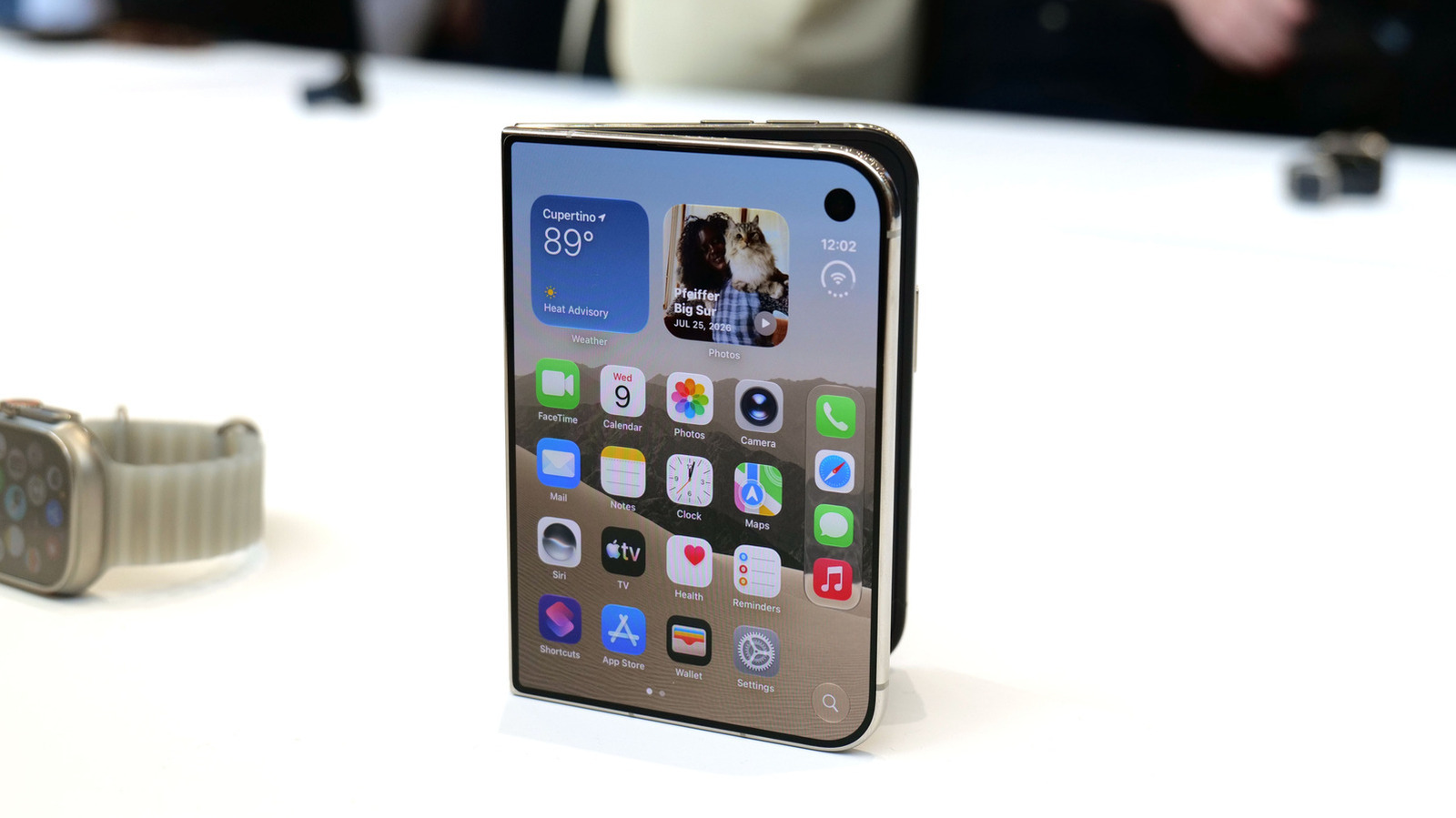
Apple iPhone Duo: A Daring Debut with Notable Compromises
Apple's highly anticipated iPhone Duo, priced at $2,000, has gone on pre-order. While hailed as "Apple's most exciting device in a decade" for its innovative foldable design and immersive display, it comes with significant drawbacks like the absence of FaceID and a premium camera.