
Amazon's Next Pillar: Custom AI Chips and Developer Implications
Fellow developers, In the rapidly evolving landscape of artificial intelligence, cloud infrastructure is a battleground, and custom silicon is emerging as a critical differentiator. Recent news from Jeff Bezos himself

Fellow developers,
In the rapidly evolving landscape of artificial intelligence, cloud infrastructure is a battleground, and custom silicon is emerging as a critical differentiator. Recent news from Jeff Bezos himself has highlighted Amazon's custom AI chip business as its prospective fourth "pillar," placing it alongside established giants like AWS, Marketplace, and Prime. This isn't just a business announcement; it signals a significant shift in how AI workloads will be built and optimized, and it's something every developer leveraging cloud resources for machine learning should pay close attention to.
The AI Compute Conundrum
The explosion of large language models (LLMs) and complex AI applications has created an insatiable demand for computational power. Traditionally, Nvidia's GPUs have dominated this space, becoming the de facto standard for both training and inference. However, this dominance comes with high costs and potential supply chain limitations. For cloud providers like Amazon, relying solely on external vendors creates a bottleneck and limits flexibility in optimizing their own infrastructure for scale and efficiency.
This is the problem Amazon's custom silicon strategy aims to solve. By designing its own chips, Amazon Web Services (AWS) can offer a lower-cost, performance-tuned alternative, directly addressing the soaring demand for AI computing power while reducing operational expenses for its customers.
Diving into Amazon's Custom Silicon
Amazon's journey into custom chips began over a decade ago, solidified by its acquisition of Israeli chip startup Annapurna Labs in 2015. This strategic move laid the groundwork for the development of Amazon's in-house processors, now central to its AI ambitions.
The key players in Amazon's AI chip lineup are:
- Trainium: Specifically engineered for training large language models and other deep learning workloads. Training these models is computationally intensive, requiring immense parallel processing capabilities over extended periods. Trainium is designed to handle this efficiently, offering a cost-effective alternative for iterative model development.
- Inferentia: Optimized for AI inference – that is, running trained models to make predictions or generate outputs. Once an LLM is trained, deploying it for real-world use requires efficient, low-latency inference. Inferentia aims to deliver this performance at a reduced cost, making deployed AI applications more economical.
Beyond AI, Amazon also has its Graviton processors (Arm-based CPUs for general-purpose workloads) and Nitro system (underlying virtualization technology), which together form a broader custom silicon ecosystem within AWS data centers. The article highlights that these in-house data center chips (Trainium, Graviton, and Nitro combined) currently boast an annual run rate exceeding $20 billion, demonstrating the significant scale and impact of this initiative.
How Developers Leverage This
For developers, the existence of Trainium and Inferentia presents compelling alternatives to traditional GPU instances. Instead of being locked into a single hardware paradigm, AWS users gain more choice and potential for optimization. Major players are already adopting these: Anthropic, for instance, trains and runs its Claude models on Trainium, and OpenAI has committed to consuming substantial Trainium capacity, ramping up by 2027.
When designing or migrating AI workloads on AWS, developers should consider:
- Cost Optimization: For many deep learning training and inference tasks, Trainium and Inferentia instances are positioned as lower-cost options compared to equivalent GPU-based instances. This can lead to significant savings, especially for large-scale, long-running projects.
- Performance Tuning: While general-purpose GPUs are versatile, custom AI chips are purpose-built for specific types of AI operations. This specialization can lead to better performance per watt or per dollar for compatible workloads. Understanding your model's architecture and the specific operations it performs is key to determining if these chips are a good fit.
- Ecosystem Maturity: AWS continues to invest heavily in the software stacks and developer tools to support these chips, aiming to make migration and development as seamless as possible. Familiarity with AWS's SageMaker, Elastic Inference, and other ML services will be crucial for effective utilization.
The Strategic Vision and Future Outlook
Amazon CEO Andy Jassy has echoed Bezos's sentiment, emphasizing that demand for AI computing will persist for years. The company plans to invest a record $200 billion in capital expenditures across Amazon in 2026, with a significant portion directed towards AI infrastructure, including these custom chips, data centers, networking, and power generation.
An intriguing prospect for the future is Jassy's suggestion that Amazon might eventually sell racks of its internally developed chips to third parties. This would extend Amazon's reach beyond its own data centers, potentially decentralizing AI hardware access and further intensifying competition in the silicon market.
Bezos’s definition of a “dreamy” business involves four characteristics: customer love, massive scale, strong capital returns, and durability over decades. AWS, Marketplace, and Prime clearly fit this mold. The custom chip business, with its critical role in the AI revolution, its multi-billion dollar run rate, and its strategic importance to AWS's future, is increasingly demonstrating its potential to be the next to fulfill these criteria.
For us developers, this means a wider array of powerful, cost-effective options for building the next generation of intelligent applications. Staying informed about AWS's advancements in custom silicon will be crucial for optimizing our architectures and maintaining a competitive edge in AI development.
FAQ
Q: What exactly are Amazon's custom AI chips, and what do they do? A: Amazon's primary custom AI chips are Trainium and Inferentia. Trainium is designed for computationally intensive training of large language models (LLMs) and other deep learning models. Inferentia, on the other hand, is optimized for efficient, low-latency inference, meaning running already-trained AI models to generate predictions or responses. They are built to offer a lower-cost and performance-tuned alternative to general-purpose GPUs within the AWS ecosystem.
Q: Why should developers consider using Trainium or Inferentia over traditional GPUs for AI workloads? A: Developers should consider them primarily for cost optimization and specialized performance. For many training and inference tasks involving LLMs, these custom chips can provide significant cost savings compared to GPU instances, while also being specifically engineered for those workloads, potentially offering better performance per dollar. They are integrated into AWS services, allowing for a more unified and optimized cloud AI development experience.
Q: What is the long-term vision for Amazon's custom chip business, especially regarding third-party access? A: Jeff Bezos and Andy Jassy envision the custom chip business as a foundational pillar for Amazon, driven by sustained high demand for AI computing. Amazon is investing billions into this infrastructure. A significant future possibility, as hinted by Jassy, is the potential for Amazon to sell racks of these internally developed chips directly to third parties, extending their availability beyond AWS data centers and further broadening their impact on the AI hardware market.
Related articles

Microsoft comms chief Frank Shaw to exit after nearly three decades
Frank X. Shaw, Microsoft's long-serving chief communications officer, will exit at year-end after nearly three decades shaping the company's message through pivotal periods. Shaw, 64, is not retiring but plans a break before his next move, leaving behind a legacy of adapting communications for a digital age and embracing AI tools. Microsoft is now searching for his successor.

Unions Level Up: How Collective Power is Reshaping Game Dev
The gaming industry is seeing a massive shift as unionization rises globally, securing vital worker protections, better pay, and AI safeguards. This collective movement is empowering developers and fundamentally changing workplace dynamics. It's a win for workers, and ultimately, for the games we play.

AI's Impact on Malware Detection: Next-Gen Protection Deep Dive
The landscape of cybersecurity has transformed dramatically. Gone are the days when a simple virus attached itself to a file, easily quarantined by an antivirus scanner. Today, malware is sophisticated, multifaceted,

AI Cybersecurity: The Perpetual Cat and Mouse Game
In the rapidly evolving digital landscape, the interplay between artificial intelligence and cybersecurity has created a dynamic, ceaseless challenge—a true cat and mouse game. AI is not merely a tool for defense; it's
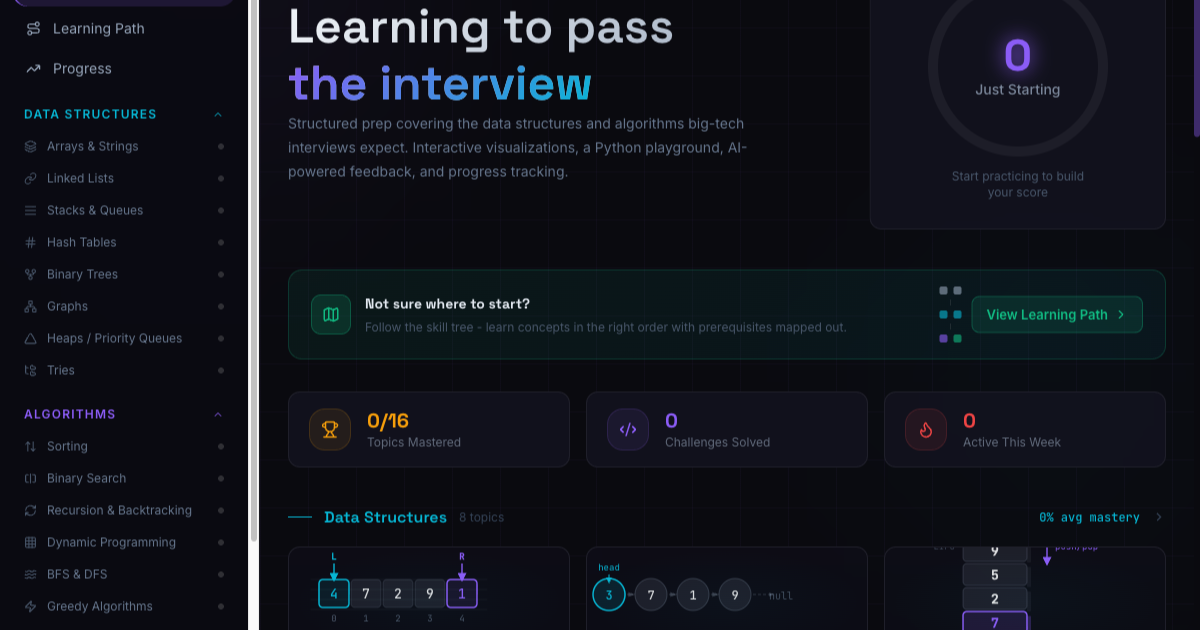
Learningto/Pass: Free, AI-Powered Interview Prep for Developers
Landing a role at a top-tier tech company often hinges on mastering complex data structures and algorithms, coupled with a solid grasp of system design. The problem for many aspiring software developers is that quality

How to Choose Your Next AirPods - Comparing 5, 4, and Pro 3
Navigating Apple's AirPods lineup can be tricky. With the new AirPods 5 potentially offering a better, cheaper option than the AirPods 4, and the AirPods Pro 3 still a premium contender, how do you decide which is right