
Amazon's Kuiper Launch Strategy: European Rockets Deliver, US Stumbles
Verdict: A Bottleneck Beyond Amazon's Control Amazon's ambitious Project Kuiper, its low-Earth orbit (LEO) Internet constellation, faces a critical junction. While the company's satellite manufacturing efforts are
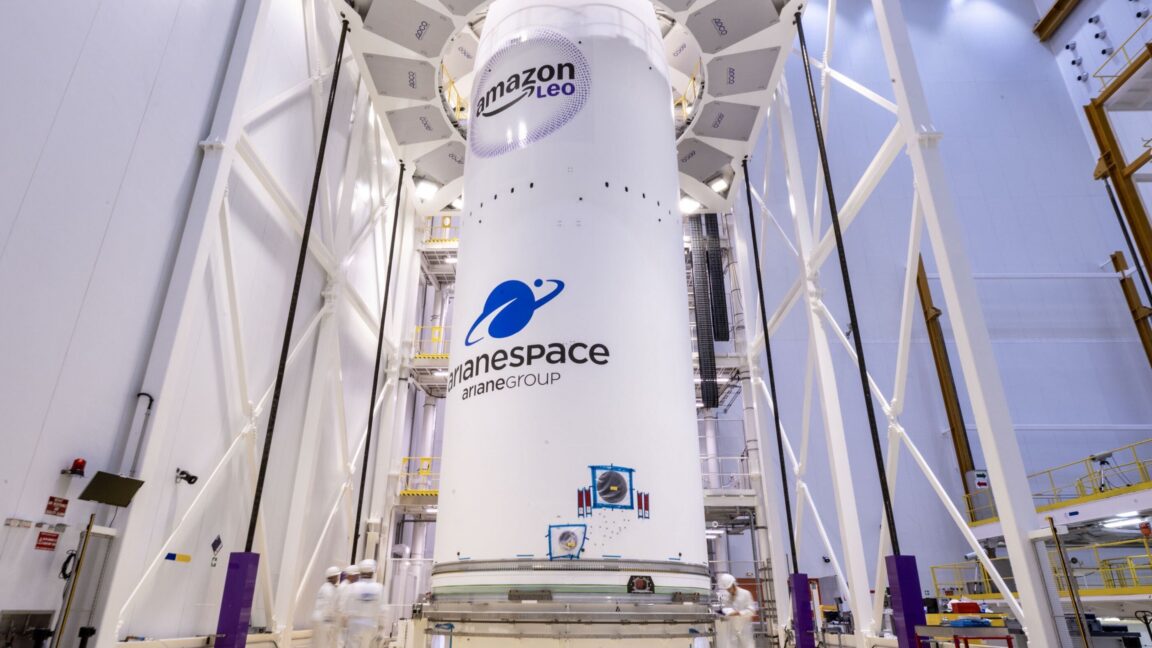
Verdict: A Bottleneck Beyond Amazon's Control
Amazon's ambitious Project Kuiper, its low-Earth orbit (LEO) Internet constellation, faces a critical junction. While the company's satellite manufacturing efforts are commendably on schedule, churning out "several satellites a day," its launch partners have largely failed to keep pace. Hundreds of flight-ready Kuiper satellites are currently sitting idle in Florida, awaiting their journey to orbit. Of the three major new rocket systems Amazon contracted years ago, only Europe's Ariane 6 has consistently delivered, becoming an unexpectedly crucial partner. Domestic launch vehicle delays and a significant accident for Blue Origin's New Glenn have left Amazon's deployment schedule considerably behind its mid-2020s aspirations, with only about 10% of its planned 3,236-satellite constellation deployed to date. Amazon maintains it's still on track for commercial service this year, but the path to full constellation deployment looks increasingly challenging.
Unpacking Amazon's LEO Strategy: The Launch Conundrum
Amazon's vision for Project Kuiper involves a massive constellation of 3,236 satellites, designed to bring broadband internet access to underserved areas globally. To achieve this, the company adopted a diversified launch strategy, signing blockbuster deals four years ago with three providers for their next-generation heavy-lift rockets:
- Arianespace (Europe): 18 launches using the Ariane 6 rocket.
- Blue Origin (USA): 12 launches of the New Glenn rocket, with options for 15 additional missions.
- United Launch Alliance (USA): 38 launches utilizing the Vulcan rocket.
Historically, Amazon has relied on ULA's Atlas V rockets for its initial deployments, launching 331 satellites on this workhorse. However, the Atlas V is nearing retirement, with only one more Amazon mission remaining, necessitating a smooth transition to the new vehicles.
Amazon's satellite production facility has proven highly efficient, with an Amazon official stating, "We’re currently manufacturing several satellites a day." This internal capability is a significant strength, ensuring a steady supply of payloads. The challenge, however, lies in getting these "hundreds" of satellites from the factory floor to orbit.
Performance & Delivery: A Mixed Bag
The performance of Amazon's chosen launch partners has been starkly uneven, directly impacting Project Kuiper's deployment:
The European Success Story: Arianespace's Ariane 6
Arianespace has emerged as the standout performer for Amazon. The Ariane 6 rocket has already completed two launches this year, with a third scheduled imminently, each carrying three dozen Amazon Leo satellites. Amazon's Vice President of Leo Production Operations, Steve Metayer, praised Arianespace, stating, "They’re very reliable on their manifest dates, and they’re very reliable and safe on their insertions into orbit." He added that Amazon looks forward to the remaining 16 launches under the existing contract and sees Arianespace as a long-term player.
This reliability stands in stark contrast to Amazon's domestic partners.
Domestic Struggles: New Glenn and Vulcan Delays
Neither Blue Origin's New Glenn nor ULA's Vulcan has yet launched any Amazon Kuiper satellites. This has created a significant bottleneck, preventing Amazon from achieving its planned "high flight cadence by the mid-2020s."
Blue Origin's New Glenn: The development of Jeff Bezos's New Glenn rocket has suffered a major setback. A catastrophic explosion during a test firing in late May not only destroyed the rocket but also severely damaged its sole launch pad at Launch Complex 36A in Florida. Industry observers estimate a lengthy recovery period of 12 to 18 months to restore the pad. Complicating matters further, multiple sources point to an issue with the BE-4 rocket engine, which powers New Glenn's first stage, as the culprit. While Amazon acknowledges New Glenn accounts for less than a quarter of its booked launches, New Glenn is designed to carry a larger payload (at least 50 satellites per flight, compared to Ariane's 36), making its absence acutely felt.
United Launch Alliance's Vulcan: The Vulcan rocket, also powered by the BE-4 engine, faces challenges stemming from the same engine issues suspected in the New Glenn failure. This complicates Vulcan's path to return to flight and efforts to address related strap-on booster problems. Despite these hurdles, Amazon's Metayer indicated that the first Vulcan launch carrying Kuiper satellites could still occur in the "late" third quarter of this year, though this remains to be seen given the engine-related complexities.
Launch Partner Performance Comparison
Here's a snapshot of how Amazon's contracted large new rocket partners are performing in delivering Kuiper satellites:
| Launch Provider | Rocket | Status (for Amazon Kuiper) | Key Challenges/Notes |
|---|---|---|---|
| Arianespace | Ariane 6 | Delivering. 2 launches completed this year, 1 more imminent. Met Amazon's manifest dates, reliable insertions. Long-term partner. | None apparent for Amazon. |
| ULA | Vulcan | Delayed. Has not launched Amazon satellites yet. Aiming for "late" Q3 this year. | Relies on BE-4 engine, which is suspected in New Glenn failure. This complicates return to flight and booster issues. |
| Blue Origin | New Glenn | Delayed / Catastrophic Failure. Has not launched Amazon satellites yet. Experienced explosion during test firing. | Rocket destroyed, sole launch pad severely damaged (12-18 month restoration). BE-4 engine suspected as culprit. Significant impact on launch cadence despite lower overall launch count compared to Vulcan. |
| ULA (legacy) | Atlas V | Nearing Retirement. Launched 331 satellites to date. Only one more mission booked for Amazon. | Reliable service historically, but no longer a long-term solution. |
Buying Recommendation: Awaiting Lift-Off
For Amazon, the strategic decision to diversify its launch portfolio has proven prescient. While the delays with its domestic partners, particularly the New Glenn accident, are significant setbacks, the consistent performance of Arianespace's Ariane 6 has prevented a complete stall in deployment. The current situation highlights the inherent risks and complexities in developing next-generation heavy-lift rockets and the critical importance of a robust supply chain for mega-constellation deployments.
Potential Project Kuiper customers should be aware that while Amazon states commercial service is on track for later this year, the pace of full constellation deployment will largely depend on its US partners overcoming their engineering and infrastructure challenges. The "hundreds" of satellites awaiting launch are a testament to Amazon's internal capabilities, but they also serve as a stark visual of the current bottleneck. For now, Amazon's intentional diversification is its strongest asset, allowing it to lean on its European partner while it awaits its US counterparts to get their rockets flying reliably.
FAQ
Q: How many satellites does Amazon still need to launch for Project Kuiper? A: Amazon plans for a total of 3,236 satellites. With 331 deployed so far, it still needs to launch approximately 2,905 satellites. The company has "hundreds" of built satellites currently waiting for launch.
Q: What is the biggest challenge Amazon faces in deploying Project Kuiper? A: The biggest challenge is the significant launch bottleneck. While Amazon is successfully manufacturing "several satellites a day," its key US launch partners, Blue Origin and ULA, have not yet delivered Kuiper satellites and are facing significant delays and technical issues, including a catastrophic explosion for New Glenn and suspected engine problems affecting both New Glenn and Vulcan.
Q: Will the launch delays impact when Amazon's Kuiper service becomes available? A: Amazon has stated it remains "on track" to begin rolling out commercial service with the Amazon Leo constellation later this year. However, the full scaling and widespread availability of the service will undoubtedly be influenced by the pace at which its launch partners can overcome their current challenges and achieve a high flight cadence.
Related articles

CNET's NYT Connections: Sports Edition Hints & Answers (Sept. 18)
CNET's NYT Connections: Sports Edition Hints & Answers (Sept. 18) Review: A Clear Victory Quick Verdict: CNET's daily guide for the NYT Connections: Sports Edition puzzle offers a clear, well-structured, and invaluable
Community Fibre 8.5Gbps: UK's Fastest, But Pricey Fibre
Quick Verdict Community Fibre has just launched the UK's fastest residential internet connection, boasting an incredible 8.5Gbps (8,200Mbps) symmetrical full fibre service. It's a technical marvel, delivering speeds

How to Choose the Best Smart Speaker in 2026 - Find Your Perfect Match
This guide helps you choose the best smart speaker in 2026 by evaluating your ecosystem, prioritizing features, and reviewing top Amazon, Google, Apple, and portable options. Learn to pick a device that integrates seamlessly and enhances your smart home.

Endless Legend 2 Dev: Early Access Has Changed, Players Are
Endless Legend 2 is launching 1.0 on Steam this September 17, but its Early Access journey highlights a huge shift in player expectations. Amplitude's CEO notes players are now 'unforgiving' of unfinished games, making true experimentation difficult for developers.
Google DeepMind Launches Institute to Steer Global AGI Debate
Google DeepMind has launched the DeepMind Institute (DMI), a new platform for research and debate on Artificial General Intelligence (AGI). Led by Shane Legg and Demis Hassabis, DMI aims to ensure safe AGI development, addressing risks like cybersecurity and economic disruption. It will host diverse perspectives on AGI's future.

Anthropic Claude Merger: Unified AI for Enhanced Productivity
Anthropic Claude Merger: The Verdict Anthropic is making a bold move, consolidating its previously distinct AI tools — Claude chat and Claude Cowork — into a single, more intuitive “all-powerful Claude.” This strategic