
Xiaomi CEO Admits SUV Price Flaw, Unveils Cheaper Tesla Rival
Xiaomi’s CEO admitted his SUV wasn’t cheap enough to beat Tesla. Then he launched one that is. In an unusual display of candor for a tech titan, Xiaomi founder and CEO Lei Jun publicly acknowledged on Wednesday that his
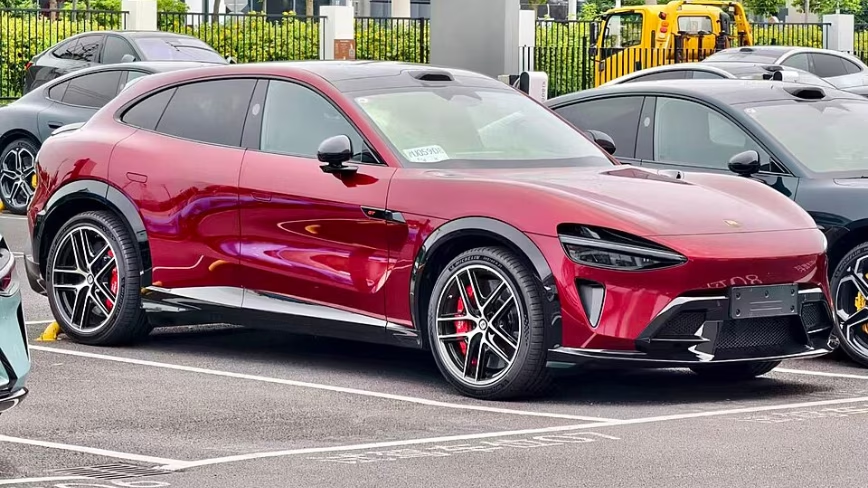
Xiaomi’s CEO admitted his SUV wasn’t cheap enough to beat Tesla. Then he launched one that is.
In an unusual display of candor for a tech titan, Xiaomi founder and CEO Lei Jun publicly acknowledged on Wednesday that his company's electric SUV, the YU7, was not priced aggressively enough to genuinely compete with Tesla. Following this admission, Lei unveiled the YU7 True Standard Edition, a new entry-level variant dramatically undercutting the Tesla Model Y in China while offering superior range and features. This strategic move aims to re-energize demand for Xiaomi's electric vehicles amidst a challenging market.
Undercutting the Competition: Price, Range, and Features
The new YU7 True Standard Edition is priced at 233,500 yuan, approximately $34,300, making it 30,000 yuan ($4,350) cheaper than China's entry-level Tesla Model Y, which starts at 263,500 yuan. This pricing directly addresses Lei Jun's previous concern, as the YU7's earlier base model (now the Long Range edition) was only $1,450 below Tesla, a gap Lei deemed insufficient to attract buyers.
Beyond just price, Xiaomi's new SUV boasts a certified CLTC range of 643 kilometers (around 399 miles), significantly outperforming the equivalent rear-wheel-drive Model Y's 593 kilometers (368 miles). Crucially, the YU7 Standard Edition includes advanced features like air suspension and LiDAR as standard, functionalities that Tesla does not offer on the Model Y at any price point. The cost reduction was achieved through technical adjustments, including a smaller 73 kWh lithium iron phosphate battery from CATL and a lighter kerb weight of 2,200 kg, without compromising the SUV's five-meter exterior dimensions.
Strategic Shift Amidst Sales Dip
This aggressive pricing strategy comes as Xiaomi's YU7 sales trajectory showed signs of slowing. Initially launched in June 2025, the YU7 garnered over 200,000 firm orders within minutes, creating a substantial waiting list. By April 2026, Xiaomi had delivered 232,000 YU7 units, but monthly sales had declined sharply, dropping to 9,876 units in April from a peak of 37,869 in January. This new, more competitive price point is a clear effort to reignite consumer interest and maintain sales momentum.
Xiaomi's electric vehicle division has been a rapid success story, shipping over 600,000 EVs in less than two years and turning profitable in November 2025 – a faster path to profitability than Tesla. The company delivered 410,000 vehicles in 2025 and is targeting 550,000 in 2026. The automotive business is rapidly evolving from a side project into a core growth engine for the smartphone giant. Alongside the Standard Edition, Xiaomi also introduced the YU7 GT, a 990-horsepower performance variant, establishing a halo product to elevate the brand's perception.
The Intensifying Battle: Tesla's Challenges in China
Tesla's dominant position in China faces mounting pressure from domestic competitors like Xiaomi and BYD. BYD surpassed Tesla as the world's largest EV seller in 2025, delivering 2.26 million battery electric vehicles. While the Model Y remains China's top-selling EV, its pricing power is visibly eroding as rivals match or exceed its specifications at lower costs. Tesla's Q1 2026 deliveries fell short of Wall Street expectations, with the company producing 50,000 more vehicles than it sold, suggesting a growing demand ceiling.
Global Implications and a Shifting Benchmark
The competitive landscape in China, where over 200 battery-powered models are priced below $25,000, illustrates a fundamental shift in the global EV market. While Chinese EVs are making inroads in markets like Canada due to favorable trade deals, the U.S. has moved to block Chinese connected vehicles entirely. Despite Xiaomi's CEO stating no current plans for the U.S. market, the YU7's compelling value proposition — offering more range and features for significantly less money than a Model Y — underscores the competitive reality that international lawmakers are attempting to contain. Lei Jun's candid admission and subsequent launch highlight a new benchmark in the EV sector, where a $34,300 SUV with extensive range, air suspension, and LiDAR is considered an entry-level option, reshaping expectations for consumers worldwide.
FAQ
Q: What is the new Xiaomi YU7 Standard Edition's primary advantage over the Tesla Model Y?
A: The YU7 True Standard Edition is significantly cheaper at approximately $34,300 (compared to $38,650 for the cheapest Model Y in China), offers greater range (643 km vs. 593 km CLTC), and includes premium features like air suspension and LiDAR as standard, which the Model Y does not.
Q: Why did Xiaomi introduce this new, cheaper variant of the YU7 SUV?
A: Xiaomi's CEO, Lei Jun, admitted that the previous YU7 model wasn't competitively priced enough against Tesla, leading to a sharp drop in monthly sales after an initial strong launch. The new variant is a strategic move to reignite demand and maintain Xiaomi's aggressive growth in the EV market.
Q: What does this launch signify for the broader EV market, especially in China?
A: This launch intensifies the EV price war in China and signals a shifting competitive benchmark. It demonstrates that Chinese manufacturers are not only competing on price but also offering superior features and range, further challenging established players like Tesla and creating a market where high value is expected even at entry-level price points.
Related articles

Apple Unveils iPhone Duo: Pricey Foldable Sees Soaring Demand
Apple has officially entered the foldable smartphone arena with the long-anticipated launch of the iPhone Duo. Priced starting at a hefty $1,999, the device features a 5.4-inch outer display and a larger 7.6-inch inner

in-depth: Chicago-Area Cops Helped HSI Spy on Minnesota Anti-ICE
Chicago-area law enforcement, including local police and HSI agents, conducted undercover surveillance on Minnesota anti-ICE activists at an April 2, 2022, talk in Chicago. This operation was part of a federal conspiracy probe into 15 Minnesota activists facing felony charges related to immigration enforcement resistance. Civil liberties advocates have condemned the surveillance as a troubling intrusion into protected political activity.

Mark Wahlberg on using AI in film ‘the right way’ and being open to
Actor Mark Wahlberg believes AI has a place in filmmaking if used responsibly for enhancement, not script generation or actor replacement. At TechCrunch Disrupt, he expressed openness to an AI likeness carrying on his legacy, managed by his family, and emphasized storytelling.
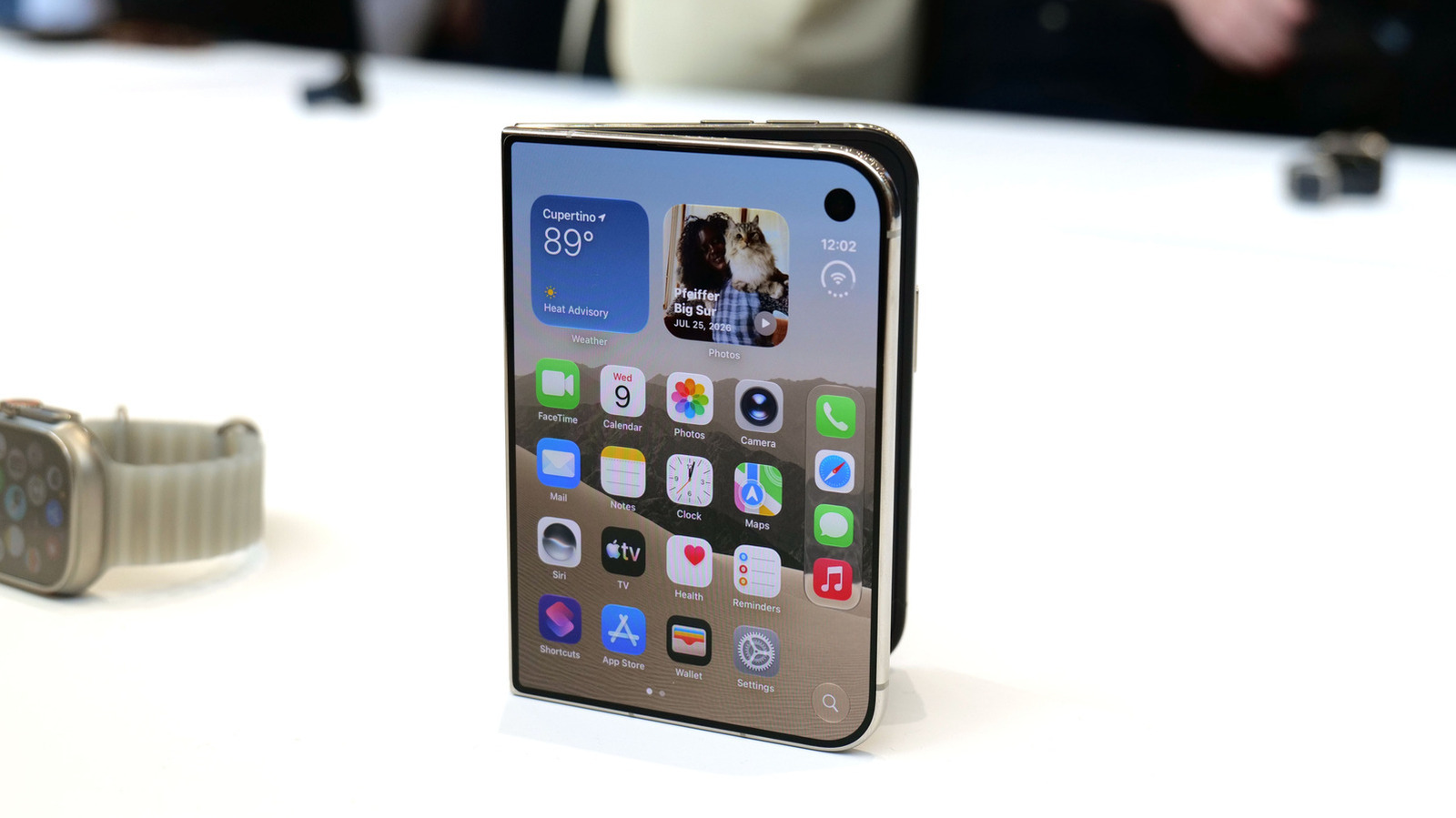
Apple iPhone Duo: A Daring Debut with Notable Compromises
Apple's highly anticipated iPhone Duo, priced at $2,000, has gone on pre-order. While hailed as "Apple's most exciting device in a decade" for its innovative foldable design and immersive display, it comes with significant drawbacks like the absence of FaceID and a premium camera.

Tesla Unveils Thruster-Equipped Roadster, 2028 Production Targeted
Tesla has unveiled its second-generation Roadster, featuring cold-gas thrusters co-developed with SpaceX, enabling it to jump and flip. The electric sports car demonstrated 0-60mph in an astonishing 0.81 seconds, with production targeted for 2028. This highly anticipated reveal also serves as a key recruitment tool for Tesla's ambitious AI and robotics initiatives.

AI's Confidence vs. Formal Methods' Rigor: Design Flaws & Verification
While AI accelerates code generation, formal methods remain critical for ensuring system correctness. Languages like TLA+ and tools like Quint enable developers to model and verify system designs before coding, catching subtle flaws. Quint makes formal methods more accessible with developer-friendly syntax and executability. This approach is vital for verifying AI-generated code through trace validation and model-based testing, ensuring reliability against real-world data.