
Xbox's Shifting Exclusive Strategy: A Jigsaw Puzzle or Clear Path
Xbox Chief Strategy Officer Matthew Ball clarifies the company's evolving exclusive strategy, emphasizing a "reliable pipeline of exclusive games" for platform growth, citing *Gears of War: E-Day* and *Clockwork Revolution* as examples. However, he notes that large live-service and some single-player titles like *Halo: Campaign Evolved* and *Fable* will go multiplatform. Xbox acknowledges player confusion about its "framework" for these decisions, promising more clarity.

Xbox's Shifting Exclusive Strategy: A Jigsaw Puzzle or Clear Path?
Alright, gamers, let's talk about exclusives. It's a word that’s been tossed around more than a hot potato in recent Xbox discussions, often leaving more questions than answers. After a tumultuous period marked by unfortunate layoffs, studio closures, and even a bump in hardware prices, Xbox is attempting to recalibrate its message and strategy. The big question on everyone’s mind has been: what exactly makes a game an Xbox exclusive in this new era?
Well, we finally have some insights straight from the horse's mouth, or rather, from Xbox Chief Strategy Officer Matthew Ball, who recently shed some light on the company's evolving approach. It's clear that while Xbox needs its marquee titles to stay put, it's also not entirely abandoning the idea of reaching broader audiences. This isn’t a simple, black-and-white situation, and frankly, it feels a bit like Xbox is still figuring out the exact shade of grey.
The Return of the Locked Box (For Growth, At Least)
Let’s cut to the chase: Xbox is bringing exclusives back to the forefront. Matthew Ball explicitly stated, "To return our platform to consistent growth, we need a reliable pipeline of exclusive games." This statement underscores a shift in philosophy, moving away from the 'everything everywhere' approach that sometimes diluted the appeal of owning an Xbox console. The strategy now seems to be about reinforcing the value proposition of the Xbox ecosystem, both its hardware and Game Pass service.
And we already have concrete examples of this renewed commitment. Games like the highly anticipated Gears of War: E-Day and the intriguing time-bending RPG Clockwork Revolution are confirmed to be console exclusives for Xbox Series X|S (alongside PC, naturally). Ball emphasized that these aren't just one-off experiments; they're "just the first" in what he promises will be a steady stream of console-exclusive titles. This is a clear signal to players and competitors alike that Xbox isn't giving up on the traditional console war entirely, even as it expands its reach elsewhere.
Not Everything Stays Exclusive: A Multiplatform Twist
Now, here’s where things get a bit more nuanced. While Gears: E-Day and Clockwork Revolution are staying within the Xbox/PC family, Ball also clarified that not every first-party title will be locked down. Specifically, "large live-service titles" will continue to be multiplatform, aiming for the widest possible audience. This makes sense for games designed to have massive player bases and sustained engagement, where platform exclusivity could limit growth.
Perhaps more surprisingly, Ball noted that some single-player games could also make their way to other hardware, like the PS5. We’ve already seen this in action with Halo: Campaign Evolved and Fable, both confirmed to be launching day-and-date on PlayStation alongside Xbox and PC. Damon Conn, executive producer for Halo: Campaign Evolved, explained that for Halo's 25th anniversary, a multiplatform launch was the right move to allow friends to enjoy shared experiences regardless of their chosen system. This suggests a strategic flexibility, picking and choosing battles based on a game's nature and potential impact.
The Mysterious "Framework" and Its Clarity Challenge
So, how does Xbox decide what stays exclusive and what goes multiplatform? According to Ball, there's a "framework" in place, guiding these decisions on a case-by-case basis. However, he was also candid enough to admit, "I recognize that this approach is not obvious to all of our players, and we are committed to making this clearer." And honestly, 'not obvious' might be an understatement for many gamers scratching their heads over recent announcements.
This "framework" sounds like a complex algorithm of market analysis, genre considerations, development costs, and strategic platform growth objectives. While the commitment to clarity is welcome, the lack of transparency around this framework is undoubtedly a source of continued speculation and, for some, frustration. Gamers crave consistency, and a seemingly arbitrary case-by-case approach can feel unsettling, especially when core franchises like Halo are crossing over.
Analyst Skepticism and the Road Ahead
The gaming community, and indeed the industry, has been watching Xbox’s every move closely. Following the flurry of negative news earlier in the year, some analysts are viewing this renewed push for exclusives with a degree of skepticism. One analyst, as reported in the source, suggested that Gears of War: E-Day and Clockwork Revolution might be "sacrificial lambs" – titles used to signal a commitment to exclusives, even if their individual commercial performance isn't the primary goal. The idea here is that Xbox is working hard to win back "hearts and minds" after a challenging period.
This perspective highlights the intense scrutiny Xbox is currently under. They're trying to achieve "consistent growth" and entertain "a billion people every day" (a truly ambitious goal), but they're doing so while navigating player sentiment that's been bruised by recent corporate decisions. It’s a delicate balancing act, trying to please both the hardcore Xbox loyalists who demand exclusives and the wider audience they aim to capture with their multiplatform strategy.
The Verdict: A Hybrid Path, Still Evolving
Xbox's exclusive strategy is clearly in a state of evolution. It's a hybrid approach: reinforcing the platform with dedicated exclusives like Gears: E-Day and Clockwork Revolution, while simultaneously embracing multiplatform releases for games that benefit from a wider reach, such as live-service titles and even some established single-player franchises like Halo and Fable. The stated goal is growth, and the method is a strategic mix of exclusivity and accessibility.
While the commitment to a "reliable pipeline of exclusive games" is a positive sign for Xbox console owners, the nebulous nature of the "framework" for decision-making leaves room for further questions. Xbox has promised to make this clearer, and gamers will be watching to see how that clarity manifests. For now, it seems Xbox is saying: 'Yes, we have exclusives, and no, not everything is an exclusive, and we’ll tell you why… eventually.' It's a move to solidify their identity while still being flexible in a rapidly changing industry, but the path to regaining full player confidence is still being paved.
FAQ
Q: Are all new first-party Xbox games going to be exclusive to Xbox Series X|S and PC?
A: Not all, but many will be. Xbox Chief Strategy Officer Matthew Ball stated that titles like Gears of War: E-Day and Clockwork Revolution are confirmed console exclusives, and more are planned. However, large live-service games and some single-player titles, such as Halo: Campaign Evolved and Fable, will launch on multiple platforms, including PS5.
Q: Why are some major Xbox titles like Fable going multiplatform?
A: Xbox's strategy allows for case-by-case decisions. For games like Halo: Campaign Evolved, the executive producer noted that a multiplatform launch for its 25th anniversary would allow friends to enjoy shared experiences regardless of their console. This suggests a desire to reach a wider audience for certain titles while still driving growth for the Xbox platform with other exclusives.
Q: What is Xbox's ultimate goal with this mixed exclusive strategy?
A: Xbox aims to return its platform to "consistent growth" and eventually "entertain a billion people every day." By having a "reliable pipeline of exclusive games," they hope to reinforce the value of the Xbox ecosystem. Simultaneously, making certain titles multiplatform allows them to reach a broader player base, especially for games that thrive on large communities, balancing platform loyalty with wider market penetration.
Related articles
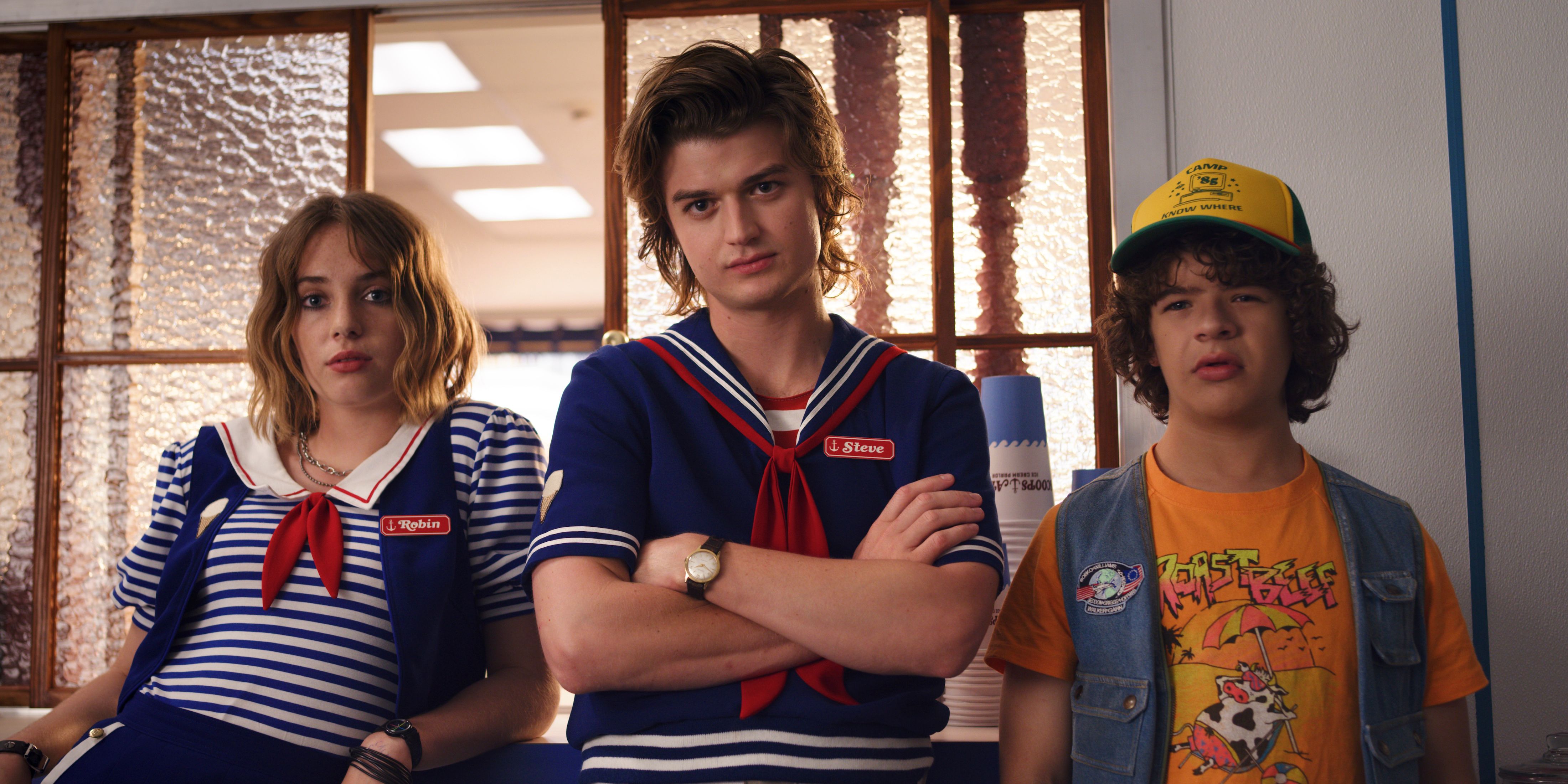
The Party's Back! Tales from '85 Unleashes Season 2 on Netflix
Stranger Things: Tales from '85, the animated spin-off, returns to Netflix on September 17th with 10 new episodes. Set between seasons 2 and 3 of the original live-action series, Season 2 sees The Party facing ghostly apparitions and strange creatures around Valentine's Day. While it received mixed reactions initially, it retains the 80s vibe and core characters.

Blood of The Dawnwalker’s True Foes Lurk in the Wilds
_Blood of The Dawnwalker_ from Rebel Wolves is an RPG that unexpectedly challenges players with fierce wildlife, drawing comparisons to _Dragon Age: Inquisition_'s early zones. Its unique directional combat system, while engaging, can lead to players being overwhelmed by animal ambushes. Despite the high difficulty, these encounters add a fun, dynamic layer to the game.

Unions Level Up: How Collective Power is Reshaping Game Dev
The gaming industry is seeing a massive shift as unionization rises globally, securing vital worker protections, better pay, and AI safeguards. This collective movement is empowering developers and fundamentally changing workplace dynamics. It's a win for workers, and ultimately, for the games we play.

Apple AirPods 5 Now Available for Preorder
Apple's AirPods 5 are now available for preorder, with an official launch date of September 18th. The new standard $129 model features active noise cancellation, a premium feature previously exclusive to higher-end AirPods. An upgraded $149 model offers wireless charging, longer battery life, and touch controls.

CNET's NYT Connections: Sports Edition Hints & Answers - Daily Puzzle
CNET's daily guide for NYT Connections: Sports Edition offers clear, spoiler-protected hints and answers, making it an efficient and reliable resource for sports puzzle enthusiasts.
No More Robots Sails into New Territory with Cruise Control
After nine years of publishing success, indie studio No More Robots is launching its first self-developed IP, `Cruise Control`, a puzzle game born from a pivot away from a shelved online shooter. Founder Mike Rose reflects on the company's unconventional, lean approach, the accidental success of `Descenders`, and the massive potential of upcoming title `Another Door`, while also considering his own future in the demanding industry.