
Ukraine's MUL.E: A Stealthy, Versatile Battlefield Asset
Ukraine's MUL.E electric motorcycle redefines frontline mobility and support. Cleared for service, it offers stealthy transport, minefield navigation, and acts as a mobile power station for critical equipment like drones. Our review dives into its innovative design and strategic advantages.
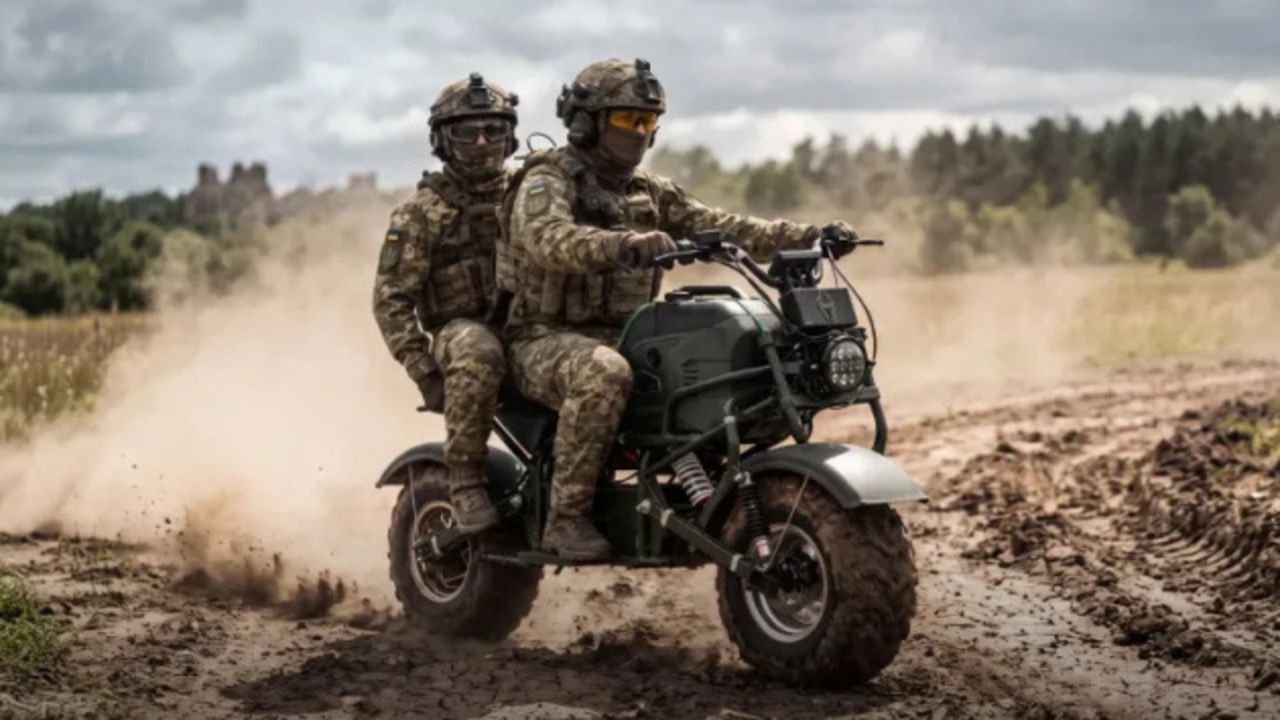
Ukraine's MUL.E electric motorcycle isn't just a mode of transport; it's a critical piece of frontline infrastructure, recently codified by the nation's Defense Ministry. Combining stealthy, all-terrain mobility with the invaluable capability to power drones and communications equipment, and uniquely, to navigate anti-vehicle minefields, the MUL.E represents a highly adaptive and essential asset for modern combat zones. Its blend of innovative design and practical utility makes it a standout development in military technology.
Design & Core Capabilities
The MUL.E is built for resilience and versatility. As Ukraine's first all-wheel-drive electric military motorcycle, its 2x2 layout with two independent electric motors ensures continued movement even if one fails – a critical advantage in combat. It accommodates two soldiers, transports wounded personnel, hauls small cargo, and can tow a loaded trailer across challenging terrains where larger vehicles struggle. Its minimal noise, owing to the electric powertrain, enhances stealth for clandestine operations, allowing for quick deployment and extended autonomous periods.
The Minefield Advantage
One of the MUL.E's most groundbreaking features is its ability to traverse anti-vehicle minefields with significantly reduced risk. By incorporating wide off-road tires and a low ground pressure profile, its weight distribution mimics an infantry soldier's foot. This clever engineering reduces the likelihood of activating mines intended for heavier equipment, offering a potentially life-saving pathway through otherwise impassable hazardous areas. This capability also ensures reliable movement across diverse treacherous landscapes like sand, marshland, deep snow, and washed-out ground.
Mobile Power Hub
Addressing critical power needs on the front lines, the MUL.E integrates a smart solution: an onboard detachable petrol generator. This generator serves a dual purpose: extending the motorcycle's own battery life for its reported 100 km range, and, crucially, acting as an independent portable energy source. Soldiers can utilize it to recharge essential electronics such as FPV drone batteries, radios, mobile phones, and communications systems, transforming the MUL.E from mere transport into a vital piece of mobile infrastructure supporting sustained unit operations.
Performance & Operational Reliability
Having undergone rigorous testing, the MUL.E achieved its expected performance, earning its clearance for military service. Its estimated 100 km range on a full battery charge, combined with minimal noise and quick deployment, positions it well for stealthy reconnaissance and support. The redundant 2x2 independent electric motors enhance its battlefield reliability, crucial for maintaining mobility even when partially compromised. This focus on practical, sustained operation underscores its value.
MUL.E vs. WOLFSTORM: A Tactical Comparison
The MUL.E isn't Ukraine's only electric military motorcycle, with the WOLFSTORM approved earlier. While both are electric, their tactical applications differ.
| Feature | MUL.E | WOLFSTORM |
|---|---|---|
| Primary Focus | Minefield traversal, mobile power, all-terrain transport | Speed, thermal/acoustic stealth, rapid transport |
| Key Differentiator | Minefield crossing, detachable generator | Reduced thermal/acoustic signature, 80 km/h speed |
| Capacity | Two soldiers, wounded, cargo, towing | Two fully equipped soldiers |
| Power Source | Electric + detachable petrol generator | Electric |
The WOLFSTORM prioritizes speed and classic stealth for rapid deployment, whereas the MUL.E offers sustained support through power generation and unprecedented minefield navigation. This suggests a complementary fleet strategy, with each vehicle filling a distinct operational niche.
Strategic Procurement & Future Impact
The MUL.E's approval is part of Ukraine's ambitious plan to procure 1,500 military motorcycles by 2026, highlighting the strategic importance of these agile platforms. Cost-efficiency has already been demonstrated through competitive bidding, saving approximately $290,000. Military officials acknowledge that "lasting battlefield success will likely depend upon operational performance rather than technical specifications alone," emphasizing real-world effectiveness. The MUL.E is poised to significantly enhance mobile logistics and unit independence in conflict zones.
Final Verdict & Recommendation
The Ukrainian MUL.E electric motorcycle stands out as a triumph of tactical innovation. Its unique blend of quiet, all-terrain mobility, an unparalleled ability to traverse anti-vehicle minefields, and its dual function as a mobile power station for critical electronics, makes it an indispensable asset. For modern military forces seeking to bolster tactical flexibility, reduce logistical burdens, and empower frontline units with sustained operational capabilities, the MUL.E offers a compelling and highly recommended solution. It's a testament to purposeful engineering under extreme pressure, delivering a versatile tool perfectly suited for the urgent demands of today's battlefield.
FAQ
Q: What makes the MUL.E "stealthy"?
A: The MUL.E's electric powertrain results in minimal noise during operation, reducing its acoustic signature and making it harder for adversaries to detect, particularly during reconnaissance or infiltration missions.
Q: How does the MUL.E manage to cross minefields without detonating explosives?
A: It utilizes wide off-road tires and a low ground pressure design. This distributes the motorcycle's weight in a way that mimics an infantry soldier's foot, reducing the likelihood of triggering anti-vehicle mines that are typically designed for heavier military equipment.
Q: Can the MUL.E only power drones, or other equipment as well?
A: The MUL.E features an onboard detachable petrol generator that can recharge the motorcycle's battery or operate independently to supply electricity. This allows it to power a wide range of electronic devices, including FPV drone batteries, radios, mobile phones, and other crucial communications systems, making it a versatile mobile power station.
Related articles

iPhone 18 Pro Max: Major AT&T Cellular Flaw Forces Free Replacements
The iPhone 18 Pro Max on AT&T is suffering from a critical cellular service failure, rendering phones unable to call or text. Apple has released preventive software updates but will replace already affected devices for free, acknowledging a hardware-level problem.
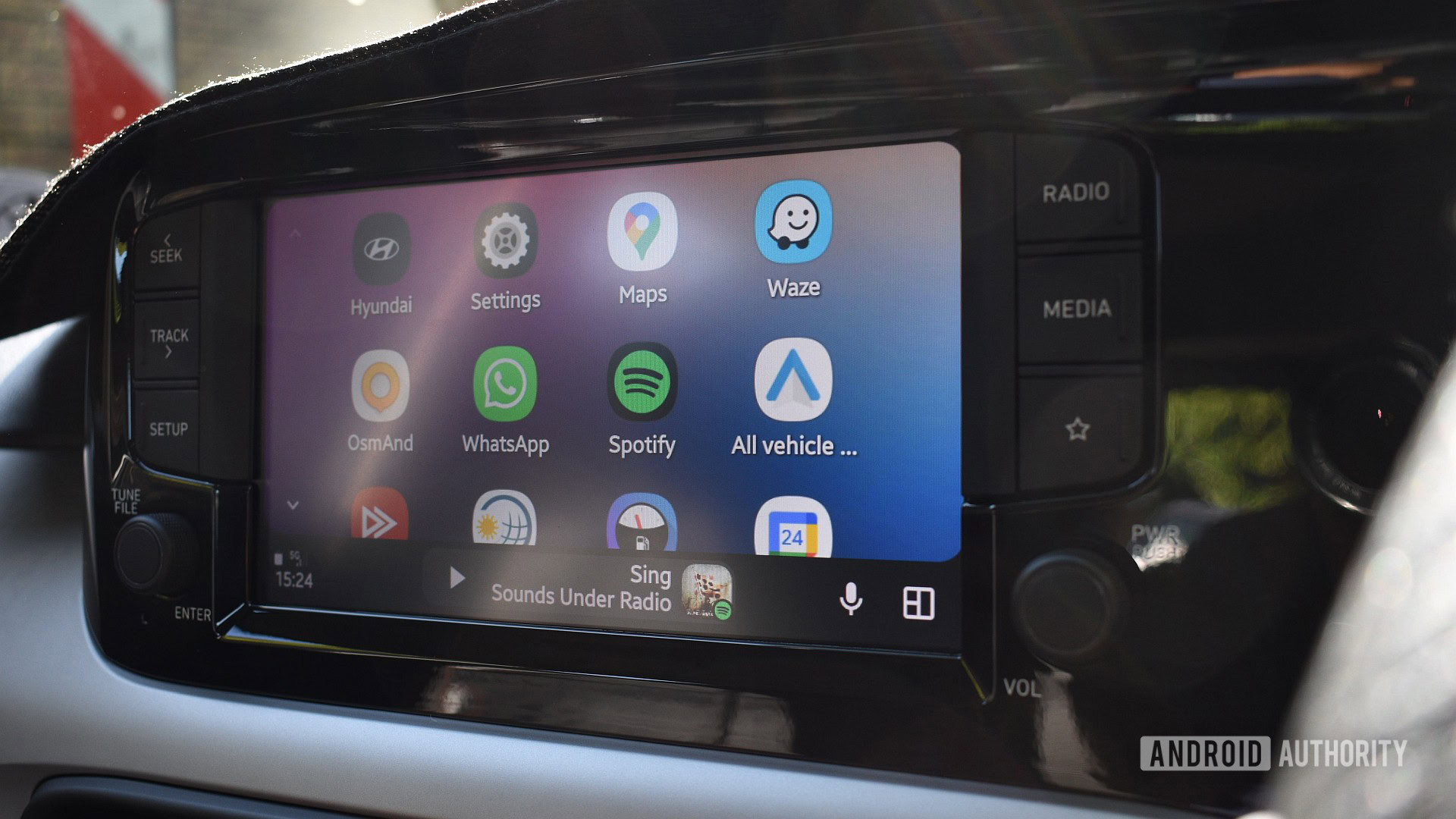
Android Auto Signal Bars: A Long-Awaited Return
Quick Verdict After months of user frustration, Android Auto’s cellular signal strength indicator is finally making its comeback to dashboards. This isn't a groundbreaking new feature, but rather the restoration of a

Kindle Colorsoft Bundle Review: A Colorful Steal for Avid Readers
Quick Verdict The Amazon Kindle Colorsoft Essentials Bundle, now available for an impressive $202 – a saving of $145 – presents a compelling opportunity for dedicated readers. While it's the previous generation ahead of

Lyft's Driver Settlement: A Win, But How Big
Quick Verdict: A Significant, Yet Incomplete, Victory Lyft has reached a landmark $272.5 million settlement in California, addressing allegations that it improperly classified its drivers as independent contractors

ChatGPT Scam: Malware Trap Identified - A Critical Warning
Quick Verdict In an increasingly sophisticated digital landscape, a new ChatGPT-themed scam has emerged, posing a significant threat to unsuspecting users. This elaborate trap, leveraging sponsored Google search

Google Wallet on Pixel: Tap-to-Pay Troubles Persist
Google Wallet's tap-to-pay feature is failing intermittently or completely on many Pixel phones, including Pixel 9 series and later, despite Wallet's expanded utility. Google has not acknowledged the bug, but user-reported fixes like restarting, clearing cache, or using a smartwatch offer temporary relief for this frustrating reliability issue.