
Trump Administration Moves to Curtail Public Input on Polluter Permits
The Trump Administration's Environmental Protection Agency (EPA) has put forth a significant rule change proposal that could drastically alter how the public engages with air pollution permitting processes. Announced on

The Trump Administration's Environmental Protection Agency (EPA) has put forth a significant rule change proposal that could drastically alter how the public engages with air pollution permitting processes. Announced on July 23, 2026, the proposed amendment would grant individual states the authority to determine the extent of public input allowed for new and existing air pollution permits. This move is seen by many as a potential boon for industries, particularly data centers, which are increasingly reliant on fossil fuels to meet their surging energy demands.
This shift in federal oversight, if implemented, represents a substantial decentralization of environmental regulatory power. By empowering states to set their own standards for public participation, the EPA's proposal risks creating a patchwork of regulations across the nation, potentially weakening community safeguards against industrial pollution. The implications are particularly acute for the burgeoning data center industry, which requires massive amounts of energy to power the computational infrastructure for artificial intelligence (AI) and other advanced technologies.
The timing of this proposal coincides with a stated objective from an EPA spokesperson: to position the United States as the “AI capital of the world.” This ambition, however, appears to be at odds with traditional environmental protection goals, as the rapid expansion of AI infrastructure necessitates a dramatic increase in energy consumption. Critics argue that easing public engagement rules would facilitate the expedited approval of new power sources, including those that burn fossil fuels, without adequate community scrutiny. This trade-off, some suggest, prioritizes technological growth and corporate interests over the environmental health of local populations.
Concerns about the environmental footprint of data centers are not new and are being voiced across the country. For instance, reports indicate that thousands of new fossil-fuel power sources are being activated in Texas to fuel the AI boom, often slipping through regulatory loopholes and leaving residents unprepared for the environmental consequences. Similarly, New York recently imposed a statewide moratorium on data center construction to address the “challenges created by these massive facilities,” acknowledging the need to pause and assess their impact.
Even tech giants like Microsoft have reported substantial increases in carbon emissions, with data centers cited as a primary driver of electricity use and pollution. These examples underscore a growing national movement, as seen in Michigan, where climate activists are advocating for data center moratoriums to curb their environmental impact. The proposed EPA rule change could exacerbate these existing tensions, making it harder for communities to voice concerns or challenge the construction of new polluting facilities in their neighborhoods.
The current rules provide a vital mechanism for residents to participate in decisions that directly affect their air quality and health. Reducing this public engagement could lead to what some perceive as overwhelming corruption, where environmental safeguards are disregarded for the sake of corporate expansion. One public comment on the matter voiced frustration that those “hired to protect the environment from ecological disaster are perfectly willing to throw all that away so that Amazon and Musk can have more gigs.”
As the demand for AI infrastructure continues its exponential growth, the debate surrounding energy sources and environmental regulations will only intensify. The Trump Administration's proposed rule change stands as a critical juncture, potentially redefining the balance between industrial expansion, technological advancement, and the public's right to influence environmental protection decisions. The future of clean air and community involvement in environmental permitting now rests, more than ever, on state-level actions and public advocacy.
FAQ
Q: What is the core change proposed by the EPA?
A: The EPA proposes to shift the authority for determining the level of public input on air pollution permits from the federal government to individual states, allowing states to decide how much engagement is required.
Q: Why are data centers specifically mentioned as potential beneficiaries of this rule change?
A: Data centers, particularly those supporting the AI boom, require immense amounts of energy, often supplied by fossil fuels. By potentially reducing public engagement in permit approvals, the rule change could simplify and accelerate the establishment of new power sources for these energy-intensive facilities without significant local opposition.
Q: What broader environmental concerns are linked to this proposal and data centers?
A: This proposal is connected to growing concerns about the environmental impact of data centers, including increased fossil fuel reliance, rising carbon emissions, and localized pollution. Several communities and states are already grappling with these issues, with some even implementing moratoriums on data center construction due to their massive energy footprint.
Related articles

Crystal Lake Series on Peacock: A Deep Dive into Horror's Past
Crystal Lake Series Review: A Deep Dive into Horror's Past Verdict: Is Crystal Lake Worth the Dive? The long-awaited Friday the 13th prequel, Crystal Lake, is finally arriving on Peacock, promising a fresh, in-depth
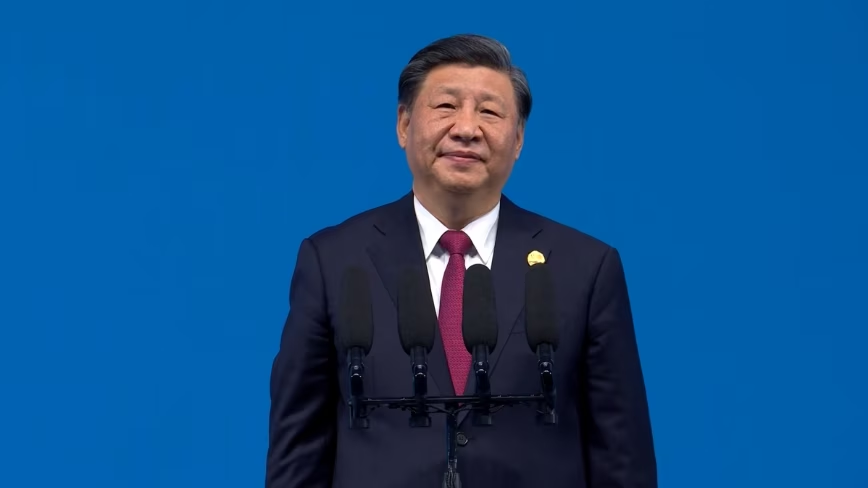
Xi pitches open-source AI to BRICS amid domestic curb debates
Chinese President Xi Jinping proposed a China-led open-source AI community and invited BRICS nations to join the World AI Cooperation Organization (WAICO) at the recent BRICS summit. This push for global collaboration contrasts sharply with Beijing's ongoing internal debates about restricting its own advanced AI models. Meanwhile, the EU's comprehensive AI Act, with its clear, enforceable rules for open-source AI, highlights a significant divergence in global AI governance approaches.

StarCraft Returns in 2030 as Open-World Shooter
Blizzard Entertainment announced a new StarCraft game, an open-world shooter, set to release in 2030. Unveiled at BlizzCon by VP Dan Hay, this marks the series' return after over a decade and a significant genre shift from its real-time strategy roots. The cinematic trailer showcased a gritty human-Zerg conflict, with many fans hoping for a traditional RTS follow-up.

Tesla Set to Finally Unveil Second-Generation Roadster on October 1
The much-anticipated second generation of the Tesla Roadster, a halo vehicle promising revolutionary performance, is finally slated for a public unveiling on October 1. After years of delays and a protracted development

Seattle Warned on Big Tech Reliance; Microsoft/OpenAI Sued; Apple's
A new City of Seattle study warns of the city's risky economic over-reliance on a few dominant tech companies. Simultaneously, the Seattle Times and Newsday are suing Microsoft and OpenAI for alleged AI training data theft, while Apple's new foldable iPhone Duo evokes memories of Microsoft's defunct Surface Duo.

Understanding the Anti-Woke Right's Challenge with Grand Theft Auto VI
Welcome to this guide on understanding the current cultural conversation surrounding the highly anticipated game, Grand Theft Auto VI. This resource is designed to help you navigate the specific challenges and