
Switch 2 Gets a Massive Upgrade: Handheld Boost Mode is Here
Switch 2 Gets a Massive Upgrade: Handheld Boost Mode is Here! Alright, Switch 2 owners, listen up! Nintendo just dropped a bombshell system update (Ver. 22.0.0, released March 16, 2026) that's going to change how you
Switch 2 Gets a Massive Upgrade: Handheld Boost Mode is Here!
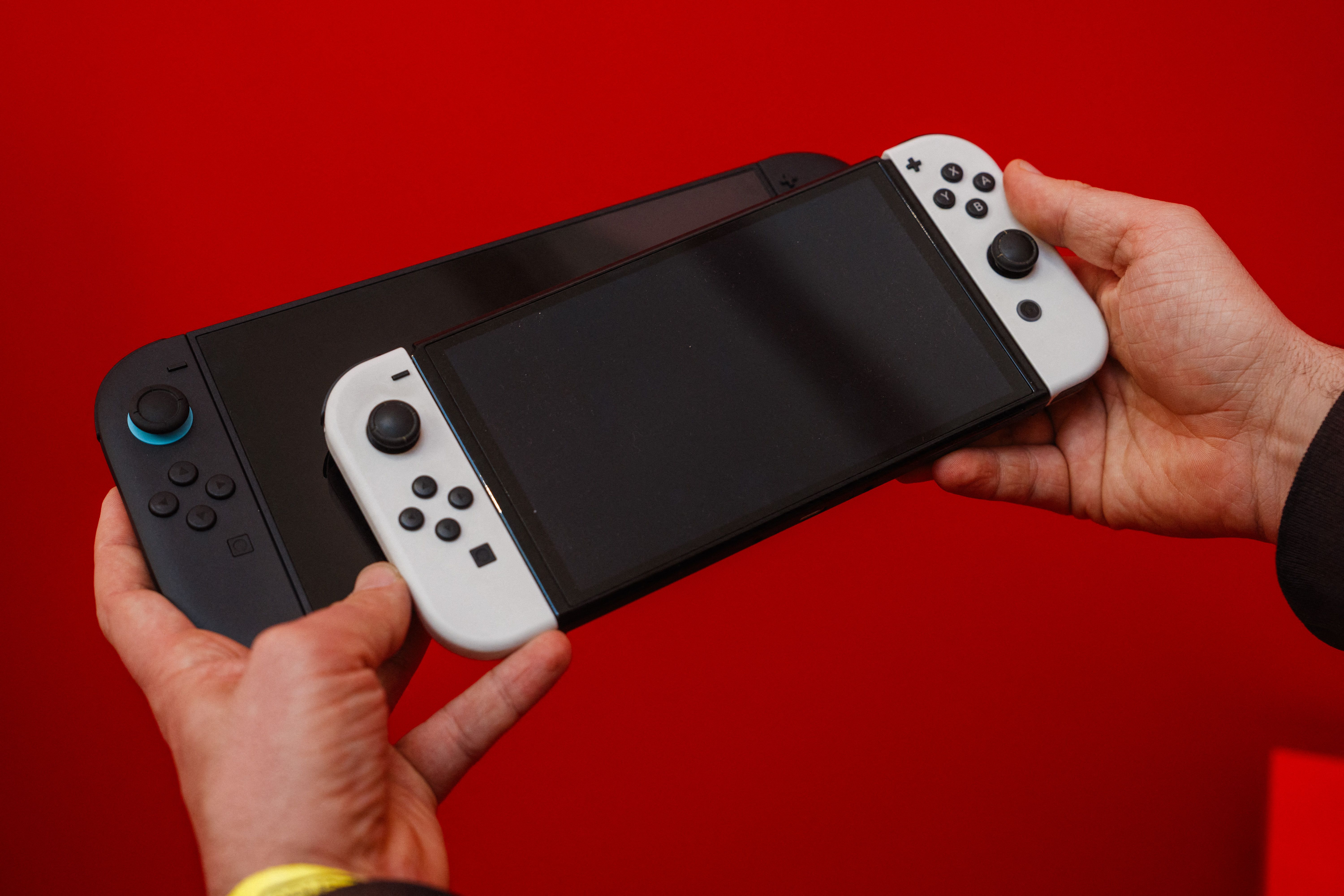
Alright, Switch 2 owners, listen up! Nintendo just dropped a bombshell system update (Ver. 22.0.0, released March 16, 2026) that's going to change how you experience your beloved legacy Switch games forever. The star of the show, the feature we've all been clamoring for, has finally arrived: Handheld Boost Mode. This isn't just a minor patch; it's a genuine game-changer, promising to unlock docked-level performance and visuals for your original Switch library, all while you're gaming on the go.
For too long, the dilemma has been real: enjoy the portability of handheld mode but often at the cost of resolution and performance, or dock your console for the full, glorious TV experience. With the Switch 2, Nintendo is looking to bridge that gap, making your vast collection of Switch classics look and run better than ever, right in the palm of your hand. Let's dive into what this epic update means for your gaming sessions.
Unleash the Power: Your Switch Games, Supercharged!
Remember those moments playing your favorite original Switch classics in handheld mode, wishing they looked and ran as smoothly as they did on your TV? Well, wish granted! Handheld Boost Mode is exactly what it sounds like: it forces compatible Switch titles to run as if they were docked, even when your Switch 2 isn't connected to your television. This means games that might have previously capped at 720p in portable play will now consistently hit that crisp 1080p on your Switch 2's superior built-in screen.
The raw horsepower of the Switch 2 is finally being harnessed to elevate your existing library, delivering better framerates and higher resolutions directly into your hands. It's like giving your old favorites a fresh coat of paint and a turbo boost, all without lifting a finger (well, maybe to enable it once!). Polygon, our source for this exciting news, highlights how this leverages the Switch 2's extra power and its native 1080p display to ensure your games always look their best, even in portable form. Get ready to rediscover your favorite Hyrule, Pokémon region, or Mushroom Kingdom with newfound clarity and smoothness.
The Fine Print: Compatibility & Power Draw
Now, before you go enabling this for every single game, there are a few important caveats to consider. Nintendo advises that while in Handheld Boost Mode, your attached Joy-Con 2 controllers will be treated as if they were a Pro Controller. This has implications for games heavily reliant on touch or motion controls, as the touch screen may be disabled, and on-screen prompts could become inaccurate. So, if you're planning a session of Super Mario Maker 2, Pokémon Let's Go Eevee/Pikachu, or The Legend of Zelda: Skyward Sword HD, you might want to stick to standard handheld mode, as these titles (among others) are reportedly blocked from using the Boost.
Additionally, some games might not see any benefit at all, depending on how they originally handled their TV mode scaling and resolution. And, naturally, all that extra processing power comes at a cost: expect increased battery consumption while Handheld Boost Mode is active. It's not a default setting either; you’ll need to dive into the 'System' settings, then 'Nintendo Switch Software Handling', to toggle it on. So, choose wisely and experiment to see which games truly shine with this new power-up.
More Than Just Boost: Quality of Life Goodies Galore!
While Handheld Boost Mode is undoubtedly the headline act, the Ver. 22.0.0 update is packed with a ton of other fantastic quality-of-life improvements that shouldn't be overlooked. For social gamers, there are now enhanced GameChat features, making it easier to invite friends (even those who haven't finished initial setup or supervised accounts) and improving the quality of shared game screens. You can even save private notes about friends on your friend list – a handy tool for remembering who prefers co-op or who owes you a round in Mario Kart. These notes aren't displayed to your friends and can even be edited from the Nintendo Switch App (version 3.3.0 or higher).
For media consumption, the News and Nintendo eShop video players now let you rewind and advance 10 seconds with the ZL and ZR Buttons, a small but mighty convenience. Managing your digital hoard just got easier with a detailed breakdown of storage capacity by data type, so you can finally see exactly what’s hogging all that space on your system memory or microSD Express card. Even minor details like the virtual game card loading animation have seen a refresh. Plus, for the audiophiles, an audio test can now be performed when 'Linear PCM 5.1 Surround' is selected for TV Sound.
Expanding Accessibility and Convenience
Nintendo is also continuing its push for better accessibility. This update adds Portuguese (Portugal) and Russian to GameChat's speech-to-text features, expanding communication options for more players. Text-to-Speech, under Accessibility, can now read the text in your Album and during the console's first-time setup, making the initial experience more inclusive. Airplane Mode has received a thoughtful upgrade too, now saving your previously set preferences for Bluetooth, Wi-Fi, or NFC, and allowing you to individually enable or disable these from Quick Settings while in the mode. Even parental controls get a minor but useful tweak, with notifications sent to your smart device app when the Parental Controls PIN is successfully entered on the console.
These might seem like minor tweaks individually, but collectively, they make the Switch 2 experience smoother, more user-friendly, and more accessible. It shows Nintendo's commitment to refining its console beyond just raw power.
A Major Win for Switch 2 Owners
System Update Ver. 22.0.0, released on March 16, 2026, is a genuinely substantial upgrade for the Switch 2. Handheld Boost Mode alone is a compelling reason to jump back into your old favorites, offering a noticeable bump in resolution and performance for many compatible titles. While the compatibility quirks mean it won't be a universal panacea for every Switch game, its impact on those that do benefit is poised to be transformative. Imagine playing Breath of the Wild or Mario Odyssey with consistent 1080p visuals, even on a bus!
Coupled with a robust suite of quality-of-life improvements, from enhanced social features to better accessibility and storage management, this update truly elevates the Switch 2 experience. Nintendo continues to refine its ecosystem, and this patch delivers meaningful enhancements that enthusiastic gamers will undoubtedly appreciate. Get ready to rediscover your library in a whole new light!
FAQ
Q: Which Switch games are compatible with Handheld Boost Mode?
A: Handheld Boost Mode is designed for original Switch games, allowing them to run as if docked. However, games heavily reliant on touch or motion controls, such as Super Mario Maker 2, Pokémon Let's Go Eevee/Pikachu, and The Legend of Zelda: Skyward Sword HD, are reportedly blocked. Some games may also see no effect depending on how they handle their TV mode implementation.
Q: How do I enable Handheld Boost Mode on my Switch 2?
A: Handheld Boost Mode is not enabled by default. You need to navigate to the system settings on your Switch 2, then select "System," and finally "Nintendo Switch Software Handling" to toggle the feature on.
Q: Does Handheld Boost Mode affect battery life?
A: Yes, Nintendo notes that running games in Handheld Boost Mode may increase power consumption due to the Switch 2 utilizing more of its processing power to achieve higher resolutions and performance.
Related articles

TCG Pocket Responds: A Much-Needed Pace Shift for Pokémon Fans
Pokémon TCG Pocket is rolling out a major update for its second anniversary, primarily addressing player concerns about overwhelming content releases by shifting to a six-week set schedule. This aims to curb player decline and improve overall engagement by giving trainers more time to collect and strategize. The update also adds new collection methods, improved deck-building features, and enhanced trading functionality.

Kojima Compares Divisive New Film 'Digger' to MGS2's Prescient Vision
Gaming icon Hideo Kojima has praised the divisive 2026 film *Digger*, drawing intriguing parallels to his own prophetic game, *Metal Gear Solid 2*. Both works, he explains, uniquely explore the dangers of misinformation and a fragmented digital reality, anxieties he shares with *Digger*'s director, Alejandro González Iñárritu.

Ubisoft Proposes German Studio Workforce Reduction Amidst
Ubisoft is planning a voluntary departure program for about 100 employees across its Düsseldorf, Berlin, and Mainz studios in Germany. This move is part of a larger, ongoing cost-reduction and restructuring effort by the publisher, aiming to better position its studios for future projects.

TGS 2026: These Forward-Looking Cosplays Are Already Living in the
Tokyo Game Show 2026 showcased incredible cosplay, with many fans embodying characters from unreleased games like *Blast Blade* and *Mononoke No Kuni*. This gallery highlights the community's foresight, alongside debut *Palworld* cosplay and refreshed takes on classics. It’s a testament to the passion that brings gaming's future to life.

Netflix is laying off around 1,000 employees: Layoffs — Key Details
Netflix is laying off approximately 1,000 employees, or six percent of its global workforce, in its largest-ever job cut. This move targets product, tech, HR, and legal teams to reduce costs and re-prioritize investments despite recent financial growth.

Beyond the Bugs: Conquering Studio Headaches in Indie Dev
This guide, part three in a series on running an indie studio, tackles the crucial but often overlooked aspect of dealing with non-development related issues. It introduces creating a shared 'studio backlog' for collective problems and using the IDS (Identify, Discuss, Solve) framework to address them constructively. The core message is to build powerful habits that keep studios from getting quietly derailed by lingering challenges.