
startups: OpenAI’s first hardware is a macro pad for Codex coders
OpenAI has officially unveiled its first piece of physical hardware: the “Codex Micro.” This dedicated macro pad is designed to enhance the workflow for developers who regularly use OpenAI’s AI coding tool, Codex. The
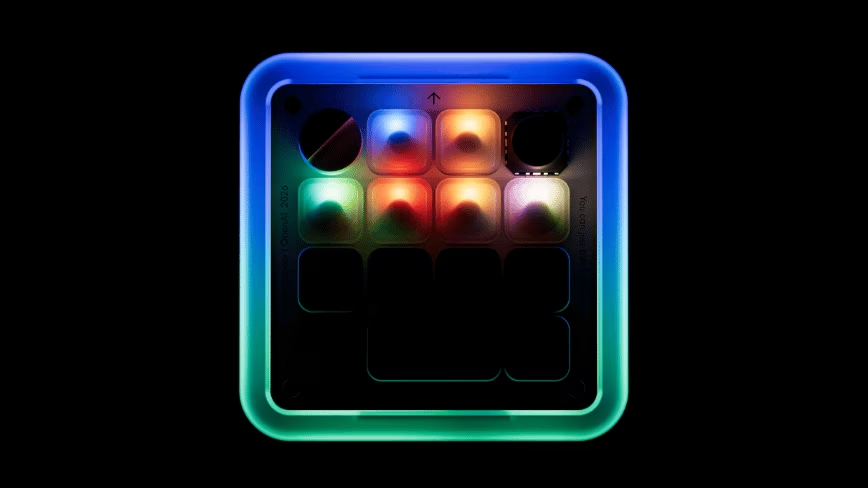
OpenAI has officially unveiled its first piece of physical hardware: the “Codex Micro.” This dedicated macro pad is designed to enhance the workflow for developers who regularly use OpenAI’s AI coding tool, Codex. The device, developed in partnership with specialized hardware manufacturer Work Louder, was teased via a short video on X and is slated for a full reveal on July 15.
Crucially, this announcement clarifies that the Codex Micro is not the much-speculated consumer-oriented AI device OpenAI is reportedly developing with former Apple design chief Jony Ive. That ambitious project is still months away, with OpenAI's finance chief indicating a release by year-end. Instead, the Codex Micro represents a more focused, niche accessory tailored for the specific needs of the growing community of AI-assisted coders.
OpenAI's Foray into Physical Tech
The teaser video, posted by the OpenAI Developers account, showcased a compact, square device featuring a grid of buttons that cycle through various colors. The accompanying caption, “Your favourite Codex shortcuts are getting an upgrade,” along with the July 15 date, set the stage for this new hardware offering.
An OpenAI spokesperson confirmed to Business Insider that the device would be named Codex Micro and is specifically “designed to supercharge people’s Codex usage.” While full details regarding pricing and features remain under wraps until the official launch, the product's intent is clear: to provide a tangible interface for interacting with AI-driven coding tasks.
Decoding the Codex Micro
The Codex Micro is a collaboration with Work Louder, a company renowned for its mechanical keyboards and macro pads. Macro pads are small, programmable keypads that sit alongside a standard keyboard, allowing users to map complex shortcuts or sequences of actions to a single button press. This design philosophy aims to streamline repetitive operations, a common occurrence in coding workflows.
Visually, the device shown in the teaser strongly resembles Work Louder’s Creator Micro 2, featuring a similar form factor that typically includes mechanical switches, a joystick, and a touch sensor. The key distinction lies in the branding: where the standard model bears the “Work Louder” logo, the Codex Micro proudly displays “OpenAI” followed by the intriguing phrase, “You can just…”, a subtle nod to Codex’s advertising slogan, “you can just build things.”
While OpenAI has not yet specified the exact functions of each button, it's highly anticipated that the pad will be programmable to execute common agent-driven coding commands. These could include actions like starting or pausing an AI agent, reviewing generated code changes, initiating tests, approving suggested actions, or deploying saved prompts. This physical interface extends the capabilities of Codex, which is already accessible through a desktop application and via ChatGPT on mobile platforms.
A New Kind of Developer Status Symbol?
The introduction of the Codex Micro aligns with an emerging trend within the developer community: the adoption of specialized physical merchandise and tools as status symbols. As AI coding tools become more pervasive, developers are increasingly curating their workspaces with accessories that signify their engagement with cutting-edge technology. Competitors like Cursor have distributed standalone “tab” keys, and Figma previously released its own Work Louder macro pad, illustrating this growing appetite for branded desk tech.
For OpenAI, this move also represents a tactical extension of its broader strategy to embed Codex into various facets of the developer ecosystem. Under Greg Brockman, OpenAI has worked to consolidate Codex and ChatGPT onto a unified platform and has expanded Codex’s reach into enterprise environments with plugins for non-developers. A branded hardware controller, therefore, serves as a tangible footprint in this ongoing expansion.
The Strategic Play: Simplicity First
OpenAI’s decision to launch a macro pad as its inaugural hardware product, rather than the more complex Jony Ive collaboration, is a strategically low-risk entry into the hardware market. Partnering with Work Louder mitigates significant manufacturing and logistical hurdles, as Work Louder already possesses the expertise and infrastructure to produce such devices. OpenAI's primary contribution largely revolves around branding, default key mappings, and software integration.
However, even with a seemingly straightforward product, the transition from software to hardware development presents unique challenges. An OpenAI staff member involved in the launch acknowledged on LinkedIn the vastly different timelines associated with hardware projects compared to software releases. This inherent complexity is likely a factor in OpenAI's decision to announce a specific reveal date rather than launching the product immediately upon its teaser.
The Practicality Question
The bigger question remains whether a dedicated macro pad truly addresses a significant need for Codex users. “Vibe coding,” or highly intuitive and efficient coding with AI assistance, ideally aims to minimize extraneous actions between concept and execution. A board of specialized buttons could be perceived as adding a layer of hardware complexity to a workflow increasingly built on natural language prompts.
For developers who extensively use fleets of AI agents and require rapid, tactile shortcuts, the Codex Micro could prove invaluable. However, others might view it as an attempt to solve a problem that the underlying AI software is already designed to simplify through intelligent command interpretation. The full utility and market reception will become clearer once the complete feature set is disclosed.
For now, OpenAI’s first tangible hardware offering is not a futuristic wearable or an AI-powered smart device, but a luminous pad of buttons designed to provide a more tactile interface for those navigating the intricate world of AI-assisted coding. All details will be released on July 15.
FAQ
Q: What is the OpenAI Codex Micro? A: The OpenAI Codex Micro is a physical macro pad, a small keyboard with programmable buttons, designed by OpenAI in collaboration with Work Louder to enhance the workflow for developers using OpenAI's AI coding tool, Codex.
Q: Is the Codex Micro the consumer AI device OpenAI is building with Jony Ive? A: No, the Codex Micro is explicitly stated to be separate from the mysterious consumer AI device that OpenAI is reportedly developing with Jony Ive, which is expected to launch later this year.
Q: When will more information about the Codex Micro be released? A: OpenAI has announced that full details, including features and pricing, for the Codex Micro will be revealed on July 15.
Related articles

Apple Unveils iPhone Duo: Pricey Foldable Sees Soaring Demand
Apple has officially entered the foldable smartphone arena with the long-anticipated launch of the iPhone Duo. Priced starting at a hefty $1,999, the device features a 5.4-inch outer display and a larger 7.6-inch inner

in-depth: Chicago-Area Cops Helped HSI Spy on Minnesota Anti-ICE
Chicago-area law enforcement, including local police and HSI agents, conducted undercover surveillance on Minnesota anti-ICE activists at an April 2, 2022, talk in Chicago. This operation was part of a federal conspiracy probe into 15 Minnesota activists facing felony charges related to immigration enforcement resistance. Civil liberties advocates have condemned the surveillance as a troubling intrusion into protected political activity.

Mark Wahlberg on using AI in film ‘the right way’ and being open to
Actor Mark Wahlberg believes AI has a place in filmmaking if used responsibly for enhancement, not script generation or actor replacement. At TechCrunch Disrupt, he expressed openness to an AI likeness carrying on his legacy, managed by his family, and emphasized storytelling.

Tesla Unveils Thruster-Equipped Roadster, 2028 Production Targeted
Tesla has unveiled its second-generation Roadster, featuring cold-gas thrusters co-developed with SpaceX, enabling it to jump and flip. The electric sports car demonstrated 0-60mph in an astonishing 0.81 seconds, with production targeted for 2028. This highly anticipated reveal also serves as a key recruitment tool for Tesla's ambitious AI and robotics initiatives.
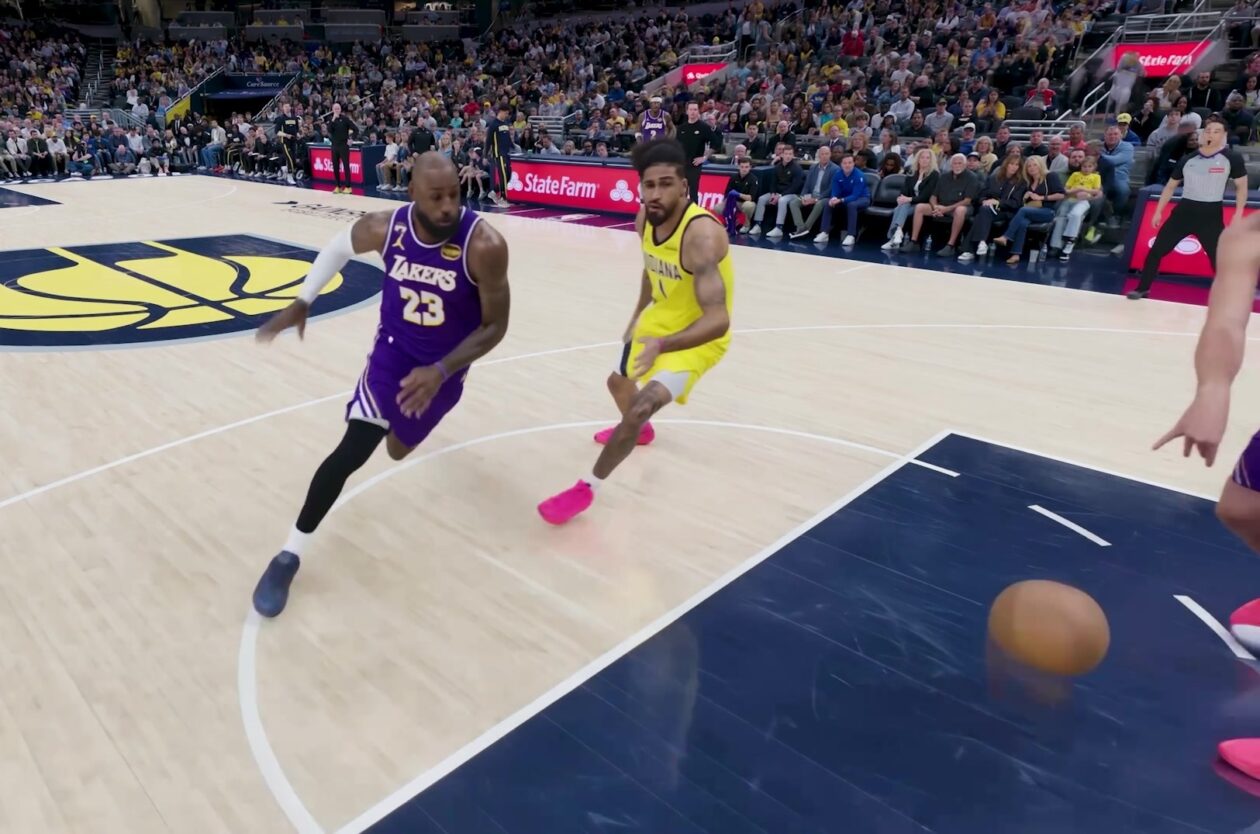
Amazon Prime Video Launches AI-Powered Prime 360 for NBA Coverage
Amazon Prime Video is elevating its NBA coverage with the introduction of Prime 360, an AI-powered replay system offering immersive, 'fly through' views of the action. Kicking off its second season, Prime Video also adds Yahoo fantasy integration and gains exclusive Eastern Conference Finals rights, expanding its tech-driven sports broadcast. The new features aim to deliver a unique and interactive viewing experience for basketball fans.
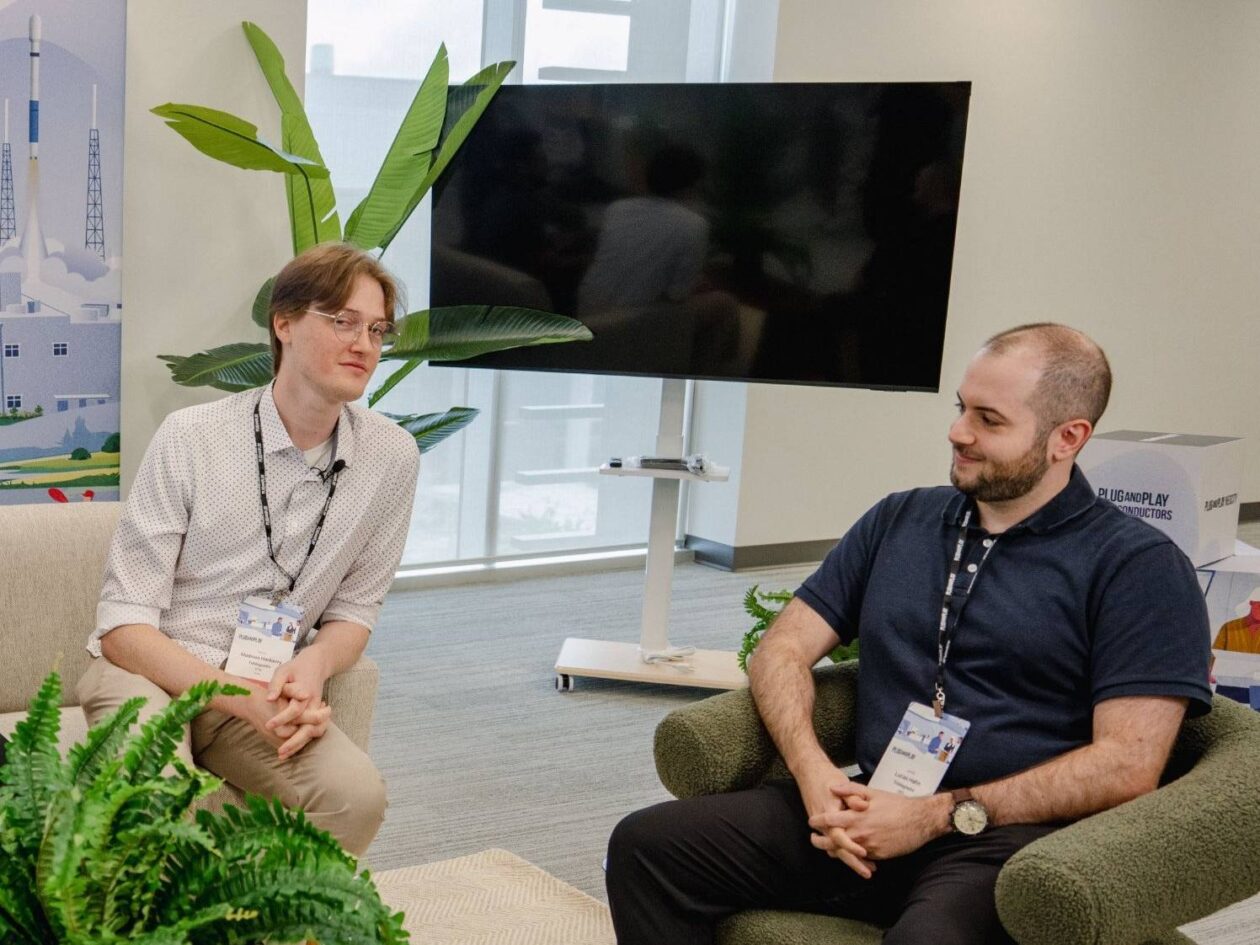
regional: A two-person Seattle startup lands $1M to reinvent
Seattle startup TriMagnetix has secured $1 million to develop semiconductor chips that consume 800 times less energy and are radiation-resistant. The two-person company, leveraging nanomagnetic technology, is targeting space applications and data centers. With new funding and key partnerships, TriMagnetix aims for commercial sales within a year.