
startups: Cinemas, schools and ICE are all banning Meta smart
Meta smart glasses are facing widespread bans from UK cinemas, US schools, and federal agencies like ICE. The core issue is the inability to easily detect when the camera-enabled eyewear is recording, raising privacy, piracy, and harassment concerns, despite the glasses offering crucial accessibility benefits.
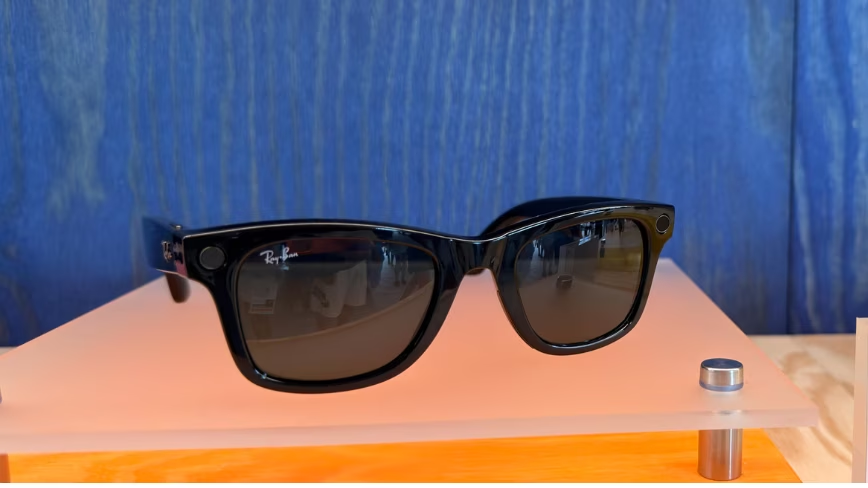
UK cinemas are moving to restrict Meta smart glasses, citing concerns over film piracy and customer privacy. This action, announced Thursday, follows a growing trend seen in American school districts, the federal Immigration and Customs Enforcement (ICE) agency, and other public venues across the US and UK, all independently imposing bans on the camera-enabled eyewear within the past fortnight. The core issue driving these varied prohibitions is a shared difficulty in reliably determining when the devices are actively recording.
The UK Cinema Association, representing over 90% of the nation's cinema operators, confirmed that many members are now implementing policies to prohibit or restrict smart glasses. While no outright bans are currently in place by specific members, the association stated operators are “mindful of the issues around privacy and film piracy” posed by the technology. Interestingly, this isn't the first time the association has tackled such a policy; similar guidance regarding wearable cameras was initially drafted in 2014 for Google Glass, remaining largely unchanged on its website since.
The Classroom Privacy Crisis
Perhaps the most concerning accounts stem from American classrooms, where Meta smart glasses have been used for harassment and bullying. Futurism reported on numerous videos, almost exclusively filmed by teenage boys using Meta glasses, showing them following and mocking girls, which were then uploaded to TikTok and Instagram. Both platforms initially failed to detect and remove this content until flagged by the publication, highlighting a significant loophole in content moderation. The discreet nature of the glasses, allowing students to bypass traditional phone confiscation policies, further exacerbates the problem, leading school districts in Florida, California, and Nevada to enact explicit bans.
Federal Agencies and Conflicting Stances
Adding to the list, the Immigration and Customs Enforcement (ICE) agency recently prohibited its employees from wearing Meta smart glasses in federal workspaces, classifying them as unauthorized body-worn cameras. Acting Director David Venturella warned that the devices could “unintentionally capture, record or transmit sensitive information, potentially compromising privacy and legal protections.” This ban creates an interesting juxtaposition with the Department of Homeland Security's request for $7.5 million in April to develop its own smart glasses prototype for biometric identification, just as Meta faced calls from 77 organizations, including the American Civil Liberties Union, to refrain from adding facial recognition to its consumer eyewear. Meta subsequently removed facial recognition code from its app in June, though it denied the timing was related to these public pressures.
The Undetectable Recording Challenge
At the heart of these diverse bans lies the pervasive challenge of detecting when Meta smart glasses are recording. Meta maintains that a non-defeatable LED indicator illuminates when the camera is active, and that attempting to cover or damage it will disable the camera. However, practical counter-evidence suggests otherwise, with modified glasses capable of circumventing the light and cheap stickers easily available to obscure it. Furthermore, unbranded smart glasses sold online often make no such promises regarding recording indicators. This crucial ambiguity forces staff, like cinema ushers, to strain their eyes in dimly lit environments, searching for a “small green or red glow” to enforce policies.
Broader Implications and the Accessibility Bind
The trend extends beyond these specific institutions. Prominent events like the DEF CON hacker conference, hospitality chains like Soho House and Wetherspoons, and even NBA arenas have advised attendees and patrons to leave recording-capable glasses at home or face being turned away. Legal venues, including courts in New York, England, and Wales, have also implemented bans. These uncoordinated actions underscore a universal concern: the privacy implications of easily concealable recording devices.
Meta argues that such restrictions hinder the significant accessibility benefits its glasses offer, particularly for blind and low-vision users who rely on features like bespoke subtitles. The company recently distributed free glasses to blind veterans, asserting that “limiting how people can use this technology would be a major step backwards.” This creates a difficult “bind” for venues, forcing them to weigh the privacy and piracy risks against the genuine utility for individuals with disabilities, a dilemma that remains largely unresolved.
FAQ
Q: Why are so many different institutions banning Meta smart glasses?
A: The primary reason across various institutions, despite their different individual concerns, is the difficulty in reliably detecting when the glasses are actively recording. This makes it challenging to enforce privacy, prevent piracy, or avoid harassment.
Q: What are Meta's arguments against these bans?
A: Meta emphasizes that its smart glasses feature a non-defeatable LED light that indicates when the camera is recording. The company also highlights the significant accessibility benefits the glasses provide for users with disabilities, such as bespoke subtitles for the hearing impaired or visual assistance for the visually impaired.
Q: Has Meta addressed privacy concerns specifically related to facial recognition?
A: Yes, Meta removed facial recognition code from its smart glasses app in June, following a report by WIRED that found the code and pressure from civil liberties organizations. However, the company denied the timing was directly related to external pressures.
Related articles

Apple Unveils iPhone Duo: Pricey Foldable Sees Soaring Demand
Apple has officially entered the foldable smartphone arena with the long-anticipated launch of the iPhone Duo. Priced starting at a hefty $1,999, the device features a 5.4-inch outer display and a larger 7.6-inch inner

DJI Solo Video Setups: Smart Choices for Lone Creators
This review delves into DJI's recommended solo video setups, highlighting the Osmo Pocket 3 Creator Combo as a top pick for its integrated camera, gimbal, and mic. It also covers stabilizers like the Osmo Mobile 8 and RS 4, and the DJI Mic Mini series for enhanced audio, providing honest pros, cons, and clear buying advice.

in-depth: Chicago-Area Cops Helped HSI Spy on Minnesota Anti-ICE
Chicago-area law enforcement, including local police and HSI agents, conducted undercover surveillance on Minnesota anti-ICE activists at an April 2, 2022, talk in Chicago. This operation was part of a federal conspiracy probe into 15 Minnesota activists facing felony charges related to immigration enforcement resistance. Civil liberties advocates have condemned the surveillance as a troubling intrusion into protected political activity.

Mark Wahlberg on using AI in film ‘the right way’ and being open to
Actor Mark Wahlberg believes AI has a place in filmmaking if used responsibly for enhancement, not script generation or actor replacement. At TechCrunch Disrupt, he expressed openness to an AI likeness carrying on his legacy, managed by his family, and emphasized storytelling.

Tesla Unveils Thruster-Equipped Roadster, 2028 Production Targeted
Tesla has unveiled its second-generation Roadster, featuring cold-gas thrusters co-developed with SpaceX, enabling it to jump and flip. The electric sports car demonstrated 0-60mph in an astonishing 0.81 seconds, with production targeted for 2028. This highly anticipated reveal also serves as a key recruitment tool for Tesla's ambitious AI and robotics initiatives.
Amazon Prime Video Launches AI-Powered Prime 360 for NBA Coverage
Amazon Prime Video is elevating its NBA coverage with the introduction of Prime 360, an AI-powered replay system offering immersive, 'fly through' views of the action. Kicking off its second season, Prime Video also adds Yahoo fantasy integration and gains exclusive Eastern Conference Finals rights, expanding its tech-driven sports broadcast. The new features aim to deliver a unique and interactive viewing experience for basketball fans.