
startups: China’s AI and chip firms are handing out shares to keep
Chinese AI and chip firms are implementing broad equity and cash incentives to retain engineers, countering fierce domestic competition and geopolitical pressures. Companies like Cambricon offer shares to over 85% of staff, while ByteDance and Tencent provide significant pay increases for AI talent. This approach contrasts sharply with the US's cash-first strategy and Europe's long-term training initiatives.
Chinese artificial intelligence and chip manufacturing companies are deploying remarkably extensive equity compensation schemes and significant cash bonuses to secure and retain top engineering talent. This aggressive strategy is emerging as a critical defensive measure, driven by intense domestic competition for skilled professionals and the urgent national priority to strengthen indigenous chip design capabilities amid escalating global export controls. The moves represent a unique approach to a global talent shortage, with implications for the future of the tech industry.
Unprecedented Equity Distribution in China
The scale of these equity handouts is unprecedented, moving beyond traditional bonus schemes. Semiconductor developer Cambricon exemplifies this trend, having unlocked approximately 600,000 shares for 124 core staff members, equating to an average value of about 5.57 million yuan (roughly $828,000) per individual. More strikingly, Cambricon has granted 5 million shares to 944 employees, encompassing 85.3% of its entire workforce, under a comprehensive plan extending until 2028.
Other Chinese tech giants are adopting similar broad-based approaches. Zhongji InnoLight, a manufacturer of optical transceivers vital for AI data centers, distributed 2.48 million shares to 99 key personnel, resulting in average yields exceeding 26 million yuan. Similarly, chip equipment maker AMEC has implemented a restricted stock plan that covers over 97% of its staff, underscoring a widespread commitment to employee ownership as a retention tool.
Cash Incentives and Strategic Imperatives
Beyond equity, direct cash incentives are also playing a significant role in China's talent wars. Technology behemoths like ByteDance and Tencent have reportedly offered substantial pay increases, with some reaching up to 150%, alongside bonuses of approximately 35% to attract and secure highly sought-after AI professionals.
This dual focus on equity and cash is fueled by complex market dynamics. Domestically, companies are fiercely poaching engineers from competitors, creating a high-stakes environment for talent acquisition. Geopolitically, stringent export controls have elevated domestic chip design to a national priority, concentrating immense demand on a relatively small pool of highly specialized engineers and making their retention paramount.
Performance-Linked Retention
These generous awards are not merely gratuitous. Many are strategically tied to performance metrics, transforming retention efforts into instruments for achieving corporate objectives. For instance, Cambricon's incentive plan is explicitly linked to an ambitious revenue target of approximately $14.8 billion. This demonstrates an effort to align employee wealth creation with company growth and strategic goals.
Europe's Different Challenge
In stark contrast to China's ownership model, Europe faces its own set of challenges in the semiconductor sector. The European Chips Skills Academy estimates a continent-wide talent gap of 65,000 workers in semiconductors. This shortage persists despite Europe reportedly having a larger headcount of AI talent than the United States, indicating an issue with specialized skills or retention mechanisms rather than overall availability of professionals.
Europe's difficulties in replicating China's equity-centric approach stem from its diverse corporate landscape and regulatory environment. Many relevant European employers are established incumbents, public research institutes, or university spinouts. Furthermore, employee share schemes vary significantly across member states, making broad, continent-wide equity programs difficult to implement effectively. Consequently, Europe's primary response has focused on long-term supply solutions, such as training initiatives, skills academies, apprenticeships, and programs under the European Chips Act, all of which operate on longer timescales.
America's Cash-First Strategy
Across the Atlantic, the American answer to the talent shortage is primarily financial. US tech companies are known for offering highly competitive cash salaries. Reports indicate that AI research firms like Anthropic pay some of the highest salaries in the sector, to the extent that even its chief executive has expressed concerns about individuals joining primarily for the lucrative compensation. This highlights a direct, immediate transactional approach to securing talent.
Divergent Global Strategies
Ultimately, the global race for crucial AI and chip engineering talent is playing out through three distinct regional strategies. China is responding with widespread employee ownership and significant cash bonuses, aiming to deeply embed engineers within its critical industries. The United States leverages substantial cash compensation to attract top talent directly. Europe, constrained by its structural and regulatory environment, is investing in long-term educational and training programs to cultivate its future workforce. Each approach reflects distinct economic, political, and cultural landscapes, with Europe's solution notably requiring a longer period for impact compared to the immediate incentives offered by China and the US.
FAQ
Q: Why are Chinese AI and chip firms offering such extensive equity to their engineers?
A: Chinese AI and chip firms are providing widespread equity as a "defensive measure" to retain top engineering talent. This is driven by intense domestic competition for skilled professionals and the national imperative to bolster chip design capabilities amidst geopolitical export controls that have made self-sufficiency a priority.
Q: How do China's talent retention strategies compare to those in Europe and the United States?
A: China's strategy heavily emphasizes broad employee ownership through extensive equity schemes, combined with high cash bonuses. The United States primarily relies on offering exceptionally high cash salaries. Europe, constrained by varied regulations and company structures, focuses on long-term solutions like training programs, skills academies, and apprenticeships.
Q: Are the equity awards given by Chinese companies unconditional?
A: No, these equity awards are often tied to performance metrics. For example, Cambricon's incentive plan is linked to a significant revenue target, transforming the retention tool into a performance-driven instrument.
Related articles

Apple Unveils iPhone Duo: Pricey Foldable Sees Soaring Demand
Apple has officially entered the foldable smartphone arena with the long-anticipated launch of the iPhone Duo. Priced starting at a hefty $1,999, the device features a 5.4-inch outer display and a larger 7.6-inch inner

in-depth: Chicago-Area Cops Helped HSI Spy on Minnesota Anti-ICE
Chicago-area law enforcement, including local police and HSI agents, conducted undercover surveillance on Minnesota anti-ICE activists at an April 2, 2022, talk in Chicago. This operation was part of a federal conspiracy probe into 15 Minnesota activists facing felony charges related to immigration enforcement resistance. Civil liberties advocates have condemned the surveillance as a troubling intrusion into protected political activity.

Mark Wahlberg on using AI in film ‘the right way’ and being open to
Actor Mark Wahlberg believes AI has a place in filmmaking if used responsibly for enhancement, not script generation or actor replacement. At TechCrunch Disrupt, he expressed openness to an AI likeness carrying on his legacy, managed by his family, and emphasized storytelling.
Tesla Unveils Thruster-Equipped Roadster, 2028 Production Targeted
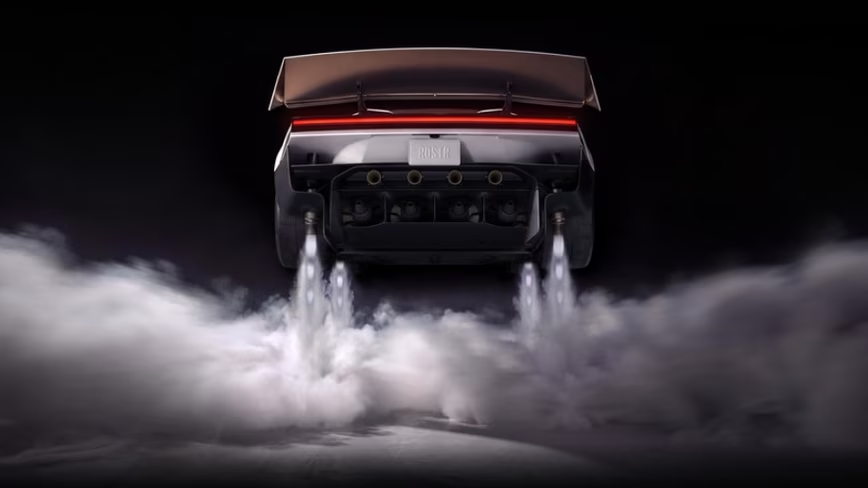
Tesla has unveiled its second-generation Roadster, featuring cold-gas thrusters co-developed with SpaceX, enabling it to jump and flip. The electric sports car demonstrated 0-60mph in an astonishing 0.81 seconds, with production targeted for 2028. This highly anticipated reveal also serves as a key recruitment tool for Tesla's ambitious AI and robotics initiatives.

Amazon Prime Video Launches AI-Powered Prime 360 for NBA Coverage
Amazon Prime Video is elevating its NBA coverage with the introduction of Prime 360, an AI-powered replay system offering immersive, 'fly through' views of the action. Kicking off its second season, Prime Video also adds Yahoo fantasy integration and gains exclusive Eastern Conference Finals rights, expanding its tech-driven sports broadcast. The new features aim to deliver a unique and interactive viewing experience for basketball fans.
regional: A two-person Seattle startup lands $1M to reinvent
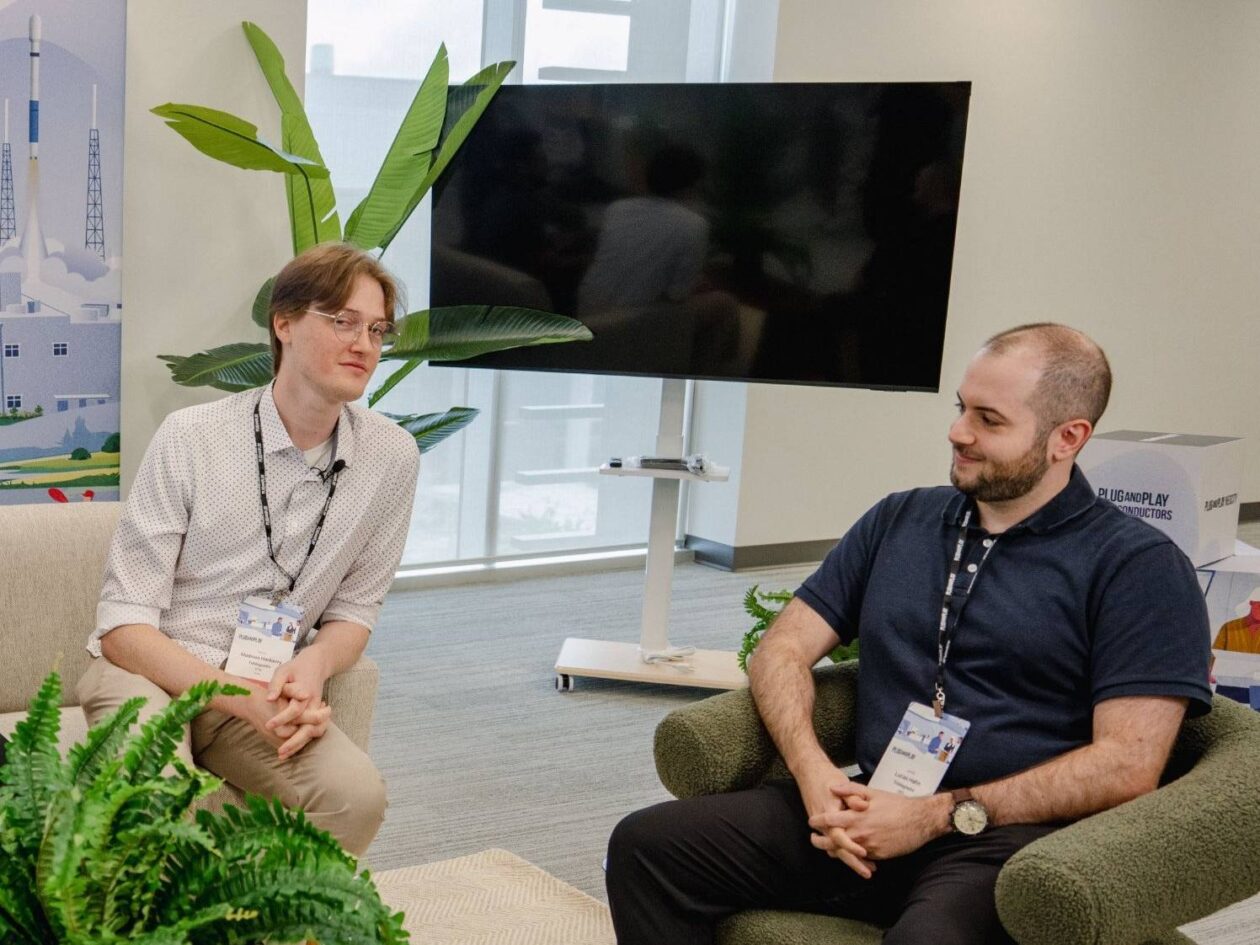
Seattle startup TriMagnetix has secured $1 million to develop semiconductor chips that consume 800 times less energy and are radiation-resistant. The two-person company, leveraging nanomagnetic technology, is targeting space applications and data centers. With new funding and key partnerships, TriMagnetix aims for commercial sales within a year.