
Silicon Valley loves young founders. Until it doesn’t.: Startups
Silicon Valley's startup scene is experiencing a dramatic shift for young founders. While AI has democratized building, enabling early success and significant funding, it also brings immense pressure for rapid growth and constant public performance. This creates a high-stakes environment where founders face intense scrutiny and ethical dilemmas alongside unprecedented opportunities.

Silicon Valley’s long-standing infatuation with young, visionary founders is facing a new, intense reality. While artificial intelligence tools have democratized startup creation, enabling a surge of entrepreneurs under 20 to secure significant funding without traditional tech résumés, this accelerated path comes with unprecedented pressures. Young innovators like 19-year-old Arlan Rakhmetzhanov, whose Y Combinator-backed Nozomio has raised over $6 million, describe a high-stakes environment where success is meteoric or failure is public and swift, fueled by social media scrutiny and investor demands for immediate, exponential growth.
Traditionally, venture capitalists favored young dropouts but often looked for co-founders with technical expertise or experience at major tech companies. However, AI’s rise has transformed this landscape, allowing individuals to build sophisticated products more rapidly. This shift means that qualities like GitHub activity, open-source contributions, and familiarity with the latest AI tools are now highly valued by early-stage investors, as noted by Ashley Smith, a general partner at Vermilion.
Smith highlights that a significant portion of her firm's portfolio includes founders under 30, with some even younger than 21, attributing their appeal to their “excitement to experiment and lack of fear.” This reflects a growing willingness to back youthful talent based on demonstrated technical prowess rather than years of corporate experience.
Pranjali Awasthi, another 19-year-old founder, exemplifies this new breed. Having dropped out of high school and later Georgia Tech, she launched Slashy, an AI-powered email management tool backed by YC, and is now stealthily building her next venture. Awasthi recalls a time when investors questioned her motivations due to her age, but observes that it's “gotten more normal now,” especially post-18.
Yet, this influx of capital and opportunity is accompanied by a more unforgiving market. Smith emphasizes that the luxury of slow learning and iterative development, once common in early-stage startups, no longer exists. Founders are expected to deliver substantial growth within months, not years, as investors constantly seek the next breakout success story like Cursor.
This relentless demand for rapid achievement forces many young founders into ethically ambiguous territory. The pressure to present a façade of success can lead to inflated revenue figures or prioritizing social media content creation over core product development. In a crowded AI market, making noise about one’s achievements has become as crucial as building a solid product.
Timothy Chen, an investor at Essence Ventures, points out the recent trend of elaborate, polished launch videos, popularized by founders like Cluely’s Roy Lee, as a symptom of this performative culture. He notes the intense need to “show off much better, quick” has become a standard for visibility.
Indeed, the “build in public” ethos has amplified the stakes, turning every milestone and misstep into a public spectacle. Awasthi notes the “constant ambient pressure from LinkedIn and Twitter,” a stark contrast to the quiet iteration possible for founders like Mark Zuckerberg in 2004. Aidan Guo, 20, co-founder of Attention Engineering, which secured $1.6 million, describes the immense mental toll.
Guo speaks of self-imposed fear of failure compounded by public criticism, urging for greater empathy within the community. The journey of steering a ship and learning on the fly is already challenging, he explains, without the added burden of widespread scrutiny.
Despite the intensity, successful young founders and experienced investors agree that fundamental principles remain paramount. Awasthi advises focusing on the essential tasks, while Rakhmetzhanov stresses that the best product, actively engaging with customers, ultimately prevails. Smith concludes that “conviction, intellectual honesty, and obsession with the customer” are the true hallmarks of a successful startup, traits that are independent of a founder’s age.
FAQ
Q: How has the rise of AI influenced opportunities for young startup founders?
A: AI tools have significantly democratized the building process, allowing young founders to develop and launch successful companies more rapidly and without needing prior experience at large tech firms. This has led to increased investor interest in founders who demonstrate proficiency with AI tools and open-source contributions.
Q: What are the primary challenges and pressures young founders face in today’s Silicon Valley?
A: Young founders today face intense pressure for rapid growth, with investors expecting results in months rather than years. They also navigate constant public scrutiny on social media, where every move is dissected. This can lead to ethical dilemmas, a focus on performative success over substance, and significant mental stress.
Q: What do experienced investors and successful young founders say is key to navigating this environment?
A: Both successful young founders like Pranjali Awasthi and Arlan Rakhmetzhanov, and investors like Ashley Smith, emphasize the importance of sticking to core startup fundamentals: focusing on the product, obsessing over customer needs, maintaining intellectual honesty, and possessing strong conviction, rather than getting sidetracked by external pressures or performative aspects.
Related articles

Apple Unveils iPhone Duo: Pricey Foldable Sees Soaring Demand
Apple has officially entered the foldable smartphone arena with the long-anticipated launch of the iPhone Duo. Priced starting at a hefty $1,999, the device features a 5.4-inch outer display and a larger 7.6-inch inner

in-depth: Chicago-Area Cops Helped HSI Spy on Minnesota Anti-ICE
Chicago-area law enforcement, including local police and HSI agents, conducted undercover surveillance on Minnesota anti-ICE activists at an April 2, 2022, talk in Chicago. This operation was part of a federal conspiracy probe into 15 Minnesota activists facing felony charges related to immigration enforcement resistance. Civil liberties advocates have condemned the surveillance as a troubling intrusion into protected political activity.

Mark Wahlberg on using AI in film ‘the right way’ and being open to
Actor Mark Wahlberg believes AI has a place in filmmaking if used responsibly for enhancement, not script generation or actor replacement. At TechCrunch Disrupt, he expressed openness to an AI likeness carrying on his legacy, managed by his family, and emphasized storytelling.

Tesla Unveils Thruster-Equipped Roadster, 2028 Production Targeted
Tesla has unveiled its second-generation Roadster, featuring cold-gas thrusters co-developed with SpaceX, enabling it to jump and flip. The electric sports car demonstrated 0-60mph in an astonishing 0.81 seconds, with production targeted for 2028. This highly anticipated reveal also serves as a key recruitment tool for Tesla's ambitious AI and robotics initiatives.

Amazon Prime Video Launches AI-Powered Prime 360 for NBA Coverage
Amazon Prime Video is elevating its NBA coverage with the introduction of Prime 360, an AI-powered replay system offering immersive, 'fly through' views of the action. Kicking off its second season, Prime Video also adds Yahoo fantasy integration and gains exclusive Eastern Conference Finals rights, expanding its tech-driven sports broadcast. The new features aim to deliver a unique and interactive viewing experience for basketball fans.
regional: A two-person Seattle startup lands $1M to reinvent
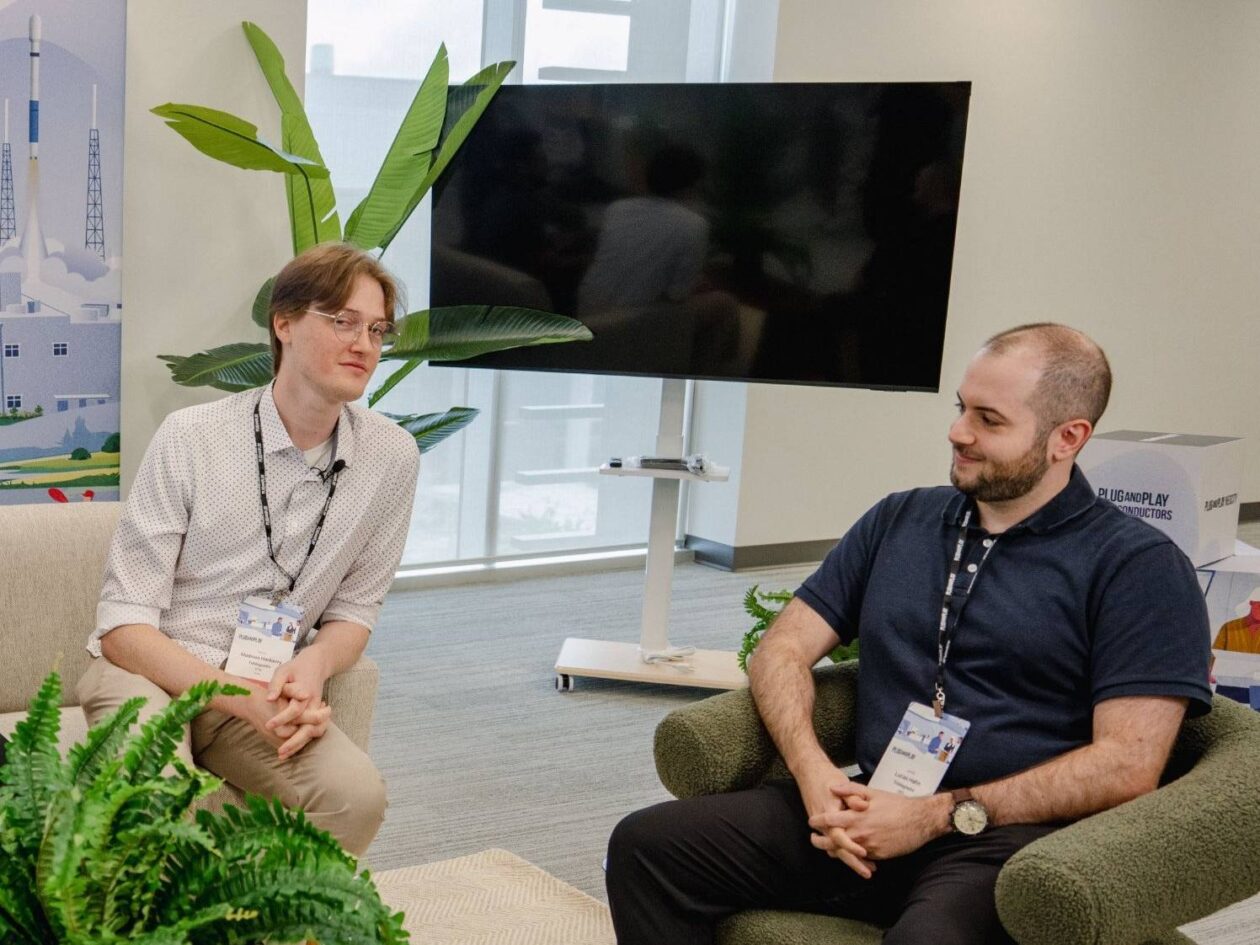
Seattle startup TriMagnetix has secured $1 million to develop semiconductor chips that consume 800 times less energy and are radiation-resistant. The two-person company, leveraging nanomagnetic technology, is targeting space applications and data centers. With new funding and key partnerships, TriMagnetix aims for commercial sales within a year.