
Seattle’s Overland AI opens Bay Area outpost, flipping the regional
Seattle-based Overland AI, a developer of autonomous ground vehicles for the U.S. military, has opened a new office in Burlingame, California. This strategic move aims to tap into the Bay Area's premier AI and robotics talent, notably reversing the long-standing trend of Silicon Valley companies establishing engineering hubs in the Pacific Northwest.
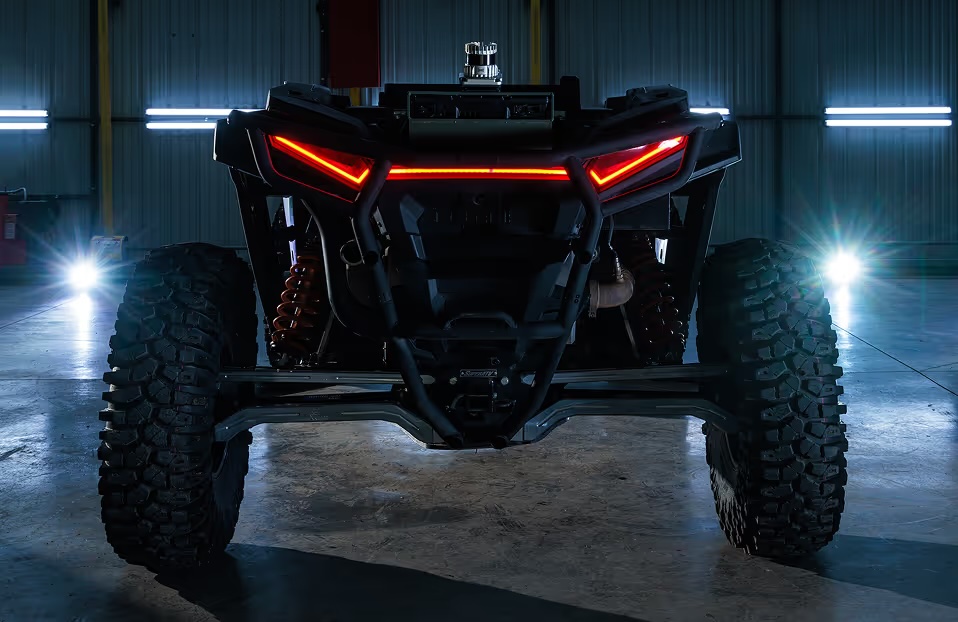
Seattle-based Overland AI, a rapidly expanding developer of autonomous ground vehicles and systems for the U.S. military, announced Wednesday its strategic expansion into the San Francisco Bay Area. The company is opening a new office in Burlingame, California, with the explicit goal of tapping into what it identifies as the world's leading talent pool in artificial intelligence and robotics. This move marks a significant reversal of a decades-long pattern where Silicon Valley tech giants typically established engineering outposts in Seattle, signaling a new phase in regional tech talent migration.
Expanding Presence in Silicon Valley
The new Burlingame facility, strategically located on the San Francisco Peninsula, is designed to become a crucial hub for Overland AI's software engineering and robot operations. A key feature of the office is a dedicated command center, which will allow operators to remotely task and control the company's autonomous ground vehicles operating across the globe. Overland AI highlighted the location's exceptional proximity to leading universities and robust public transit options, underscoring its commitment to attracting top-tier talent. The startup also revealed ambitious plans to double its Bay Area headcount within the next six months, intensifying its development efforts for its advanced off-road navigation software. Jon Fink, CTO at Overland AI, emphasized the strategic imperative of this expansion, stating, "Establishing a physical presence in the Bay gives us direct access to the deepest pool of AI talent in the world."
Reversing the Talent Flow
This latest development fundamentally alters the long-standing dynamic between the Pacific Northwest and Silicon Valley's tech ecosystems. For many years, prominent Bay Area tech corporations, including Google, Meta, and Apple, have systematically built substantial engineering centers throughout Seattle and its surrounding areas. Their primary objective has been to leverage the Pacific Northwest's rich talent in cloud computing and complex systems. GeekWire, for instance, has extensively documented this trend, listing numerous such engineering outposts. However, as the fields of autonomy and robotics accelerate at an unprecedented pace, Overland AI is now actively reversing this established talent migration. By planting its own Northern California "beachhead," the company aims to directly recruit specialized engineers from Silicon Valley's own backyard, competing for talent on new terms.
Overland AI's Rapid Ascent
Overland AI itself boasts a compelling origin story, having been founded in 2022 as a spinout from the prestigious University of Washington. The company's core mission revolves around developing sophisticated software and hardware solutions specifically for uncrewed military land vehicles. These advanced systems are engineered to navigate challenging, off-road terrain effectively and reliably, even in environments where GPS connectivity is unavailable or compromised. The startup has rapidly garnered significant investor confidence, having raised more than $140 million in venture funding to date. This impressive financial backing includes a substantial $100 million Series A round, which was led by 8VC in February. Demonstrating its growing impact and operational capability, Overland AI recently secured a notable $19.7 million contract with the U.S. Marine Corps for the manufacture of its self-driving supply vehicles. Further cementing its physical presence and production capabilities, the company opened a sprawling 22,000-square-foot production facility in Seattle's Rainer Beach neighborhood, just south of the downtown core, in 2025.
Implications for Future Tech Hubs
Overland AI's move signifies more than just a company expansion; it represents a significant bellwether for the evolving landscape of tech talent and innovation in the United States. It highlights the increasing specialization required for cutting-edge fields like autonomous systems, where proximity to specific academic and industry expertise can outweigh traditional regional tech advantages. This bold step by a Seattle-based firm into Silicon Valley’s traditional stronghold could set a precedent for other specialized technology companies. It suggests that future talent wars may increasingly focus on niche, advanced domains like AI and robotics, potentially leading to new patterns of cross-regional recruitment and development hubs. The unfolding implications of this "reverse migration" could reshape how tech companies strategize their talent acquisition and geographic expansion in the years to come, intensifying competition for highly sought-after expertise in critical emerging technologies.
FAQ
Q: What does Overland AI primarily develop?
A: Overland AI develops autonomous ground vehicles and advanced systems, including software and hardware, primarily for uncrewed military land vehicles designed to navigate complex, off-road terrain without relying on GPS.
Q: Why is Overland AI's move to the Bay Area considered "flipping the script"?
A: The move is seen as "flipping the script" because, for decades, tech giants from Silicon Valley (like Google, Meta, Apple) have typically established engineering outposts in Seattle to tap into its cloud computing and systems talent. Overland AI, a Seattle company, is now reversing this trend by setting up an office in the Bay Area to access its leading AI and robotics talent.
Q: What is the primary purpose of Overland AI's new Burlingame office?
A: The new Burlingame office will serve as a hub for software engineering and robot operations, including a dedicated command center for remotely tasking and controlling autonomous ground vehicles globally. Its main purpose is to give Overland AI direct access to the Bay Area's deep pool of AI and robotics talent.
Related articles

Apple Unveils iPhone Duo: Pricey Foldable Sees Soaring Demand
Apple has officially entered the foldable smartphone arena with the long-anticipated launch of the iPhone Duo. Priced starting at a hefty $1,999, the device features a 5.4-inch outer display and a larger 7.6-inch inner

in-depth: Chicago-Area Cops Helped HSI Spy on Minnesota Anti-ICE
Chicago-area law enforcement, including local police and HSI agents, conducted undercover surveillance on Minnesota anti-ICE activists at an April 2, 2022, talk in Chicago. This operation was part of a federal conspiracy probe into 15 Minnesota activists facing felony charges related to immigration enforcement resistance. Civil liberties advocates have condemned the surveillance as a troubling intrusion into protected political activity.

Mark Wahlberg on using AI in film ‘the right way’ and being open to
Actor Mark Wahlberg believes AI has a place in filmmaking if used responsibly for enhancement, not script generation or actor replacement. At TechCrunch Disrupt, he expressed openness to an AI likeness carrying on his legacy, managed by his family, and emphasized storytelling.
Tesla Unveils Thruster-Equipped Roadster, 2028 Production Targeted
Tesla has unveiled its second-generation Roadster, featuring cold-gas thrusters co-developed with SpaceX, enabling it to jump and flip. The electric sports car demonstrated 0-60mph in an astonishing 0.81 seconds, with production targeted for 2028. This highly anticipated reveal also serves as a key recruitment tool for Tesla's ambitious AI and robotics initiatives.

AI's Confidence vs. Formal Methods' Rigor: Design Flaws & Verification
While AI accelerates code generation, formal methods remain critical for ensuring system correctness. Languages like TLA+ and tools like Quint enable developers to model and verify system designs before coding, catching subtle flaws. Quint makes formal methods more accessible with developer-friendly syntax and executability. This approach is vital for verifying AI-generated code through trace validation and model-based testing, ensuring reliability against real-world data.

Amazon Prime Video Launches AI-Powered Prime 360 for NBA Coverage
Amazon Prime Video is elevating its NBA coverage with the introduction of Prime 360, an AI-powered replay system offering immersive, 'fly through' views of the action. Kicking off its second season, Prime Video also adds Yahoo fantasy integration and gains exclusive Eastern Conference Finals rights, expanding its tech-driven sports broadcast. The new features aim to deliver a unique and interactive viewing experience for basketball fans.