
Schneider Electric's India Data-Centre Business Set for Explosive
Schneider Electric projects its India data-centre business to outpace company-wide growth, potentially becoming its largest segment within 3-5 years. This is driven by India's massive planned data-centre expansion from 1.5 GW to 6-8 GW, bridging a significant gap between data consumption and capacity. Strategic investments, a strong Q1 2026 performance, and India's cost advantages underpin this outlook, despite challenges like rising material costs.
Schneider Electric expects its data-centre operations in India to drive growth faster than any other part of the company, potentially making it the French infrastructure giant's largest single business within the next three to five years. This ambitious forecast was shared by Deepak Sharma, the group’s Managing Director and Zone President for Greater India, speaking to Reuters on Monday.
The projection is fueled by India's colossal plans to expand its data-centre capacity from approximately 1.5 gigawatts (GW) to an estimated six to eight GW. Sharma previously described this opportunity as “exponential,” indicating that while data centres aren't currently Schneider's top business line in India, they are poised to lead the next cycle of growth alongside generation and home solutions.
India: A Hub for Hyperscale Data
Globally, data centres already contribute roughly 30% to Schneider's annual revenue of around €40 billion. However, India presents a unique landscape: the nation consumes approximately 20% of the world’s data but houses only 3% of global data-centre capacity. This significant disparity has triggered an investment frenzy from major global and domestic players.
Several tech giants are committing massive resources to India's AI infrastructure, including Google’s $15 billion AI hub in Visakhapatnam, Adani Group’s $100 billion ten-year build-out, and multi-tens-of-billions programs from Microsoft and Amazon. Additionally, Larsen & Toubro recently announced a partnership with Nvidia to establish a sovereign AI factory in Chennai. Each of these initiatives represents a substantial potential client for Schneider Electric.
Strategic Investments and Financial Momentum
To capitalize on this burgeoning market, Schneider Electric strategically acquired the remaining 35% stake in its India subsidiary, SEIPL, from Temasek last year for €5.5 billion. This move was intended to streamline local decision-making and enhance agility. India is now the company’s third-largest market, boasting approximately 38,000 employees, 31 factories, and exporting products to over 30 countries, including the United States. The buyout is expected to add about €150 million to Schneider's 2026 financing costs.
The company’s latest financial results underscore this strategic focus. Schneider’s Q1 2026 revenue grew 11.2% organically to €9.77 billion. Its energy-management segment, crucial for supplying data centre power and cooling, saw an even stronger performance, rising by nearly 13%. This growth aligns with broader industry trends, as major US hyperscalers' combined AI capital expenditure for 2026 is projected to exceed $650 billion, much of which will translate into long-term orders for the kind of grid-to-rack power equipment Schneider supplies.
Cost Advantages and Emerging Trends
India's appeal also lies in its cost-effectiveness, with deployment costs per megawatt at least 30% below the global average, according to Sharma. This advantage is driving data-centre development beyond traditional metropolitan areas like Mumbai, Chennai, Delhi, and Bengaluru, into tier-two and tier-three cities. The next wave of capacity is increasingly focused on edge sites, essential for the low-latency inference workloads that generative AI demands.
Navigating Operational Headwinds
Despite the optimistic outlook, Schneider Electric faces familiar operational challenges. Sharma highlighted the rising costs of critical materials like copper and silver, which are heavily utilized in the company's products. These increased costs are being passed through to the market. Furthermore, a prolonged conflict in West Asia could exacerbate pressures on plastics and transportation costs. While a fundamental constraint for all AI data centres, the broader issue of power supply was not directly addressed in Sharma's comments.
Ultimately, Schneider Electric's strategy hinges on the assumption that India's ambitious data-centre expansion will materialize, requiring significant investments in power and cooling infrastructure that companies like Schneider are poised to deliver. The coming quarters will be critical in determining whether announced plans translate into concrete orders and sustained growth.
FAQ
Q: What is Schneider Electric's key growth expectation for its India data-centre business?
A: Schneider Electric anticipates its India data-centre business will grow faster than any other segment of the company, potentially becoming its largest single business within the next three to five years.
Q: Why is India such a critical market for data centre expansion?
A: India currently consumes about 20% of the world's data but hosts only 3% of global data-centre capacity. The country plans to increase its installed data-centre capacity from 1.5 gigawatts to between six and eight gigawatts, driven by significant investments from hyperscalers and domestic players.
Q: What are some of the challenges Schneider Electric faces in this expansion?
A: Key challenges include the rising costs of raw materials like copper and silver, which are passed on to the market. Geopolitical factors, such as a prolonged conflict in West Asia, could also impact the cost of plastics and transportation. The underlying constraint of consistent power supply for large-scale AI data centres remains a critical factor.
Related articles

Apple Unveils iPhone Duo: Pricey Foldable Sees Soaring Demand
Apple has officially entered the foldable smartphone arena with the long-anticipated launch of the iPhone Duo. Priced starting at a hefty $1,999, the device features a 5.4-inch outer display and a larger 7.6-inch inner

in-depth: Chicago-Area Cops Helped HSI Spy on Minnesota Anti-ICE
Chicago-area law enforcement, including local police and HSI agents, conducted undercover surveillance on Minnesota anti-ICE activists at an April 2, 2022, talk in Chicago. This operation was part of a federal conspiracy probe into 15 Minnesota activists facing felony charges related to immigration enforcement resistance. Civil liberties advocates have condemned the surveillance as a troubling intrusion into protected political activity.

Mark Wahlberg on using AI in film ‘the right way’ and being open to
Actor Mark Wahlberg believes AI has a place in filmmaking if used responsibly for enhancement, not script generation or actor replacement. At TechCrunch Disrupt, he expressed openness to an AI likeness carrying on his legacy, managed by his family, and emphasized storytelling.

Tesla Unveils Thruster-Equipped Roadster, 2028 Production Targeted
Tesla has unveiled its second-generation Roadster, featuring cold-gas thrusters co-developed with SpaceX, enabling it to jump and flip. The electric sports car demonstrated 0-60mph in an astonishing 0.81 seconds, with production targeted for 2028. This highly anticipated reveal also serves as a key recruitment tool for Tesla's ambitious AI and robotics initiatives.

Amazon Prime Video Launches AI-Powered Prime 360 for NBA Coverage
Amazon Prime Video is elevating its NBA coverage with the introduction of Prime 360, an AI-powered replay system offering immersive, 'fly through' views of the action. Kicking off its second season, Prime Video also adds Yahoo fantasy integration and gains exclusive Eastern Conference Finals rights, expanding its tech-driven sports broadcast. The new features aim to deliver a unique and interactive viewing experience for basketball fans.
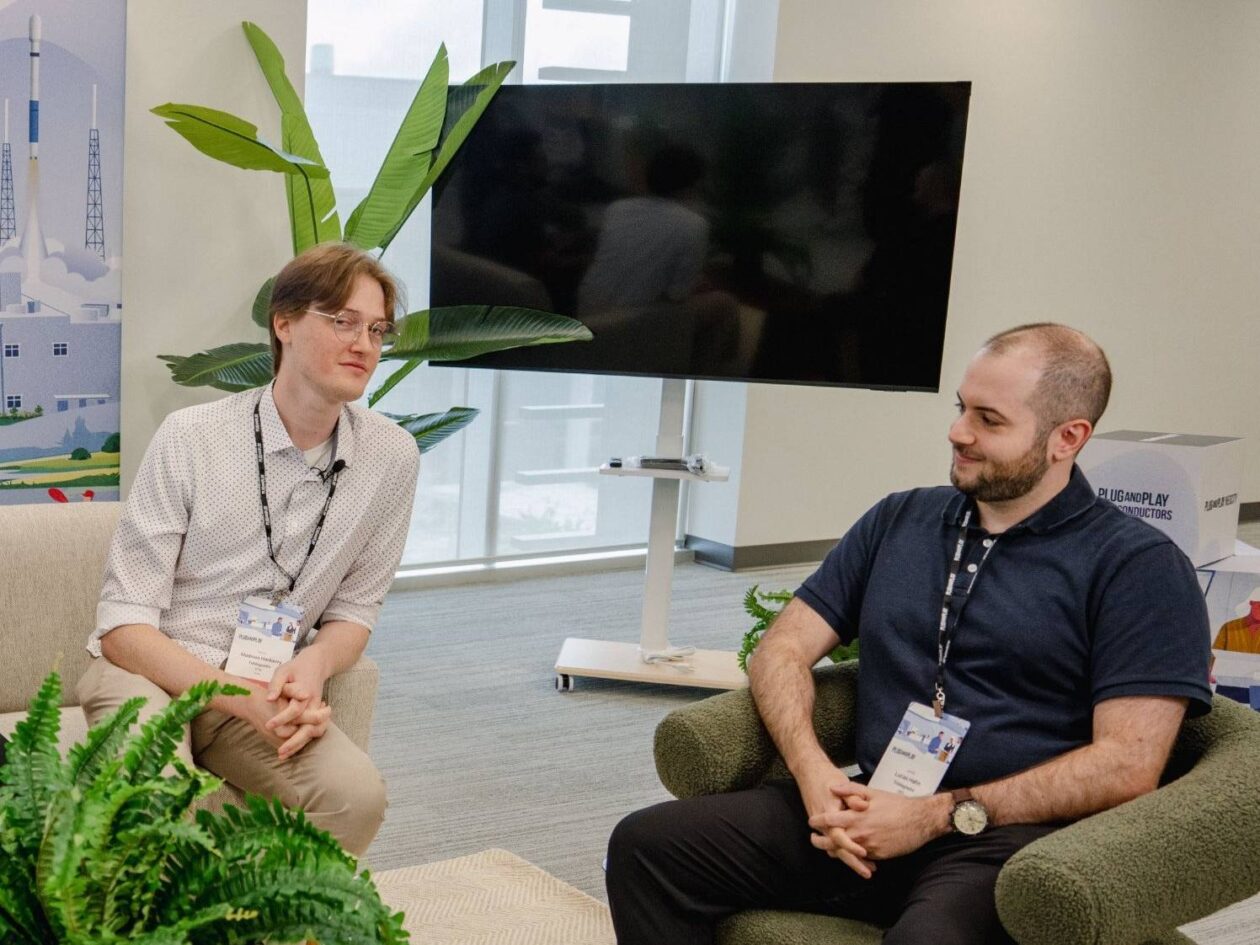
regional: A two-person Seattle startup lands $1M to reinvent
Seattle startup TriMagnetix has secured $1 million to develop semiconductor chips that consume 800 times less energy and are radiation-resistant. The two-person company, leveraging nanomagnetic technology, is targeting space applications and data centers. With new funding and key partnerships, TriMagnetix aims for commercial sales within a year.