
Scaling FinTech Operations: AI's Role in Code, SDLC, & UX
In the rapidly evolving landscape of financial technology, ensuring both security and efficiency at scale is paramount. As AI increasingly permeates critical infrastructure, developers working in FinTech face unique

In the rapidly evolving landscape of financial technology, ensuring both security and efficiency at scale is paramount. As AI increasingly permeates critical infrastructure, developers working in FinTech face unique challenges and opportunities. The core problem is clear: how do we leverage AI's power to accelerate development and enhance user experience without compromising the integrity and security demanded by financial systems?
Recently, Stack Overflow hosted a discussion with Srini Venkatesan, CTO at PayPal, at the Ai4 conference, shedding light on how a leading financial institution is tackling this integration. The conversation highlighted three key areas where AI is making significant inroads, ensuring that financial operations can indeed scale safely: validating AI-generated code, automating the Software Development Life Cycle (SDLC), and optimizing customer experiences like checkout.
Validating AI-Generated Deterministic Code for Security
The notion of AI generating code is no longer theoretical; it's a practical reality. However, for a financial platform, such as PayPal, the stakes are exceptionally high. Every line of code, especially that which handles transactions or sensitive data, must be rigorously secure, predictable, and correct. This is where the emphasis on "AI-generated deterministic code for security" becomes critical.
Deterministic code implies that given the same input, the code will always produce the exact same output, consistently and reliably. In financial computations, non-determinism can lead to catastrophic errors, data inconsistencies, or even security vulnerabilities. When AI generates this code, an advanced validation layer is essential. This validation isn't just about syntax or basic functionality; it's about ensuring:
- Predictability: The generated code adheres to strict logic, preventing unexpected behavior that could impact financial calculations or transaction flows.
- Security Posture: It introduces no new vulnerabilities, adheres to established security best practices, and passes rigorous security audits.
- Compliance: It meets regulatory requirements specific to the financial industry.
Implementing robust validation for AI-generated code often involves automated testing frameworks, formal verification methods, and potentially AI-assisted code reviews that are trained on vast datasets of secure and compliant financial code. This multi-layered approach helps bridge the gap between AI's generative speed and the non-negotiable requirement for unassailable security in finance.
Developing Autonomous SDLC Harnesses with Iterative Feedback Loops
The Software Development Life Cycle (SDLC) is the backbone of any software company, and in FinTech, its efficiency and reliability directly impact time-to-market and operational stability. PayPal's focus on "developing autonomous SDLC harnesses with iterative feedback loops" speaks to a vision of an AI-augmented development process.
An autonomous SDLC harness refers to an integrated system where various stages of software development—from requirements gathering and design to testing, deployment, and monitoring—are intelligently automated. AI plays a crucial role in orchestrating these stages, predicting potential issues, and optimizing workflows. Key aspects include:
- Automated Testing and Quality Assurance: AI can generate test cases, prioritize test execution, and even identify subtle bugs that might escape human review, particularly in complex financial logic.
- Intelligent Deployment: AI can analyze system load, dependencies, and performance metrics to optimize deployment schedules and strategies, minimizing downtime and risk.
- Continuous Monitoring and Incident Response: Post-deployment, AI-powered systems continuously monitor applications, detect anomalies, and can even trigger automated remediation or alert appropriate teams with high-fidelity insights.
The "iterative feedback loops" are crucial here. These loops enable the AI system to learn from every stage. For instance, if a particular AI-generated code pattern consistently leads to security findings, the feedback loop informs the code generation model to refine its output. If an automated deployment fails, the system learns to adapt its strategy for future deployments. This continuous learning cycle drives incremental improvements, making the SDLC progressively more efficient, resilient, and adaptive to changing business needs and security threats.
Creating a Seamless Headless Checkout Experience
Beyond internal development processes, AI is also revolutionizing the user-facing side of FinTech. The discussion touched upon "creating a seamless headless checkout experience." A headless architecture decouples the frontend user interface from the backend commerce engine, offering immense flexibility for developers and a highly optimized experience for users.
In a headless checkout scenario, AI can contribute significantly by:
- Personalization: Dynamically adjusting checkout flows, payment options, and even currency conversions based on user behavior, location, and past interactions, making the process feel intuitive and tailored.
- Fraud Detection and Risk Management: AI models can analyze transaction patterns in real-time, identifying suspicious activities and preventing fraud without introducing friction for legitimate users. This is a critical component of safely scaling money.
- Performance Optimization: By intelligently pre-fetching data, optimizing API calls, and streamlining backend processes, AI ensures that the checkout experience is lightning-fast, reducing abandonment rates and improving conversion.
- Dynamic Pricing and Promotions: AI can analyze market conditions and user demographics to offer relevant discounts or payment plans at the precise moment of checkout, further enhancing the user experience and driving sales.
The seamless aspect is vital; AI helps minimize the steps, decisions, and potential points of failure for the customer, resulting in a smooth, efficient, and trustworthy transaction process, which is the cornerstone of any successful financial platform.
Practical Takeaways
For developers, the insights from PayPal's approach underline several key principles:
- AI is an Augmentation, Not a Replacement: AI assists and optimizes critical tasks, but human oversight and rigorous validation remain indispensable, especially in high-stakes environments like finance.
- Security by Design is Paramount: When integrating AI, particularly for code generation or autonomous processes, security measures and deterministic outcomes must be architected from the ground up.
- Feedback Loops Drive Continuous Improvement: Building systems that learn and adapt from their own performance and failures is key to leveraging AI's full potential in SDLC and beyond.
- User Experience Benefits from Intelligent Automation: AI can abstract away complexity for the user, making critical financial interactions effortless and reliable.
By carefully integrating AI into their core operations, companies like PayPal are demonstrating how to build more secure, efficient, and user-friendly financial systems, ultimately enabling safer and more scalable money management on a global scale.
FAQ
Q: What does 'deterministic code' specifically mean in the context of AI-generated code for finance? A: In this context, deterministic code ensures that for any given input, the AI-generated code will consistently produce the exact same output every single time. This predictability is vital in financial systems where calculations, ledger updates, and transaction processing must be absolutely reliable and free from any random or unexpected behavior that could lead to errors or discrepancies.
Q: How do 'iterative feedback loops' in an autonomous SDLC harness improve security? A: Iterative feedback loops improve security by continuously learning from past outcomes. If security vulnerabilities are detected in code generated or deployed by the autonomous SDLC, this feedback is fed back into the AI models or automation scripts. The system then adapts and refines its processes (e.g., code generation, testing, deployment strategies) to prevent similar issues in the future, fostering a cycle of continuous security improvement and resilience.
Q: Why is a 'headless' architecture particularly beneficial when integrating AI for a seamless checkout experience? A: A headless architecture separates the frontend user interface from the backend logic, including AI components. This decoupling offers greater flexibility, allowing AI models to optimize backend processes (like fraud detection, payment routing, or personalization) independently without needing to re-engineer the user-facing experience. It enables rapid iteration on AI-driven features, better performance, and a highly customizable frontend that can consume AI-powered services to deliver a truly seamless and intelligent user journey.
Related articles

Nscale Adds Former OpenAI Exec Fidji Simo to Board Ahead of IPO
Nscale, the U.K.-based AI data center startup, has appointed former OpenAI, Meta, and Instacart executive Fidji Simo to its board of directors. This high-profile addition comes as Nscale prepares for a potential IPO this fall, leveraging Simo's extensive experience in scaling major tech platforms and guiding a company through a successful public offering.

AI's Impact on Malware Detection: Next-Gen Protection Deep Dive
The landscape of cybersecurity has transformed dramatically. Gone are the days when a simple virus attached itself to a file, easily quarantined by an antivirus scanner. Today, malware is sophisticated, multifaceted,
AI Cybersecurity: The Perpetual Cat and Mouse Game
In the rapidly evolving digital landscape, the interplay between artificial intelligence and cybersecurity has created a dynamic, ceaseless challenge—a true cat and mouse game. AI is not merely a tool for defense; it's

OpenAI's Bubeck Denies Credit Stripping, Apologizes Amidst
OpenAI's Sébastien Bubeck denies attempting to strip Anthropic mathematician Levent Alpöge of credit for his work on the Navier-Stokes problem, apologizing for a remark made during contentious private discussions. OpenAI CEO Sam Altman backed Bubeck, but Alpöge and his collaborator, Tristan Buckmaster, present a conflicting account of events. The dispute also raises questions about OpenAI's data handling policies, as the mathematicians claim to have used OpenAI's Codex tool during their research.
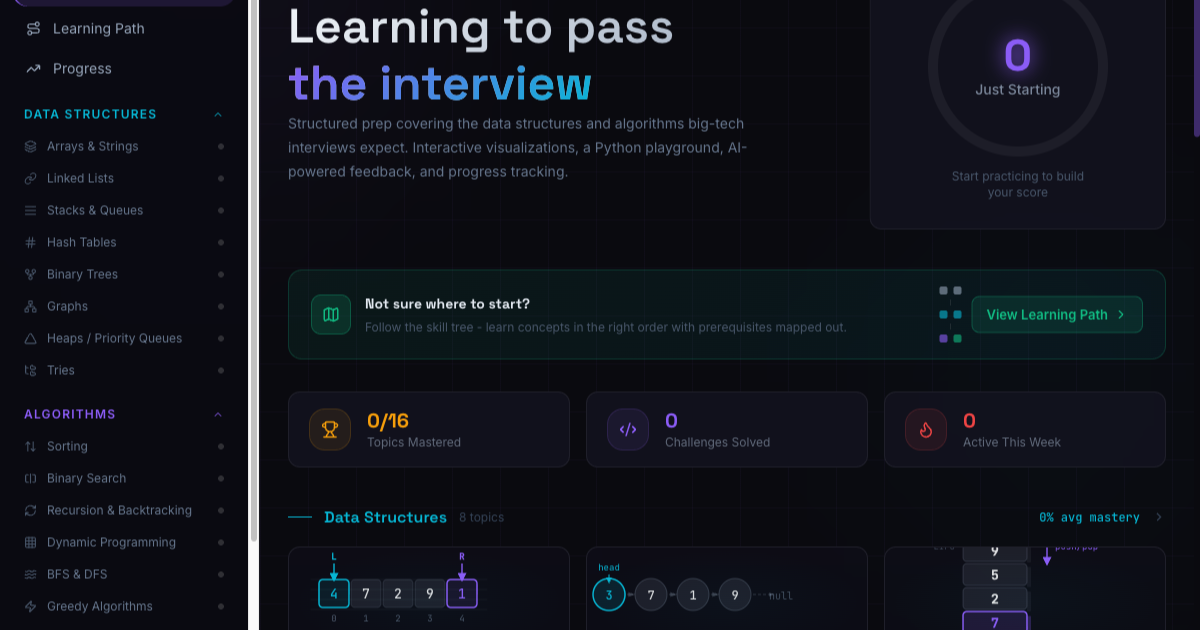
Learningto/Pass: Free, AI-Powered Interview Prep for Developers
Landing a role at a top-tier tech company often hinges on mastering complex data structures and algorithms, coupled with a solid grasp of system design. The problem for many aspiring software developers is that quality

The Composite Design Pattern: Unifying Individual Objects and Groups
As software engineers, we frequently encounter scenarios where we need to manage collections of objects that can be either individual entities or groups containing other entities. Think of a file system with files and