
Run a Local AI Coding Assistant: Ditch the Fees, Boost Privacy
Stop Paying for AI Coding Assistants: Go Local, Stay Private Are you a developer tired of monthly fees, usage limits, and the privacy implications of sending your code to cloud-based AI assistants? What if you could
Stop Paying for AI Coding Assistants: Go Local, Stay Private
Are you a developer tired of monthly fees, usage limits, and the privacy implications of sending your code to cloud-based AI assistants? What if you could have an intelligent coding partner right on your own machine, accessible anytime, without an internet connection or a hefty subscription bill? This guide will show you exactly how to set up a powerful AI coding assistant locally on your computer, using free, open-source tools. You don't need a supercomputer or an expensive graphics card – your existing setup, even a laptop, is often enough.
By following these steps, you'll gain a private, efficient, and cost-effective AI companion that can offer real-time code suggestions, help debug errors, and even explain complex concepts, all while keeping your projects securely on your local disk.
Why Consider a Local AI Assistant?
Many developers believe running an AI requires a massive server farm or an overpriced graphics card. However, this isn't always true. While large, seventy-billion-parameter models can be resource-intensive, smaller, optimized models are designed to run efficiently on standard hardware. Cloud-based assistants often come with usage caps, require you to submit your entire project, and may raise concerns about data privacy. Running a local AI empowers you to bypass these limitations, giving you full control and keeping your sensitive code on your machine.
Before You Begin: What You'll Need
To get started, you'll need just a few things. You don't need the latest and greatest hardware; many existing computers will work just fine.
- A Computer: This can be a desktop or a laptop. Even a five-year-old machine can handle smaller models. While dedicated graphics cards offer higher memory bandwidth, many models are now optimized for CPU-only operation.
- Operating System: GPT4All offers installers for various operating systems.
- System Memory (RAM): A good amount of system memory is critical. While it's possible to run the smallest models with 8 gigabytes of RAM, it's advisable to avoid running other demanding applications simultaneously if your RAM is limited. More RAM provides a smoother experience.
- Internet Connection: You'll need this initially to download the GPT4All application and your chosen AI model.
Step-by-Step Guide: Setting Up Your Local AI with GPT4All
We recommend using GPT4All for its ease of use and smooth performance. It simplifies the process, eliminating complex terminal commands or Python dependencies during setup.
Step 1: Download and Install GPT4All
- Visit the GPT4All website: Open your web browser and navigate to the official GPT4All website.
- Download the installer: Locate and download the installer specifically designed for your operating system (e.g., Windows, macOS, Linux).
- Run the installer: Once the download is complete, execute the installer file. Follow the on-screen prompts; the setup process is straightforward and user-friendly.
Step 2: Choose and Download Your Coding Model
After installing GPT4All, it's time to select an AI model optimized for coding tasks and your hardware.
- Launch GPT4All: Open the application after installation.
- Access the Community Models Explorer: On the main screen, use the search bar to look up available models. You'll be searching within the "Community Models Explorer" tab.
- Search for a suitable coding model: For CPU-only setups, smaller versions of the Qwen2.5-Coder family are excellent choices. Search for "Qwen2.5-Coder" to see available options.
- Select a compact model: Focus on models like the 1.5 billion (1.5B) or 7 billion (7B) parameter instruction models. These are designed to be efficient.
- Choose a quantization: You'll see various quantizations listed. Quantization is a technique that compresses model weights to fit into your system memory more easily. The
q4_0quantization typically offers the best balance of speed and coding capability, significantly reducing the model's size while maintaining quality. - Download the model: Click the download button next to your chosen
q4_0Qwen2.5-Coder model. Wait for the download to complete; the model will then be ready to load.
Step 3: Configure Your Model for Optimal Performance
Before you start chatting, a few quick adjustments will ensure your model runs efficiently on your CPU.
- Open the Local Models View: Click the "Models" icon within the GPT4All interface.
- Select your Qwen model: From the list of downloaded models, select the Qwen model you just acquired.
- Adjust hardware settings: On the right side of the interface, you'll find hardware settings.
- Set Device to CPU: In the "Device" menu, select "CPU". This instructs the application to perform all computations strictly on your central processor, which is essential when you don't have a dedicated graphics card.
- Adjust Context Window: The context window is the model's short-term memory, holding your code and conversation history. For CPU processing, a context length of around 4096 tokens works well. Setting this too high can consume excessive system memory, leading to slow performance. Experiment with this setting if you encounter issues.
Troubleshooting & Best Practices
- Slow Performance: If the AI feels sluggish, first check your context window setting and ensure it's not excessively high. Close any other memory-intensive applications. Consider downloading an even smaller model (e.g., 1.5B instead of 7B) if performance remains an issue.
- Model Not Loading: Double-check that you've set the "Device" to "CPU" in the model's hardware settings. Ensure you have enough available system RAM.
- Debugging Made Easy: One of the most powerful features of a local AI is its ability to help with debugging. When a script fails or throws an error, you can paste the stack trace directly into the local chat window. The assistant can then identify syntax issues, point out logical flaws, explain the root cause, and even suggest code fixes, all while keeping your data private.
- Experimentation: Start with the smallest
q4_0Qwen2.5-Coder model (1.5B) to gauge your system's performance, then incrementally try larger models (e.g., 7B) if your machine handles it well.
The Advantages of Your Own Local AI
With your AI coding assistant running locally, you unlock several key benefits:
- Unparalleled Privacy: Your code and conversations remain on your local disk. You never send private project details to an external cloud server, eliminating data security concerns.
- Offline Functionality: Once downloaded, your AI assistant doesn't require an internet connection to function, making it ideal for working in environments without reliable Wi-Fi or when you simply prefer to stay disconnected.
- Cost Savings: Say goodbye to monthly subscription fees and usage caps. Your local AI assistant runs on your existing hardware, costing you nothing extra beyond the initial setup.
- Real-time Assistance: Get instant code suggestions and debugging help directly in your development environment, without latency caused by network requests.
Conclusion: Take Control of Your Coding Assistant
In an era of rising costs and increasing privacy concerns, running your own local AI coding assistant is a smart, empowering move for any developer. You don't need to invest in new, expensive hardware; your current computer likely has the power to run compact, efficient models. Before you spend another dollar on cloud-based services, give local AI a try. Experience the freedom, privacy, and efficiency of having a dedicated coding partner that's truly yours.
FAQ
Q: Do I need a powerful graphics card to run a local AI?
A: No, not necessarily. While powerful graphics cards (GPUs) can accelerate large models, small models like the Qwen 2.5 Coder family are specifically optimized to run efficiently on your computer's CPU. For example, a 1.5 billion parameter model, when compressed with quantization, can take up only about 2 gigabytes of memory, allowing it to run smoothly on your CPU alone.
Q: How much system memory (RAM) do I need?
A: A good amount of system memory is important. While the smallest models can technically run with 8 gigabytes of RAM, it's recommended to have more if you intend to run other applications simultaneously. Properly setting the context window in GPT4All also helps manage memory usage and prevents the application from becoming slow.
Q: Can I use my local AI assistant offline?
A: Yes! One of the significant advantages of a local AI is its independence from the internet. Once the model weights are downloaded and stored on your local disk, your AI assistant can provide real-time code suggestions and chat features without requiring an active internet connection.
Related articles

in-depth: Chicago-Area Cops Helped HSI Spy on Minnesota Anti-ICE
Chicago-area law enforcement, including local police and HSI agents, conducted undercover surveillance on Minnesota anti-ICE activists at an April 2, 2022, talk in Chicago. This operation was part of a federal conspiracy probe into 15 Minnesota activists facing felony charges related to immigration enforcement resistance. Civil liberties advocates have condemned the surveillance as a troubling intrusion into protected political activity.
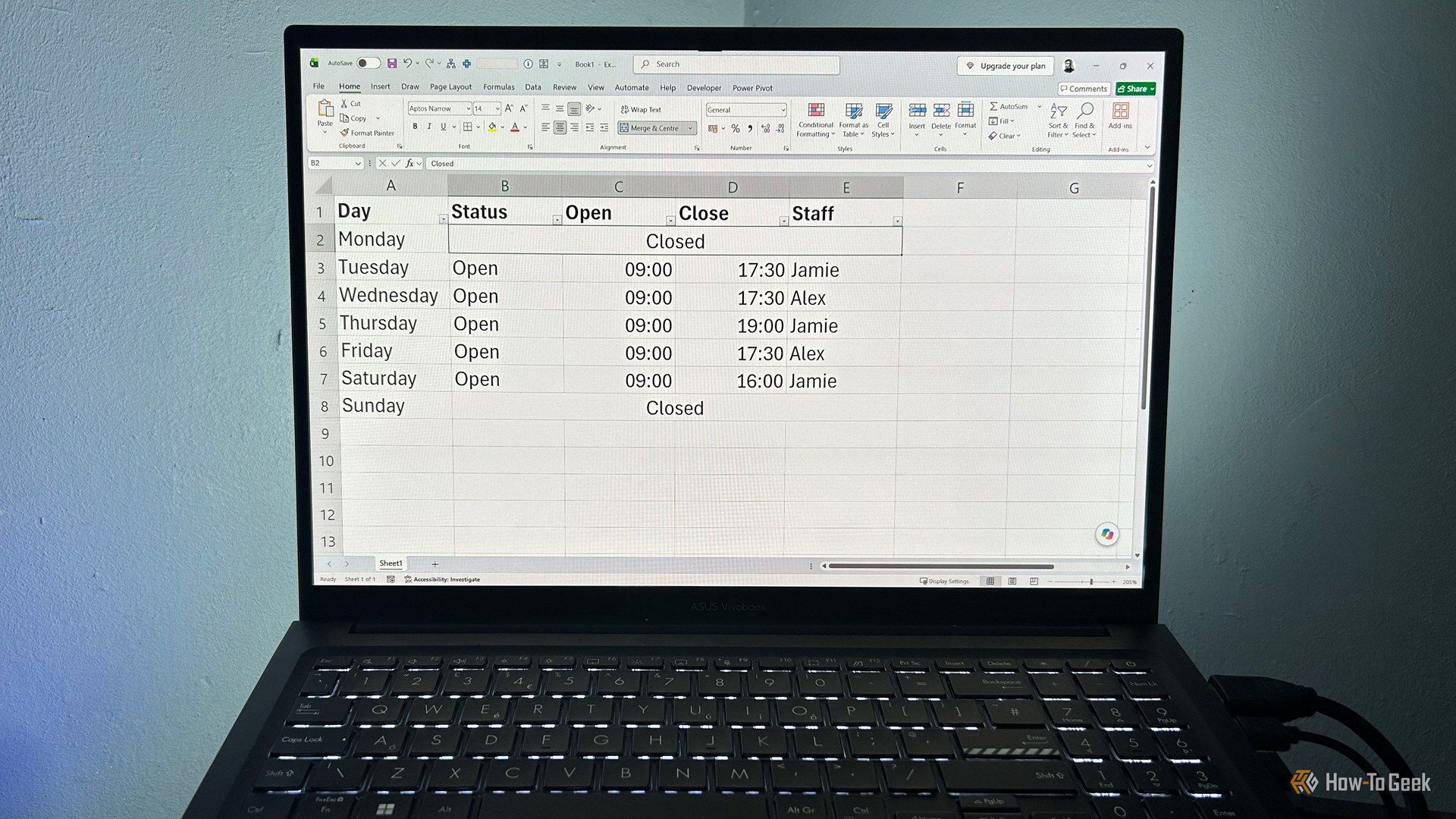
Ditch Merge & Center: The Better Way to Align Text in Excel
Learn to use Excel's "Center Across Selection" to align text across cells without merging, avoiding common data manipulation issues. This guide provides steps to utilize this newly accessible feature and add it to your Quick Access Toolbar.

AI's Confidence vs. Formal Methods' Rigor: Design Flaws & Verification
While AI accelerates code generation, formal methods remain critical for ensuring system correctness. Languages like TLA+ and tools like Quint enable developers to model and verify system designs before coding, catching subtle flaws. Quint makes formal methods more accessible with developer-friendly syntax and executability. This approach is vital for verifying AI-generated code through trace validation and model-based testing, ensuring reliability against real-world data.
Ephemeral PR Preview Environments on GKE: A Deep Dive
Every development team eventually grapples with the limitations of shared staging environments. The familiar scenario: multiple features deployed simultaneously, database migrations clashing, and the phrase "it works on
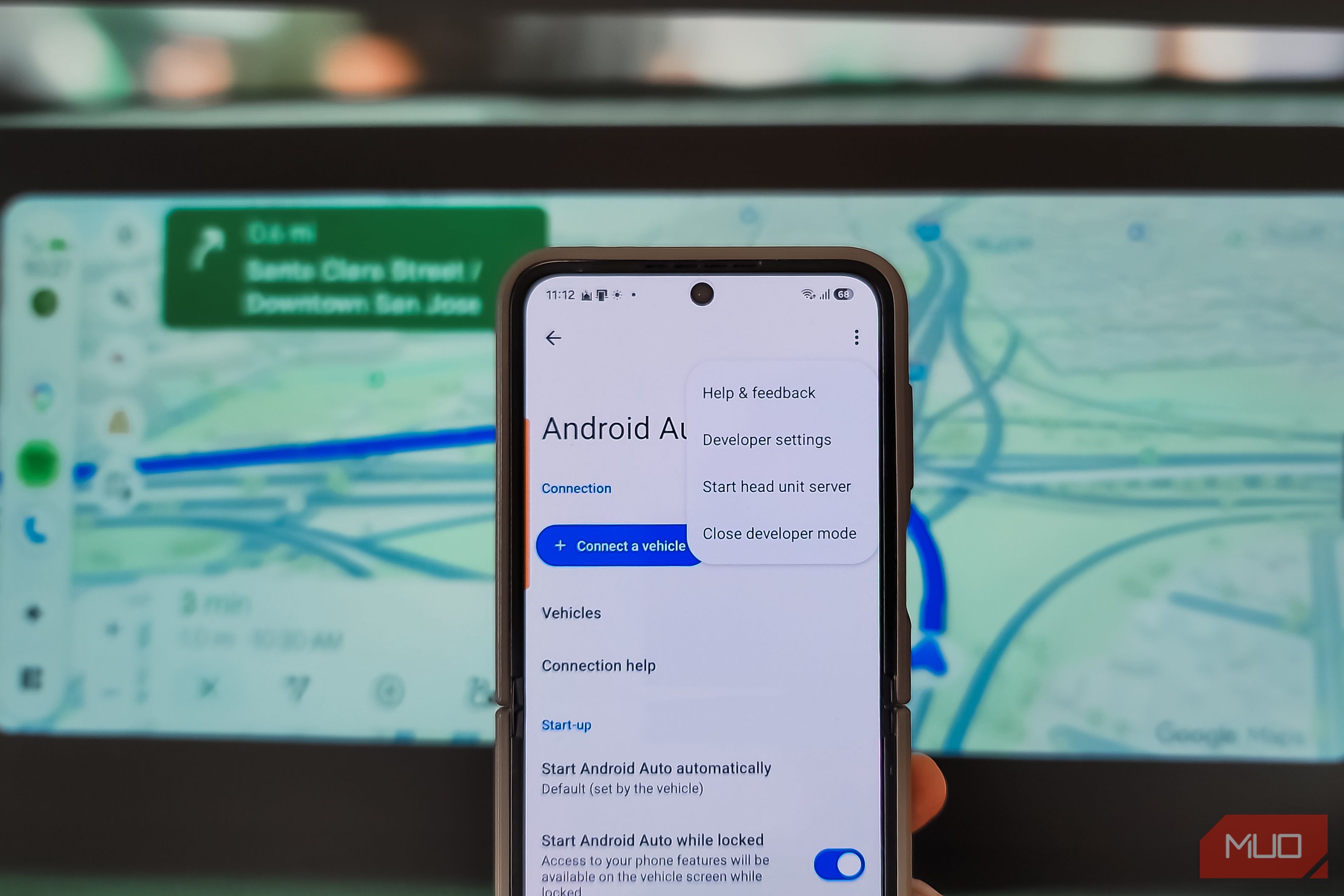
Stop Android Auto Battery Drain: Essential Features to Disable and
Android Auto offers unparalleled convenience, bringing your phone's most useful features directly to your car's display. From navigation and calls to messages and music, it keeps you connected without distracting you
Turn Your Android Phone into a Powerful Desktop Replacement
Learn how to transform your Android phone into a full-fledged desktop computer using external displays and accessories, providing a cost-effective and integrated alternative to new Googlebooks.