
Robotaxis are real now — so is the pushback: Autonomous Vehicles
The rapid expansion of driverless robotaxis is fueling intense regulatory battles across the U.S. Local and federal authorities, unions, and safety advocates are demanding stricter oversight, citing public safety, traffic issues, and job displacement concerns. This signals a critical period of evolving legislation for autonomous transportation.

The commercial deployment of driverless robotaxis is rapidly expanding across the United States, cementing their status as a real-world transportation option. However, this proliferation has ignited an intense and widespread battle over the regulatory frameworks governing the nascent technology, pitting communities, labor unions, and lawmakers against autonomous vehicle developers and state preemption laws.
From New York to California, a growing chorus of opposition is demanding stricter oversight, new fees, and clear safety protocols as driverless cars become a more common sight on city streets. This intensifying debate highlights a critical inflection point where technological innovation meets significant societal and governmental concerns.
Local and State Resistance Mounts
The resistance to unregulated robotaxi expansion is particularly potent at the local and state levels, where the immediate impacts of robotaxi operations are felt most keenly. In New York, Governor Kathy Hochul recently withdrew a proposal that would have paved the way for driverless services outside New York City. This decision came after significant opposition from taxi drivers, influential unions, and state lawmakers, effectively stalling any legalization efforts for commercial driverless services in the state.
Washington D.C. is witnessing a similar struggle, with labor unions actively campaigning against legislation designed to legalize commercial robotaxis. City lawmakers are now deliberating a potential cap of 200 vehicles and a 15-cent-per-mile fee. This proposed fee aims to generate revenue for Metro system upgrades and provide support for workers whose jobs may be displaced by autonomous vehicles, highlighting a direct link between the new technology and its societal costs. A City Council hearing on the matter earlier in July reportedly spanned an exhaustive 10 hours, underscoring the deep divisions and extensive concerns surrounding the technology's introduction.
Even in San Francisco, a city often at the forefront of tech adoption, the tide is turning. Mayor Daniel Lurie, once a known proponent of robotaxis, is now advocating for more stringent regulations. This shift follows multiple incidents where Waymo robotaxis reportedly caused significant traffic disruptions during emergencies and large public events. Adding to the local control, California police were granted the authority in July to formally cite autonomous-vehicle manufacturers if their driverless cars violate traffic laws, a significant step towards holding companies directly accountable for their vehicles' conduct.
Beyond these major urban centers, states that initially welcomed autonomous vehicles are also grappling with effective oversight. Texas, for instance, this year began enforcing new permitting requirements for commercial AV operators, a move to establish clearer operational guidelines. Meanwhile, cities in Florida have voiced frustrations that existing state preemption laws severely limit their ability to enact local regulations and respond to problems caused by autonomous vehicles on their own roads, leading to calls for more localized control.
Federal Scrutiny Intensifies
The regulatory pushback isn't solely confined to state and local governments; federal agencies are also increasing their scrutiny. The National Highway Traffic Safety Administration (NHTSA) recently issued a clear warning to autonomous-vehicle companies. The agency emphasized that driverless vehicles that cannot safely and effectively interact with first responders, such as police and firefighters, pose a tangible danger to public safety. This federal intervention signals a growing demand for AV systems to integrate seamlessly and safely into existing emergency response protocols, ensuring they don't become obstacles in critical situations.
The Road Ahead for Robotaxis
The mounting pushback underscores a critical inflection point for the robotaxi industry. While the technology is proving its viability on public roads, the lack of a cohesive national regulatory framework and the varied local responses create a complex and often contradictory operating environment. The intensifying debate highlights the tension between technological innovation and public concerns regarding safety, economic disruption, and local governance.
As robotaxi services continue their expansion, the regulatory landscape is set to remain dynamic, with ongoing legislative battles and evolving safety standards defining the future of autonomous public transportation. Companies will likely face increasing pressure to demonstrate not only the safety but also the social benefits and seamless integration of their services to gain widespread acceptance.
FAQ
Q: Why is there increasing pushback against robotaxis despite their expansion?
A: As robotaxis become more common, concerns are growing among various groups, including taxi drivers, labor unions, safety advocates, and local governments. Their worries center on issues like public safety incidents, traffic disruptions, potential job displacement, and a lack of local control over the new technology.
Q: What specific regulatory actions are being taken by authorities?
A: Regulatory actions vary by location. New York's governor withdrew a proposal for expansion, DC is considering vehicle caps and a per-mile fee, San Francisco's mayor is calling for tougher rules, and California police can now cite AV manufacturers. Federally, NHTSA has warned companies about vehicles failing to interact safely with first responders. States like Texas are implementing new permits, while Florida cities seek more local control.
Q: What are the key challenges for robotaxi companies moving forward?
A: Robotaxi companies face the challenge of navigating a complex and fragmented regulatory landscape. They will need to address public and governmental concerns regarding safety, demonstrate effective interaction with emergency services, potentially negotiate fees to mitigate societal impacts like job displacement, and work towards gaining social license and trust within diverse communities to ensure long-term viability and widespread adoption.
Related articles

Apple Unveils iPhone Duo: Pricey Foldable Sees Soaring Demand
Apple has officially entered the foldable smartphone arena with the long-anticipated launch of the iPhone Duo. Priced starting at a hefty $1,999, the device features a 5.4-inch outer display and a larger 7.6-inch inner

in-depth: Chicago-Area Cops Helped HSI Spy on Minnesota Anti-ICE
Chicago-area law enforcement, including local police and HSI agents, conducted undercover surveillance on Minnesota anti-ICE activists at an April 2, 2022, talk in Chicago. This operation was part of a federal conspiracy probe into 15 Minnesota activists facing felony charges related to immigration enforcement resistance. Civil liberties advocates have condemned the surveillance as a troubling intrusion into protected political activity.

Mark Wahlberg on using AI in film ‘the right way’ and being open to
Actor Mark Wahlberg believes AI has a place in filmmaking if used responsibly for enhancement, not script generation or actor replacement. At TechCrunch Disrupt, he expressed openness to an AI likeness carrying on his legacy, managed by his family, and emphasized storytelling.
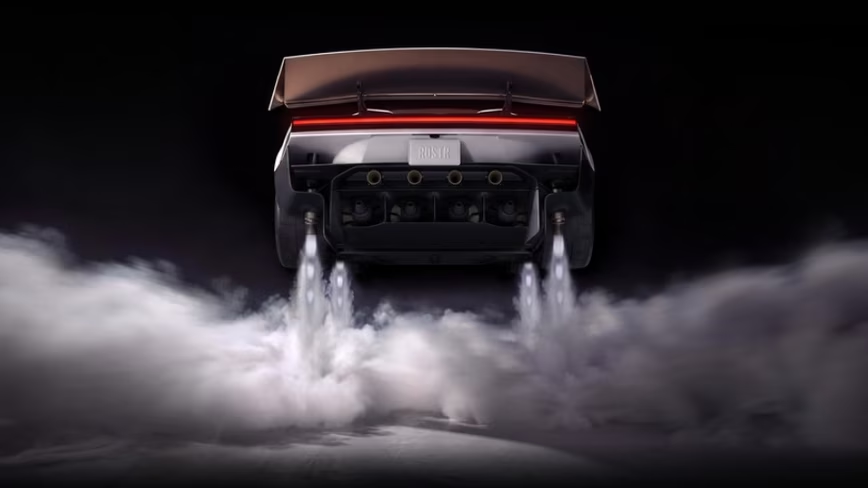
Tesla Unveils Thruster-Equipped Roadster, 2028 Production Targeted
Tesla has unveiled its second-generation Roadster, featuring cold-gas thrusters co-developed with SpaceX, enabling it to jump and flip. The electric sports car demonstrated 0-60mph in an astonishing 0.81 seconds, with production targeted for 2028. This highly anticipated reveal also serves as a key recruitment tool for Tesla's ambitious AI and robotics initiatives.

AI's Confidence vs. Formal Methods' Rigor: Design Flaws & Verification
While AI accelerates code generation, formal methods remain critical for ensuring system correctness. Languages like TLA+ and tools like Quint enable developers to model and verify system designs before coding, catching subtle flaws. Quint makes formal methods more accessible with developer-friendly syntax and executability. This approach is vital for verifying AI-generated code through trace validation and model-based testing, ensuring reliability against real-world data.

Amazon Prime Video Launches AI-Powered Prime 360 for NBA Coverage
Amazon Prime Video is elevating its NBA coverage with the introduction of Prime 360, an AI-powered replay system offering immersive, 'fly through' views of the action. Kicking off its second season, Prime Video also adds Yahoo fantasy integration and gains exclusive Eastern Conference Finals rights, expanding its tech-driven sports broadcast. The new features aim to deliver a unique and interactive viewing experience for basketball fans.