
Roborock vs. Ecovacs: My Pick After Dozens of Robot Vacuum Tests
When diving into the crowded world of robot vacuums, two names consistently rise to the top for market-leading performance: Roborock and Ecovacs. As someone who has rigorously tested dozens of models from both brands, I

When diving into the crowded world of robot vacuums, two names consistently rise to the top for market-leading performance: Roborock and Ecovacs. As someone who has rigorously tested dozens of models from both brands, I can confidently say that while both offer exceptional cleaning, there's a clear winner for most users, and specific scenarios where one truly shines over the other.
My comprehensive testing, spanning years of use, reveals that Roborock edges out Ecovacs as the more consistently dependable and intelligent choice for the average user. However, if mopping is your absolute top priority or you're drawn to cutting-edge features, Ecovacs makes a compelling case. Let's break down why.
App Experience: Intuition vs. Innovation
For any smart home device, the accompanying app is crucial, and robot vacuums are no exception. Roborock's application has been a standout in the market for seven years, evolving into an incredibly intuitive and reliable interface. It allows for effortless creation of multiple floor maps, detailed cleaning routines, customized room-specific behaviors, and precise scheduling. Map management is exceptionally detailed and user-friendly.
Ecovacs, to its credit, has made significant strides in improving its app over the past few years. However, it still falls short of Roborock's seamless experience. While core cleaning scenarios like vacuum-only or combined vacuuming and mopping, along with intensity and water flow adjustments, are readily accessible, finding more intricate customizations and personalization settings can feel buried and less intuitive. This often means a steeper learning curve for users wanting to fine-tune their cleaning experience.
Navigation and Mapping: Smart Paths vs. Hardware Focus
Navigation, the robot's ability to intelligently move through your home, is highly model-dependent within both brands. However, my tests consistently show that a greater number of Roborock models outperform Ecovacs in this critical area. Roborock has historically invested heavily in map accuracy, sophisticated path planning, precise obstacle recognition, and robust recovery behaviors when issues arise. Their reliance on an advanced software stack, processing data from LiDAR, light sensors, and RGB cameras, has led to innovations like the Saros Z70's mechanical arm for obstacle manipulation, showcasing their commitment to robotic intelligence.
Ecovacs, while not lacking in smarts, tends to prioritize innovation in cleaning hardware. This means that while certain high-end Ecovacs models, like the Deebot X11 OmniCyclone or X12 OmniCyclone, can navigate exceptionally well, you'll find more consistent and reliable navigation across Roborock's diverse product range. For consistent and smart floor coverage, Roborock generally leads.
Suction Performance: Close Call in the Lab
When it comes to raw vacuuming power, both brands are strong contenders. Ecovacs often emphasizes high Pascal (Pa) ratings, a measure of suction pressure. However, true suction power combines this pressure with efficient airflow, effective brush design, and proper floor contact. Our lab data, gathered from testing eight Roborock and ten Ecovacs models, provides a clear quantitative comparison:
For sand pickup tests, where specific amounts of sand were distributed on hardwood, low-pile, and medium-pile carpets:
- Roborock: Averaged 85.3% sand removal from hardwood, 51.0% from low-pile carpet, and 50.7% from mid-pile carpet, resulting in an overall average suction score of 62.3%.
- Ecovacs: Averaged 76.2% sand removal from hardwood, 53.6% from low-pile carpet, and 50.4% from mid-pile carpet, for an overall average suction score of 60.1%.
The numbers show a very close competition, with Roborock holding a slight edge in overall average sand pickup. Quantifiably, the difference is minimal enough that either brand will provide strong vacuuming performance.
Obstacle Avoidance: Consistency Wins
True set-it-and-forget-it convenience hinges on a robot vacuum's ability to avoid getting stuck on common household items. In my experience, Roborock vacuums generally detect obstacles sooner and slow down more effectively, increasing their likelihood of navigating around items like socks or charging cords. This translates to fewer rescue missions for you.
However, it's not a universal rule. While Roborock generally offers more consistent obstacle avoidance across various price points, Ecovacs does have flagship models that truly excel. The Ecovacs Deebot X12 OmniCyclone, for instance, has outperformed every Roborock model we've tested in our lab for obstacle avoidance. But when you look beyond the premium offerings, Roborock maintains a more reliable performance standard across its lineup.
Mopping Feature: Ecovacs' Strong Suit
Here's where Ecovacs truly shines. They boast a long history of innovative mopping solutions and consistently feature superior mopping capabilities across their range. While Roborock largely stuck with iterative updates to its single microfiber mop pad system for years, Ecovacs pioneered rotating mop pads and more recently introduced the effective Ozmo roller mop (developed by its sister company, Tineco). Roborock has only just introduced a single roller mop model this year.
My tests confirm Ecovacs' advantage. Their robots are more efficient at tackling difficult, dried-on stains like spilled juice, coffee, syrup, and soy sauce. This points to Ecovacs not only having more innovative mop designs but also exerting greater downward pressure on the floor, resulting in a more thorough clean.
The Verdict: Roborock for Dependability, Ecovacs for Mopping Innovation
For most users seeking a consistently dependable robot vacuum that will perform reliably for years without feeling outdated, Roborock is my top recommendation. It excels in app user experience, general navigation intelligence, consistent obstacle avoidance across its models, and offers excellent vacuuming performance. It's an ideal choice for homes with a mix of floor types and users who value a robust, intelligent robotic core.
However, if your home features primarily hard floors (hardwood, tile, vinyl planks) and you prioritize aggressive innovation in mopping technology, Ecovacs is an excellent choice. Their advanced mopping systems are undeniably superior for tackling sticky messes, and they are quick to integrate ambitious new features. Both brands offer a wide range of prices, voice control, self-emptying and self-washing options, and customizable maps, ensuring advanced features are available regardless of your choice.
FAQ
Q: Which brand has a better mobile app? A: Roborock generally offers a more intuitive, easy-to-navigate, and reliable mobile application with detailed customization for maps and cleaning routines. While Ecovacs has improved, some settings can still feel less accessible.
Q: Which brand is better for tackling dried-on stains? A: Ecovacs consistently features superior mopping capabilities and is more efficient at removing difficult dried-on stains from hard floors, thanks to its innovative mop designs and greater downward pressure.
Q: Is there a significant difference in vacuum suction power between the two brands? A: According to lab tests, Roborock averaged 62.3% sand pickup, while Ecovacs averaged 60.1%. While Roborock had a slight edge, the difference in quantifiable suction performance is minimal, meaning both brands offer strong vacuuming capabilities.
Related articles
Android 17 QPR2 Beta 7.1: The Performance Relief You've Been Waiting
Android 17 QPR2 Beta 7.1: Finally Fixing the QPR1 Performance Woes Verdict: Android 17 QPR2 Beta 7.1 is a crucial and highly anticipated software update for Google Pixel users, specifically targeting and resolving the

DJI Solo Video Setups: Smart Choices for Lone Creators
This review delves into DJI's recommended solo video setups, highlighting the Osmo Pocket 3 Creator Combo as a top pick for its integrated camera, gimbal, and mic. It also covers stabilizers like the Osmo Mobile 8 and RS 4, and the DJI Mic Mini series for enhanced audio, providing honest pros, cons, and clear buying advice.

Ars Technica's Rocket Report: Your Essential Space Industry Briefing
Quick Verdict Ars Technica's Rocket Report, presented by veteran space reporter Stephen Clark, offers an invaluable and meticulously organized weekly (or similar frequency, implied by "Edition 9.15") digest of the most

Apple iPhone Duo: A Daring Debut with Notable Compromises
Apple's highly anticipated iPhone Duo, priced at $2,000, has gone on pre-order. While hailed as "Apple's most exciting device in a decade" for its innovative foldable design and immersive display, it comes with significant drawbacks like the absence of FaceID and a premium camera.
Tesla Unveils Thruster-Equipped Roadster, 2028 Production Targeted
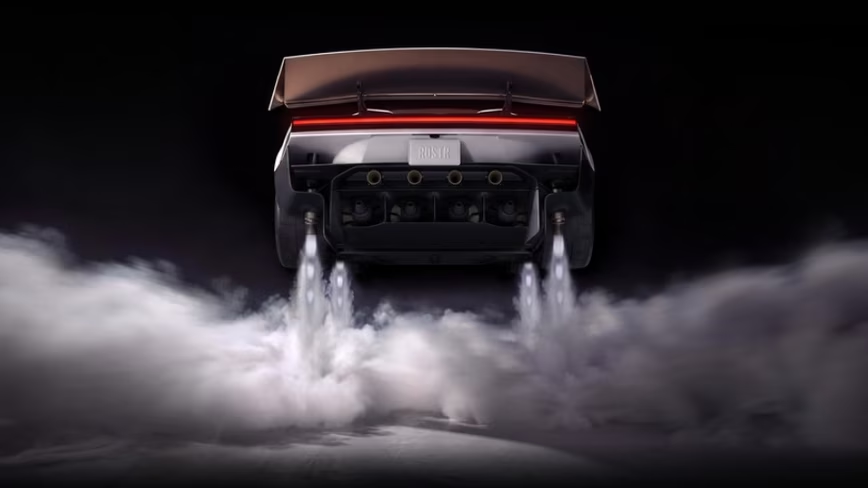
Tesla has unveiled its second-generation Roadster, featuring cold-gas thrusters co-developed with SpaceX, enabling it to jump and flip. The electric sports car demonstrated 0-60mph in an astonishing 0.81 seconds, with production targeted for 2028. This highly anticipated reveal also serves as a key recruitment tool for Tesla's ambitious AI and robotics initiatives.
KDE Plasma 6.8: A Future-Focused 30th Anniversary Update
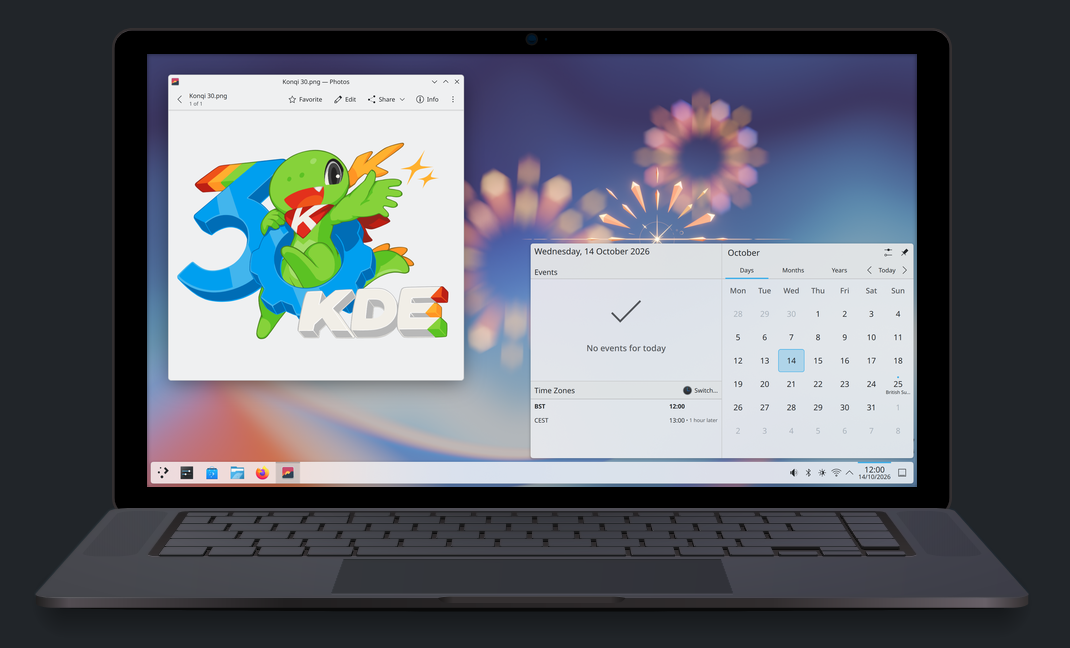
Quick Verdict KDE Plasma 6.8, arriving as the "30th Anniversary Edition," is a pivotal release that decisively pushes the desktop environment into the future. With a definitive farewell to native X11 sessions and a