
regional: Pet project: Seattle startup studio’s new app connects
Seattle startup studio Conduit Venture Labs has launched Sniff, an iOS app connecting neighbors through their dogs. Founded by Amish Patel, it aims to combat urban loneliness by fostering real-world connections among pet owners in geofenced communities.

Seattle's tech scene has unleashed a new social networking app, Sniff, aiming to bridge community divides through a universal love for dogs. Developed by Conduit Venture Labs, the startup studio co-founded by Microsoft veteran Amish Patel, Sniff is an iOS application designed to transform chance encounters between canines into lasting human connections. Launched initially in several Seattle neighborhoods, the app seeks to combat urban loneliness by fostering real-world interactions among dog owners.
The inspiration for Sniff stemmed from Patel's own experience in Seattle's Madrona neighborhood, where his standard poodle, Chewie, became his primary conduit for meeting neighbors. Patel observed that dog parents often know each other by their pets' names before their own, leading to a strong, albeit informally organized, community. This informal connection sparked the idea for a structured platform.
Patel points to a broader societal problem: the rising tide of loneliness and social isolation, a concern highlighted by the U.S. Surgeon General’s 2023 advisory. With many people feeling disconnected from their neighbors, Sniff posits that dogs can serve as natural catalysts for building local community bonds. The app leverages this inherent social dynamic to encourage offline engagement.
How Sniff Builds Connections
To ensure a secure and authentic environment, Sniff employs robust verification methods. The app confirms that users are real individuals residing within the neighborhoods they claim, utilizing address and location data. This commitment to trust and safety is where artificial intelligence plays a crucial role, verifying identities and geographic residency rather than dictating social matches.
Once inside the geofenced app, users can browse profiles that prioritize their dogs, displaying only pet photos and names. Personal human details are kept private until a connection is willingly made. After connecting, neighbors can communicate directly within the app, organize dog playdates, or even request assistance with dog walking or pet sitting, fostering a sense of mutual support and community resilience.
Local Rollout and Community Engagement
Sniff is currently undergoing a pilot phase across key Seattle neighborhoods, including Madrona, Leschi, Madison Park, the Central District, and Capitol Hill. While residents in any Seattle area can sign up, neighborhood access is gradually activated as enough engaged users join, ensuring a vibrant local community from the outset. Madrona, the initial launch zone, already boasts approximately 100 active users.
To accelerate community growth, Sniff is collaborating with the Seattle Chamber of Connection, an organization where Patel serves on the board. This partnership recruits "Pack Leaders" – local dog owners who take on the role of community organizers, facilitating meetups and introducing new members to their neighborhood's dog-loving network. This grassroots approach is designed to cultivate stronger local ties.
Behind Conduit Venture Labs
Sniff represents the fourth in-house venture from Conduit Venture Labs, co-founded by Patel and Susan Paley, the former CEO of Beats by Dre. The studio specializes in "hard-tech" startups that integrate both hardware and software solutions. Patel's extensive background includes eight years at Microsoft, working on projects like Xbox Kinect and Microsoft Band, before transitioning to the startup ecosystem with companies such as Katalyst and Vicis.
Conduit's portfolio also includes Fluffy, a computer vision platform tailored for doggy daycares, and an upcoming audiobook AI venture focused on combating loneliness, which is preparing for a public seed funding round this autumn. A fourth health tech project from the studio remains undisclosed, showcasing Conduit's diverse interests in applying technology to everyday challenges.
Future Plans and Broader Impact
The development of the Sniff app has followed a lean methodology, initially relying on a small team of developers and a product lead, with Patel overseeing multiple studio projects. The team has since adopted AI-assisted development to enhance speed and efficiency, preparing for the app's broader expansion. The next strategic step involves securing a full-time CEO to lead Sniff as it pursues external capital and explores potential hardware integrations to complement its software offerings.
Ultimately, Sniff aims to amplify the inherent social nature of dogs, allowing them to connect with other canines and, by extension, their human companions. As Patel succinctly puts it, dogs "just get to be more social," fostering real-world connections beyond the digital scroll. The app hopes to transform routine dog walks into opportunities for genuine community building, one "sniff" at a time.
FAQ
Q: How does Sniff ensure user safety and authenticity within its community?
A: Sniff prioritizes trust and safety by verifying users' identities and residential addresses within specific neighborhoods. The app utilizes address and location data to confirm that members are real people living where they claim, and it operates within geofenced boundaries, allowing users to connect only with nearby dog owners. AI assists in these verification processes.
Q: What unique features does Sniff offer beyond basic social networking?
A: Sniff stands out by initially presenting only dog profiles, keeping human names and personal details private until a connection is established. Once connected, neighbors can use the app to message each other, schedule dog meetups, or even arrange help with dog walking or sitting, fostering a practical support network rooted in their shared love for pets.
Q: What are Sniff's future plans for growth and development?
A: Sniff is currently seeking a dedicated full-time CEO to lead the company as it raises capital. The team plans to continue leveraging AI-assisted development for faster iteration and is exploring the integration of hardware features to enhance the app's functionality. The goal is to expand beyond its initial Seattle pilot neighborhoods and grow its community.
Related articles

Apple Unveils iPhone Duo: Pricey Foldable Sees Soaring Demand
Apple has officially entered the foldable smartphone arena with the long-anticipated launch of the iPhone Duo. Priced starting at a hefty $1,999, the device features a 5.4-inch outer display and a larger 7.6-inch inner

in-depth: Chicago-Area Cops Helped HSI Spy on Minnesota Anti-ICE
Chicago-area law enforcement, including local police and HSI agents, conducted undercover surveillance on Minnesota anti-ICE activists at an April 2, 2022, talk in Chicago. This operation was part of a federal conspiracy probe into 15 Minnesota activists facing felony charges related to immigration enforcement resistance. Civil liberties advocates have condemned the surveillance as a troubling intrusion into protected political activity.

Mark Wahlberg on using AI in film ‘the right way’ and being open to
Actor Mark Wahlberg believes AI has a place in filmmaking if used responsibly for enhancement, not script generation or actor replacement. At TechCrunch Disrupt, he expressed openness to an AI likeness carrying on his legacy, managed by his family, and emphasized storytelling.

Tesla Unveils Thruster-Equipped Roadster, 2028 Production Targeted
Tesla has unveiled its second-generation Roadster, featuring cold-gas thrusters co-developed with SpaceX, enabling it to jump and flip. The electric sports car demonstrated 0-60mph in an astonishing 0.81 seconds, with production targeted for 2028. This highly anticipated reveal also serves as a key recruitment tool for Tesla's ambitious AI and robotics initiatives.

Amazon Prime Video Launches AI-Powered Prime 360 for NBA Coverage
Amazon Prime Video is elevating its NBA coverage with the introduction of Prime 360, an AI-powered replay system offering immersive, 'fly through' views of the action. Kicking off its second season, Prime Video also adds Yahoo fantasy integration and gains exclusive Eastern Conference Finals rights, expanding its tech-driven sports broadcast. The new features aim to deliver a unique and interactive viewing experience for basketball fans.
regional: A two-person Seattle startup lands $1M to reinvent
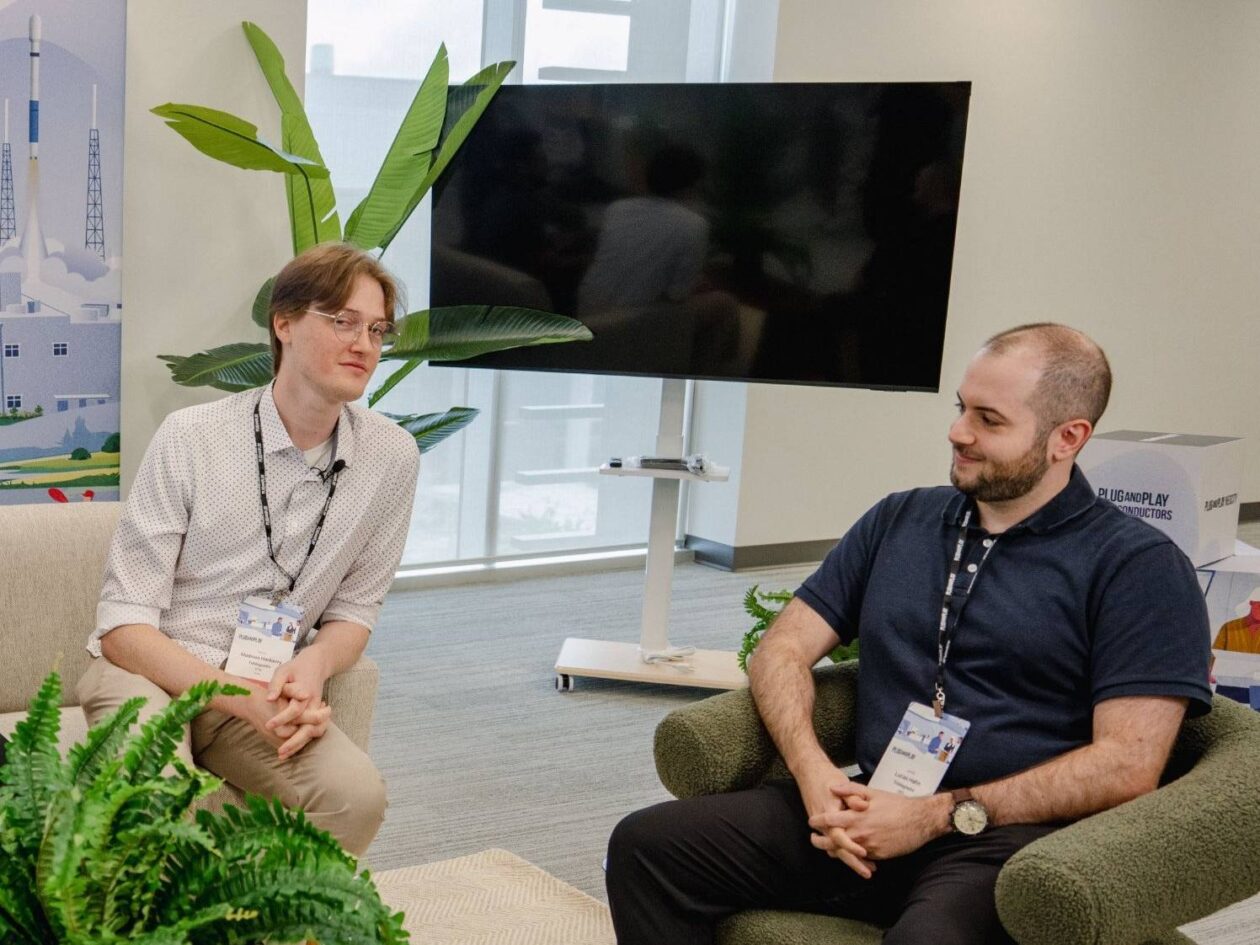
Seattle startup TriMagnetix has secured $1 million to develop semiconductor chips that consume 800 times less energy and are radiation-resistant. The two-person company, leveraging nanomagnetic technology, is targeting space applications and data centers. With new funding and key partnerships, TriMagnetix aims for commercial sales within a year.