
regional: Opinion: Governor’s new economic council snubs startups
Seattle angel investor Charles Fitzgerald criticizes Washington Gov. Bob Ferguson's new Economic Development Council as backward-looking, lacking startup and VC representation, and ignoring AI. He argues the council's composition and focus overlook critical drivers of future economic growth and fail to address the state's deteriorating business climate.

Washington Governor Bob Ferguson recently established an Economic Development Council with the stated goal of strengthening the state's economy and expanding opportunities for its residents. However, this initiative, announced last week, has drawn sharp criticism from Seattle angel investor Charles Fitzgerald. In an opinion piece for GeekWire, Fitzgerald argues that the council is fundamentally backward-looking, conspicuously lacks representation from the vibrant startup and venture capital ecosystems, and critically overlooks the transformative power of artificial intelligence (AI), which he identifies as the singular most impactful force currently shaping Washington's economic landscape.
A Council Under Scrutiny
Fitzgerald contends that while Governor Ferguson may finally be acknowledging a deteriorating business climate in Washington, the composition of his new council reveals a concerning economic mindset. The group, which the Governor lauded as a “historic convening,” consists of more nonprofits and governmental agencies than actual businesses. Notably, with the exception of one small homebuilder, none of the participating companies were founded in the 21st century, suggesting a focus on traditional industries rather than future innovation.
A significant point of contention is the complete absence of entrepreneurs, the startup community, or any stakeholders actively building the next generation of industries. Fitzgerald highlights the irony that the mayor of Cleveland appears more connected to the tech startup community than any Washington state politician. Furthermore, several of the council's largest corporate members, including Amazon, Microsoft, and Boeing, have recently been associated with mass layoffs and significant shifts of their workforces outside Washington state, raising questions about their suitability as primary drivers of future local job growth.
The Glaring Omission of AI
Perhaps the most striking criticism leveled against the Governor's economic strategy is its apparent obliviousness to artificial intelligence. While Governor Ferguson's announcement name-checked areas like quantum computing, advanced manufacturing, and clean energy, AI was conspicuously absent from the discussion. This omission is particularly troubling given that AI is widely recognized as the most significant force currently reshaping global and local economies.
Fitzgerald emphasizes that new job creation predominantly originates from young, growing companies, with AI serving as a major catalyst for new company formation. Beyond startups, AI is poised to fundamentally transform knowledge work and significantly boost productivity across all organizations, including government entities. Forgetting to acknowledge or strategically plan for AI, Fitzgerald argues, makes it “impossible to talk about 'the next chapter of economic prosperity for our state.'”
Reassessing Economic Growth Strategies
The council is set to meet quarterly and provide advisory reports to the Governor. Fitzgerald's stark recommendation for its first report is a simple, direct message: “STOP DRIVING BUSINESS AWAY.” He points to recent examples of successful companies like Starbucks and Janicki Industries relocating jobs outside Washington as evidence of a challenging business environment, despite Ferguson's claim of having “a direct line of communication” with Starbucks.
While Governor Ferguson has indicated he would be “open to more aggressive financial incentives to attract out-of-state business,” Fitzgerald critiques this as a “zero-sum view” of job creation. Instead, he advocates for prioritizing the retention of existing companies and fostering an environment conducive to organic growth. This would involve ensuring effective public services, predictable tax policies, and sensible regulation, suggesting a need for fundamental changes in how state government currently operates.
Lessons from Cleveland's Past
Fitzgerald draws a compelling parallel between Washington's current economic crossroads and the historical experience of Cleveland. He has previously warned that the software era might be ending, necessitating a new economic strategy for Washington state, as prosperity is not guaranteed. He recounts Cleveland's painful decline when its industrial economy fractured, noting that the city is still striving for recovery decades later.
The mayor of Cleveland, during a recent GeekWire visit, offered a poignant lesson: “We didn’t pivot fast enough, and the world left us behind.” This serves as a cautionary tale for Washington, emphasizing the need for proactive and forward-thinking economic leadership. While acknowledging the Governor's positive intent to seek “the next chapter of economic prosperity,” Fitzgerald concludes that genuine economic growth stems not from committees, but from a foundational principle of “first do no harm” to the existing business ecosystem.
FAQ
Q: What are the primary criticisms leveled against Governor Ferguson's new Economic Development Council?
A: The council is criticized for being backward-looking, comprising more nonprofits and government agencies than businesses, and lacking representation from startups, entrepreneurs, and venture capitalists. Critics also point out that many of its major corporate members have recently conducted layoffs or moved operations out of state, and that it significantly overlooks the role of artificial intelligence in the modern economy.
Q: Why is the omission of AI from the council's focus considered a significant oversight?
A: AI is identified as the single biggest force shaping today's economy, driving new company formation and dramatically increasing productivity across all sectors. The author argues that it's impossible to discuss future economic prosperity without addressing AI's implications, making its absence from the council's agenda a critical misstep.
Q: What alternative economic strategies does the opinion piece suggest for Washington state?
A: Instead of offering financial incentives to lure businesses from other states, the piece advocates for nurturing an environment conducive to organic growth. This includes prioritizing the retention of existing companies, ensuring effective and efficient public services, implementing predictable tax policies, and establishing sensible regulations.
Related articles

Apple Unveils iPhone Duo: Pricey Foldable Sees Soaring Demand
Apple has officially entered the foldable smartphone arena with the long-anticipated launch of the iPhone Duo. Priced starting at a hefty $1,999, the device features a 5.4-inch outer display and a larger 7.6-inch inner

in-depth: Chicago-Area Cops Helped HSI Spy on Minnesota Anti-ICE
Chicago-area law enforcement, including local police and HSI agents, conducted undercover surveillance on Minnesota anti-ICE activists at an April 2, 2022, talk in Chicago. This operation was part of a federal conspiracy probe into 15 Minnesota activists facing felony charges related to immigration enforcement resistance. Civil liberties advocates have condemned the surveillance as a troubling intrusion into protected political activity.

Mark Wahlberg on using AI in film ‘the right way’ and being open to
Actor Mark Wahlberg believes AI has a place in filmmaking if used responsibly for enhancement, not script generation or actor replacement. At TechCrunch Disrupt, he expressed openness to an AI likeness carrying on his legacy, managed by his family, and emphasized storytelling.

Tesla Unveils Thruster-Equipped Roadster, 2028 Production Targeted
Tesla has unveiled its second-generation Roadster, featuring cold-gas thrusters co-developed with SpaceX, enabling it to jump and flip. The electric sports car demonstrated 0-60mph in an astonishing 0.81 seconds, with production targeted for 2028. This highly anticipated reveal also serves as a key recruitment tool for Tesla's ambitious AI and robotics initiatives.

Amazon Prime Video Launches AI-Powered Prime 360 for NBA Coverage
Amazon Prime Video is elevating its NBA coverage with the introduction of Prime 360, an AI-powered replay system offering immersive, 'fly through' views of the action. Kicking off its second season, Prime Video also adds Yahoo fantasy integration and gains exclusive Eastern Conference Finals rights, expanding its tech-driven sports broadcast. The new features aim to deliver a unique and interactive viewing experience for basketball fans.
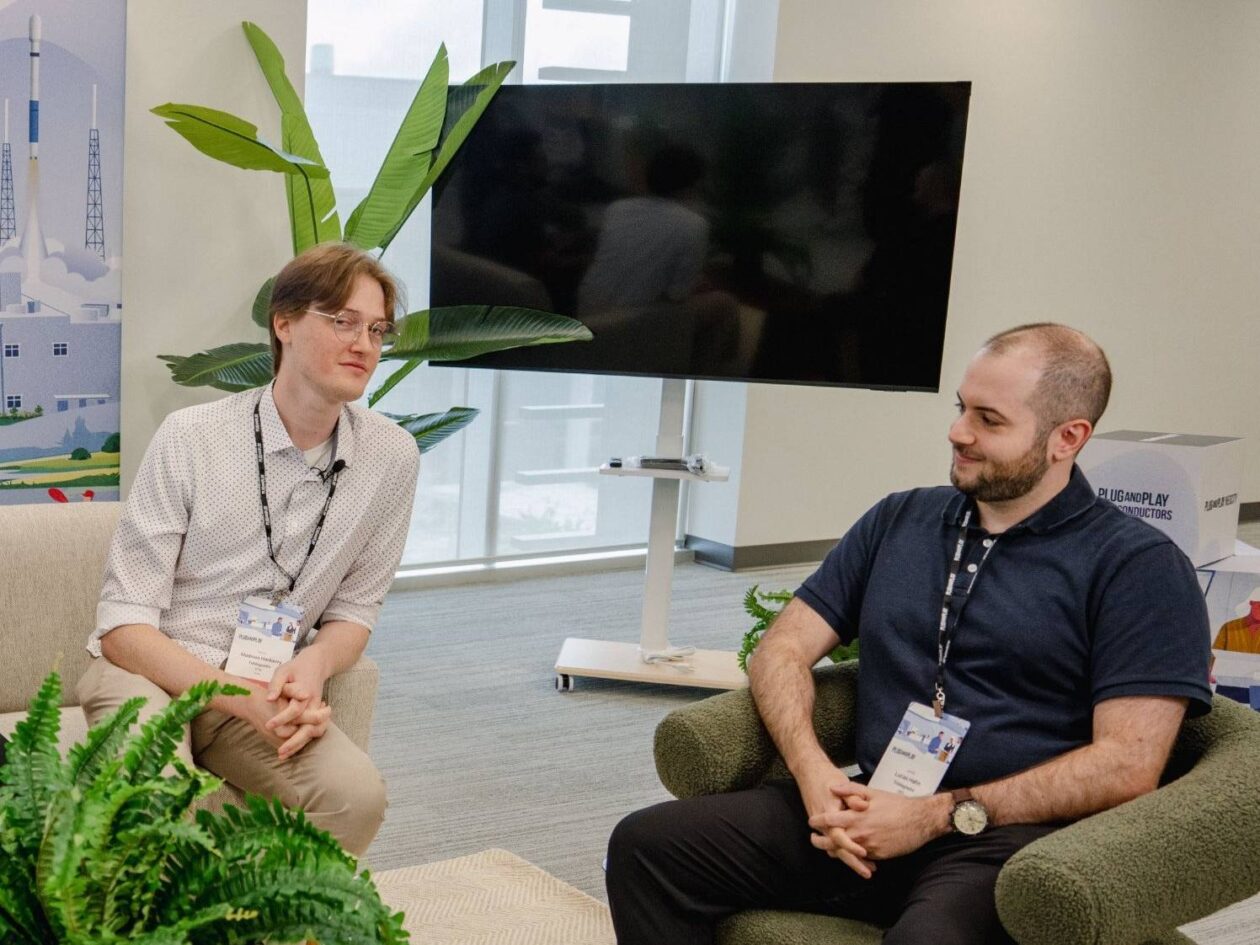
regional: A two-person Seattle startup lands $1M to reinvent
Seattle startup TriMagnetix has secured $1 million to develop semiconductor chips that consume 800 times less energy and are radiation-resistant. The two-person company, leveraging nanomagnetic technology, is targeting space applications and data centers. With new funding and key partnerships, TriMagnetix aims for commercial sales within a year.