
regional: Opinion: Don’t let the OpenAI soap opera hide the
A prominent artificial intelligence veteran is urging federal intervention regarding OpenAI's controversial conversion from a nonprofit to a for-profit entity, arguing that the ongoing legal battles, particularly the

A prominent artificial intelligence veteran is urging federal intervention regarding OpenAI's controversial conversion from a nonprofit to a for-profit entity, arguing that the ongoing legal battles, particularly the Elon Musk versus Sam Altman courtroom drama, are obscuring a dangerous precedent for American charity law. Oren Etzioni, founder of the Allen Institute for AI, states that this conversion challenges the fundamental nature of nonprofits and calls for Washington D.C. to address the issue, as state attorneys general have, in his view, failed to act decisively.
Writing in an opinion piece published on May 18, 2026, Etzioni warns that if unchecked, OpenAI’s re-structuring could legitimize a pathway for tax-advantaged charities to become lucrative private corporations once their assets gain significant value. He asserts that a nonprofit status signifies a lasting commitment, not a temporary convenience to be abandoned when profitability emerges.
Etzioni's core concern revolves around the question: can a charity, initially funded by tax-deductible donations, legitimately transform into a for-profit corporation? He contends that if the answer is affirmative, it effectively renders the term "nonprofit" meaningless, allowing founders to redefine its purpose once an asset becomes valuable enough. This, he argues, creates a blueprint for future nonprofit-to-for-profit conversions in the technology sector and beyond, a precedent that has been accepted without proper judicial review.
He highlights the November 2023 upheaval at OpenAI, where CEO Sam Altman was briefly fired and then reinstated, as the critical "empirical test" of the nonprofit board's true governance. Etzioni points to Microsoft CEO Satya Nadella's testimony, where he described stepping in as "the adult in the room," and the board's authority dissolving within five days due to pressure from employees and investors. This event, according to Etzioni, demonstrated that the nonprofit board’s control was merely superficial, effectively becoming "a rubber stamp of the for-profit," as stated by Public Citizen in a September 2025 letter to state attorneys general.
Despite forceful arguments from UCLA legal scholars, Public Citizen, Nobel laureates, fifty California foundations, and former OpenAI employees, both California Attorney General Rob Bonta and Delaware Attorney General Kathy Jennings approved OpenAI’s recapitalization plan in October 2025. Their statements tracked closely, blessing the conversion based on assurances that nonprofit control would be maintained. Etzioni contends that the true test of this control, the Altman firing, subsequently proved these assurances to be hollow.
Etzioni suggests that the reasons behind the state attorneys general not pursuing a stronger case were likely political, given the immense value of OpenAI, its powerful investors, and the U.S. government's explicit industrial policy for AI dominance. While the ongoing Oakland trial involving Elon Musk could result in significant rulings, such as an unwinding of the recapitalization or damages, Etzioni believes it won't resolve the broader precedent problem because it's tied to Musk's specific claims and standing.
For a lasting solution, Etzioni advocates for a federal case. He argues that with state legal avenues exhausted, the path forward must involve federal bodies like the IRS, congressional tax-writing committees, or federal antitrust agencies. A federal case, he suggests, would establish a clear deterrent, ensuring that other AI labs or nonprofits considering similar maneuvers would face tangible consequences. This precedent, he stresses, extends far beyond the AI industry, impacting the integrity of the entire nonprofit system and those who chose the charitable path in good faith.
FAQ
Q: What is the main concern raised by Oren Etzioni regarding OpenAI?
A: Etzioni argues that OpenAI's conversion from a nonprofit to a for-profit entity sets a dangerous precedent for American charity law, potentially allowing tax-advantaged charitable assets to be converted into lucrative private corporations without sufficient legal oversight.
Q: Why does Etzioni believe the November 2023 events at OpenAI are significant?
A: He sees the brief firing and swift reinstatement of CEO Sam Altman in November 2023 as an "empirical test" that proved the nonprofit board's authority was not genuinely exercised, indicating that the for-profit structure's influence superseded the nonprofit's governance.
Q: What solution does Etzioni propose to address this precedent?
A: Etzioni suggests that a federal case, involving entities like the IRS, congressional tax committees, or federal antitrust agencies, is necessary to establish a binding precedent and prevent similar nonprofit-to-for-profit conversions in the future, as he believes state attorneys general have not adequately addressed the issue.
Related articles

Apple Unveils iPhone Duo: Pricey Foldable Sees Soaring Demand
Apple has officially entered the foldable smartphone arena with the long-anticipated launch of the iPhone Duo. Priced starting at a hefty $1,999, the device features a 5.4-inch outer display and a larger 7.6-inch inner

in-depth: Chicago-Area Cops Helped HSI Spy on Minnesota Anti-ICE
Chicago-area law enforcement, including local police and HSI agents, conducted undercover surveillance on Minnesota anti-ICE activists at an April 2, 2022, talk in Chicago. This operation was part of a federal conspiracy probe into 15 Minnesota activists facing felony charges related to immigration enforcement resistance. Civil liberties advocates have condemned the surveillance as a troubling intrusion into protected political activity.

Mark Wahlberg on using AI in film ‘the right way’ and being open to
Actor Mark Wahlberg believes AI has a place in filmmaking if used responsibly for enhancement, not script generation or actor replacement. At TechCrunch Disrupt, he expressed openness to an AI likeness carrying on his legacy, managed by his family, and emphasized storytelling.
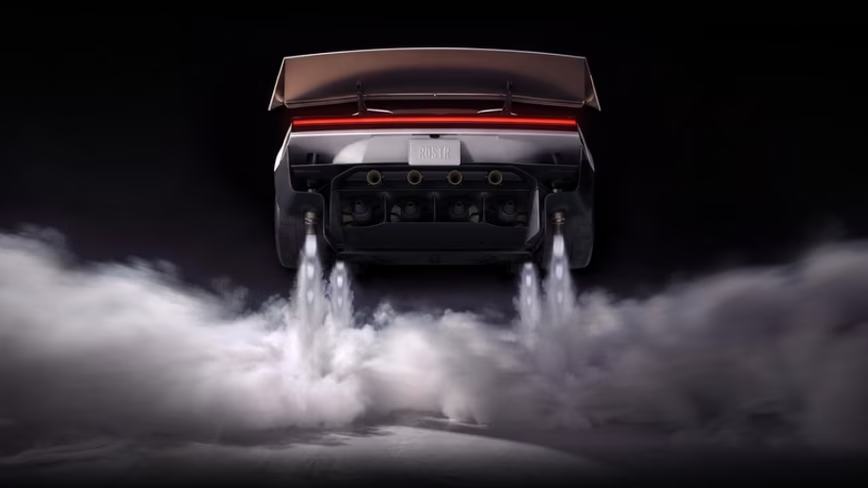
Tesla Unveils Thruster-Equipped Roadster, 2028 Production Targeted
Tesla has unveiled its second-generation Roadster, featuring cold-gas thrusters co-developed with SpaceX, enabling it to jump and flip. The electric sports car demonstrated 0-60mph in an astonishing 0.81 seconds, with production targeted for 2028. This highly anticipated reveal also serves as a key recruitment tool for Tesla's ambitious AI and robotics initiatives.
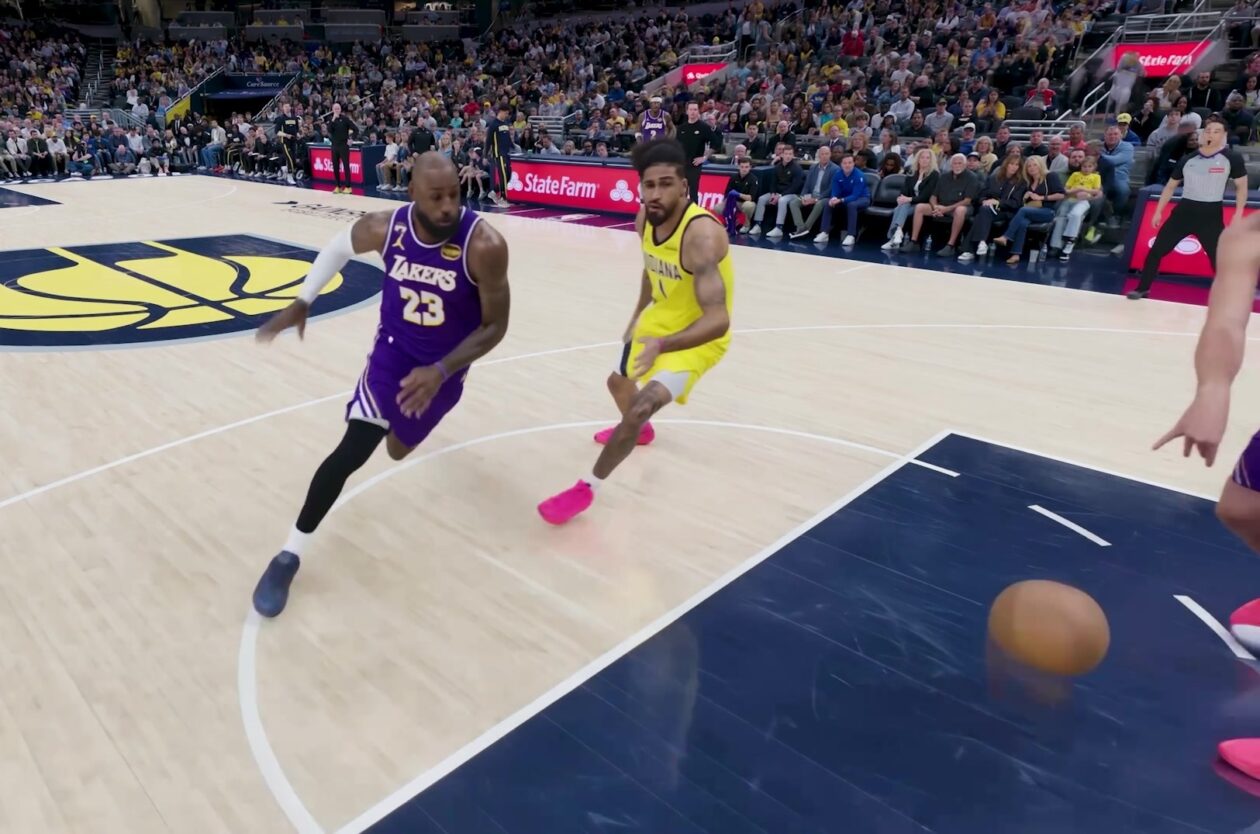
Amazon Prime Video Launches AI-Powered Prime 360 for NBA Coverage
Amazon Prime Video is elevating its NBA coverage with the introduction of Prime 360, an AI-powered replay system offering immersive, 'fly through' views of the action. Kicking off its second season, Prime Video also adds Yahoo fantasy integration and gains exclusive Eastern Conference Finals rights, expanding its tech-driven sports broadcast. The new features aim to deliver a unique and interactive viewing experience for basketball fans.

KDE Plasma 6.8: A Future-Focused 30th Anniversary Update
Quick Verdict KDE Plasma 6.8, arriving as the "30th Anniversary Edition," is a pivotal release that decisively pushes the desktop environment into the future. With a definitive farewell to native X11 sessions and a