
regional: Etzioni on AI: The colorful and cranky language of the AI
AI researchers Oren Etzioni and Daniel S. Weld have released a new GeekWire glossary of over 35 non-technical AI terms, revealing a "cranky" vocabulary heavily focused on AI's problems and potential harms. They define terms like "AI slop," "deepfakes," and "brain rot," alongside their own coinages such as "AI slap," "promptatory," and "agentsomnia," noting a distinct lack of common phrases for AI's positive impacts.
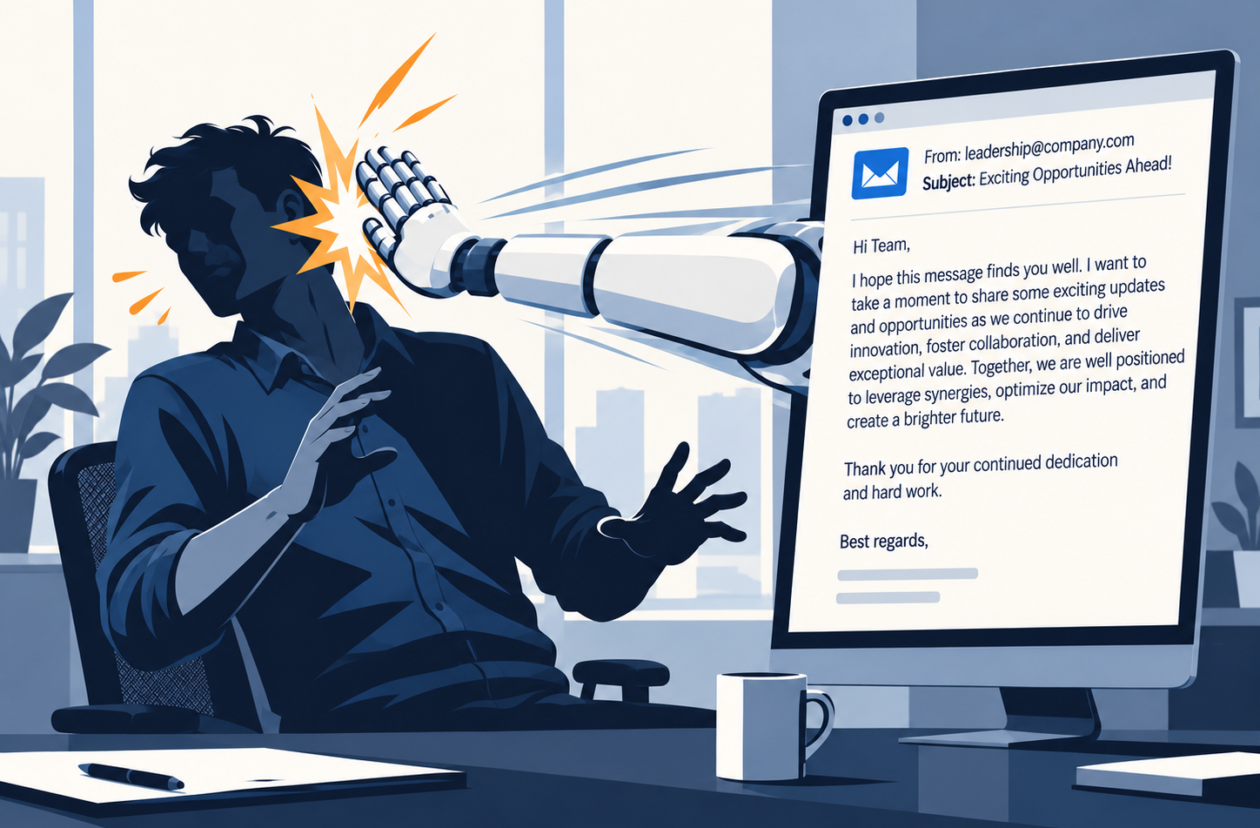
AI luminaries Oren Etzioni, founding CEO of the Allen Institute for AI, and Professor Daniel S. Weld from the University of Washington have released a new glossary on GeekWire, detailing over 35 non-technical phrases that define the current "colorful and cranky" language of the AI era. Published October 16, 2026, the compilation covers terms from the widely used "AI slop" and "deepfake" to their own coinages like "AI slap" and "promptatory," highlighting a lexicon often focused on AI's negative implications and societal shifts.
The authors note a striking trend: the majority of new AI-related terms reflect concerns and critiques rather than celebrate successes. Merriam-Webster's choice of "AI slop" – low-quality digital content produced by AI – as its 2025 word of the year exemplifies this sentiment. Etzioni and Weld propose "AI cream" for rare, superb AI-assisted writing, hoping quality will eventually prevail.
They introduce "AI slap" for forwarding unread AI-generated text, an extension of the "meat proxy" concept. This fosters "AI suspicion" or "Turing tingle" – a nagging feeling content might be machine-generated – potentially leading to "AI shaming," accusing human work of being AI-generated.
Deceptive AI phenomena are well-represented, from "deepfakes" (altered videos) and the "liar’s dividend" (dismissing genuine evidence as fabricated) to "cheapfakes" and "chatfishing" (AI-crafted dating personas). The broader concern, voiced by Daniel Dennett, is "counterfeit people," with controversies like AI actress Tilly Norwood highlighting machines passing as human.
Societal critiques include the "Nerd Reich" and "broligarchy," describing powerful tech billionaires, and "technofeudalism" reflecting economic power shifts. Oxford's 2024 word of the year, "brain rot," captures the mental toll of online junk. This links to "dead internet theory" (web content by bots) and Cory Doctorow's "enshittification" (platform decay), contributing to widespread "AI fatigue."
For those interacting with AI tools, the lexicon includes "vibe coding," Collins Dictionary's 2025 word of the year, which is blindly accepting AI-generated code. Etzioni and Weld coin "promptatory" for the frustrating state of endless, absurd editing loops with AI, a "vibe coding" hangover. "Agentsomnia" describes the anxiety of constantly monitoring autonomous AI agents, akin to "agent FOMO."
The glossary also covers the speculative and often boastful language surrounding AI's future. "Feel the AGI" is an OpenAI rallying cry for profound AI capabilities, while "P(doom)" quantifies personal anxiety about AI leading to existential risks. Exaggerated claims are captured by "bragawatts" (boasting about uncompleted projects) and "vibe revenue" (funding attracted by AI's potential, not proven success).
Human-AI relationships are reflected in "parasocial," Cambridge Dictionary's 2025 word of the year, extending to one-sided bonds with chatbots. This can escalate to "AI addiction" (escapist roleplay, pseudosocial companionship, compulsive questioning). In extreme cases, "AI psychosis" describes individuals experiencing worsening paranoia and delusions linked to chatbot use, though it's not a clinical diagnosis.
Etzioni and Weld conclude that the current linguistic landscape predominantly reflects AI's problems. While terms like "slop," "shaming," and "psychosis" abound, a common word for AI's positive contributions remains elusive. Their "AI cream" is a singular counterpoint, urging contributions for phrases celebrating AI doing something well.
FAQ
Q: What is "AI slap" and "AI cream" according to Etzioni and Weld? A: "AI slap" is a new term coined by Etzioni and Weld, describing the act of forwarding AI-generated text, code, or other output without reading, understanding, or validating it. Conversely, "AI cream" is their proposed term for rare instances of superb writing or content authored with the help of AI, representing the high-quality output desired from artificial intelligence.
Q: How do the authors categorize the predominant tone of new AI-related terminology? A: Etzioni and Weld observe that the majority of new phrases in the AI era, such as "AI slop," "deepfakes," "brain rot," and "AI psychosis," name problems, complaints, or negative aspects. They note a significant absence of common words specifically celebrating or describing AI's positive contributions, highlighting a predominantly "cranky" and critical vocabulary.
Q: What are "promptatory" and "agentsomnia," and what do they reflect about the user experience with AI? A: "Promptatory" is a term coined by the authors to describe the frustrating state of being caught in an unending edit-and-re-prompt loop with an AI system, where fixing one AI-introduced bug leads to others, making progress feel paradoxical. "Agentsomnia" refers to the chronic inability to rest or disconnect from work, driven by the nagging feeling that one's autonomous software or AI agents are stalled and require human feedback, akin to "agent FOMO." Both terms highlight the potential for AI tools to create new forms of user friction and mental strain.
Related articles

Apple Unveils iPhone Duo: Pricey Foldable Sees Soaring Demand
Apple has officially entered the foldable smartphone arena with the long-anticipated launch of the iPhone Duo. Priced starting at a hefty $1,999, the device features a 5.4-inch outer display and a larger 7.6-inch inner

We can finally hear some of Wu-Tang Clan’s Once Upon A Time in
For the first time, fans can now hear snippets of the legendary, one-of-one Wu-Tang Clan album, "Once Upon A Time in Shaolin," thanks to a collaboration between the crypto art collective PleasrDAO and the "Pablo Torre

Porsche’s electric Macan Turbo is an automotive existential crisis
Porsche's 2026 electric Macan Turbo challenges traditional sports car definitions, blending exhilarating 630-hp performance with an anonymous crossover design. Tested on various roads, it raises questions about automotive identity in the EV era, proving that immense power can come in an understated package.

in-depth: Chicago-Area Cops Helped HSI Spy on Minnesota Anti-ICE
Chicago-area law enforcement, including local police and HSI agents, conducted undercover surveillance on Minnesota anti-ICE activists at an April 2, 2022, talk in Chicago. This operation was part of a federal conspiracy probe into 15 Minnesota activists facing felony charges related to immigration enforcement resistance. Civil liberties advocates have condemned the surveillance as a troubling intrusion into protected political activity.
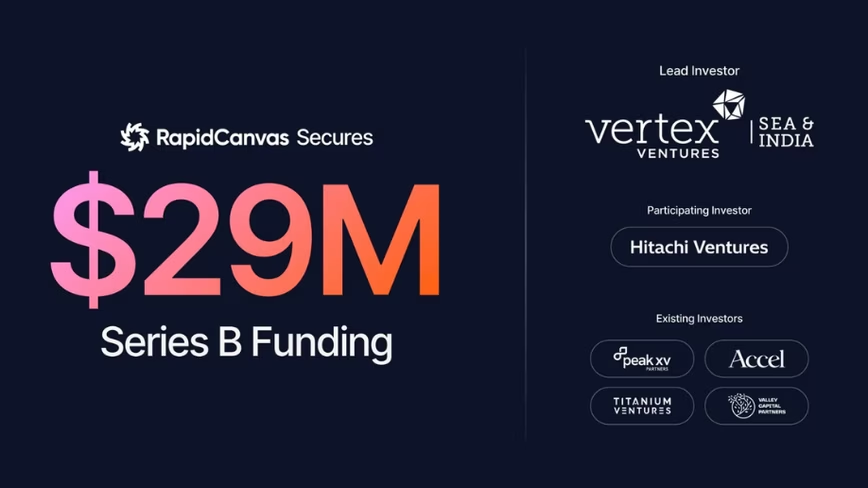
RapidCanvas Secures $29M Series B to Scale Enterprise AI Solutions
Austin, Texas – RapidCanvas, a burgeoning startup specializing in building and running custom AI applications for enterprises, has announced a successful close of its Series B funding round, raising $29 million. Led by

Elorian’s first AI model wants to reason with images, not just about
Elorian, a Palo Alto AI startup, has launched Glimpse, its inaugural AI model. It features a "visual scratch space" that allows it to actively reason *with* images by dynamically revisiting visual data during processing, rather than just inferring *about* them. Elorian claims Glimpse outperforms some frontier models and aims to evolve it for direct action and robotic control.