
Quantic Dream's Live-Service Flop: Layoffs & Union Blames
Quantic Dream's live-service MOBA, *Spellcasters Chronicles*, flopped disastrously, leading to its abandonment after just three months and up to 95 potential layoffs. A French union blames studio leadership, including David Cage, for "incompetence," poor management, and ignoring warnings, creating an "ungodly expensive" game that failed to connect with players.
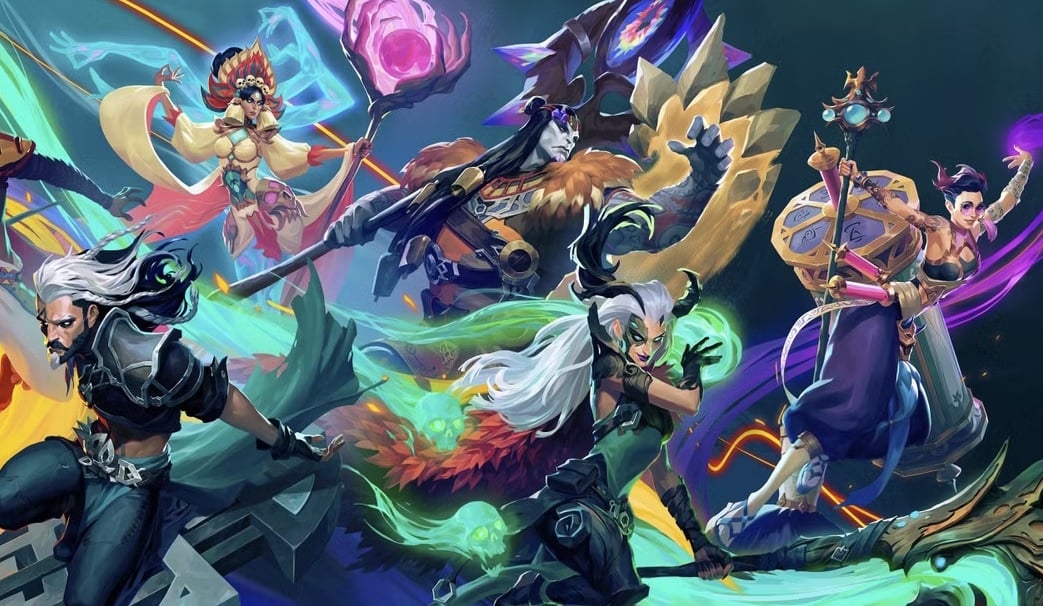
Buckle up, gamers, because we've got some wild news from Quantic Dream. The studio behind Detroit: Become Human just saw its latest venture, free-to-play MOBA Spellcasters Chronicles, go belly-up a mere three months after launch. The game has been yanked from Steam, with servers set to vanish by June, and this spectacular failure is sparking massive potential layoffs—up to 95 employees could be impacted. A French union is not mincing words, pointing fingers squarely at the studio's leadership, including David Cage, for what they're calling outright 'incompetence.'
Quantic Dream's MOBA Flops Hard, Triggers Layoffs
It’s a tough pill to swallow: a game from Quantic Dream, a studio with such pedigree, abandoned less than 90 days post-launch. Spellcasters Chronicles was meant to be Quantic Dream's first new title in eight years, a significant departure from their signature cinematic, story-driven experiences. Instead of a grand return, it’s become a cautionary tale. The free-to-play MOBA quietly slipped onto Steam in early 2026, and by May 20th, the announcement came: it was over. The game is already gone from Steam, and its online presence will cease entirely next month. This isn't just a quiet sunset; it's a dramatic crash, leaving questions and, more critically, the jobs of nearly a hundred developers hanging in the balance.
An Eight-Year Odyssey to Disaster
According to Le Syndicat des Travailleureuses du Jeu Vidéo (STJV), the French video game workers' union, this isn't a sudden mishap but the culmination of years of missteps. The union reveals that Spellcasters Chronicles was an eight-year endeavor, led by Guillaume de Fondaumière, David Cage, and Grégorie Diaconu. Originally envisioned as a 'reasonably-sized' project with a much earlier release window, it ballooned out of control. The union claims that throughout this lengthy cycle, 'nobody questioned the business model or how the game was to become profitable.' This lack of fundamental business planning, coupled with what they describe as 'catastrophic project management,' led to endless iterations, team exhaustion, and ultimately, a direct path to this current disaster.
Union Sounds the Alarm: 'Incompetence Led Us Here'
The STJV’s blog post pulls no punches, directly blaming Quantic Dream's leadership decisions for the failure. While management reportedly points to 'external factors,' the union insists blame lies with internal 'financial, creative or organizational' choices. They highlight that the game became 'ungodly expensive' and was aimed at a 'high-risk market' without actually aligning with what modern players are looking for. Worker representatives, the union emphasizes, repeatedly warned about the project's 'colossal risk level.' Yet, leadership, they claim, 'arrogantly explained that success was a given... thanks to ’30 years of experience’,' refusing to consider alternatives or contingency plans. 'Failure was never an option, never thought about, never planned for: incompetence led us here today,' the union declared, stressing that 'workers pay for management’s misguided ways.'
The Live-Service Curse Claims Another Victim
This event adds Spellcasters Chronicles to the growing pyre of ill-fated live-service games. It’s a market segment that continues to lure studios with promises of long-term engagement and revenue, but consistently proves brutally unforgiving. Quantic Dream, known for its polished, single-player narrative experiences, was stepping far outside its comfort zone. The union suggests that the game's premature abandonment and minimal marketing could also be linked to NetEase, the Chinese conglomerate that acquired Quantic Dream in 2022. NetEase has reportedly been scaling back international game development, and it's plausible they pulled the plug or pushed for an early, under-supported release, further complicating the studio's vision.
What About Star Wars Eclipse? And the Human Cost
A pressing question swirling around this debacle is the fate of Star Wars Eclipse, Quantic Dream's other major project. The studio insists the highly anticipated narrative single-player adventure will remain 'unaffected' by the Spellcasters restructuring. However, employees are reportedly questioning this claim, especially regarding who from the Spellcasters team will transition to Star Wars Eclipse and why more staff aren't being retained. The union sees the idea that Spellcasters workers can't contribute to Star Wars Eclipse as 'an insult,' arguing it suggests their skills are 'worthless,' especially given Quantic Dream's reliance on proprietary tools and recent project-based team splits. This situation underscores the very real human cost of these business decisions, impacting the livelihoods and morale of dedicated developers.
A Wake-Up Call for Studio Leadership?
The rapid demise of Spellcasters Chronicles and the union's scathing critique paints a grim picture. It highlights the dangers of hubris in game development, especially when venturing into unfamiliar, highly competitive genres like live-service MOBAs without a solid plan or willingness to heed internal warnings. While Star Wars Eclipse is supposedly safe, the shadow cast by this failure, and the accusations of deep-seated 'incompetence,' will undoubtedly linger. This isn't just a game failing; it's a stark reminder of the fragile balance between creative vision, business acumen, and the welfare of the people who bring digital worlds to life.
FAQ
Q: What was Spellcasters Chronicles?
A: Spellcasters Chronicles was a free-to-play MOBA (multiplayer online battle arena) game developed by Quantic Dream, known for its narrative-driven single-player titles. It was the studio's first new game in eight years.
Q: Why was Spellcasters Chronicles abandoned so quickly?
A: The game was abandoned just three months after launch due to its commercial failure. A French union, Le Syndicat des Travailleureuses du Jeu Vidéo, blames "catastrophic project management," a lack of a clear business model, excessive costs, and leadership's "incompetence" and "arrogance" in dismissing warnings about the project's high risk.
Q: How many employees are affected by these layoffs at Quantic Dream?
A: Up to 95 employees at Quantic Dream could face layoffs as a direct result of Spellcasters Chronicles' failure and the subsequent restructuring.
Related articles

TCG Pocket Responds: A Much-Needed Pace Shift for Pokémon Fans
Pokémon TCG Pocket is rolling out a major update for its second anniversary, primarily addressing player concerns about overwhelming content releases by shifting to a six-week set schedule. This aims to curb player decline and improve overall engagement by giving trainers more time to collect and strategize. The update also adds new collection methods, improved deck-building features, and enhanced trading functionality.

Kojima Compares Divisive New Film 'Digger' to MGS2's Prescient Vision
Gaming icon Hideo Kojima has praised the divisive 2026 film *Digger*, drawing intriguing parallels to his own prophetic game, *Metal Gear Solid 2*. Both works, he explains, uniquely explore the dangers of misinformation and a fragmented digital reality, anxieties he shares with *Digger*'s director, Alejandro González Iñárritu.

Ubisoft Proposes German Studio Workforce Reduction Amidst
Ubisoft is planning a voluntary departure program for about 100 employees across its Düsseldorf, Berlin, and Mainz studios in Germany. This move is part of a larger, ongoing cost-reduction and restructuring effort by the publisher, aiming to better position its studios for future projects.

TGS 2026: These Forward-Looking Cosplays Are Already Living in the
Tokyo Game Show 2026 showcased incredible cosplay, with many fans embodying characters from unreleased games like *Blast Blade* and *Mononoke No Kuni*. This gallery highlights the community's foresight, alongside debut *Palworld* cosplay and refreshed takes on classics. It’s a testament to the passion that brings gaming's future to life.

Netflix is laying off around 1,000 employees: Layoffs — Key Details
Netflix is laying off approximately 1,000 employees, or six percent of its global workforce, in its largest-ever job cut. This move targets product, tech, HR, and legal teams to reduce costs and re-prioritize investments despite recent financial growth.

Beyond the Bugs: Conquering Studio Headaches in Indie Dev
This guide, part three in a series on running an indie studio, tackles the crucial but often overlooked aspect of dealing with non-development related issues. It introduces creating a shared 'studio backlog' for collective problems and using the IDS (Identify, Discuss, Solve) framework to address them constructively. The core message is to build powerful habits that keep studios from getting quietly derailed by lingering challenges.