
programming: Creating checkpoints by gaslighting a Postgres
The landscape of database management is rapidly evolving, particularly with the increasing prevalence of AI agents interacting directly with our data systems. While these agents offer immense potential, they also

The landscape of database management is rapidly evolving, particularly with the increasing prevalence of AI agents interacting directly with our data systems. While these agents offer immense potential, they also introduce new complexities, often leading to unmanaged infrastructure and a chaotic database state. This article explores how advanced database features, like branching, scale-to-zero, and centralized access control, effectively allow developers to 'gaslight' a Postgres database into a more manageable, checkpointed reality, even when faced with the inherent 'sloppiness' of AI-driven operations.
The Rise of AI Agents and Database Chaos
AI agents are quickly becoming primary creators and users of databases. They can rapidly generate data, schemas, and temporary objects during development, testing, or operational tasks. However, this agility often comes with a significant drawback: these agents can be notoriously inefficient when it comes to cleaning up their own infrastructure. This leaves developers with a bewildering array of untidy database states, orphaned resources, and an overall environment that is difficult to understand, manage, and recover from. The term 'gaslighting' here serves as a metaphor for imposing a structured, controlled perception of the database's state, even when underlying AI activities might suggest otherwise. We force the database into well-defined, recoverable 'checkpoints' despite potential agent-induced disarray.
Database Branching: Your Data's Version Control
One of the most powerful mechanisms to manage this agent-driven chaos and create reliable 'checkpoints' is database branching. Think of it as Git for your data. Just as code branching allows developers to experiment without affecting the main codebase, database branching provides isolated, writable copies of your database in seconds. This allows AI agents to operate and experiment in their own branches, making changes without polluting the production or main development environments. When an agent creates a branch, it essentially establishes a 'checkpoint' – a specific, reproducible state of the database from which it can work. If an agent's activities lead to an undesirable state, that branch can simply be discarded, or a new branch can be created from an earlier, known-good 'checkpoint.' Fast branching, as seen in solutions like Databricks Lakebase, is crucial here, enabling rapid iteration and isolated experimentation without significant resource overhead.
Scale-to-Zero: Taming Resource Consumption
Another critical strategy for managing the 'sloppy' tendencies of AI agents is implementing a scale-to-zero architecture for database compute resources. In this model, compute resources are dynamically provisioned only when actively needed and are automatically scaled down to zero when idle. This directly addresses the problem of uncleaned infrastructure left behind by agents. If an AI agent spins up a temporary database instance or a set of compute resources for a specific task and then fails to de-provision them, a scale-to-zero system will eventually detect inactivity and automatically shut down those resources. This not only significantly reduces operational costs by preventing wasted compute cycles but also simplifies infrastructure management. It ensures that dormant agent-created environments don't linger indefinitely, effectively 'cleaning up' after agents by design.
Centralized Access Control: The Guardrails for Agent Autonomy
While branching and scale-to-zero handle the technical aspects of state and resource management, centralized access control provides the necessary governance. With AI agents potentially having broad access to create and modify database elements, it becomes paramount to establish granular control over their permissions. Centralized access control ensures that agents can only interact with the parts of the database they are authorized to, preventing unintended modifications to critical data or schemas outside their designated branches or workspaces. This acts as a protective layer, guiding the database back to a controlled reality even amidst autonomous agent activity. It complements branching by ensuring agents operate within defined boundaries, preventing them from inadvertently 'gaslighting' the entire database into an unrecognizable state.
Databricks Lakebase: A Practical Approach
These concepts are being brought to life in products like Databricks Lakebase, a Postgres-compatible operational database. Lakebase specifically integrates fast branching capabilities, separated compute and storage, and tight integration with the Databricks lakehouse. This combination offers a robust environment for agent-driven development, allowing developers to maintain control and establish reliable checkpoints even as AI agents become more deeply embedded in database workflows. By providing these foundational capabilities, solutions like Lakebase empower teams to embrace AI agents while ensuring database integrity and operational efficiency.
Practical Takeaways
For developers navigating the complexities of AI agents interacting with databases, embracing features like database branching, scale-to-zero, and robust access control is crucial. These technologies provide the necessary tools to create isolated environments, manage resources efficiently, and enforce security policies. The result is a database ecosystem where AI agents can innovate freely, yet developers retain complete control, effectively 'gaslighting' the system into a predictable and recoverable state through reliable checkpoints.
FAQ
Q: How does database branching differ from traditional database backups or snapshots?
A: Database branching, as implemented in systems like Databricks Lakebase, provides fast, writable copies of a database that can diverge and be worked on independently, much like source code branches. While backups and snapshots offer recovery points, they are typically read-only and primarily for disaster recovery or point-in-time restoration, not for active, concurrent development or experimentation by multiple entities like AI agents.
Q: What are the main benefits of scale-to-zero for agent-driven database development?
A: The primary benefits include significant cost savings by only paying for compute resources when actively used, and automatic cleanup of infrastructure. AI agents are often 'sloppy' about de-provisioning temporary resources, and scale-to-zero automatically addresses this by shutting down idle compute, preventing resource sprawl and simplifying operational overhead.
Q: Why is centralized access control particularly important when AI agents interact with databases?
A: Centralized access control is crucial because AI agents can operate autonomously and rapidly make changes. Without robust, granular controls, agents might inadvertently access or modify sensitive data or critical schemas outside their intended scope, leading to data corruption or security vulnerabilities. Centralized control ensures agents adhere to defined permissions, maintaining database integrity and security.
Related articles
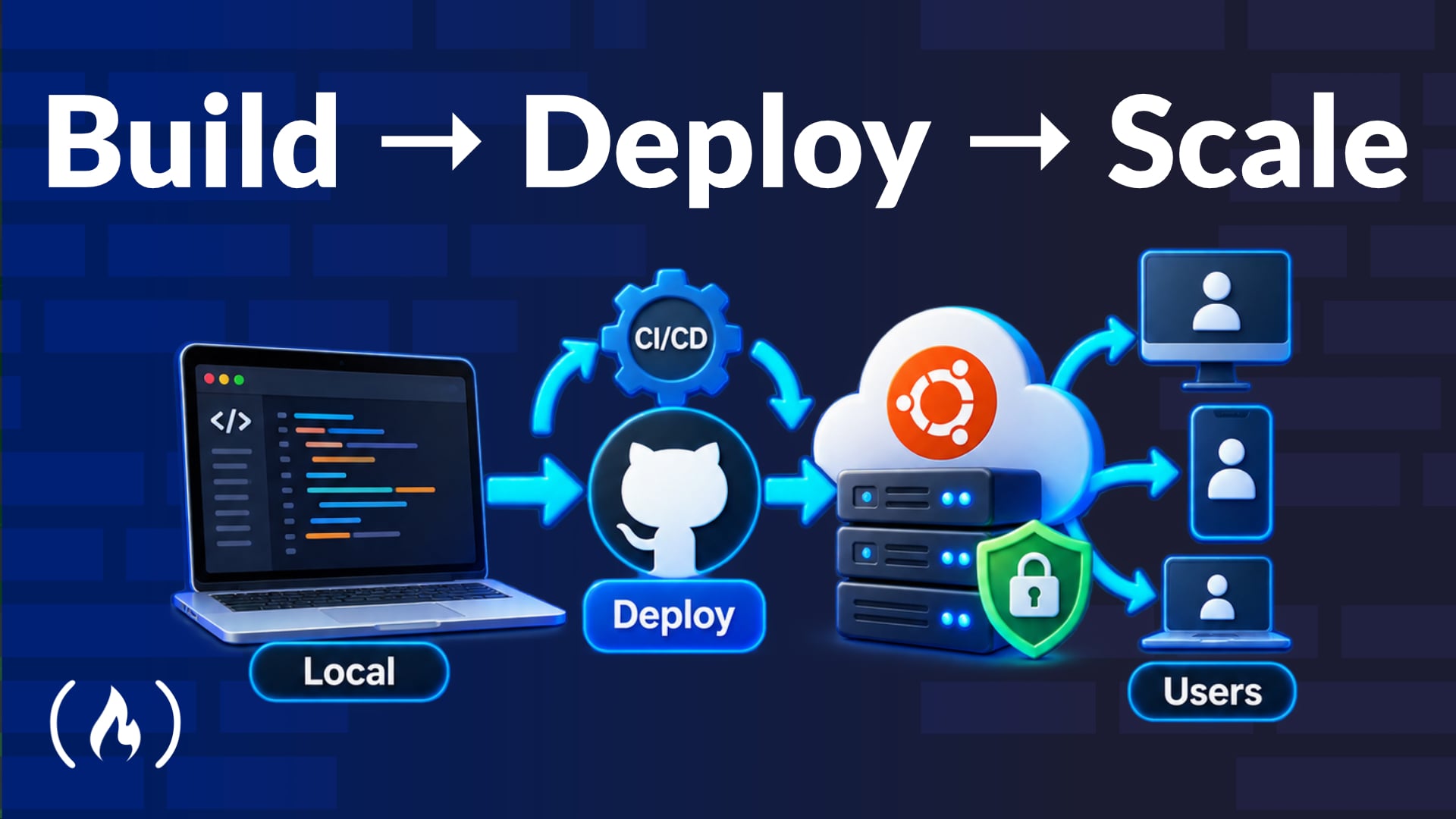
Mastering Full-Stack Deployment: Secure, Automate, Go Live
This article highlights a comprehensive freeCodeCamp.org course on deploying, securing, and automating full-stack web applications. It covers crucial steps from server provisioning and foundational security with UFW and Fail2Ban, to application runtime setup, data management, global access via Nginx and Cloudflare, and robust CI/CD pipelines with GitHub Actions. The course emphasizes a hands-on approach, integrating continuous security testing and observability, culminating in a production-ready application.
Ordewell: Orchestrating AI Coding Agents for Structured Development
Ordewell is an orchestration tool for AI coding agents that transforms a single development goal into an ordered, dependency-aware plan of tasks. Each task specifies its runner, model, thinking effort, and mode, allowing for granular control. It verifies results based on evidence rather than opinion, and offers CLI, VS Code, and web interfaces, along with an extensible skill system.
OEMpocalypse: Unprivileged Android App to Root via OEM Code
The OEMpocalypse strategy offers a novel approach to rooting Android devices from an unprivileged app by targeting OEM-specific code. It bypasses generic Linux and chipset driver complexities, aiming for a stable page Use-After-Free (UAF) primitive in OEM kernel drivers, often after an initial sandbox escape through OEM IPC handlers. This method prioritizes reliability and portability across an OEM's lineup, accepting the trade-off of per-OEM exploitation.

AI's Impact on Malware Detection: Next-Gen Protection Deep Dive
The landscape of cybersecurity has transformed dramatically. Gone are the days when a simple virus attached itself to a file, easily quarantined by an antivirus scanner. Today, malware is sophisticated, multifaceted,
AI Cybersecurity: The Perpetual Cat and Mouse Game
In the rapidly evolving digital landscape, the interplay between artificial intelligence and cybersecurity has created a dynamic, ceaseless challenge—a true cat and mouse game. AI is not merely a tool for defense; it's
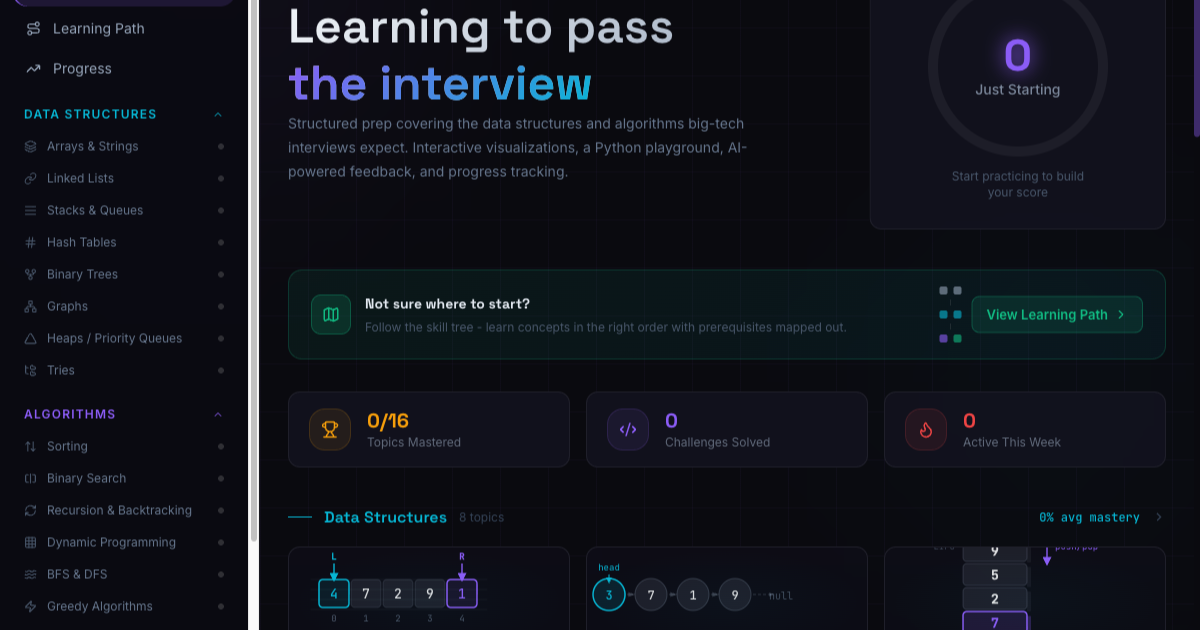
Learningto/Pass: Free, AI-Powered Interview Prep for Developers
Landing a role at a top-tier tech company often hinges on mastering complex data structures and algorithms, coupled with a solid grasp of system design. The problem for many aspiring software developers is that quality