
policy: He’s king of the AI boom. Why do former colleagues say he
Sam Altman, OpenAI CEO, faced intense questioning about his honesty in a federal trial initiated by Elon Musk. This testimony, combined with statements from former colleagues, has reignited persistent concerns about his trustworthiness, impacting perceptions of a key figure in the AI boom.

In a federal courtroom in Oakland, California, this week, Sam Altman, the high-profile CEO of generative AI powerhouse OpenAI, faced pointed questions about his honesty during a trial initiated by Tesla CEO Elon Musk. The courtroom exchange has brought renewed scrutiny to long-standing concerns about Altman’s trustworthiness, with testimony from other individuals involved in the case reinforcing these doubts. This trial gives fresh impetus to persistent questions regarding the integrity of one of the most influential figures in the artificial intelligence sector.
During a gruff cross-examination, Musk’s attorney directly asked Altman, “Do you always tell the truth?” Altman responded by stating, “I believe I’m a truthful person.” The attorney then pressed further, inquiring whether individuals Altman had conducted business with might perceive him as having misled them. Altman’s reply — “I can’t answer that for other people” — underscored the personal nature of the inquiry, yet implied awareness of external perceptions.
However, the court proceedings revealed that Altman’s response was not the full picture. The article notes that "several had already had their say in court," indicating that other witnesses had indeed expressed sentiments suggesting concerns about Altman's reliability or the transparency of his dealings. This prior testimony from various individuals has effectively amplified the allegations and transformed a direct question to Altman into a broader discussion about his reputation among his peers and business partners.
Sam Altman stands at the forefront of the artificial intelligence revolution, widely recognized as the "king of the AI boom" due to his leadership at OpenAI, the company behind the widely acclaimed ChatGPT. This platform alone has reshaped perceptions of AI capabilities and propelled OpenAI to a dominant position in the tech landscape. Given the immense influence and rapid advancements occurring within AI, the character and integrity of its leaders are under intense public and industry microscope.
The legal battle initiated by Elon Musk against Altman and OpenAI serves as a critical backdrop for these revelations. While the full scope of Musk’s allegations is not detailed in the provided content, the line of questioning employed by his legal team clearly aims to challenge Altman’s credibility. For an industry built on rapid innovation and often operating with significant investment and public trust, any shadow cast on the honesty of a key leader can have far-reaching consequences.
The implications of this testimony extend beyond the confines of the Oakland courtroom. Persistent questions about a leader’s trustworthiness can undermine confidence among investors, partners, and even employees. For OpenAI, a company at the cutting edge of AI development, maintaining a reputation for integrity is paramount, particularly as it navigates complex ethical considerations surrounding advanced AI technologies. The ongoing trial is likely to keep these questions at the forefront, potentially shaping public and industry perceptions of Altman and his organization for some time.
The case highlights a growing tension within the tech industry, where visionary leadership often intertwines with intense competition and high stakes. As AI continues to evolve at an unprecedented pace, the spotlight on its pioneers will only intensify, making transparency and ethical conduct critical components of success and public acceptance. The legal proceedings initiated by Musk are not just about specific contractual or operational disputes, but also fundamentally about the character and reliability of those charting the future of technology. This public airing of grievances and character assessments could set precedents for how accountability is viewed among tech titans.
Ultimately, while Altman asserts his own truthfulness, the collective voices of those who have "had their say in court" suggest a different narrative. These renewed questions, fueled by a high-stakes legal battle, ensure that the debate around Sam Altman’s trustworthiness will continue to resonate, casting a critical eye on the individual steering one of the world's most transformative companies. The outcome of the trial, and public reaction to the testimonies, will undoubtedly influence how Altman and OpenAI are perceived in the highly competitive and rapidly evolving AI landscape.
FAQ
Q: What is the central controversy surrounding Sam Altman in this trial?
A: The core controversy revolves around questions concerning Sam Altman’s honesty and trustworthiness, which have been raised during testimony in a federal court case initiated by Elon Musk. Former colleagues' statements in court appear to reinforce these doubts.
Q: Who is Sam Altman, and why is his trustworthiness a significant issue?
A: Sam Altman is the CEO of OpenAI, the company behind ChatGPT, and is widely considered a leading figure in the artificial intelligence industry. His trustworthiness is significant because he leads a highly influential and rapidly advancing technology company, making public and industry confidence in his integrity crucial.
Q: What is Elon Musk's role in these proceedings?
A: Elon Musk, CEO of Tesla, is the plaintiff who initiated the federal court case against Sam Altman and OpenAI. His attorney directly questioned Altman about his truthfulness, bringing these issues to the forefront of the public discourse.
Related articles

Apple Unveils iPhone Duo: Pricey Foldable Sees Soaring Demand
Apple has officially entered the foldable smartphone arena with the long-anticipated launch of the iPhone Duo. Priced starting at a hefty $1,999, the device features a 5.4-inch outer display and a larger 7.6-inch inner

in-depth: Chicago-Area Cops Helped HSI Spy on Minnesota Anti-ICE
Chicago-area law enforcement, including local police and HSI agents, conducted undercover surveillance on Minnesota anti-ICE activists at an April 2, 2022, talk in Chicago. This operation was part of a federal conspiracy probe into 15 Minnesota activists facing felony charges related to immigration enforcement resistance. Civil liberties advocates have condemned the surveillance as a troubling intrusion into protected political activity.

Mark Wahlberg on using AI in film ‘the right way’ and being open to
Actor Mark Wahlberg believes AI has a place in filmmaking if used responsibly for enhancement, not script generation or actor replacement. At TechCrunch Disrupt, he expressed openness to an AI likeness carrying on his legacy, managed by his family, and emphasized storytelling.

Tesla Unveils Thruster-Equipped Roadster, 2028 Production Targeted
Tesla has unveiled its second-generation Roadster, featuring cold-gas thrusters co-developed with SpaceX, enabling it to jump and flip. The electric sports car demonstrated 0-60mph in an astonishing 0.81 seconds, with production targeted for 2028. This highly anticipated reveal also serves as a key recruitment tool for Tesla's ambitious AI and robotics initiatives.

Amazon Prime Video Launches AI-Powered Prime 360 for NBA Coverage
Amazon Prime Video is elevating its NBA coverage with the introduction of Prime 360, an AI-powered replay system offering immersive, 'fly through' views of the action. Kicking off its second season, Prime Video also adds Yahoo fantasy integration and gains exclusive Eastern Conference Finals rights, expanding its tech-driven sports broadcast. The new features aim to deliver a unique and interactive viewing experience for basketball fans.
regional: A two-person Seattle startup lands $1M to reinvent
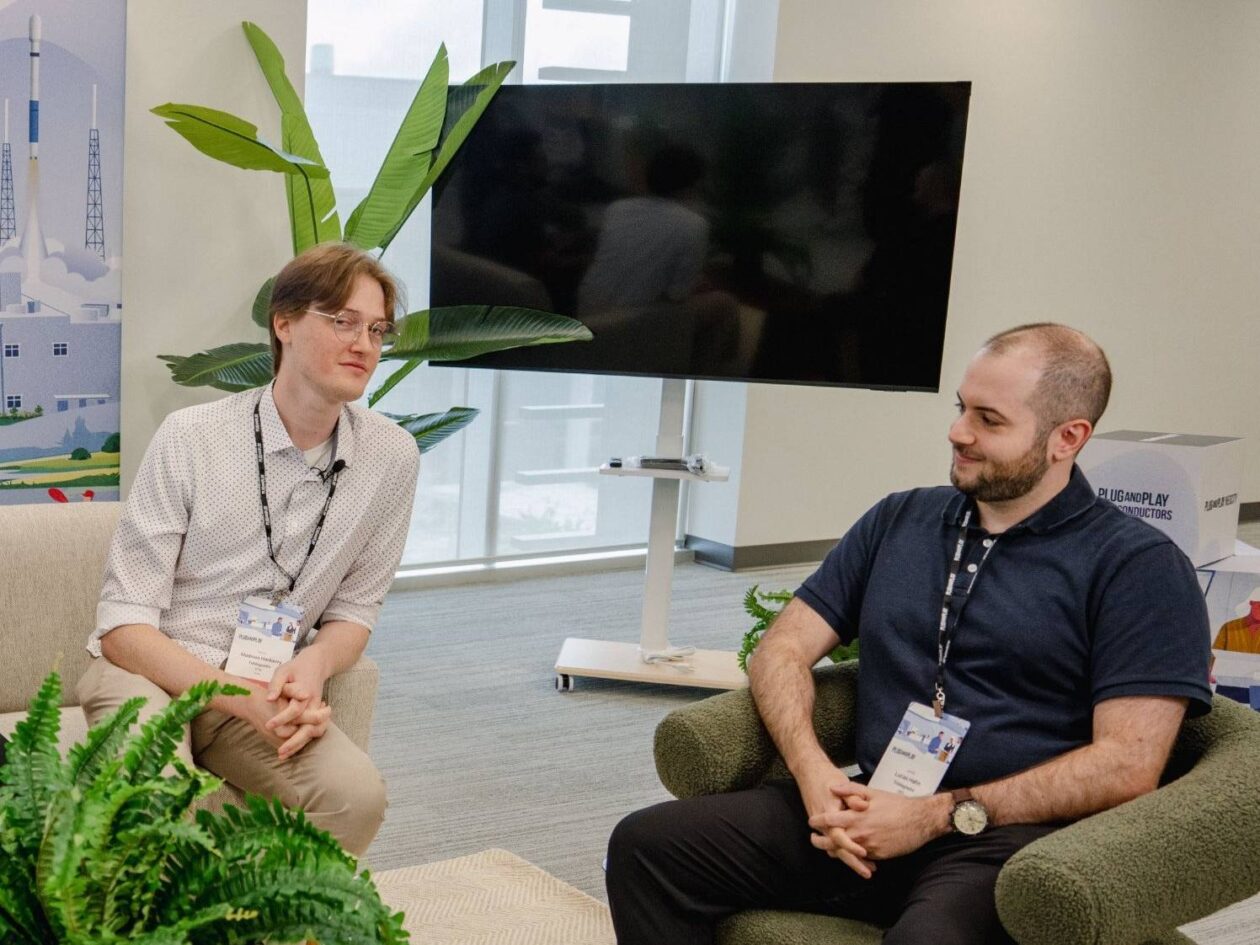
Seattle startup TriMagnetix has secured $1 million to develop semiconductor chips that consume 800 times less energy and are radiation-resistant. The two-person company, leveraging nanomagnetic technology, is targeting space applications and data centers. With new funding and key partnerships, TriMagnetix aims for commercial sales within a year.