
PlayStation Price Hikes: A Costly Update for Gamers
Sony has announced significant price increases for the PS5, PS5 Pro, and PlayStation Portal, effective April 2026. Citing global economic pressures, these hikes make entry into the PlayStation ecosystem more expensive, impacting consumer buying decisions amidst rising component costs across the gaming industry.

Verdict: A Steep Climb for PlayStation Enthusiasts
Sony's recent announcement of significant price increases for its core PlayStation hardware – including the standard PS5, the more powerful PS5 Pro, and the PlayStation Portal remote player – is a tough pill to swallow for gamers. While the company cites understandable global economic pressures, rising component costs, and supply chain challenges, the reality is that diving into or upgrading within the PlayStation ecosystem is about to get substantially more expensive. This move reflects a broader industry trend, but it undeniably places a higher barrier of entry for consumers, making the 'bad time to be a gaming fan' sentiment ring true.
Unpacking Sony's Latest Price Adjustments
Effective April 2026, gamers globally will face higher price tags for key PlayStation devices. In the United States, the standard PlayStation 5 and its Digital Edition are projected to see price bumps of approximately $100. The premium PS5 Pro, already positioned at a higher tier, will incur the steepest increase, potentially rising by up to $150. Even the PlayStation Portal remote player, a relatively newer accessory, isn't spared, with an estimated $50 increase.
Sony's official statement attributes these adjustments to "continued pressures in the global economic landscape," specifically mentioning inflation, escalating component costs, and ongoing supply chain disruptions. This isn't an isolated incident either; the company previously raised PS5 prices in 2025, indicating a consistent challenge in managing manufacturing and distribution expenses.
The Economic Realities Behind the Hikes
It's unusual for console prices to increase this late in a generation's lifecycle; typically, costs gradually decline as manufacturing processes become more efficient. However, the current market conditions have upended this traditional trajectory. A major contributing factor highlighted in the industry is the surge in demand for memory components driven by the rapid expansion of AI data centers. This has created a significant strain on the supply of RAM sticks, effectively turning them into a premium commodity. The ripple effect extends to other critical hardware components like GPUs and storage, tightening the supply chain across the entire PC and gaming hardware sector.
Evidence of this widespread pressure is seen across the industry. Companies like HP are exploring laptop leasing models, Framework has increased prices for its modular laptop components, and smaller players like Ayaneo have reportedly cancelled gaming handhelds due to untenable component costs. Even giants like Valve are hesitant to comment on Steam Machine pricing due to market volatility. Analysts suggest that this memory crunch is unlikely to ease anytime soon, meaning these elevated hardware costs could persist for the foreseeable future. Sony's decision, while unwelcome, thus appears to be a reactive measure to a challenging global economic environment.
The Impact on the Gamer
For the end-user, the consequences of these price hikes are immediate and substantial. The financial barrier to entry into the PlayStation ecosystem, or to upgrade to a Pro model, has significantly increased. This could force many prospective buyers to reconsider their purchase, potentially delaying their entry into the current console generation or even pushing them towards alternative solutions. Options like exploring the second-hand market for older consoles, subscribing to gaming services on other platforms, or looking at competing console ecosystems might become more attractive for budget-conscious consumers.
Despite the higher costs, Sony appears to be banking on continued strong demand, particularly for the PS5 Pro's enhanced gaming experiences. However, the overall sentiment among the gaming community is one of frustration, with many feeling that it's simply a difficult and expensive time to be a dedicated gaming enthusiast.
Competitive Landscape and Industry Shifts
Sony's decision to raise prices could establish a precedent within the gaming hardware industry. Competitors such as Microsoft and Nintendo are navigating similar cost pressures, and a move by one major player could influence others to follow suit. This situation also hints at a strategic shift within the industry. Rather than engaging in aggressive hardware price reductions to drive adoption, console manufacturers might increasingly rely on their services, subscription offerings, and software ecosystems to maintain profitability and engage their user base. Future console development and pricing strategies will undoubtedly be shaped by these ongoing component cost challenges, potentially leading to more expensive next-generation hardware across the board.
Buying Recommendation: A Harder Choice
Given these significant price increases, a buying decision for a PlayStation console becomes more complex. If you've been on the fence about purchasing a PS5 or upgrading to a PS5 Pro, the window to acquire them at their current (lower) prices is rapidly closing before April 2026. Acting sooner rather than later could save you a considerable amount of money.
For those who are not in immediate need or are budget-constrained, it's worth evaluating the value proposition carefully. While PlayStation offers a strong library of exclusive titles and a robust ecosystem, the increased cost makes alternatives more compelling. Exploring subscription services, considering the second-hand market, or looking at competing platforms might be viable options if the new price points strain your budget. The overall value equation for PlayStation hardware has undeniably shifted, demanding a more thoughtful consideration of your gaming priorities and financial limits.
FAQ
Q: Why is Sony raising the prices of its PlayStation consoles and Portal?
A: Sony attributes the price increases to "continued pressures in the global economic landscape," including inflation, rising component costs (particularly memory and semiconductors, partly due to AI data center demand), and ongoing supply chain challenges. This is a continuation of a trend, as PS5 prices were also adjusted in 2025.
Q: How much are the PlayStation hardware prices increasing in the U.S.?
A: In the United States, the PS5 and PS5 Digital Edition models are expected to increase by approximately $100. The PS5 Pro could see an increase of up to $150, and the PlayStation Portal remote player is estimated to rise by about $50. These global price changes take effect in April 2026.
Q: Should I purchase a PlayStation 5 or PS5 Pro now, or wait until after the price hike?
A: If you were already planning to buy a PS5, PS5 Pro, or PlayStation Portal, it would be financially advantageous to purchase it before the price increases take effect in April 2026. The source suggests that due to ongoing supply chain and economic pressures, prices are not expected to decrease in the near future.
Related articles

Apple Unveils iPhone Duo: Pricey Foldable Sees Soaring Demand
Apple has officially entered the foldable smartphone arena with the long-anticipated launch of the iPhone Duo. Priced starting at a hefty $1,999, the device features a 5.4-inch outer display and a larger 7.6-inch inner
Android 17 QPR2 Beta 7.1: The Performance Relief You've Been Waiting
Android 17 QPR2 Beta 7.1: Finally Fixing the QPR1 Performance Woes Verdict: Android 17 QPR2 Beta 7.1 is a crucial and highly anticipated software update for Google Pixel users, specifically targeting and resolving the

DJI Solo Video Setups: Smart Choices for Lone Creators
This review delves into DJI's recommended solo video setups, highlighting the Osmo Pocket 3 Creator Combo as a top pick for its integrated camera, gimbal, and mic. It also covers stabilizers like the Osmo Mobile 8 and RS 4, and the DJI Mic Mini series for enhanced audio, providing honest pros, cons, and clear buying advice.
TCG Pocket Responds: A Much-Needed Pace Shift for Pokémon Fans
Pokémon TCG Pocket is rolling out a major update for its second anniversary, primarily addressing player concerns about overwhelming content releases by shifting to a six-week set schedule. This aims to curb player decline and improve overall engagement by giving trainers more time to collect and strategize. The update also adds new collection methods, improved deck-building features, and enhanced trading functionality.

Ars Technica's Rocket Report: Your Essential Space Industry Briefing
Quick Verdict Ars Technica's Rocket Report, presented by veteran space reporter Stephen Clark, offers an invaluable and meticulously organized weekly (or similar frequency, implied by "Edition 9.15") digest of the most
Apple iPhone Duo: A Daring Debut with Notable Compromises
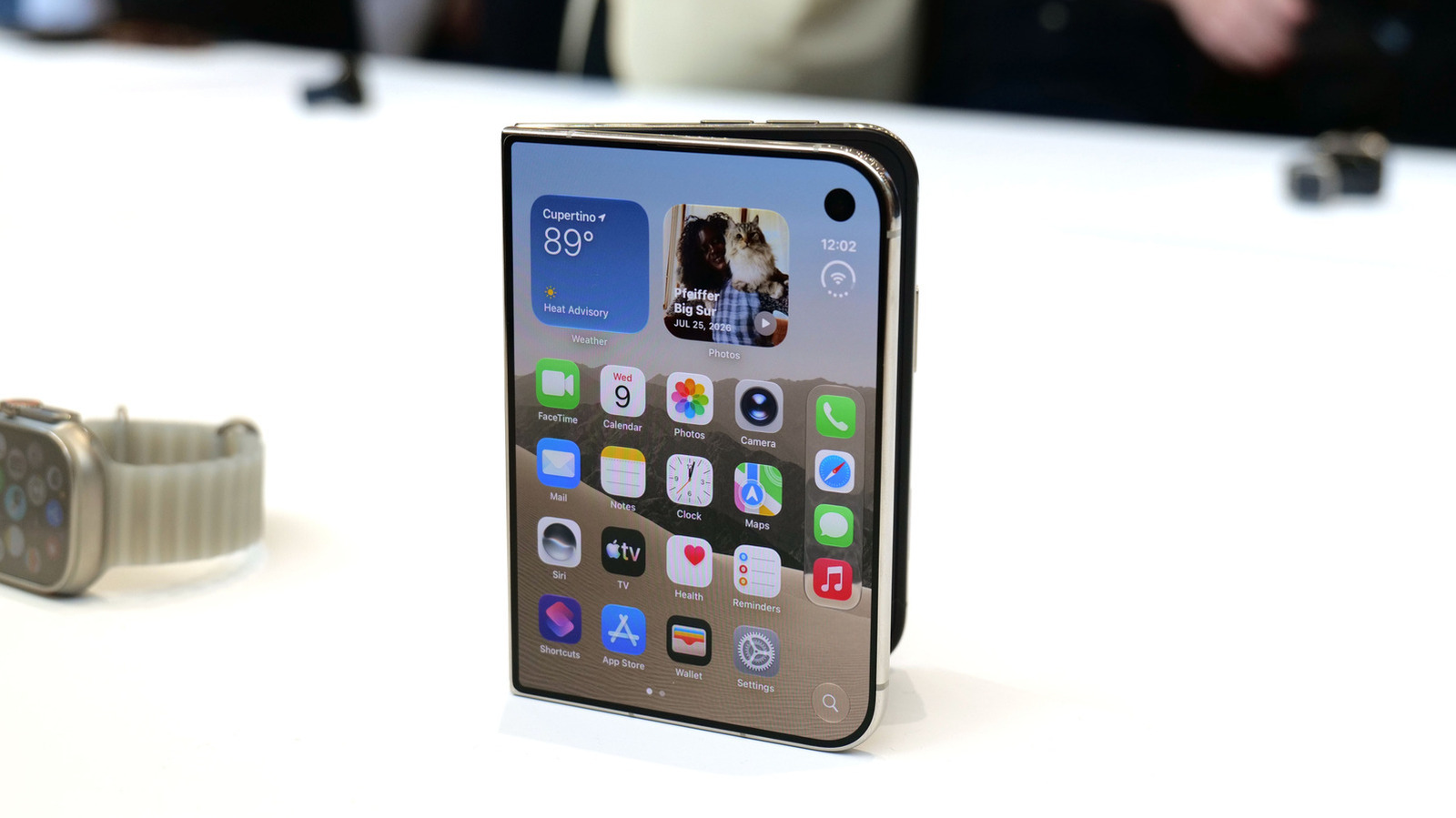
Apple's highly anticipated iPhone Duo, priced at $2,000, has gone on pre-order. While hailed as "Apple's most exciting device in a decade" for its innovative foldable design and immersive display, it comes with significant drawbacks like the absence of FaceID and a premium camera.