
Pearl AI Cryptomining: Empty Promises, Real Costs
Pearl, a Layer-1 blockchain, claims to merge crypto mining with useful AI computation, but new research suggests its 320,000-GPU network burns 112MW on "zero useful AI computation," driving up GPU rental prices.
Quick Verdict
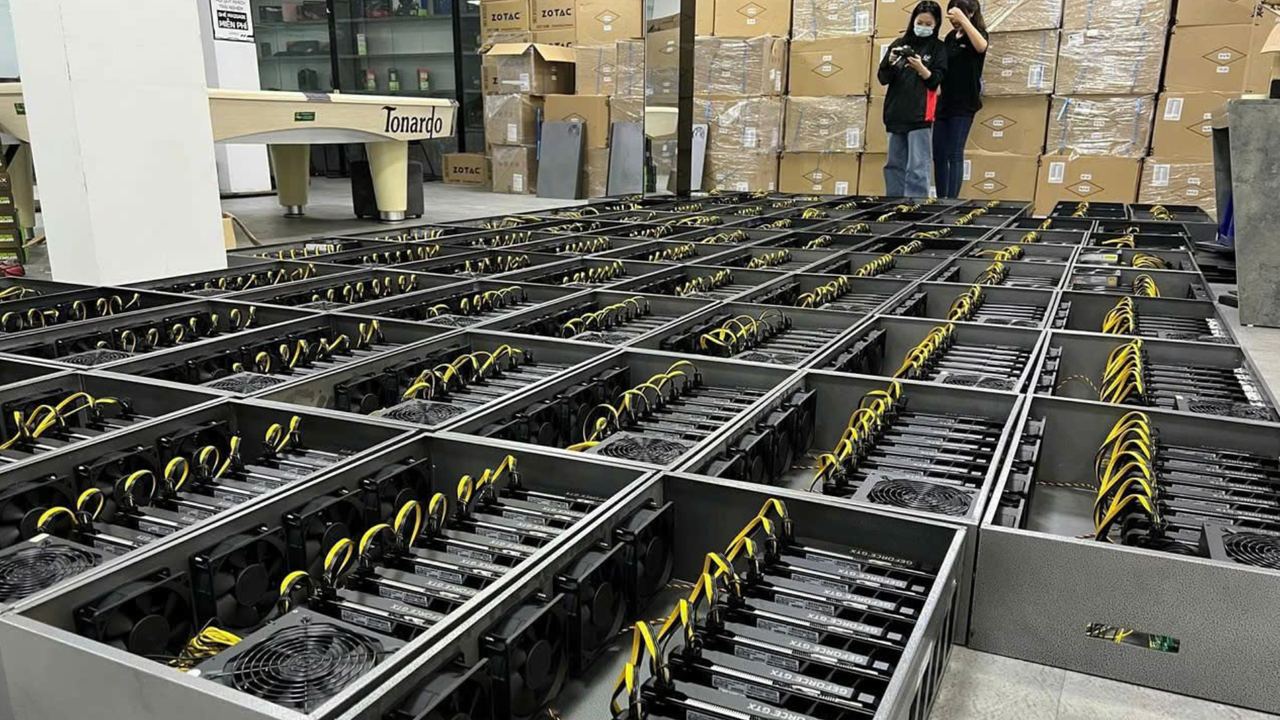
Pearl, a Layer-1 blockchain, has positioned itself as a revolutionary platform that transforms cryptocurrency mining into useful artificial intelligence (AI) computation. However, recent research casts a serious shadow on these claims. A new preprint alleges that Pearl's massive network, utilizing an estimated 320,000 RTX 3090-class GPUs and burning 112 megawatts of power, is producing "zero useful AI computation." The protocol, while verifying matrix multiplications, fundamentally fails to ensure these calculations stem from real AI workloads. This apparent "usefulness gap" has already led to a significant 38% spike in budget GPU rental prices, negatively impacting independent AI researchers. For now, Pearl appears to be an unfulfilled promise, delivering cryptomining with AI-shaped math rather than genuine AI utility.
The AI Mining Promise of Pearl
Pearl entered the blockchain space with an ambitious vision: to harness the immense computational power of cryptocurrency mining for the betterment of artificial intelligence. Its core proposition, a Proof-of-Useful-Work (PoUW) system, aims to replace traditional energy-intensive hashing with computations directly relevant to AI, such as neural network inference and training. By employing a scheme called cuPOW, which involves noised integer matrix multiplications, Pearl’s goal is to make every GPU cycle simultaneously secure its network and advance AI development. This Layer-1 blockchain has grown significantly, operating at an estimated 24 exahashes per second (EH/s), equivalent to hundreds of thousands of high-end GPUs.
The Core Issue: An "Empty" Promise of AI Utility
Despite Pearl's compelling narrative, a comprehensive research preprint titled "The Usefulness Gap in Proof-of-Useful-Work" presents a concerning reality. The study unequivocally states that Pearl's network, despite its scale, is currently generating "zero useful AI computation." The fundamental flaw, according to the research, lies not in the computation type itself—matrix multiplication is indeed crucial for AI—but in the verification process. Pearl’s cuPOW protocol rigorously confirms the mathematical correctness of these multiplications but utterly fails to ascertain if the input matrices originate from a genuine AI model, a paying client, or any actual AI workload. This critical oversight creates an environment where miners have no incentive to perform real AI tasks.
To demonstrate this gap, researcher Abhinaba Basu devised a miner that fed the Pearl network uniformly random matrices, detached from any inference task. This test miner successfully submitted output to a mining pool, earning 44 accepted shares on both Nvidia and AMD hardware, and even secured an on-chain payout. This proves that Pearl's system cannot distinguish between random, purposeless calculations and genuinely useful AI work, thereby undermining its central claim.
Evidence of the "Usefulness Gap"
Further strengthening the study's conclusions, Basu conducted in-depth analyses of Pearl's operations. An examination of 8,012 workers in a single mining pool, representing about 21% of the network's hashrate, confirmed they possessed AI-capable hardware. However, a forensic inspection of the dominant mining binary revealed no identifiable code for any machine-learning framework. While acknowledging potential code obfuscation, this finding strongly suggests a lack of integrated AI tasks. Additionally, runtime profiling of these miners showed heavy compute usage coupled with light memory-bandwidth use—a signature consistent with pure matrix math but inconsistent with the memory-intensive demands of transformer inference, a common AI workload.
Real-World Repercussions: GPU Costs & Miner Profitability
The rapid expansion of Pearl mining has had tangible and adverse effects on the broader GPU ecosystem. The study directly links Pearl's public mining software release in May to a substantial 38% surge in budget GPU rental prices on platforms like vast.ai. During this period, GPU utilization on vast.ai skyrocketed from 57% to 94%. This increased demand translates to significant financial burden, with Basu estimating an additional $600,000 per year in rental costs for independent researchers who compete for this affordable hardware. For miners, the financial picture is mixed: at a recent PRL token price of approximately $0.76, mining is marginally profitable on budget cards like the RTX 3060 Ti, while an RTX 3090 largely operates at a breakeven point.
Beyond Nvidia: Hardware Agnosticism & Partnership Scrutiny
On a positive technical note, Pearl exhibits commendable hardware flexibility. The research reports the first Pearl shares mined on non-Nvidia hardware, including an AMD Instinct MI300X, which outperformed an RTX 3090, along with successful benchmarks on server CPUs and Apple M2 chips via Metal compute shaders. This demonstrates that the commodity integer arithmetic underlying Pearl's work isn't confined to a single vendor. However, even Pearl's high-profile partnership with Together AI, which offers a discounted AI inference endpoint subsidized by PRL revenue, is framed by the study as "financial arbitrage." The actual AI inference is performed on Together AI's separate GPUs, with PRL earnings merely subsidizing the service, rather than being a direct output of useful computation by the Pearl mining network itself.
Final Verdict & Recommendation
Pearl presents an enticing vision of merging blockchain utility with AI advancement, yet current evidence suggests its implementation falls critically short. The "usefulness gap" in its PoUW protocol means that despite burning 112 MW across hundreds of thousands of GPUs, the network currently lacks verifiable mechanisms to ensure this power contributes to actual AI computation. This not only renders its core promise unfulfilled but also imposes real costs on the AI research community through elevated GPU rental prices. While the network supports diverse hardware and offers marginal profitability for some miners, these aspects cannot overshadow the fundamental issue of its claimed AI utility being unproven.
For potential miners drawn by the promise of contributing to AI, or investors swayed by Pearl’s marketing, a high degree of skepticism is warranted. Until Pearl can demonstrably close its "usefulness gap" and prove that its network performs verifiable, on-chain useful AI computation, it remains a concept with significant practical shortcomings and negative externalities. Proceed with extreme caution.
FAQ
Q: Is Pearl truly performing useful AI computation as it claims?
A: According to a recent research preprint, Pearl's network is currently performing "zero useful AI computation." While it conducts matrix multiplications, a core AI arithmetic, its protocol does not verify if these operations originate from real AI models or workloads, meaning miners are incentivized to use random matrices.
Q: Is it profitable to mine Pearl (PRL) tokens?
A: At recent PRL prices (around $0.76), mining is marginally profitable on budget cards like the RTX 3060 Ti and roughly breaks even on an RTX 3090, according to the study. However, this marginal profitability comes at the cost of significant power consumption (112 MW) for computation that currently lacks verifiable AI utility.
Q: How does Pearl mining impact the broader GPU market?
A: The study attributes a roughly 38% jump in budget GPU rental prices on platforms like vast.ai directly to Pearl mining, with utilization climbing from 57% to 94%. This increased demand and cost disproportionately affects independent AI researchers who rely on these affordable GPUs.
Related articles
Android 17 QPR2 Beta 7.1: The Performance Relief You've Been Waiting
Android 17 QPR2 Beta 7.1: Finally Fixing the QPR1 Performance Woes Verdict: Android 17 QPR2 Beta 7.1 is a crucial and highly anticipated software update for Google Pixel users, specifically targeting and resolving the

DJI Solo Video Setups: Smart Choices for Lone Creators
This review delves into DJI's recommended solo video setups, highlighting the Osmo Pocket 3 Creator Combo as a top pick for its integrated camera, gimbal, and mic. It also covers stabilizers like the Osmo Mobile 8 and RS 4, and the DJI Mic Mini series for enhanced audio, providing honest pros, cons, and clear buying advice.

Ars Technica's Rocket Report: Your Essential Space Industry Briefing
Quick Verdict Ars Technica's Rocket Report, presented by veteran space reporter Stephen Clark, offers an invaluable and meticulously organized weekly (or similar frequency, implied by "Edition 9.15") digest of the most
Apple iPhone Duo: A Daring Debut with Notable Compromises
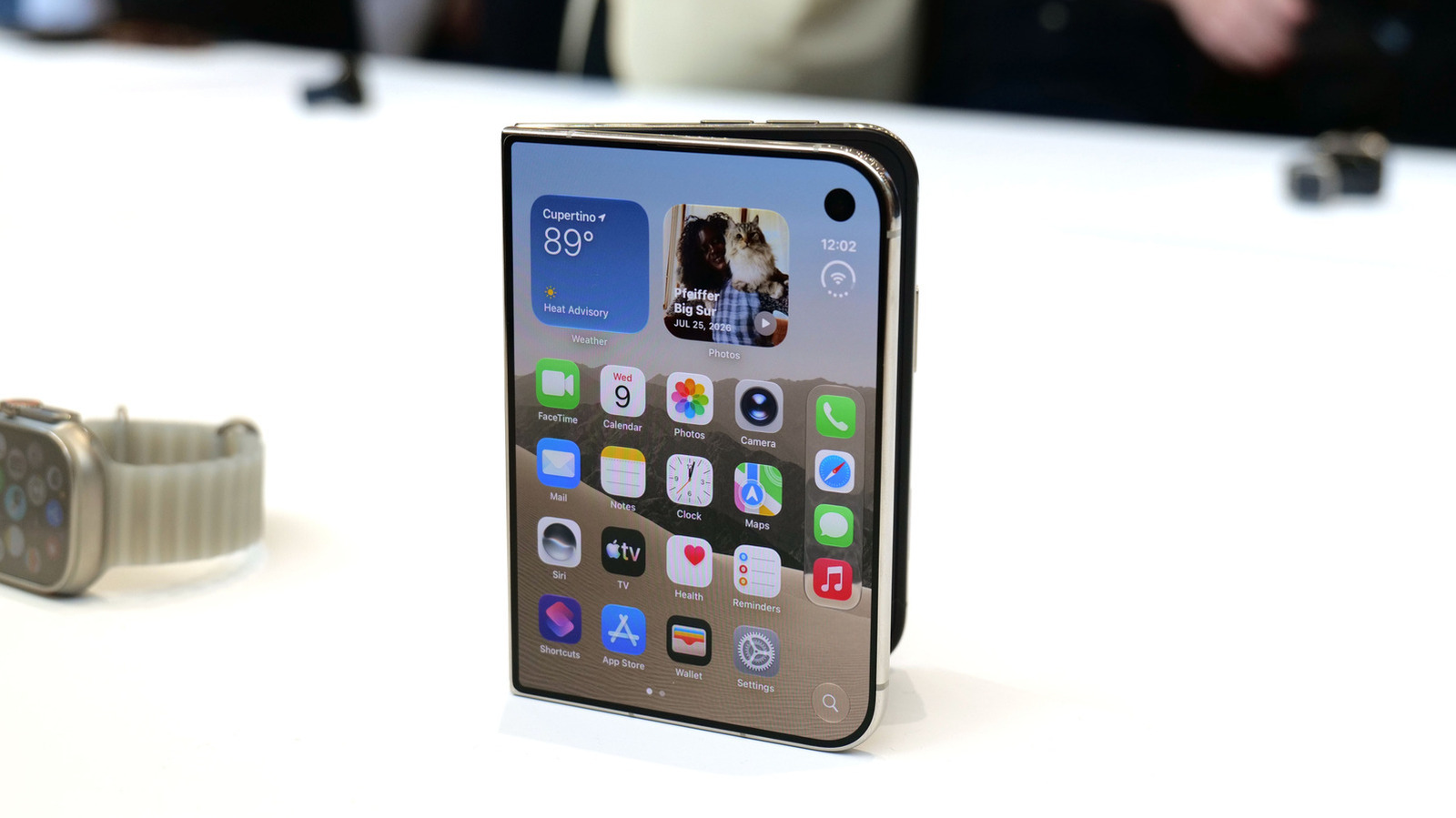
Apple's highly anticipated iPhone Duo, priced at $2,000, has gone on pre-order. While hailed as "Apple's most exciting device in a decade" for its innovative foldable design and immersive display, it comes with significant drawbacks like the absence of FaceID and a premium camera.

AI's Confidence vs. Formal Methods' Rigor: Design Flaws & Verification
While AI accelerates code generation, formal methods remain critical for ensuring system correctness. Languages like TLA+ and tools like Quint enable developers to model and verify system designs before coding, catching subtle flaws. Quint makes formal methods more accessible with developer-friendly syntax and executability. This approach is vital for verifying AI-generated code through trace validation and model-based testing, ensuring reliability against real-world data.

Amazon Prime Video Launches AI-Powered Prime 360 for NBA Coverage
Amazon Prime Video is elevating its NBA coverage with the introduction of Prime 360, an AI-powered replay system offering immersive, 'fly through' views of the action. Kicking off its second season, Prime Video also adds Yahoo fantasy integration and gains exclusive Eastern Conference Finals rights, expanding its tech-driven sports broadcast. The new features aim to deliver a unique and interactive viewing experience for basketball fans.