
Origin Code 256GB DDR5-8000 CUDIMM: High-Capacity RAM Arrives for the
Quick Verdict Origin Code's 256GB (2x128GB) DDR5-8000 CUDIMM memory kits mark a monumental shift, bringing previously enterprise-exclusive quad-rank memory to the mainstream. With unheard-of capacities and impressive
Quick Verdict
Origin Code's 256GB (2x128GB) DDR5-8000 CUDIMM memory kits mark a monumental shift, bringing previously enterprise-exclusive quad-rank memory to the mainstream. With unheard-of capacities and impressive speeds, it's a game-changer for professionals, enthusiasts, and anyone craving ultimate memory performance. However, early platform limitations and the current memory shortage cast a shadow over an otherwise revolutionary release.
Introduction: A New Era of Consumer RAM
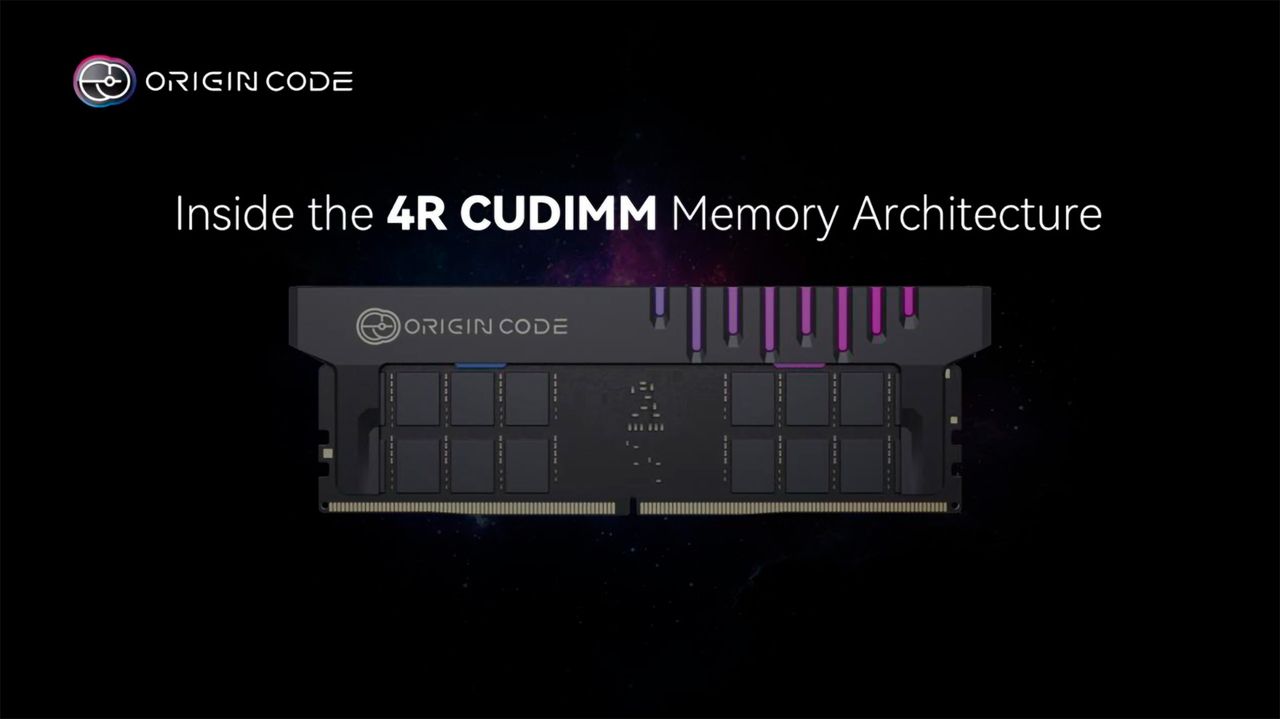
Origin Code, a fresh face in the competitive memory market, has made a resounding entrance with its quad-rank (4R) CUDIMM memory kits, unveiled at Computex 2026. This isn't just another incremental upgrade; it’s a significant leap, pushing consumer memory capacity to unprecedented levels. With individual DDR5 memory modules now hitting 128GB, achieving a staggering 256GB in a dual-DIMM setup is no longer confined to server racks or specialized workstations – it’s a reality for the mass market.
For years, quad-rank memory, which fundamentally offers higher density by packing more memory chips onto a single module, has been a staple in enterprise and server environments. Its arrival in the mainstream consumer space, primarily enabled by DDR5 and the introduction of CUDIMMs, signals a new frontier for high-performance computing on the desktop.
Unpacking the Technology: Quad-Rank CUDIMM
To understand the significance of Origin Code's offering, it's essential to grasp the underlying technology. Consumer memory modules traditionally employ either a single- or dual-rank design, meaning they have one or two independent sets of memory chips, respectively. Quad-rank memory, as the name suggests, integrates four distinct sets of memory chips. This design allows manufacturers to dramatically increase the density of a single memory module. Where DDR5 previously maxed out at 64GB per module, quad-rank DDR5 effectively doubles that to 128GB, with future possibilities even hinting at 256GB per module.
Crucially, the emergence of these high-density consumer quad-rank DDR5 kits is not a simple evolution but a direct consequence of the client clock driver (CKD) embedded within CUDIMMs (Client Unbuffered DIMMs). This CKD chip is instrumental for two main reasons: it empowers memory modules to reach incredibly high frequencies, and equally important, it significantly enhances the stability of quad-rank memory. Running four banks of memory chips simultaneously, especially at high speeds, places considerable stress on the processor. Historically, this stress prevented quad-rank memory from being viable for everyday users. The CUDIMM’s integrated CKD effectively offloads some of this burden, making these high-capacity, high-speed modules practical for the desktop.
Key Specifications and Performance
Origin Code showcased two distinct flavors of its 4R CUDIMM memory kits, catering to different segments of the market:
- Standard Kit: A 256GB (2x128GB) DDR5-8000 kit was demonstrated on a Gigabyte Z890 Aorus Elite Duo X motherboard paired with a Core Ultra 7 270K Plus processor. This standard offering comes with somewhat relaxed memory timings of 64-63-63-128, which is entirely expected given the substantial capacity and high speed. It operates at a modest 1.1V DRAM voltage.
- Flagship Kit: For the most demanding enthusiasts and professionals, Origin Code has a premium version. This DDR5-8000 kit boasts much tighter timings of 42-57-57-108. This superior performance comes at the cost of requiring a higher 1.4V, indicating it’s tuned for maximum stability and speed in high-performance builds.
The ability to hit DDR5-8000 speeds with 128GB modules is a truly impressive feat, especially for a new player. It offers users an unparalleled amount of high-speed memory, ideal for intensive tasks like video editing, 3D rendering, scientific simulations, or running multiple virtual machines.
User Experience and Compatibility
The immediate user experience with Origin Code's CUDIMM kits will largely depend on the platform. Current demonstrations, including Origin Code's with Gigabyte and a separate one from Adata with MSI, consistently point to Intel's Z890 platform. This suggests that the initial adoption of quad-rank CUDIMMs will primarily be on compatible Intel systems. For AMD users, the situation is less clear. While AMD has confirmed that the AM5 socket supports CUDIMMs, the feature has not yet been rolled out. Industry speculation suggests full CUDIMM support for AMD platforms might arrive with the Zen 6 generation. This means early adopters of Origin Code’s memory will likely need an Intel Z890-based system.
Beyond raw performance, the sheer capacity offered by these modules redefines what’s possible for consumer-grade workstations. Users no longer have to compromise on the number of browser tabs, software applications, or datasets they can simultaneously manage without hitting memory bottlenecks. For content creators and power users, this translates directly into enhanced productivity and smoother workflows.
Competition and Market Outlook
Origin Code isn't operating in a vacuum. The momentum for quad-rank CUDIMM memory kits is building across the industry. Adata, for instance, has already showcased its own quad-rank CUDIMM functionality in partnership with MSI, demonstrating modules running at DDR5-5600 speeds. It's a reasonable expectation that other established memory brands will swiftly join this emerging market segment, leading to increased competition and potentially more diverse offerings in the near future.
Pros and Cons
Pros:
- Massive Capacity: Unprecedented 256GB dual-channel configurations for consumers.
- High Speed: DDR5-8000 modules deliver top-tier performance.
- Quad-Rank Design: Brings enterprise-level density to the mainstream.
- CUDIMM Stability: Client Clock Driver enhances stability for high-capacity, high-frequency operation.
- Enthusiast Options: Flagship kit offers tighter timings for peak performance.
Cons:
- Platform Specificity: Currently appears limited to Intel Z890 platforms.
- AMD Compatibility Uncertainty: Full CUDIMM support for AM5 is delayed, possibly until Zen 6.
- Global Memory Shortage: Significant challenge, likely leading to high prices and limited availability.
- New Brand: Origin Code is a new player, which might raise questions about long-term support for some buyers.
- Relaxed Standard Timings: The standard kit's timings are looser than some enthusiast-grade dual-rank kits, though expected for the capacity.
Buying Recommendation
Origin Code's 256GB DDR5-8000 CUDIMM kits are undeniably groundbreaking. If you are an enthusiast, professional, or power user building a high-end Intel Z890 system and require an absolutely massive amount of fast RAM for memory-intensive applications like virtualization, extreme multitasking, high-resolution content creation, or scientific computing, then these modules are a compelling, perhaps even revolutionary, option. The flagship kit, in particular, caters to those who demand the absolute best in terms of both capacity and raw speed.
However, potential buyers must proceed with caution. The current global memory shortage is a significant hurdle, indicating that these kits will likely be expensive and potentially difficult to acquire. AMD users should hold off until CUDIMM support is officially rolled out for their platform. For average users or gamers, 256GB is likely overkill, and more affordable, lower-capacity options will offer better value. But for those truly pushing the boundaries of desktop computing, Origin Code is signaling a bold new direction.
FAQ
Q: Will these Origin Code CUDIMM modules work with my current AMD AM5 motherboard?
A: Based on current information, it is highly speculative that these quad-rank CUDIMMs will work on current AMD AM5 platforms. While AMD's AM5 socket has been confirmed to support CUDIMMs, the feature's full implementation and arrival date are uncertain, with speculation pointing towards Zen 6.
Q: What is the primary advantage of quad-rank CUDIMM memory over traditional dual-rank memory?
A: The main advantage is significantly higher capacity per module. Quad-rank designs allow manufacturers to fit four sets of memory chips on a single module, effectively doubling the capacity compared to high-density dual-rank modules (e.g., 128GB vs. 64GB). CUDIMMs further enable these high-capacity modules to achieve very high frequencies with enhanced stability.
Q: Given the global memory shortage, how will this affect the availability and price of Origin Code's CUDIMM kits?
A: The persistent global memory shortage is expected to be the biggest challenge. This shortage has already caused memory prices to skyrocket with no end in sight, which will likely translate to high prices and potentially limited availability for these cutting-edge quad-rank CUDIMM memory kits, possibly hindering their mass market adoption despite their revolutionary technology.
Related articles
Android 17 QPR2 Beta 7.1: The Performance Relief You've Been Waiting
Android 17 QPR2 Beta 7.1: Finally Fixing the QPR1 Performance Woes Verdict: Android 17 QPR2 Beta 7.1 is a crucial and highly anticipated software update for Google Pixel users, specifically targeting and resolving the

DJI Solo Video Setups: Smart Choices for Lone Creators
This review delves into DJI's recommended solo video setups, highlighting the Osmo Pocket 3 Creator Combo as a top pick for its integrated camera, gimbal, and mic. It also covers stabilizers like the Osmo Mobile 8 and RS 4, and the DJI Mic Mini series for enhanced audio, providing honest pros, cons, and clear buying advice.

Ars Technica's Rocket Report: Your Essential Space Industry Briefing
Quick Verdict Ars Technica's Rocket Report, presented by veteran space reporter Stephen Clark, offers an invaluable and meticulously organized weekly (or similar frequency, implied by "Edition 9.15") digest of the most

Apple iPhone Duo: A Daring Debut with Notable Compromises
Apple's highly anticipated iPhone Duo, priced at $2,000, has gone on pre-order. While hailed as "Apple's most exciting device in a decade" for its innovative foldable design and immersive display, it comes with significant drawbacks like the absence of FaceID and a premium camera.

AI's Confidence vs. Formal Methods' Rigor: Design Flaws & Verification
While AI accelerates code generation, formal methods remain critical for ensuring system correctness. Languages like TLA+ and tools like Quint enable developers to model and verify system designs before coding, catching subtle flaws. Quint makes formal methods more accessible with developer-friendly syntax and executability. This approach is vital for verifying AI-generated code through trace validation and model-based testing, ensuring reliability against real-world data.

KDE Plasma 6.8: A Future-Focused 30th Anniversary Update
Quick Verdict KDE Plasma 6.8, arriving as the "30th Anniversary Edition," is a pivotal release that decisively pushes the desktop environment into the future. With a definitive farewell to native X11 sessions and a