
Nvidia launches enterprise AI agent platform with Adobe, Salesforce
Nvidia CEO Jensen Huang took the stage at GTC 2026 on Monday to unveil the Agent Toolkit, an open-source platform for building autonomous AI agents, announcing a significant industry alignment with 17 major enterprise

Nvidia CEO Jensen Huang took the stage at GTC 2026 on Monday to unveil the Agent Toolkit, an open-source platform for building autonomous AI agents, announcing a significant industry alignment with 17 major enterprise software companies including Adobe, Salesforce, and SAP. This move positions Nvidia to dominate the platform layer of the burgeoning AI agent era, leveraging its hardware supremacy to drive future demand for its GPUs across virtually every industry.
The Agent Toolkit, described by Huang as the “blueprints for a new kind of industry dominance,” provides the foundational models, runtime, security framework, and optimization libraries essential for AI agents to operate autonomously within organizations. These agents are designed for diverse tasks, from resolving customer service tickets and designing semiconductors to managing clinical trials and orchestrating marketing campaigns. While each component is open source, it is meticulously optimized for Nvidia hardware, ensuring that the proliferation of these agents will inherently generate demand for Nvidia's GPUs.
Nvidia's Strategic Enterprise AI Play
Nvidia’s initiative addresses the current complexity of building enterprise AI agents, which typically requires integrating disparate components from various vendors. The Agent Toolkit unifies this process with key elements: Nemotron, a family of open models optimized for agentic reasoning; AI-Q, an open blueprint for agents to perceive, reason, and act on enterprise knowledge; OpenShell, an open-source runtime enforcing policy-based security; and cuOpt, an optimization skill library. This integrated platform aims to streamline development and deployment.
AI-Q notably features a hybrid architecture that routes complex orchestration tasks to frontier models while delegating research tasks to Nemotron’s open models. Nvidia claims this approach can reduce query costs by over 50% while maintaining accuracy, potentially making advanced AI more accessible for enterprises. OpenShell, meanwhile, tackles the critical issue of trust, creating isolated sandboxes with strict policies on data access and privacy. Nvidia is collaborating with major cybersecurity players like Cisco, CrowdStrike, Google, Microsoft Security, and TrendAI to integrate OpenShell, fostering industry validation for its security approach.
Industry Leaders Embrace the Toolkit
The widespread adoption announced at GTC 2026 underscores Nvidia's ambition. Adobe, in a strategic partnership, will integrate Agent Toolkit for running hybrid, long-running creativity, productivity, and marketing agents, leveraging Firefly models and CUDA libraries. Salesforce is utilizing Nemotron models within its Agentforce platform, allowing customers to build and deploy AI agents for service, sales, and marketing, with Slack serving as a conversational interface for these agents.
SAP, whose software underpins global commerce, will integrate the toolkit through Joule Studio on SAP Business Technology Platform, enabling customers to design tailored agents. ServiceNow's Autonomous Workforce of AI Specialists will also leverage the toolkit and AI-Q Blueprint, demonstrating its versatility in hybrid model environments. The reach extends to specialized sectors, with Cadence, Siemens, and Synopsys building advanced agents for semiconductor design, and IQVIA integrating Nemotron into its IQVIA.ai platform for life sciences organizations.
In security, CrowdStrike’s Falcon platform will be embedded directly into Nvidia AI agent architectures, while Cisco AI Defense will provide protection for OpenShell, emphasizing a “secure-by-design” philosophy. Other adopters include Dassault Systèmes for its Virtual Companions, Atlassian for its Rovo AI strategy, Box for secure business processes, and Palantir for AI agents on its sovereign AI Operating System Reference Architecture.
The Open-Source Strategy: A Calculated Moat
Nvidia's decision to open-source key components like OpenShell and Nemotron models is a calculated competitive move. By integrating with popular frameworks like LangChain, Nvidia aims to establish the Agent Toolkit as fundamental infrastructure for AI agent development. This mirrors Google’s Android strategy: giving away the operating system to generate demand for core services. Nvidia is providing the agent operating system to drive demand for its core product—the GPU. The Nemotron Coalition, a global collaboration including Mistral AI, further cements this strategy by seeding the open model ecosystem with Nvidia-optimized foundations, ensuring future models perform best on Nvidia hardware.
Despite the significant announcements, several challenges temper the narrative. Adoption agreements are not production deployments, and competitive offerings from Microsoft, Google, and Amazon suggest the market may fragment. The security claims, while architecturally sound, are new and unproven at scale in complex enterprise environments. Furthermore, organizational readiness within enterprises for autonomous agents, including governance and regulatory frameworks, often lags behind technological capabilities.
Beyond agents, GTC 2026 saw a cascade of announcements, including the Vera Rubin platform with its Vera CPU and Rubin GPU, the Dynamo 1.0 inference operating system, BlueField-4 STX storage, new Level 4 autonomous vehicle programs on DRIVE Hyperion, and Roche's deployment of over 3,500 Blackwell GPUs. These demonstrate Nvidia’s ambition to remake itself at every layer of the computing stack.
Ultimately, GTC 2026 signifies Nvidia’s conviction that the era of AI agents will surpass the era of AI models, and its intention to own the platform layer. The agreement of 17 major software companies suggests an industry-wide endorsement, betting that building on Nvidia’s infrastructure will accelerate their own innovation—a pivotal moment in enterprise technology whose full impact will unfold in the coming years.
FAQ
Q: What is the Nvidia Agent Toolkit? A: The Nvidia Agent Toolkit is an open-source platform designed for building autonomous AI agents for enterprise use. It includes optimized models (Nemotron), an AI-Q blueprint for reasoning, an OpenShell runtime for security, and a cuOpt optimization library, all tailored to work best with Nvidia hardware.
Q: Why is Nvidia offering an open-source platform for AI agents? A: Nvidia's open-source strategy for the Agent Toolkit is a strategic move to establish its platform as the foundational infrastructure for enterprise AI agent development. By making the software accessible and optimized for its hardware, Nvidia aims to ensure that the widespread adoption of AI agents drives continuous demand for its core product: GPUs.
Q: What are some of the key security features of the Agent Toolkit? A: The Agent Toolkit incorporates OpenShell, an open-source runtime that creates isolated sandboxes to enforce strict policy-based security, data access, network reach, and privacy guardrails. Nvidia is also collaborating with major cybersecurity firms like CrowdStrike and Cisco to integrate their existing security tools and provide robust protection for agents operating in complex enterprise environments.
Related articles

Apple Unveils iPhone Duo: Pricey Foldable Sees Soaring Demand
Apple has officially entered the foldable smartphone arena with the long-anticipated launch of the iPhone Duo. Priced starting at a hefty $1,999, the device features a 5.4-inch outer display and a larger 7.6-inch inner

in-depth: Chicago-Area Cops Helped HSI Spy on Minnesota Anti-ICE
Chicago-area law enforcement, including local police and HSI agents, conducted undercover surveillance on Minnesota anti-ICE activists at an April 2, 2022, talk in Chicago. This operation was part of a federal conspiracy probe into 15 Minnesota activists facing felony charges related to immigration enforcement resistance. Civil liberties advocates have condemned the surveillance as a troubling intrusion into protected political activity.

Mark Wahlberg on using AI in film ‘the right way’ and being open to
Actor Mark Wahlberg believes AI has a place in filmmaking if used responsibly for enhancement, not script generation or actor replacement. At TechCrunch Disrupt, he expressed openness to an AI likeness carrying on his legacy, managed by his family, and emphasized storytelling.
Ars Technica's Rocket Report: Your Essential Space Industry Briefing
Quick Verdict Ars Technica's Rocket Report, presented by veteran space reporter Stephen Clark, offers an invaluable and meticulously organized weekly (or similar frequency, implied by "Edition 9.15") digest of the most

Tesla Unveils Thruster-Equipped Roadster, 2028 Production Targeted
Tesla has unveiled its second-generation Roadster, featuring cold-gas thrusters co-developed with SpaceX, enabling it to jump and flip. The electric sports car demonstrated 0-60mph in an astonishing 0.81 seconds, with production targeted for 2028. This highly anticipated reveal also serves as a key recruitment tool for Tesla's ambitious AI and robotics initiatives.
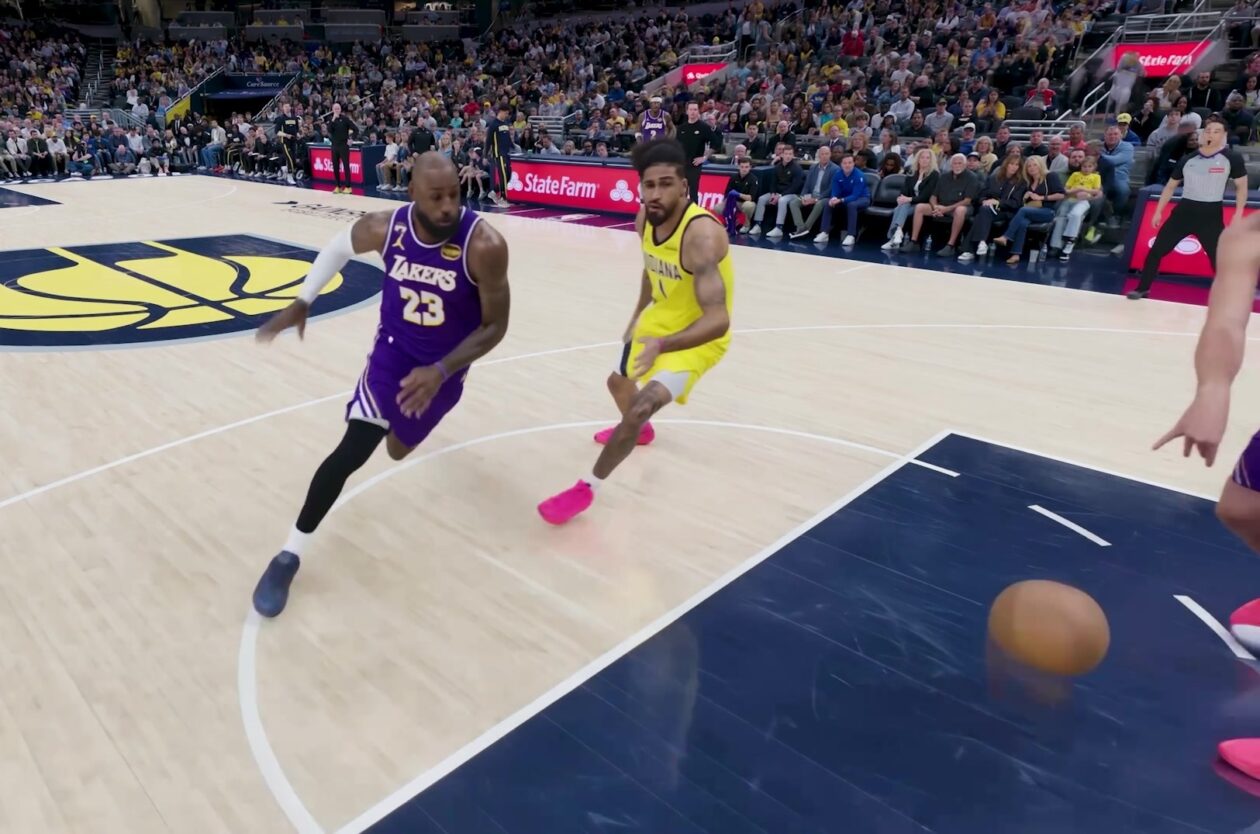
Amazon Prime Video Launches AI-Powered Prime 360 for NBA Coverage
Amazon Prime Video is elevating its NBA coverage with the introduction of Prime 360, an AI-powered replay system offering immersive, 'fly through' views of the action. Kicking off its second season, Prime Video also adds Yahoo fantasy integration and gains exclusive Eastern Conference Finals rights, expanding its tech-driven sports broadcast. The new features aim to deliver a unique and interactive viewing experience for basketball fans.