
NASA DART Mission: A Planetary Defense Game-Changer
The universe is a vast and unpredictable place, and for decades, humanity has pondered the very real, albeit rare, threat of an asteroid impact. Enter NASA's Double Asteroid Redirection Test (DART) mission, a
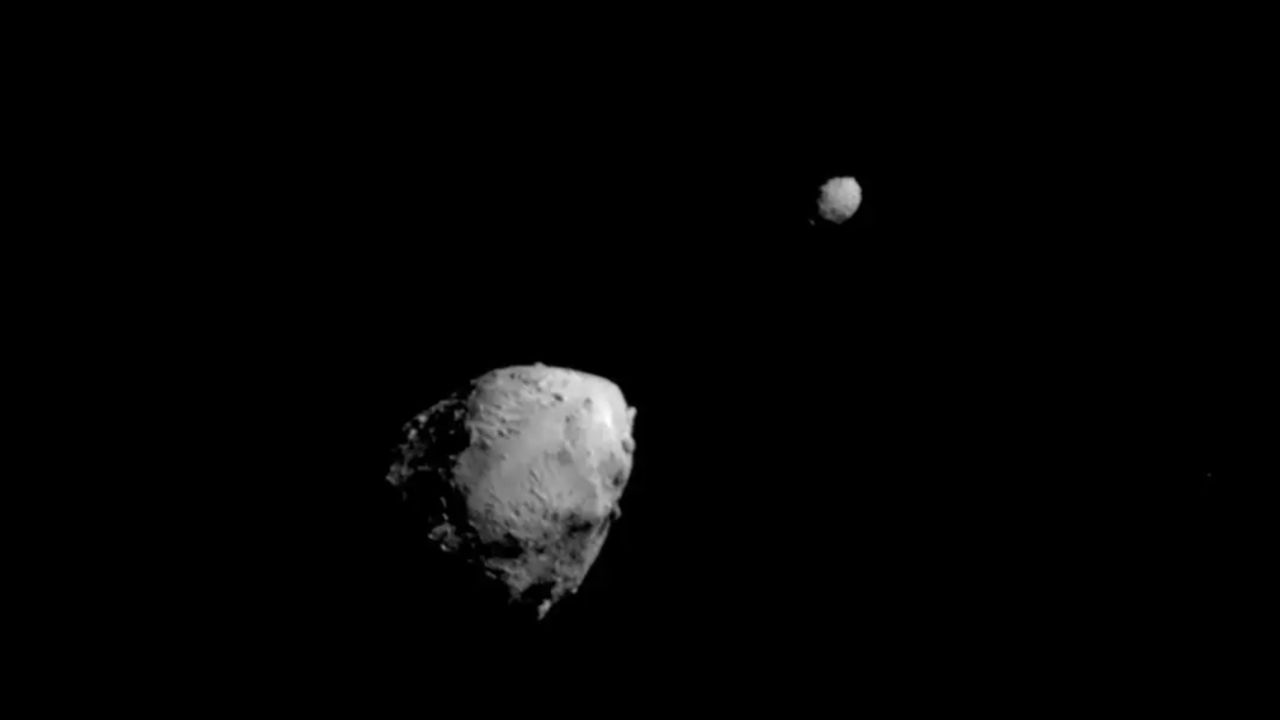
The universe is a vast and unpredictable place, and for decades, humanity has pondered the very real, albeit rare, threat of an asteroid impact. Enter NASA's Double Asteroid Redirection Test (DART) mission, a groundbreaking experiment designed to test our ability to defend our home planet. After a successful kinetic impact and months of meticulous observation, the verdict is in: DART isn't just a mission; it's a monumental achievement in planetary defense, proving that humanity now possesses a viable strategy to nudge threatening celestial bodies off a collision course.
Quick Verdict
NASA's DART mission unequivocally demonstrated the effectiveness of a kinetic impactor as a planetary defense mechanism. By successfully altering the orbit of a small asteroid, Dimorphos, the mission provides invaluable proof-of-concept for safeguarding Earth from potential cosmic threats. While the target itself was not hazardous, the precision and measurable results confirm that with early detection, even a slight change in trajectory can prevent a catastrophic impact. This isn't just a scientific success; it's a reassuring step towards securing humanity's future in space.
Mission Overview and Key Details
Launched in November 2021, the DART probe embarked on a nine-month journey, culminating in its precise collision with Dimorphos in September 2022. Dimorphos, a relatively small asteroid measuring 560 feet (170 meters) wide, orbits a larger companion, Didymos, which spans 880 yards (805 meters). The primary goal was to see if a kinetic strike could perceptibly alter Dimorphos's orbital period around Didymos.
After several months of observation by NASA scientists and a network of volunteer astronomers, the results were conclusive: Dimorphos's 12-hour orbit around Didymos was successfully reduced by approximately 33 minutes. While seemingly minor, this change represents a significant scientific breakthrough. Further analysis also revealed an even more subtle, yet profound, impact: the entire binary system's orbit around the Sun was affected by a minuscule 0.15 seconds. Rahil Makadia, lead author of a study on the mission, highlighted the change in the binary system's orbital speed was about 11.7 microns per second, or 1.7 inches per hour. This underscores a critical principle of planetary defense: over the immense distances of space, even a tiny alteration, if applied early enough, can mean the difference between an asteroid striking or missing Earth.
It's important to note the scale of potential impact that such objects represent. While Dimorphos, if it were on a collision course, could wipe out an area the size of London, its larger companion, Didymos, poses a threat capable of devastating an entire region like Southern England. Thankfully, neither of these asteroids posed any danger to Earth, even before the DART mission took place. They served as perfect, non-threatening test subjects for this vital experiment.
Mission Execution and Scientific Validation
The success of DART hinges not just on the impact itself, but on the meticulous execution and rigorous scientific validation that followed. The probe's journey and precise targeting demonstrated advanced navigational capabilities. Following the impact, the extended observation period, involving both professional astronomers and a global network of volunteers, was crucial. This collective effort allowed for the precise measurement of the orbital change, confirming the mission's objective with high confidence. The ability to detect such minute alterations – a 33-minute shift in a 12-hour orbit, a 0.15-second change in a solar orbit, and a speed alteration of just 1.7 inches per hour – speaks volumes about the sophistication of the instruments and the analytical methods employed. This wasn't merely a collision; it was a controlled scientific experiment with measurable, repeatable results, setting a robust precedent for future planetary defense endeavors.
Pros
- Proven Technology: DART delivered undeniable proof that kinetic impactors are a viable and effective method for altering the trajectory of asteroids. This moves planetary defense from theoretical models to demonstrated capability.
- Early Intervention Efficacy: The mission validates the principle that even very small nudges, when applied early enough in an asteroid's trajectory, can prevent a collision over cosmic distances.
- Invaluable Data Collection: The detailed observations and measurements post-impact provide critical data for refining models of asteroid composition, impact dynamics, and deflection strategies.
- Global Engagement: The involvement of volunteer astronomers alongside NASA highlights the collaborative nature of this scientific endeavor and its broad appeal.
Cons
- Detection Dependency: While DART proved deflection is possible, the mission itself highlights the critical bottleneck: early detection. The kinetic impact strategy relies entirely on identifying potential threats far in advance, a capability NASA is still actively developing.
- Time-Sensitive Application: The kinetic impact method necessitates significant lead time. For objects detected late in their approach, this method might not be feasible, requiring alternative defense strategies.
- Limited Test Scope: DART targeted a non-threatening asteroid of a specific size and composition. Real-world threats could vary greatly in size, speed, and material, potentially requiring different impactor designs or multiple impacts.
DART's Role in a Broader Planetary Defense Strategy
DART is not a standalone solution but a crucial component of a comprehensive planetary defense strategy. The source content emphasizes that despite DART's success, NASA remains concerned about the multitude of smaller, undetected rocks in space that could pose a danger. This concern directly informs NASA's next critical step: the development of an orbiting telescope specifically designed for planetary defense. This telescope will be the first of its kind, dedicated to early detection of incoming threats like asteroids and comets.
In this ecosystem, DART represents the 'response' mechanism, while the new orbiting telescope will be the 'early warning' system. They are complementary forces, not alternatives. DART has proven that if an object is found early, it can be nudged. The orbiting telescope's mission will be to ensure we find those objects early enough for DART-like missions to be effective. Without robust detection capabilities, even the most effective deflection technology remains reactive rather than proactive. This integrated approach – early detection followed by decisive action – forms the backbone of humanity's emerging planetary defense shield.
Recommendation
The DART mission represents a resounding success and a pivotal moment for humanity's long-term survival. It’s an investment that transcends typical consumer products, offering a priceless return: the potential to safeguard our planet. We strongly advocate for continued and robust funding for NASA's planetary defense initiatives, encompassing both advanced detection systems like the upcoming orbiting telescope and further development of deflection technologies. DART has moved planetary defense from science fiction to scientific fact, demonstrating a proactive capability that is essential for a species living in a cosmic shooting gallery. This is not a 'product' to buy, but a collective endeavor to support, ensuring the security of our shared future.
FAQ
Q: Was Dimorphos a threat to Earth before the DART mission?
A: No, the source content explicitly states that Dimorphos and its larger companion, Didymos, would never have impacted Earth, even without the DART mission. They were chosen as safe test subjects for the planetary defense experiment.
Q: How significant were the orbital changes achieved by DART?
A: While the numbers might seem small (a 33-minute reduction in Dimorphos's 12-hour orbit and a 0.15-second change in the system's solar orbit), these minute alterations are considered highly significant. Over the vast distances involved in space, such small changes, if applied early enough, can be enough to deflect a hazardous object from a collision course with Earth.
Q: What's the next step for planetary defense, following DART's success?
A: The next critical step for NASA, as mentioned in the source, is to build and deploy an orbiting telescope specifically designed to detect incoming threats like asteroids and comets. This early detection capability is crucial to identify potential hazards far enough in advance for kinetic impact missions like DART to be effective.
Related articles

Crystal Lake Series on Peacock: A Deep Dive into Horror's Past
Crystal Lake Series Review: A Deep Dive into Horror's Past Verdict: Is Crystal Lake Worth the Dive? The long-awaited Friday the 13th prequel, Crystal Lake, is finally arriving on Peacock, promising a fresh, in-depth
Google's AI Branding Fix: A Clearer Vision for Gemini
This article critiques Google's fragmented AI branding, proposing a unified 'Gemini Intelligence' system to simplify user experience and strengthen Gemini's identity.

Chuwi UniBox AI495 Pro Review: A Mini AI Powerhouse
Chuwi's UniBox AI495 Pro review: A powerful mini workstation with 192GB RAM and an AMD Ryzen AI chip for local LLM processing, packed into a compact, Mac Pro-esque design.
Pixel Connectivity: Battery Drain, Not Data Speed, Is the Real
Google's Pixel series has consistently offered a compelling Android experience, often earning a spot on recommendation lists for its clean software and camera prowess. However, a recurring shadow has loomed over the

AI Cybersecurity: The Perpetual Cat and Mouse Game
In the rapidly evolving digital landscape, the interplay between artificial intelligence and cybersecurity has created a dynamic, ceaseless challenge—a true cat and mouse game. AI is not merely a tool for defense; it's

CNET's NYT Connections: Sports Edition Hints & Answers - Daily Puzzle
CNET's daily guide for NYT Connections: Sports Edition offers clear, spoiler-protected hints and answers, making it an efficient and reliable resource for sports puzzle enthusiasts.