
Microsoft 2.5: Lamanna Drives Company's "Copilot" Transformation
Microsoft is poised to launch its "Copilot Super App," a transformative move led by EVP Charles Lamanna, aimed at unifying the company's diverse AI offerings. This initiative seeks to establish Copilot as the central interface for all Microsoft services, addressing prior fragmentation and redefining user interaction with the tech giant's ecosystem. The strategy includes deep integration of core franchises and a shift towards usage-based pricing for AI services, signaling Microsoft's ambition to become the "Copilot company."

Executive Vice President Charles Lamanna is at the helm of Microsoft's ambitious pivot to become the "Copilot company," spearheading the upcoming launch of the "Copilot Super App." This transformative initiative, revealed by company officials, aims to unify Microsoft's fragmented AI experiences, creating a single, intelligent gateway for both consumer and business users in what GeekWire terms the "Microsoft 2.5" era. The move signals a profound reorientation of the tech giant's strategy, positioning Copilot as the central interface for its vast ecosystem.
Lamanna, who oversees Copilot, Agents, and Platform, is a key figure within the Copilot Leadership Team driving this monumental shift. Despite his relatively recent ascent to this EVP role in March 2026, his journey at Microsoft spans over 13 years across multiple stints, including leading the Power Platform and Dynamics 365 teams. He emphasizes customer obsession, a "total ownership mindset," and kindness within his team, routinely outlining strategic priorities in a "State of the Business" paper.
Unifying Fragmented AI Experiences
Acknowledging past "missteps" and a "Copilot-Palooza" of fragmented offerings—from consumer to commercial to GitHub Copilot—Lamanna revealed the Super App's primary goal: integration. The Super App is envisioned as a singular destination, much like a browser or operating system, designed to bring together disparate Copilot functionalities for both professional and personal use. Microsoft intends for it to become the initial application users launch, similar to how many start their day with Outlook or Teams.
The upcoming Copilot Super App will serve as the hub for various AI agents, including Code, Chat, Cowork, and "Autopilots" (always-on agents). While the app itself is expected to be free, consistent with the current Copilot App, the underlying services it exposes will likely incur usage-based charges. This aligns with Microsoft's shift towards metered pricing for AI products like GitHub Copilot and Microsoft 365 Cowork, reflecting an environment where continuous agent activity, rather than user count, drives demand.
Deep Integration and the "IQ" Suite
Microsoft is actively integrating its foundational franchises into the Super App experience. Dynamics 365, the company's CRM and ERP suite, is evolving into a network of agents that connect to AI models via Dynamics Model Context Protocol (MCP) servers. Similarly, the Dataverse platform, which underpins Power Platform and Dynamics, is being directly linked with Copilot, promising streamlined data querying from within the AI assistant.
While competitors explore "headless" architectures where backend data is accessed solely through agents, Lamanna expresses reservations about the term, calling it "dumb." Instead, Microsoft champions its "IQ" suite of intelligence layers. Work IQ, for instance, analyzes emails, chats, meetings, and usage patterns, allowing Copilot and agents to provide context-aware suggestions without requiring users to directly open traditional applications like Outlook or SharePoint. Fabric IQ provides a similar layer for Microsoft's data platform.
Work IQ is effectively becoming the "headless" version of Microsoft 365, enabling users to access their email, documents, and files without intermediaries. The Super App automatically invokes the necessary IQ layer or backend service, ensuring seamless interaction. As Lamanna explained, "Copilot can navigate to these IQs as needed. For email, go to Work IQ. Info inside Dynamics 365, go to the MCP servers that it publishes. Data from Salesforce or ServiceNow, we have connectors. But you stay in the Super App."
The Future: A "Copilot Company"
Lamanna firmly states Microsoft's ultimate ambition: "We want to be the Copilot company." He envisions the Copilot Super App as the "front door to basically everything," encompassing Dynamics, GitHub, Exchange, SharePoint, OneDrive, and numerous other services. Alongside this, Microsoft will continue its role as an infrastructure provider, focusing on tokens, compute, and storage—areas Lamanna identifies as the most compelling technology businesses for the next decade. This strategic direction positions Microsoft as a leader in the evolving AI landscape, redefining how users interact with technology.
FAQ
Q: What is the "Copilot Super App"?
A: The Copilot Super App is Microsoft's upcoming initiative to create a single, unified destination for all its various Copilot AI experiences. It aims to act as a central hub, similar to a browser or operating system, bringing together consumer and business AI functionalities.
Q: How will Microsoft address the fragmentation of its Copilot offerings?
A: According to EVP Charles Lamanna, the Copilot Super App is designed to combat the "Copilot-Palooza" of fragmented experiences by consolidating them into one primary interface. This aims to make Copilot the default starting point for users across Microsoft's ecosystem.
Q: Will the Copilot Super App be free to use?
A: While the Copilot Super App itself is expected to be free, much like the current Copilot App, the underlying services and advanced AI agents it accesses will likely be subject to usage-based pricing, aligning with Microsoft's existing models for products like GitHub Copilot.
Related articles

Apple Unveils iPhone Duo: Pricey Foldable Sees Soaring Demand
Apple has officially entered the foldable smartphone arena with the long-anticipated launch of the iPhone Duo. Priced starting at a hefty $1,999, the device features a 5.4-inch outer display and a larger 7.6-inch inner

in-depth: Chicago-Area Cops Helped HSI Spy on Minnesota Anti-ICE
Chicago-area law enforcement, including local police and HSI agents, conducted undercover surveillance on Minnesota anti-ICE activists at an April 2, 2022, talk in Chicago. This operation was part of a federal conspiracy probe into 15 Minnesota activists facing felony charges related to immigration enforcement resistance. Civil liberties advocates have condemned the surveillance as a troubling intrusion into protected political activity.

Mark Wahlberg on using AI in film ‘the right way’ and being open to
Actor Mark Wahlberg believes AI has a place in filmmaking if used responsibly for enhancement, not script generation or actor replacement. At TechCrunch Disrupt, he expressed openness to an AI likeness carrying on his legacy, managed by his family, and emphasized storytelling.

Tesla Unveils Thruster-Equipped Roadster, 2028 Production Targeted
Tesla has unveiled its second-generation Roadster, featuring cold-gas thrusters co-developed with SpaceX, enabling it to jump and flip. The electric sports car demonstrated 0-60mph in an astonishing 0.81 seconds, with production targeted for 2028. This highly anticipated reveal also serves as a key recruitment tool for Tesla's ambitious AI and robotics initiatives.

AI's Confidence vs. Formal Methods' Rigor: Design Flaws & Verification
While AI accelerates code generation, formal methods remain critical for ensuring system correctness. Languages like TLA+ and tools like Quint enable developers to model and verify system designs before coding, catching subtle flaws. Quint makes formal methods more accessible with developer-friendly syntax and executability. This approach is vital for verifying AI-generated code through trace validation and model-based testing, ensuring reliability against real-world data.
Amazon Prime Video Launches AI-Powered Prime 360 for NBA Coverage
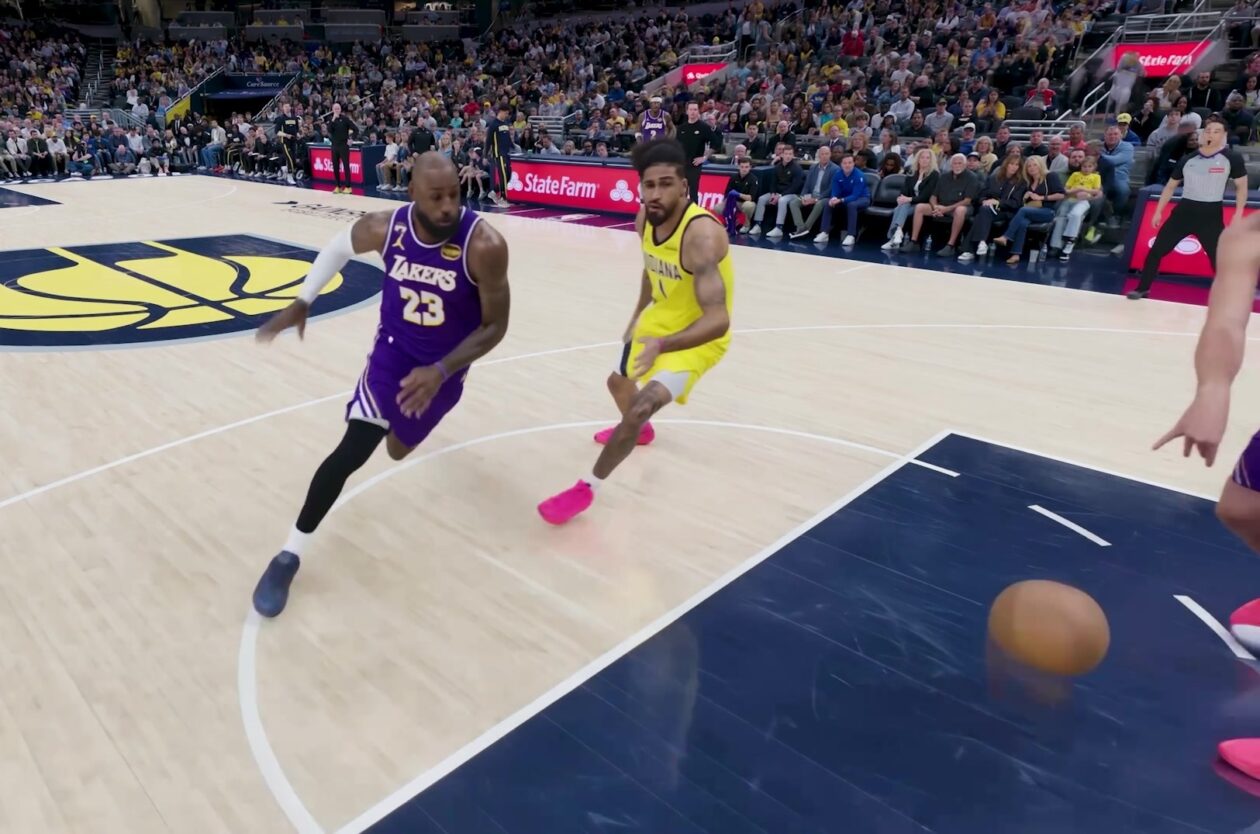
Amazon Prime Video is elevating its NBA coverage with the introduction of Prime 360, an AI-powered replay system offering immersive, 'fly through' views of the action. Kicking off its second season, Prime Video also adds Yahoo fantasy integration and gains exclusive Eastern Conference Finals rights, expanding its tech-driven sports broadcast. The new features aim to deliver a unique and interactive viewing experience for basketball fans.