
Measles Resurgence: A Grim Harbinger for Public Health
This review analyzes the urgent warning from Brown University's Pandemic Center: the measles resurgence signals systemic public health vulnerabilities, high economic costs, and eroding public trust, prefiguring future disease threats.
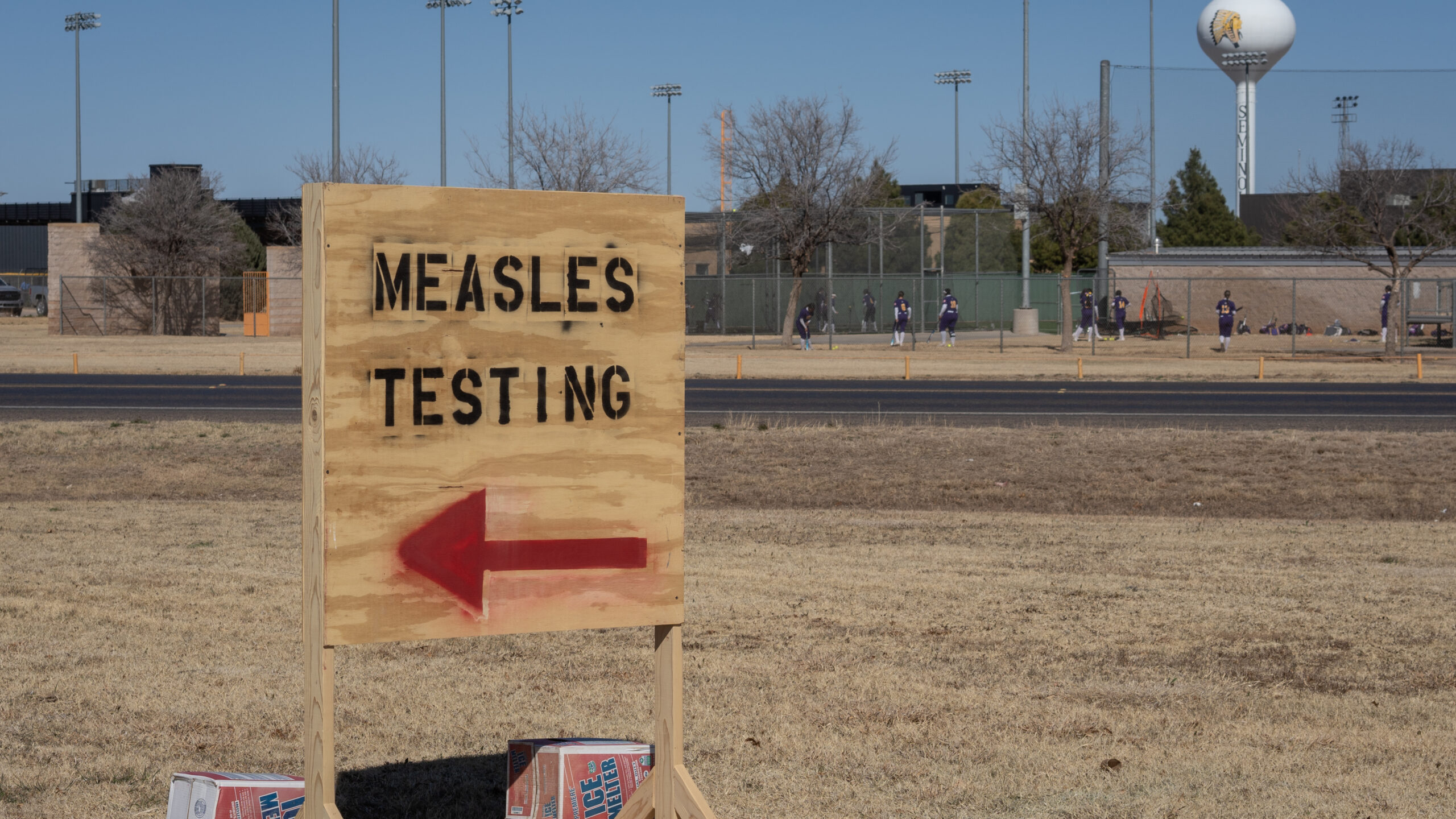
The Measles Resurgence: A Grim Harbinger for Public Health
Quick Verdict: The recent resurgence of measles in the US is far more than an isolated health concern; it's a stark indicator of systemic vulnerabilities in our public health infrastructure and a potential precursor to broader infectious disease challenges. With significant economic costs already mounting and public trust in health institutions eroding, this analysis from the Pandemic Center at Brown University serves as a critical, urgent warning that warrants immediate attention and proactive measures.
Key Findings: Unpacking the Crisis
This crucial analysis, originally published via The Conversation and highlighted by Ars Technica, dissects the multifaceted implications of rising measles cases, presenting them not just as a health threat but as a profound economic and societal challenge. The core 'product' here isn't a gadget, but a vital insight into the state of our collective defense against infectious diseases.
At the heart of the issue is the devastating economic impact of measles. Studies reveal that containing outbreaks often runs into tens of thousands of dollars per case. A concrete example cited is the 2018-2019 Washington state outbreak, which involved a relatively modest 72 cases. The public health response, medical expenses, and productivity losses combined for a staggering US$3.2 million bill. This isn't just about direct healthcare costs; it encompasses the broader economic disruption caused by illness and prevention efforts. The Common Health Coalition's findings further underscore this financial burden: a sustained 1 percent decline in MMR (Measles, Mumps, Rubella) vaccine coverage could cost the U.S. billions across its healthcare systems and wider economy. This isn't abstract; it's a direct threat to financial stability.
The 'Proxy' Effect: More Than Just Measles
Perhaps the most alarming aspect of this analysis is its identification of measles control as a 'proxy' for a nation's overall capacity to manage infectious diseases. The methods for halting measles spread—vaccination, case detection and isolation, contact tracing, and safe treatment—are fundamental to controlling many other infectious threats. Therefore, a weakening response to measles signals a systemic flaw that could compromise our ability to combat future outbreaks, pandemics, or even biological attacks.
Indeed, the report points out that this isn't merely a theoretical concern. Beyond measles, other once-controlled infections, such as whooping cough, have seen sharp increases in 2024 and remained elevated in 2025 compared to pre-COVID-19 pandemic levels. This trend suggests a broader erosion of public health defenses, not just an isolated measles problem.
User Experience (Public Trust) and System Design Flaws
In a traditional tech review, we'd discuss user experience. Here, that translates to public confidence and engagement with public health initiatives. The analysis highlights that the ability to control many infectious diseases hinges on public trust in core public health components. The declining MMR vaccine coverage is presented as a symptom of underlying challenges in public support for vaccines.
Compounding this, polling data from KFF (2023 to early 2026) reveals an erosion of public confidence in the Centers for Disease Control and Prevention (CDC). Less than half of those polled trust the government even “a fair amount” to provide reliable vaccine information. This breakdown in trust is a critical 'design flaw' in our public health system's ability to function effectively. Without widespread public acceptance and adherence, even the best scientific advice and resources struggle to make an impact.
These 'growing cracks in the country’s public health armor,' as the authors put it, will inevitably complicate efforts to protect Americans from future disease threats, whether they manifest as localized outbreaks, widespread pandemics, or more sinister biological attacks. The system, in its current state of public distrust, is simply less resilient.
Pros and Cons of the Current Situation
Given that the 'product' here is an analysis of a grim situation, 'pros' aren't about the situation itself being good, but about what the analysis successfully highlights and its potential to drive change. 'Cons' are the realities of the current crisis.
Pros (Insights Provided):
- Clear Economic Costing: The analysis meticulously details the financial burden of outbreaks, providing a strong incentive for preventative action.
- Identifies Measles as a 'Proxy': It successfully frames measles as a canary in the coal mine, elevating its importance beyond a single disease.
- Pinpoints Declining Public Trust: Crucially identifies the erosion of public confidence as a root cause, not just a symptom.
- Urgent Warning: Acts as a timely and necessary alarm bell for policymakers and the public regarding broader systemic vulnerabilities.
Cons (Realities of the Situation):
- High and Mounting Economic Costs: The financial strain from outbreaks is already significant and increasing.
- Erosion of Public Trust: A fundamental challenge to effective public health, making future responses more difficult.
- Resurgence of Other Diseases: Indicative of a wider problem beyond just measles, suggesting a deteriorating overall public health landscape.
- Increased Vulnerability: The identified 'cracks' mean a heightened risk to Americans from future disease threats of any kind.
Comparison to Alternatives
In a typical review, we might compare this specific public health warning to similar analyses or warnings. However, the source content does not provide directly comparable 'alternatives' in a way that would lend itself to a feature-by-feature table. Instead, the analysis itself serves as a unique and timely 'product' of insight. It does, however, implicitly compare the current state of public health to a previous state – specifically, the period before the COVID-19 pandemic. In that pre-pandemic era, public trust in health institutions and vaccine coverage were generally higher, and the resurgence of diseases like whooping cough and measles was not as pronounced. The current situation represents a significant decline in these metrics, signaling a weakening of collective immunity and public health cohesion.
Recommendation: A Call to Action
This isn't a product you 'buy' in the traditional sense, but an urgent analysis that demands attention and action. Our recommendation is unequivocal: take this warning seriously. The insights provided by Jennifer B. Nuzzo and Andrea Uhlig from the Pandemic Center are invaluable. They highlight that investing in public health, rebuilding trust, and ensuring high vaccination rates are not just health imperatives but economic necessities and national security concerns. Ignoring the resurgence of measles and the underlying issues it represents would be a catastrophic oversight, leaving the nation vulnerable to more frequent, costly, and severe health crises in the future. Support for accurate information, public health institutions, and vaccination programs is paramount.
FAQ
Q: What are the primary economic costs associated with measles outbreaks?
A: Measles outbreaks incur significant economic costs, including tens of thousands of dollars per case for containment, public health responses, medical expenses, and productivity losses. A sustained 1% drop in MMR coverage is projected to cost the U.S. billions across healthcare systems and the wider economy.
Q: Why is the resurgence of measles considered a 'grim sign' for future health threats?
A: Measles control methods (vaccination, detection, isolation, contact tracing, treatment) are foundational to managing many infectious diseases. The struggles with measles signal a systemic weakening of public health infrastructure and declining public trust, making the nation more vulnerable to future outbreaks, pandemics, or even biological attacks.
Q: What is identified as a key factor behind the declining effectiveness of public health measures?
A: A critical factor is the erosion of public trust in the basic components of public health, including declining support for vaccines and diminishing confidence in institutions like the Centers for Disease Control and Prevention (CDC). This lack of trust complicates efforts to provide reliable information and implement effective disease control strategies.
Related articles

Crystal Lake Series on Peacock: A Deep Dive into Horror's Past
Crystal Lake Series Review: A Deep Dive into Horror's Past Verdict: Is Crystal Lake Worth the Dive? The long-awaited Friday the 13th prequel, Crystal Lake, is finally arriving on Peacock, promising a fresh, in-depth

Tesla Set to Finally Unveil Second-Generation Roadster on October 1
The much-anticipated second generation of the Tesla Roadster, a halo vehicle promising revolutionary performance, is finally slated for a public unveiling on October 1. After years of delays and a protracted development
Google's AI Branding Fix: A Clearer Vision for Gemini
This article critiques Google's fragmented AI branding, proposing a unified 'Gemini Intelligence' system to simplify user experience and strengthen Gemini's identity.

Chuwi UniBox AI495 Pro Review: A Mini AI Powerhouse
Chuwi's UniBox AI495 Pro review: A powerful mini workstation with 192GB RAM and an AMD Ryzen AI chip for local LLM processing, packed into a compact, Mac Pro-esque design.

Nscale Adds Former OpenAI Exec Fidji Simo to Board Ahead of IPO
Nscale, the U.K.-based AI data center startup, has appointed former OpenAI, Meta, and Instacart executive Fidji Simo to its board of directors. This high-profile addition comes as Nscale prepares for a potential IPO this fall, leveraging Simo's extensive experience in scaling major tech platforms and guiding a company through a successful public offering.
Pixel Connectivity: Battery Drain, Not Data Speed, Is the Real
Google's Pixel series has consistently offered a compelling Android experience, often earning a spot on recommendation lists for its clean software and camera prowess. However, a recurring shadow has loomed over the