
Mantis Biotech Secures $7.4M to Build Human Digital Twins
Mantis Biotech has secured $7.4 million in seed funding to advance its platform for creating 'digital twins' of humans. These physics-based, predictive models aim to solve the critical data availability issues in biomedical research, especially for rare diseases, by generating synthetic datasets. Currently, Mantis is applying its technology in professional sports to predict athlete performance and injury, with plans to expand into preventative healthcare and pharmaceutical research.

New York-based Mantis Biotech has raised $7.4 million in seed funding to expand its pioneering work in creating “digital twins” of humans. These physics-based, predictive models are designed to overcome a significant hurdle in biomedical research: the scarcity of reliable, representative data, particularly for rare diseases and unique medical conditions that often stymie the effectiveness of large language models.
The funding round was led by Decibel VC, with contributions from Y Combinator, Liquid 2, and several angel investors. Mantis Biotech plans to deploy this capital for strategic hiring, advertising, marketing initiatives, and strengthening its go-to-market strategies as it pushes its innovative platform forward.
Medicine’s reliance on structured data often leaves AI models struggling with edge cases, where patient privacy concerns and the sheer rarity of conditions limit data availability. Mantis Biotech's solution involves synthesizing disparate data sources to construct comprehensive digital representations of the human body, encompassing anatomy, physiology, and behavior.
According to Georgia Witchel, Mantis' founder and CEO, the company's platform integrates various data types, from medical imaging and biometric sensors to textbooks and motion capture. An LLM-based system then routes, validates, and synthesizes these diverse data streams. Crucially, this synthesized information is processed through a sophisticated physics engine to generate high-fidelity, predictive models.
This physics engine is central to Mantis’s ability to augment existing data, grounding the generated synthetic information in realistic anatomical physics. Witchel illustrated this by explaining how easily their system could create a dataset for hand-pose estimation for an individual missing a finger—a scenario where real-world, labeled data is virtually nonexistent. By modifying their physics model, they can regenerate the model to include such variations.
Mantis envisions wide-ranging applications for these digital twins across the biomedical industry, especially where patient information is fragmented, unstructured, or difficult to access due to ethical and regulatory restrictions. Witchel highlighted the ethical advantage: “I think that’s going to open up people to this idea that humans can be tested on when you’re using virtual humans. I feel currently, people operate with the exact opposite mindset, which totally makes sense, because people’s privacy should be respected.”
The startup has already demonstrated success in professional sports, an industry with a keen interest in modeling high-performing athletes. One of Mantis’s primary clients is an NBA team, for whom they create digital representations tracking athletes' performance metrics, such as jump mechanics over time, correlating them with factors like sleep patterns and training load, to predict injury likelihood.
Looking ahead, Mantis Biotech aims to further develop its technology and eventually launch its platform to the general public, with a focus on preventative healthcare. The company is also working to serve pharmaceutical laboratories and researchers engaged in FDA trials, providing valuable insights into how patients respond to various treatments.
FAQ
Q: What problem is Mantis Biotech trying to solve with digital twins?
A: Mantis Biotech is addressing medicine's data availability problem, particularly in edge cases like rare diseases, where reliable and representative data for training AI models is scarce due to ethical constraints and the inherent rarity of conditions.
Q: How does Mantis Biotech create its digital twins?
A: The company's platform gathers data from various sources (textbooks, sensors, imaging), uses an LLM-based system to synthesize it, and then runs this information through a physics engine. This engine creates high-fidelity, predictive models of human anatomy, physiology, and behavior, grounding the synthetic data in realistic physical principles.
Q: What are some current and future applications for Mantis Biotech's digital twins?
A: Currently, Mantis Biotech is working with professional sports teams, including an NBA client, to model athlete performance and predict injury risks. In the future, the company plans to target preventative healthcare, assist pharmaceutical labs and researchers with FDA trials, and explore other applications where human performance and health can be virtually simulated and analyzed.
Related articles

Apple Unveils iPhone Duo: Pricey Foldable Sees Soaring Demand
Apple has officially entered the foldable smartphone arena with the long-anticipated launch of the iPhone Duo. Priced starting at a hefty $1,999, the device features a 5.4-inch outer display and a larger 7.6-inch inner
Android 17 QPR2 Beta 7.1: The Performance Relief You've Been Waiting
Android 17 QPR2 Beta 7.1: Finally Fixing the QPR1 Performance Woes Verdict: Android 17 QPR2 Beta 7.1 is a crucial and highly anticipated software update for Google Pixel users, specifically targeting and resolving the

in-depth: Chicago-Area Cops Helped HSI Spy on Minnesota Anti-ICE
Chicago-area law enforcement, including local police and HSI agents, conducted undercover surveillance on Minnesota anti-ICE activists at an April 2, 2022, talk in Chicago. This operation was part of a federal conspiracy probe into 15 Minnesota activists facing felony charges related to immigration enforcement resistance. Civil liberties advocates have condemned the surveillance as a troubling intrusion into protected political activity.

TCG Pocket Responds: A Much-Needed Pace Shift for Pokémon Fans
Pokémon TCG Pocket is rolling out a major update for its second anniversary, primarily addressing player concerns about overwhelming content releases by shifting to a six-week set schedule. This aims to curb player decline and improve overall engagement by giving trainers more time to collect and strategize. The update also adds new collection methods, improved deck-building features, and enhanced trading functionality.

Mark Wahlberg on using AI in film ‘the right way’ and being open to
Actor Mark Wahlberg believes AI has a place in filmmaking if used responsibly for enhancement, not script generation or actor replacement. At TechCrunch Disrupt, he expressed openness to an AI likeness carrying on his legacy, managed by his family, and emphasized storytelling.
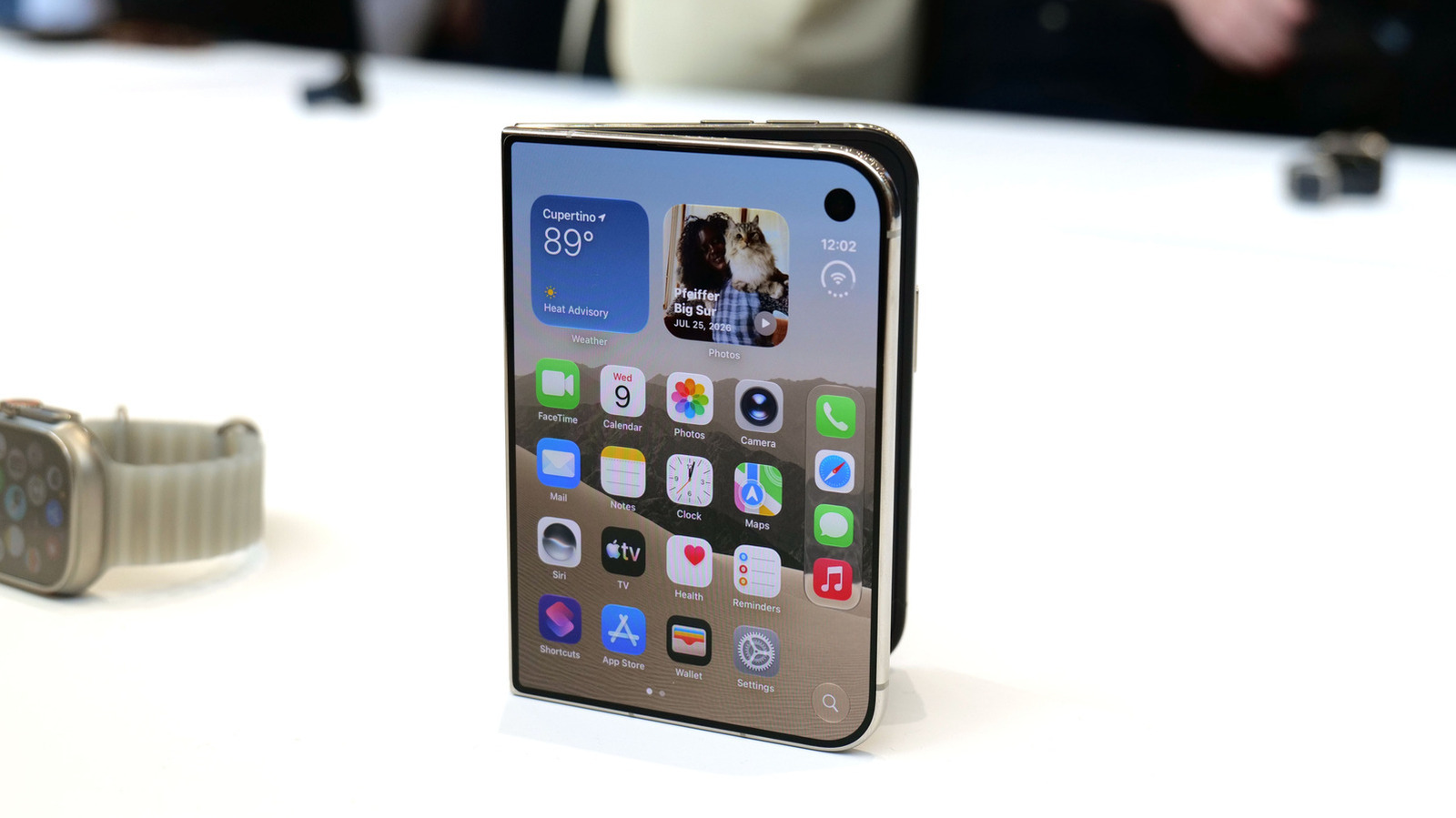
Apple iPhone Duo: A Daring Debut with Notable Compromises
Apple's highly anticipated iPhone Duo, priced at $2,000, has gone on pre-order. While hailed as "Apple's most exciting device in a decade" for its innovative foldable design and immersive display, it comes with significant drawbacks like the absence of FaceID and a premium camera.