
Java's Secret Weapon: How Age Powers Its AI Future
Java's extensive history is a key AI superpower, offering a stable foundation for agent-generated code and an unparalleled dataset for training AI models. Its mature ecosystem of libraries and agentic harnesses further enable developers to build robust, integrated AI applications. This positions Java as a powerful, reliable choice for future AI-driven software development.

The rapid evolution of artificial intelligence, particularly in areas like code generation and agentic programming, has led many developers to reassess their toolkit. While newer languages often steal the spotlight in discussions around AI/ML, an often-overlooked contender is making a quiet, yet powerful, resurgence: Java. Far from being a relic, Java's extensive history isn't a burden; it's proving to be a foundational superpower in the age of AI.
Java's Enduring Stability: A Bedrock for AI
One of Java's most significant strengths, honed over decades, is its inherent stability. Its long history translates directly into a mature, robust, and reliable language platform. For AI agents tasked with generating or modifying code, working with a stable language means predictable behavior, fewer unexpected issues, and a well-understood execution environment. This maturity is critical when building complex, enterprise-grade AI applications where reliability cannot be compromised. The consistent evolution of Java, coupled with its "write once, run anywhere" philosophy, ensures that codebases, whether human-written or AI-generated, benefit from a solid, dependable foundation. This deep-rooted stability minimizes the unknown variables that AI models might otherwise struggle with, allowing them to focus on logic and functionality rather than wrestling with language idiosyncrasies.
A Goldmine of Data: Training AI Models with Java
The sheer volume and quality of existing Java code represent an unparalleled asset for training AI models. Billions of lines of Java code have been written over more than twenty-five years, spanning every conceivable domain—from massive enterprise systems and financial applications to mobile apps and scientific computing. This vast corpus of code, much of it publicly available in open-source projects or through platforms like Stack Overflow, serves as an incredibly rich and diverse training dataset for Large Language Models (LLMs) and coding agents.
When an AI model learns from such an extensive and varied collection of code, it gains a deeper understanding of idiomatic Java, common design patterns, best practices, and effective problem-solving strategies. This enables coding agents to generate more accurate, efficient, and maintainable Java code. Unlike newer languages with smaller datasets, Java's abundant historical data empowers AI to produce high-quality, production-ready solutions, making the generated code more reliable and easier for human developers to integrate and maintain.
The Power of Partnership: Java's Massive Ecosystem
Java's age has also cultivated an exceptionally rich and diverse ecosystem of libraries, frameworks, and tools. This massive collection acts as a powerful partner for agentic Java, enabling AI agents to build sophisticated applications without reinventing the wheel. Instead of generating low-level code for every function, an AI agent can leverage established, highly optimized Java libraries for tasks such as:
- Data Processing: Efficiently handling and manipulating large datasets.
- Networking and Communication: Building robust client-server applications and microservices.
- Web Development: Utilizing mature frameworks for enterprise web applications.
- Database Interaction: Seamlessly connecting to and querying various data stores.
- Concurrency: Managing parallel operations effectively.
This rich ecosystem means that AI-generated Java code can integrate seamlessly with existing, battle-tested components. For developers, this translates to faster development cycles, reduced error rates, and access to a wealth of proven solutions. AI agents become orchestrators, intelligently combining these pre-built modules to create complex applications, focusing on the higher-level architecture and business logic.
Agentic Harnesses: Orchestrating AI with Java
Beyond the language and its libraries, agentic Java also benefits from "agentic harnesses." These are the frameworks and platforms designed to facilitate the operation and integration of AI agents within a development workflow. They provide the necessary infrastructure for agents to:
- Understand developer intent.
- Generate, test, and refine code.
- Interact with existing build systems (like Maven or Gradle) and version control.
- Collaborate with other agents or human developers.
These harnesses, often themselves built using robust technologies, create a powerful synergy. They enable AI agents to effectively leverage Java's stability and ecosystem, turning high-level directives into concrete, executable Java code. This collaborative approach means that AI isn't replacing developers but empowering them, augmenting their capabilities by offloading repetitive coding tasks and accelerating the implementation of complex features.
Practical Takeaways for Developers
For developers eyeing the future of AI-assisted programming, Java presents a compelling case:
- Trustworthy Code Generation: AI models trained on vast amounts of high-quality Java code are more likely to produce reliable and idiomatic solutions.
- Leverage Existing Investments: Companies with significant Java codebases can seamlessly integrate AI-generated Java, preserving their intellectual property and existing infrastructure.
- Powerful Ecosystem Access: AI agents can tap into an unparalleled array of proven libraries and frameworks, accelerating development and enhancing application capabilities.
- Stability in Production: The inherent stability of the Java platform makes it an ideal choice for critical AI-driven applications that demand high availability and reliability.
Embracing agentic Java means recognizing that the language's maturity, far from being a disadvantage, is its most formidable asset in the AI era. It's not about choosing between old and new, but about leveraging stability and established excellence to build the innovative AI solutions of tomorrow.
FAQ
Q: How does Java's "long history" directly benefit AI model training compared to newer languages? A: Java's long history has resulted in an exceptionally large and diverse corpus of high-quality, well-documented code across numerous domains. This vast dataset provides AI models with an unparalleled wealth of examples for learning idiomatic patterns, best practices, and robust solutions, leading to more accurate and reliable code generation compared to languages with smaller, less mature codebases.
Q: What is meant by "agentic harnesses" in the context of Java and AI? A: "Agentic harnesses" refer to the frameworks and platforms that facilitate the integration, orchestration, and execution of AI coding agents within a development environment. These harnesses allow AI agents to understand tasks, generate Java code, interact with build tools, and collaborate effectively, enabling them to leverage Java's ecosystem and stability in a structured manner.
Q: Can AI agents generate Java code that integrates with existing, complex enterprise Java systems? A: Yes, Java's massive and mature ecosystem, combined with the comprehensive training data available for AI models, makes it highly suitable for this. AI agents trained on Java can generate code that adheres to established patterns and integrates seamlessly with existing Java libraries and frameworks prevalent in enterprise systems, thereby extending or augmenting current functionalities.
Related articles

AI's Impact on Malware Detection: Next-Gen Protection Deep Dive
The landscape of cybersecurity has transformed dramatically. Gone are the days when a simple virus attached itself to a file, easily quarantined by an antivirus scanner. Today, malware is sophisticated, multifaceted,
AI Cybersecurity: The Perpetual Cat and Mouse Game
In the rapidly evolving digital landscape, the interplay between artificial intelligence and cybersecurity has created a dynamic, ceaseless challenge—a true cat and mouse game. AI is not merely a tool for defense; it's

No More Robots Sails into New Territory with Cruise Control
After nine years of publishing success, indie studio No More Robots is launching its first self-developed IP, `Cruise Control`, a puzzle game born from a pivot away from a shelved online shooter. Founder Mike Rose reflects on the company's unconventional, lean approach, the accidental success of `Descenders`, and the massive potential of upcoming title `Another Door`, while also considering his own future in the demanding industry.
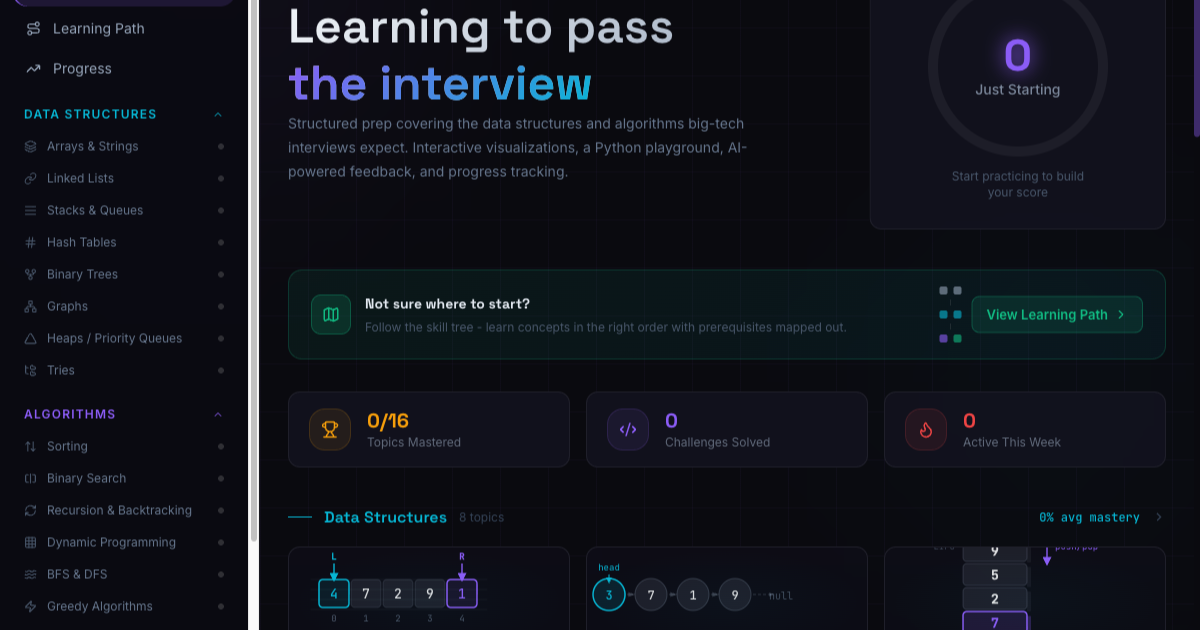
Learningto/Pass: Free, AI-Powered Interview Prep for Developers
Landing a role at a top-tier tech company often hinges on mastering complex data structures and algorithms, coupled with a solid grasp of system design. The problem for many aspiring software developers is that quality

Milki Delivery: Ghibli Charm Hides a Surprisingly Dark Secret
Milki Delivery is a charming, Ghibli-inspired cozy game about a girl delivering milk with her pet cow. Beneath its wholesome exterior, a subtle mystery unfolds around the disappearance of other cows and the rebuilding of community bonds.
The Composite Design Pattern: Unifying Individual Objects and Groups
As software engineers, we frequently encounter scenarios where we need to manage collections of objects that can be either individual entities or groups containing other entities. Think of a file system with files and