
in-depth: What You Need to Know About Building an Outdoor Sauna
A significant trend is heating up in backyards across the country, particularly in regions like Portland, Oregon, where a robust sauna culture helps combat the winter blues. Many homeowners are investing in personal

A significant trend is heating up in backyards across the country, particularly in regions like Portland, Oregon, where a robust sauna culture helps combat the winter blues. Many homeowners are investing in personal outdoor saunas, moving beyond traditional gym facilities to create private wellness retreats. However, recent experiences from early adopters reveal that installing these backyard luxuries, which can cost thousands, comes with unexpected complexities that future buyers should carefully consider.
The surge in demand has led to a market filled with various options and promises of easy setup. Yet, the journey from purchase to a fully functional, satisfying outdoor sauna is often more arduous and nuanced than advertised. While the allure of a personal "schvitz" is strong, understanding critical factors—from sauna type to installation logistics and climate impact—is paramount to a successful, regret-free investment.
Choosing Your Sauna: Types and Performance
Before breaking ground, prospective buyers must navigate the diverse landscape of sauna types. Traditional Finnish saunas typically use wood stoves and heated stones, offering an authentic experience. Modern electric saunas branch into two main categories: those with a single electric heat source, which can be dry or wet (allowing for "löyly," or steam, when water is poured over rocks), and infrared (IR) saunas, which use light panels to heat the body directly.
While debates persist among devotees about health benefits and sanitation, most personal outdoor installations lean towards electric wet models, mirroring public gym saunas. Infrared saunas are often more affordable but may present comfort challenges due to multiple light panels. Your choice significantly impacts heating time, maintenance, and the overall experience.
Critical Site Selection and Power Demands
Location is not just about aesthetics; it's about structural and electrical integrity. Installation manuals for models like Sun Home's Luminar specify non-negotiable requirements, including a level surface like tile, concrete, or wood capable of supporting significant weight (870 to 1,270 pounds). Furthermore, a professional electrician is essential to modify your power supply to a 240-volt, 30-amp NEMA L6-30P outlet, as DIY electrical work voids warranties and poses safety risks.
Despite being marketed as "outdoor" saunas, many manufacturers now advise installation in a dry, weather-protected area. The reason: components are often fragile, and delivery may entail leaving hundreds of pounds of unassembled, non-waterproof parts exposed. Immediate transfer to a secure, dry location is critical to prevent damage, a logistics challenge often overlooked by first-time buyers.
The Realities of Installation: Professionalism Pays Off
Many consumers, enticed by lower prices or a desire for immediate gratification, might consider self-assembly. However, experiences reveal that manufacturer estimates for DIY installation (e.g., three to four hours) are often wildly optimistic, potentially stretching into entire weekends of strenuous labor, especially with older, cryptic manuals. The consensus among those who've tackled it: professional installation, even with a "white-glove service" that might have delivery gaps, is an invaluable investment.
Friends of the author who opted for local, full-service companies avoided these delivery and assembly headaches entirely, highlighting the superior experience of professional oversight from start to finish. This service mitigates risks, saves time, and ensures correct setup, ultimately enhancing the long-term enjoyment of the sauna.
Material Quality and Climate Influence Performance
The materials used in your sauna's construction directly correlate with its heating efficiency. Thinner walls, large glass panels, and aluminum components allow heat to escape more readily, prolonging the heat-up time. In contrast, thicker wooden walls and smaller windows retain heat more effectively. Poor weatherstripping, as observed in some installations, can also lead to significant heat loss, even allowing visible sunlight through gaps.
Climate is another critical factor. A large outdoor sauna in a cold environment, particularly if uncovered, will struggle to reach and maintain desired temperatures. One personal account noted a 5-person unit limping to 140 degrees Fahrenheit in a Portland winter, taking 45-60 minutes to heat up before its 60-minute timer cut-off. Meanwhile, a friend's professionally installed electric steam sauna heated to 150 degrees Fahrenheit in just 20 minutes, demonstrating the profound impact of proper materials and installation in adverse conditions.
Investing in an outdoor sauna is a significant undertaking. While the promise of a personal wellness sanctuary is appealing, informed choices regarding sauna type, location, materials, and most crucially, professional installation, can dramatically impact satisfaction and prevent costly disappointments. For those eyeing an outdoor sauna in 2026 and beyond, diligent planning and a willingness to engage experts will pave the way for a truly relaxing experience.
FAQ
Q: What are the main types of outdoor saunas available?
A: Outdoor saunas primarily include traditional Finnish wood-burning models, and modern electric types, which can be either single-source electric (dry or wet/steam) or infrared (IR) saunas that use light panels.
Q: How important is professional installation for an outdoor sauna?
A: Professional installation is highly recommended due to the significant weight of components, complex electrical requirements (240-volt, 30-amp outlet), and the need for immediate, secure storage of parts upon delivery. DIY installation can void warranties and lead to prolonged, difficult assembly.
Q: What critical factors should be considered for an outdoor sauna's location?
A: Key factors include a level, structurally sound surface (e.g., concrete, tile) capable of supporting over 800 pounds, access to a professionally installed 240-volt electrical supply, and ideally, a dry, weather-protected area, despite the sauna being marketed for outdoor use.
Related articles

Apple Unveils iPhone Duo: Pricey Foldable Sees Soaring Demand
Apple has officially entered the foldable smartphone arena with the long-anticipated launch of the iPhone Duo. Priced starting at a hefty $1,999, the device features a 5.4-inch outer display and a larger 7.6-inch inner

in-depth: Chicago-Area Cops Helped HSI Spy on Minnesota Anti-ICE
Chicago-area law enforcement, including local police and HSI agents, conducted undercover surveillance on Minnesota anti-ICE activists at an April 2, 2022, talk in Chicago. This operation was part of a federal conspiracy probe into 15 Minnesota activists facing felony charges related to immigration enforcement resistance. Civil liberties advocates have condemned the surveillance as a troubling intrusion into protected political activity.

TCG Pocket Responds: A Much-Needed Pace Shift for Pokémon Fans
Pokémon TCG Pocket is rolling out a major update for its second anniversary, primarily addressing player concerns about overwhelming content releases by shifting to a six-week set schedule. This aims to curb player decline and improve overall engagement by giving trainers more time to collect and strategize. The update also adds new collection methods, improved deck-building features, and enhanced trading functionality.

Mark Wahlberg on using AI in film ‘the right way’ and being open to
Actor Mark Wahlberg believes AI has a place in filmmaking if used responsibly for enhancement, not script generation or actor replacement. At TechCrunch Disrupt, he expressed openness to an AI likeness carrying on his legacy, managed by his family, and emphasized storytelling.
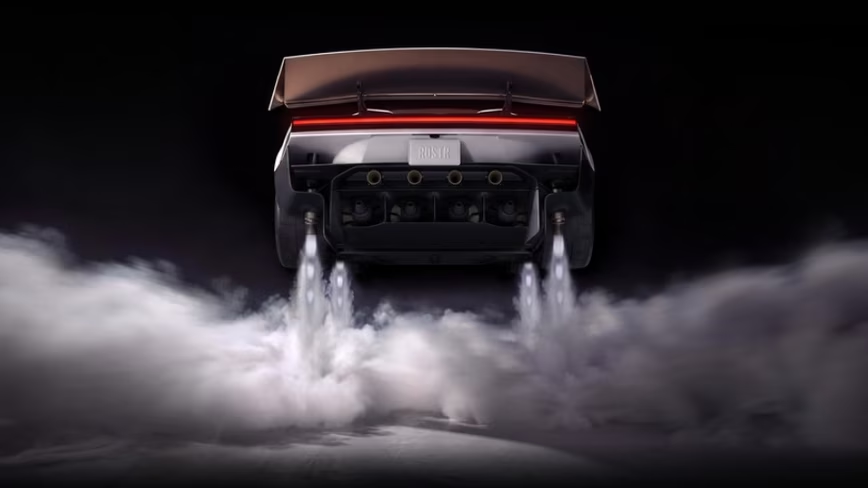
Tesla Unveils Thruster-Equipped Roadster, 2028 Production Targeted
Tesla has unveiled its second-generation Roadster, featuring cold-gas thrusters co-developed with SpaceX, enabling it to jump and flip. The electric sports car demonstrated 0-60mph in an astonishing 0.81 seconds, with production targeted for 2028. This highly anticipated reveal also serves as a key recruitment tool for Tesla's ambitious AI and robotics initiatives.

Amazon Prime Video Launches AI-Powered Prime 360 for NBA Coverage
Amazon Prime Video is elevating its NBA coverage with the introduction of Prime 360, an AI-powered replay system offering immersive, 'fly through' views of the action. Kicking off its second season, Prime Video also adds Yahoo fantasy integration and gains exclusive Eastern Conference Finals rights, expanding its tech-driven sports broadcast. The new features aim to deliver a unique and interactive viewing experience for basketball fans.