
in-depth: There’s a Long-Shot Proposal to Protect California Workers
California gubernatorial candidate Tom Steyer has proposed a groundbreaking plan to guarantee jobs for workers displaced by AI, funding it through a novel "token tax" on big tech. The initiative aims to make California the first major economy to protect its workforce from automation's impact by creating jobs in key sectors and establishing an AI Worker Protection Administration. This long-shot proposal faces political challenges but highlights growing concerns over AI's economic effects.

California gubernatorial hopeful Tom Steyer has unveiled a pioneering proposal designed to safeguard the state's workforce from the economic dislocations anticipated with widespread artificial intelligence adoption. The plan, revealed on May 8, 2026, aims to make California the first major economy globally to guarantee good-paying jobs for workers displaced by AI, addressing growing anxieties about automation's impact.
Steyer's initiative builds upon an AI policy framework he introduced in March. Central to its funding is a novel "token tax" – a fractional-cent levy on big tech companies for every unit of data processed by AI. Revenue from this tax would flow into the Golden State Sovereign Wealth Fund, with earmarked portions dedicated to job creation in critical sectors such as housing, healthcare, and modernizing California’s energy infrastructure.
According to a campaign memo seen by WIRED, the proposal emphasizes strengthening the state's economic foundation, investing in communities, and fostering vibrant public spaces. To support these new roles, Steyer plans significant investments in training and apprenticeship programs across the state. The initiative also seeks to expand unemployment insurance and establish an AI Worker Protection Administration. This new agency would comprise union leaders, academics, and technologists, tasked with developing rules to protect workers' rights.
Steyer highlighted the urgency behind his plan, telling WIRED, "People all over this state are terrified that AI is going to hollow out this whole economy and they’re going to lose their jobs. Young people are worried they’ll never get a job." He emphasized a vision for AI as a transformational technology that should not leave Californians behind.
The California candidate's job guarantee arrives amidst a national discussion on AI's societal implications. Other jurisdictions and industry leaders have put forward similar concepts. New Jersey State Senator Troy Singleton, for instance, has proposed a bill requiring companies that replace workers with AI to contribute to a retraining fund. At the federal level, Congress is considering proposals for grants and tax credits to incentivize companies to offer AI training to their existing employees.
Intriguingly, aspects of Steyer’s plan echo ideas from prominent AI figures. Dario Amodei, CEO of Anthropic, previously suggested a token tax as a reasonable solution for AI displacement, acknowledging it was not in his direct economic interest. OpenAI also put forth a concept similar to a public wealth fund in April, aligning with Steyer's Golden State Sovereign Wealth Fund.
Steyer's announcement closely follows his Democratic primary opponent Xavier Becerra's own AI plan. Becerra, a former Health and Human Services secretary, advocated for "workforce investment and transition support" but did not specify a funding mechanism. In a memo, Becerra stated, "Displacement without support is abandonment," committing to collaborate with the Legislature, California's education system, and industry partners to develop accessible workforce programs for the AI economy.
Developing state-level AI regulation faces significant political headwinds. The White House, under President Donald Trump, issued an executive order in December threatening to withhold federal broadband funding from states that enact what it deems "onerous" AI laws. Moreover, powerful Silicon Valley-backed super PACs, including one linked to OpenAI cofounder Greg Brockman, have actively targeted candidates who champion AI regulation, such as Manhattan congressional candidate Alex Bores.
Despite these challenges, Steyer remains resolute. "Not regulating AI doesn’t seem remotely reasonable," he contended. He believes California must lead with a forward-looking vision that extends beyond merely enriching entrepreneurs, ensuring that the benefits of AI are broadly shared across the state’s population. The proposal, though described as a long shot, underscores a growing urgency among policymakers to address the profound economic shifts anticipated from advanced AI technologies.
FAQ
Q: What is the core idea behind Tom Steyer's AI job guarantee proposal?
A: The proposal aims to guarantee good-paying jobs with benefits for California workers who are displaced by artificial intelligence, making California the first major economy to implement such a safeguard.
Q: How would Steyer's plan be funded?
A: It would be funded by a "token tax," a small levy on big tech companies for every unit of data processed by AI. This revenue would go into a Golden State Sovereign Wealth Fund, supporting job creation and training programs.
Q: What kind of jobs would be created under this plan?
A: Funds from the proposal would be earmarked for jobs in essential areas such as building housing, health care services, and modernizing California's energy infrastructure, alongside investments in training and apprenticeship programs.
Related articles

Apple Unveils iPhone Duo: Pricey Foldable Sees Soaring Demand
Apple has officially entered the foldable smartphone arena with the long-anticipated launch of the iPhone Duo. Priced starting at a hefty $1,999, the device features a 5.4-inch outer display and a larger 7.6-inch inner

in-depth: Chicago-Area Cops Helped HSI Spy on Minnesota Anti-ICE
Chicago-area law enforcement, including local police and HSI agents, conducted undercover surveillance on Minnesota anti-ICE activists at an April 2, 2022, talk in Chicago. This operation was part of a federal conspiracy probe into 15 Minnesota activists facing felony charges related to immigration enforcement resistance. Civil liberties advocates have condemned the surveillance as a troubling intrusion into protected political activity.

Mark Wahlberg on using AI in film ‘the right way’ and being open to
Actor Mark Wahlberg believes AI has a place in filmmaking if used responsibly for enhancement, not script generation or actor replacement. At TechCrunch Disrupt, he expressed openness to an AI likeness carrying on his legacy, managed by his family, and emphasized storytelling.

Tesla Unveils Thruster-Equipped Roadster, 2028 Production Targeted
Tesla has unveiled its second-generation Roadster, featuring cold-gas thrusters co-developed with SpaceX, enabling it to jump and flip. The electric sports car demonstrated 0-60mph in an astonishing 0.81 seconds, with production targeted for 2028. This highly anticipated reveal also serves as a key recruitment tool for Tesla's ambitious AI and robotics initiatives.

Amazon Prime Video Launches AI-Powered Prime 360 for NBA Coverage
Amazon Prime Video is elevating its NBA coverage with the introduction of Prime 360, an AI-powered replay system offering immersive, 'fly through' views of the action. Kicking off its second season, Prime Video also adds Yahoo fantasy integration and gains exclusive Eastern Conference Finals rights, expanding its tech-driven sports broadcast. The new features aim to deliver a unique and interactive viewing experience for basketball fans.
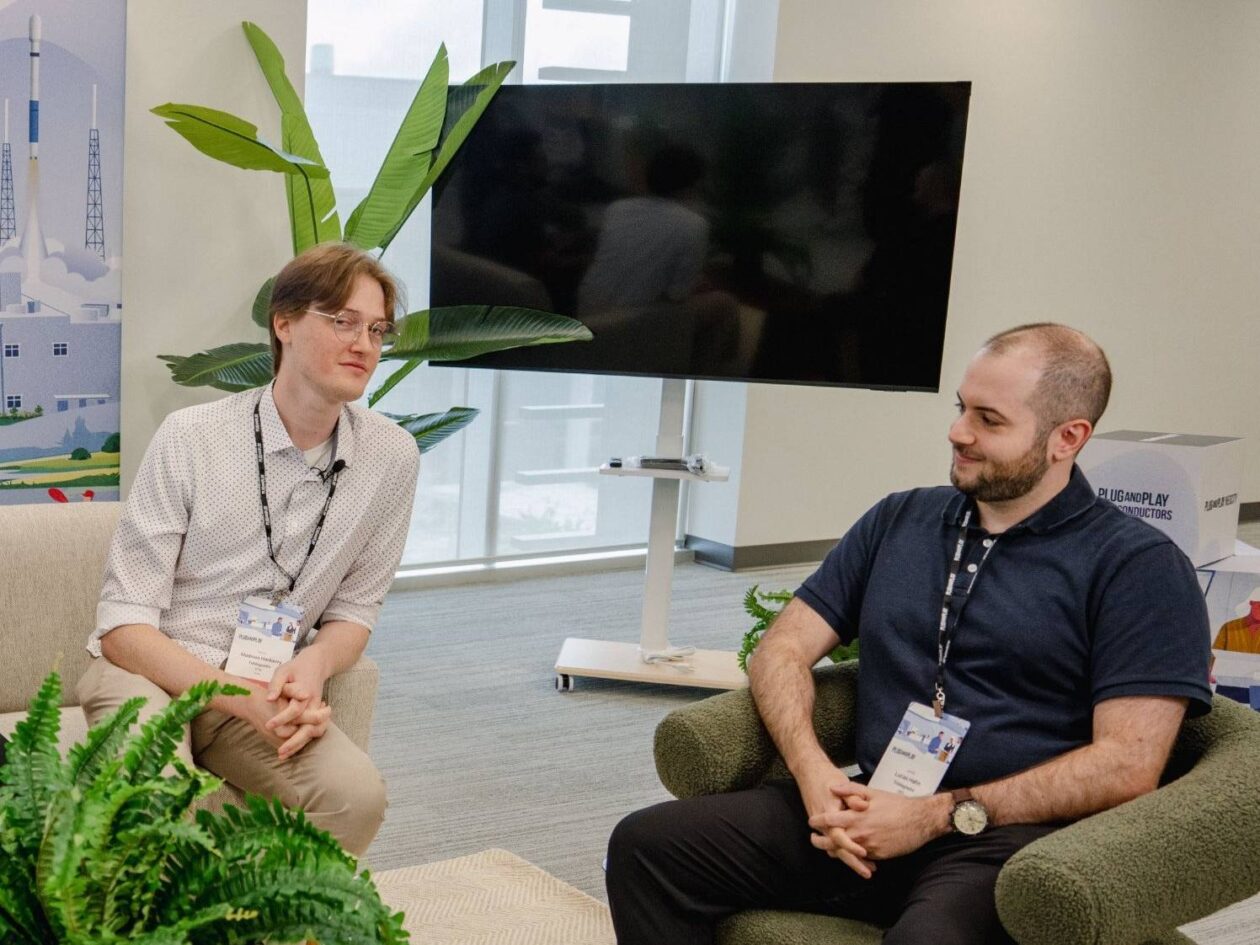
regional: A two-person Seattle startup lands $1M to reinvent
Seattle startup TriMagnetix has secured $1 million to develop semiconductor chips that consume 800 times less energy and are radiation-resistant. The two-person company, leveraging nanomagnetic technology, is targeting space applications and data centers. With new funding and key partnerships, TriMagnetix aims for commercial sales within a year.