
in-depth: Tech CEOs Think AI Will Let Them Be Everywhere at Once
A growing trend among Silicon Valley's top executives reveals a bold, personalized vision for artificial intelligence: leveraging it to achieve a form of digital omnipresence within their organizations. Despite broader

A growing trend among Silicon Valley's top executives reveals a bold, personalized vision for artificial intelligence: leveraging it to achieve a form of digital omnipresence within their organizations. Despite broader corporate and consumer resistance to AI’s accelerated adoption, leaders like Meta’s Mark Zuckerberg and Block’s Jack Dorsey are pioneering internal AI applications designed to delegate their responsibilities, flatten hierarchies, and potentially exert unprecedented influence over their workforces.
The initiative showcases a readiness among some billionaires to charge ahead with their individual interpretations of AI’s transformative potential, even as the technology struggles to deliver the promised efficiencies for many major corporations.
Zuckerberg's Digital Doppelgänger for Staff Interaction
Meta is reportedly developing a sophisticated, photorealistic three-dimensional AI avatar of its chief executive, Mark Zuckerberg. According to sources within the company cited by the Financial Times on April 13, this digital replica is being trained on Zuckerberg's public statements, distinctive mannerisms, and his current strategic perspectives. The primary goal is for this bot to interact directly with Meta staff, offering managerial guidance, feedback, and answering questions in video chat sessions on Zuckerberg’s behalf.
Zuckerberg himself is deeply involved in the testing and training of his animated doppelgänger. Company employees have indicated that this early-stage project is a priority, developed alongside other AI characters intended for one-on-one engagement with Facebook and Instagram users. Meta has not yet commented on the development of the “Zuckerbot.”
This concept of a digital stand-in isn't entirely new. A year prior, CEOs Sebastian Siemiatkowski of Klarna and Eric Yuan of Zoom garnered attention for using AI doubles to deliver portions of their remarks during quarterly earnings calls, hinting at a broader executive interest in delegating routine responsibilities to AI simulations.
Jack Dorsey's Vision for an AI-Driven Flat Hierarchy
Meanwhile, Jack Dorsey, CEO of Block (formerly Square), is pursuing an even more radical application of AI to restructure his company. Block has recently undergone significant workforce reductions, including a 40 percent cut—approximately 4,000 employees—in February, as it increasingly integrates AI into its operations. In a recent interview for the business podcast Long Strange Trip, Dorsey articulated his vision for systematically collapsing the company's management hierarchy around a central AI system.
Dorsey expressed his aspiration to reduce the managerial depth between himself and any employee from a current maximum of five layers to just two or three this year. His ultimate, most ideal scenario involves every one of Block's 6,000 employees reporting directly to him, a feat he believes becomes manageable when the majority of work is processed through what he calls an “intelligence layer.”
AI as Omni-Boss: Implications and Strategy
While Dorsey’s approach of centralizing management via AI seems distinct from creating a digital avatar, both initiatives point to a similar outcome for employees: an illusion of direct supervision and instant, AI-mediated “access” to their ultimate boss. This trend suggests that despite obstacles in getting users to adopt AI features, top executives are determined to leverage the technology to exert greater influence and presence within their own organizations through a unique form of AI-enabled omnipresence.
Responding to queries about Dorsey’s remarks, a Block spokesperson directed to a March 31 blog post co-authored by Dorsey and Sequoia partner Roelof Botha, titled “From Hierarchy to Intelligence.” The piece advocates for eliminating middle management by fundamentally rethinking AI integration, positioning AI not just as a “copilot” to existing structures but as an “intelligence (or mini-AGI)” capable of matching or exceeding human capabilities, thereby forming a new organizational backbone.
This shift from AI as a mere assistant to AI as a central intelligence layer marks a significant evolution in how tech leaders envision the future of corporate governance and employee interaction. The implications for workforce dynamics, decision-making processes, and the very structure of companies could be profound as these personalized AI fantasies move closer to reality.
FAQ
Q: What is an “AI avatar” in the context of Mark Zuckerberg’s project?
A: In this context, an AI avatar refers to a photorealistic, three-dimensional digital replica of Mark Zuckerberg. It is designed to be trained on his public comments, mannerisms, and strategic views, enabling it to interact with Meta staff on his behalf, answer questions, and offer managerial guidance via video chat.
Q: How does Jack Dorsey plan to use AI to change Block’s management structure?
A: Jack Dorsey intends to use a “central AI” to significantly flatten Block’s management hierarchy. His goal is for most of the company’s work to go through this AI “intelligence layer,” allowing him to reduce the number of managerial levels between himself and any employee, potentially leading to a structure where all 6,000 employees effectively report directly to him through the AI.
Q: What is the difference between an “AI copilot” and a “mini-AGI” as discussed by Block’s leadership?
A: As described by Jack Dorsey and Roelof Botha, an “AI copilot” makes existing company structures work slightly better without changing them, essentially assisting employees. A “mini-AGI” (Artificial General Intelligence), however, represents a more transformative approach where AI becomes the core organizational intelligence, fundamentally rethinking workflows and potentially eliminating management layers by matching or exceeding human reasoning capabilities.
Related articles

Lenovo Legion Go S with SteamOS Plummets to $999.99
Lenovo's Legion Go S handheld gaming PC, featuring SteamOS and a Ryzen Z1 Extreme, is now $999.99 at Best Buy, a 37% reduction. This deal offers double the RAM and storage, a sharper 120Hz display, and a faster processor than the base Steam Deck OLED, making it a compelling high-value option.

Ericsson Rides 7% Organic Sales Surge Amidst Major Asia Restructuring
STOCKHOLM — Ericsson has reported robust third-quarter results for 2026, with organic sales climbing by an impressive 7%, largely fueled by its Networks division. The Swedish telecommunications giant also announced a

Replit makes OpenAI its default over Anthropic, CEO says: AI Coding
Replit, the AI coding platform, announced a significant shift, making OpenAI its default artificial intelligence model over previous partner Anthropic. CEO Amjad Masad cited superior performance, cost-efficiency, and a stronger partnership with OpenAI as key drivers for the change. While Anthropic models remain accessible, the default switch is expected to substantially redirect Replit's AI spending.

Mercedes-AMG Unveils 1,153HP Electric GT SUV, First Ground-Up EV
Mercedes-AMG has officially pulled back the curtain on its most ambitious electric vehicle yet: the 2028 Mercedes-AMG GT SUV. This groundbreaking, all-electric full-size SUV marks a significant milestone as the

Amazon's AI Wearable, Booking's Seattle Gambit, and LinkedIn's
Seattle, WA – October 17, 2026 – Major tech developments are making headlines today as Amazon introduces its new Bee AI wearable devices, Booking Holdings plants a substantial AI travel venture in rival Expedia’s
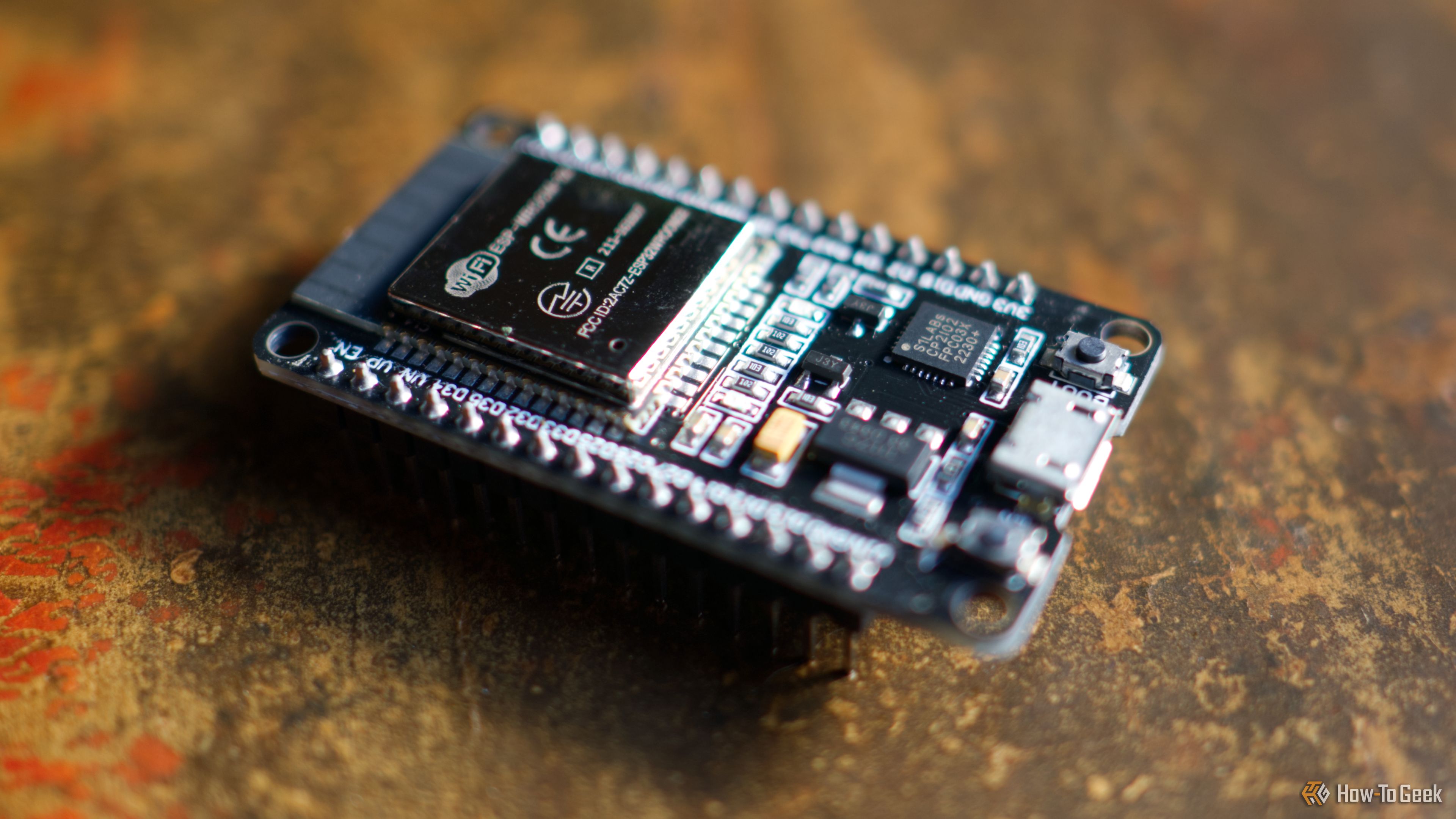
3 Clever Ways ESP32 Revitalizes Retro Computers
Discover three clever ways the versatile ESP32 microcontroller is revitalizing retro computers, from adding Wi-Fi and emulating disk drives to running full system emulators. Learn how this affordable board breathes new life into vintage tech.