
in-depth: Microsoft’s Quantum Chief Doesn’t Care That Scientists
Microsoft's quantum chief, Zulfi Alam, is defiantly dismissing scientific skepticism regarding his team's quantum computing claims, particularly concerning elusive Majorana quasiparticles. He prioritizes commercial speed and a 2029 delivery goal for a working machine over traditional peer review, fueling a divide with the scientific community.

Microsoft's quantum computing aspirations are facing a defiant stance from its leadership, as Zulfi Alam, the company’s corporate vice president of quantum, dismisses scientific skepticism regarding his team's breakthroughs. Alam openly stated that he "doesn't really care" that some scientists have questioned Microsoft's claims, including a major announcement last year about effectively splitting an electron into elusive Majorana quasiparticles. This bold declaration underscores a growing divide between Microsoft's rapid development approach and the scientific community's demands for traditional peer review and transparent data sharing in the race to build commercially viable quantum computers.
Microsoft is investing billions into developing quantum computers, a technology promising to solve currently impossible problems in areas like drug discovery and defense by fundamentally altering how information is processed. The company's unique strategy hinges on utilizing Majorana particles, theoretical entities hypothesized nearly nine decades ago, which have proven exceptionally difficult to isolate and confirm.
Last year’s announcement, where Microsoft claimed to have engineered Majorana quasiparticles, was met with significant skepticism. Scientists pointed to inconclusive data in the research papers and a general absence of peer-reviewed analysis, noting they couldn't rule out other physical phenomena causing the observed signals. This isn't the first time Microsoft's quantum work has faced scrutiny; in 2021, the company retracted a paper from Nature that initially claimed evidence of Majorana particles after independent physicists flagged data analysis issues.
More recently, in June, Microsoft announced a qubit that was reportedly 1,000 times more reliable than its predecessor, achieved with the help of its scientific discovery AI agent. Despite this progress, scientists continue to question the underlying Majorana work, primarily because Microsoft has declined to release the raw data supporting its findings.
When asked why he wouldn't share such data, Alam responded rhetorically, “Why should I?” He explained to WIRED that the commercial sensitivity of his team's work prevents the public release of granular data. Alam also voiced frustration with the pace of the scientific publishing process, observing that a paper published in June was based on research conducted two years prior.
“The world has changed in two years, so this notion of having peer reviews and publications doesn't work in this fast-moving world right now,” Alam asserted, adding that he believes there aren't enough experts to accelerate the process. He concluded, dismissively, “That’s why this paper thing is kind of boring now.”
This perspective is sharply contested by the broader scientific community. Trevor Lanting, chief development officer at Nasdaq-listed quantum computer maker D-Wave Quantum, emphasized the importance of independent evaluation. “The field is growing, there are a lot of experts outside of these firms that are able to reliably assess claims and scientific work,” Lanting stated, whose own company has faced similar accusations of overstating results.
Lanting views claims evaluated by science as an essential component of "the healthy process of really establishing the science and the technical foundation for the technology." He interpreted a company’s reluctance to engage with this scrutiny as an indication that "our results aren’t strong enough to stand up to that scrutiny.”
Despite the growing chorus of scientific unease, Alam remains steadfast in his conviction. He continues to believe he has no obligation to validate his work through traditional academic means. Instead, Microsoft's strategy is to ultimately win over academics and the industry by delivering a fully functional quantum machine.
Microsoft has set an ambitious target to produce a "useful" quantum computer by 2029. Alam views the feedback and skepticism from the scientific community not as a deterrent, but as a motivator. “It motivates us to be even faster,” he said, outlining a clear mission: “Get this machine up and let the machine do the work.” The company is pushing forward, betting on practical demonstration over immediate peer consensus to prove the viability of its groundbreaking, yet controversial, quantum computing endeavors.
FAQ
Q: What are Majorana quasiparticles and why are they important to Microsoft's quantum computing efforts?
A: Majorana quasiparticles are theoretical entities, hypothesized almost 90 years ago, that possess unique quantum properties. Microsoft believes they could serve as the foundation for highly stable and reliable quantum bits (qubits), which are crucial for building powerful quantum computers. Their elusive nature, however, has made their experimental confirmation challenging and controversial.
Q: Why are scientists skeptical of Microsoft's quantum computing claims?
A: Skepticism stems from several factors, including what scientists describe as inconclusive data in Microsoft's research papers, a lack of traditional peer-review analysis for many results, and the company's refusal to share raw data. Without this, external experts find it difficult to verify Microsoft's conclusions or rule out other physical phenomena as explanations for observed signals.
Q: What is Microsoft's ultimate goal and timeline for its quantum computer?
A: Microsoft aims to build a commercially useful quantum computer by 2029. The company's quantum chief, Zulfi Alam, intends to validate their research and claims by delivering a working machine, rather than solely relying on traditional scientific publishing and peer review processes.
Related articles

Apple Unveils iPhone Duo: Pricey Foldable Sees Soaring Demand
Apple has officially entered the foldable smartphone arena with the long-anticipated launch of the iPhone Duo. Priced starting at a hefty $1,999, the device features a 5.4-inch outer display and a larger 7.6-inch inner

in-depth: Chicago-Area Cops Helped HSI Spy on Minnesota Anti-ICE
Chicago-area law enforcement, including local police and HSI agents, conducted undercover surveillance on Minnesota anti-ICE activists at an April 2, 2022, talk in Chicago. This operation was part of a federal conspiracy probe into 15 Minnesota activists facing felony charges related to immigration enforcement resistance. Civil liberties advocates have condemned the surveillance as a troubling intrusion into protected political activity.

Mark Wahlberg on using AI in film ‘the right way’ and being open to
Actor Mark Wahlberg believes AI has a place in filmmaking if used responsibly for enhancement, not script generation or actor replacement. At TechCrunch Disrupt, he expressed openness to an AI likeness carrying on his legacy, managed by his family, and emphasized storytelling.
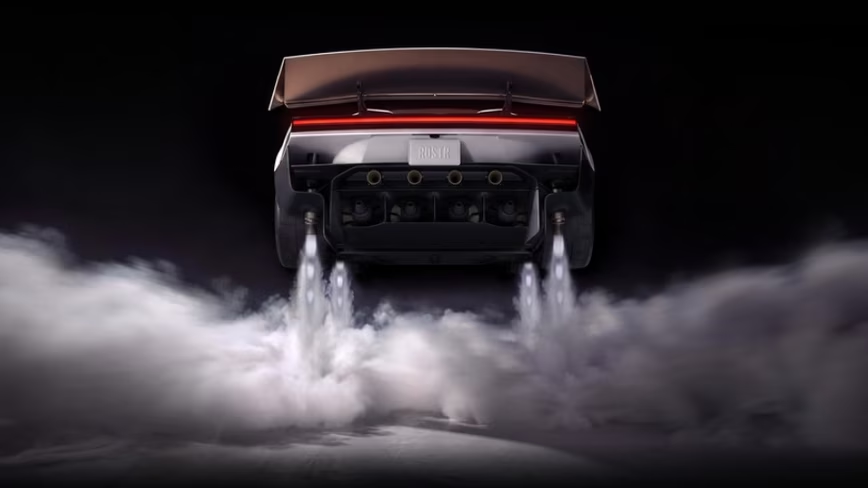
Tesla Unveils Thruster-Equipped Roadster, 2028 Production Targeted
Tesla has unveiled its second-generation Roadster, featuring cold-gas thrusters co-developed with SpaceX, enabling it to jump and flip. The electric sports car demonstrated 0-60mph in an astonishing 0.81 seconds, with production targeted for 2028. This highly anticipated reveal also serves as a key recruitment tool for Tesla's ambitious AI and robotics initiatives.

Amazon Prime Video Launches AI-Powered Prime 360 for NBA Coverage
Amazon Prime Video is elevating its NBA coverage with the introduction of Prime 360, an AI-powered replay system offering immersive, 'fly through' views of the action. Kicking off its second season, Prime Video also adds Yahoo fantasy integration and gains exclusive Eastern Conference Finals rights, expanding its tech-driven sports broadcast. The new features aim to deliver a unique and interactive viewing experience for basketball fans.
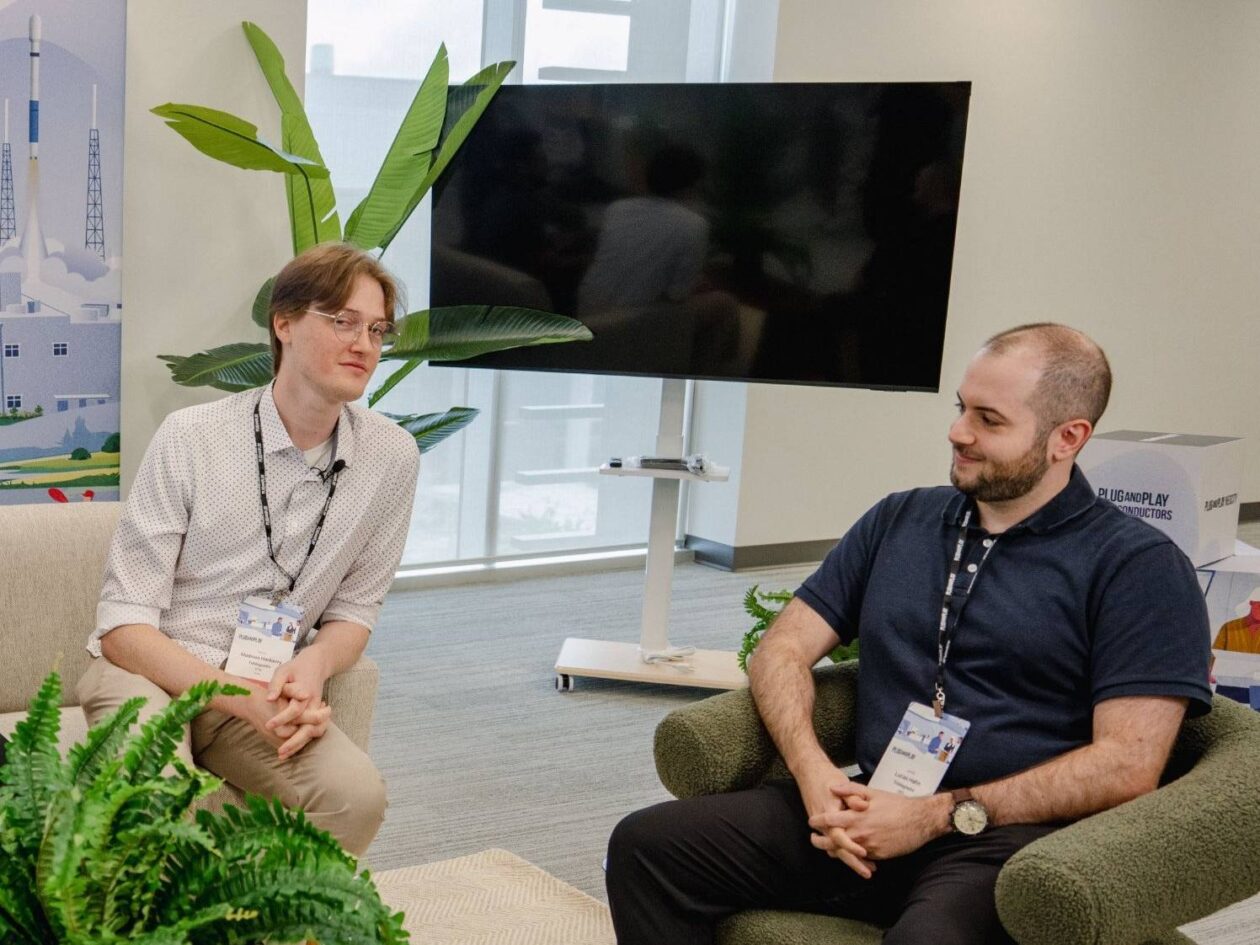
regional: A two-person Seattle startup lands $1M to reinvent
Seattle startup TriMagnetix has secured $1 million to develop semiconductor chips that consume 800 times less energy and are radiation-resistant. The two-person company, leveraging nanomagnetic technology, is targeting space applications and data centers. With new funding and key partnerships, TriMagnetix aims for commercial sales within a year.