
If you’re giving a commencement speech in 2026, maybe don’t mention
Recent commencement speeches at the University of Central Florida and the University of Arizona saw speakers booed for discussing artificial intelligence. Graduates expressed widespread pessimism about AI's impact on their future job prospects, reflecting broader anxieties about the economy. This trend suggests a significant shift in how the younger generation views technological advancements.

AI Remarks Draw Boos from Graduates at Recent Commencement Ceremonies
Recent commencement speeches at major universities have revealed a surprising and strong negative sentiment among graduating students towards artificial intelligence. In a trend marking the current graduation season of May 2026, speakers who lauded AI's potential were met with audible boos and disinterest, signaling a deep-seated pessimism about technology's impact on their future.
The most notable incidents occurred at the University of Central Florida and the University of Arizona. At UCF, Gloria Caulfield, an executive at Tavistock Development Company, faced a chorus of boos when she declared, "The rise of artificial intelligence is the next industrial revolution." Her attempt to pivot, noting that "Only a few years ago, AI was not a factor in our lives," was met with ironic cheers, underscoring the audience's clear stance.
Similarly, former Google CEO Eric Schmidt encountered significant pushback during his address at the University of Arizona. While some initial booing stemmed from separate allegations of sexual assault against him (which he denies), the negative reception intensified when he discussed AI. Students loudly booed his assertion that they would "help shape artificial intelligence" and his advice to "get on" the "rocket ship," indicating a widespread rejection of the optimistic AI narrative.
Student Sentiment and Economic Anxieties
The palpable discomfort with AI among graduates is not an isolated phenomenon. This sentiment appears to be rooted in broader anxieties about the job market and economic stability. A recent Gallup poll highlights this, showing that only 43% of Americans aged 15 to 34 believe it's a good time to find local employment, a sharp decline from 75% in 2022.
Journalist and tech critic Brian Merchant attributes this response to a perception of AI as "the cruel new face of hyper-scaling capitalism." For many students, especially those facing unemployment or uncertain career paths, the prospect of an AI-driven future does not inspire excitement but rather apprehension about job displacement and diminished opportunities. Even some software engineers are reportedly concerned about AI's impact on their profession.
Caulfield's misjudgment of her audience, largely comprised of arts and humanities graduates, may have exacerbated the situation. One student noted that the speaker had already lost the audience with generic praise for corporate figures like Jeff Bezos before even mentioning AI. Alexander Rose Tyson, a UCF graduate, described the booing as a "collective, ‘This sucks,’" rather than a single instigator.
A Divergent Experience
While the negative reactions were pronounced in these instances, the sentiment isn't entirely universal. Nvidia CEO Jensen Huang, for example, spoke at Carnegie Mellon’s commencement without any reported audible dissent when he stated that AI had "reinvented computing." This suggests that the reception to AI discussions can vary significantly based on the speaker, institution, and the specific context of the message.
However, the incidents with Caulfield and Schmidt underscore a critical shift in how the younger generation perceives advanced technology. Schmidt himself acknowledged a prevailing "fear in your generation that the future has already been written, that the machines are coming, that the jobs are evaporating, that the climate is breaking, that politics are fractured, and that you are inheriting a mess that you did not create." This deep-seated concern means that future commencement speakers might do well to approach the topic of artificial intelligence with greater sensitivity, or perhaps, avoid it altogether.
FAQ
Q: Why were commencement speakers booed for mentioning AI?
A: Students largely expressed concerns about AI's potential impact on their future job prospects, viewing it as a symbol of job displacement and "hyper-scaling capitalism," alongside a general pessimism regarding the job market.
Q: Which prominent figures faced this negative reaction?
A: Gloria Caulfield, an executive at Tavistock Development Company, at the University of Central Florida, and former Google CEO Eric Schmidt at the University of Arizona, both experienced audible boos when discussing AI.
Q: Is this negative reaction towards AI universal across all graduation ceremonies?
A: No, the reaction is not universal. Nvidia CEO Jensen Huang, for instance, mentioned AI at Carnegie Mellon's commencement without reported audible pushback, suggesting that audience reception can vary based on the speaker and context.
Related articles

Apple Unveils iPhone Duo: Pricey Foldable Sees Soaring Demand
Apple has officially entered the foldable smartphone arena with the long-anticipated launch of the iPhone Duo. Priced starting at a hefty $1,999, the device features a 5.4-inch outer display and a larger 7.6-inch inner
Android 17 QPR2 Beta 7.1: The Performance Relief You've Been Waiting
Android 17 QPR2 Beta 7.1: Finally Fixing the QPR1 Performance Woes Verdict: Android 17 QPR2 Beta 7.1 is a crucial and highly anticipated software update for Google Pixel users, specifically targeting and resolving the

in-depth: Chicago-Area Cops Helped HSI Spy on Minnesota Anti-ICE
Chicago-area law enforcement, including local police and HSI agents, conducted undercover surveillance on Minnesota anti-ICE activists at an April 2, 2022, talk in Chicago. This operation was part of a federal conspiracy probe into 15 Minnesota activists facing felony charges related to immigration enforcement resistance. Civil liberties advocates have condemned the surveillance as a troubling intrusion into protected political activity.

TCG Pocket Responds: A Much-Needed Pace Shift for Pokémon Fans
Pokémon TCG Pocket is rolling out a major update for its second anniversary, primarily addressing player concerns about overwhelming content releases by shifting to a six-week set schedule. This aims to curb player decline and improve overall engagement by giving trainers more time to collect and strategize. The update also adds new collection methods, improved deck-building features, and enhanced trading functionality.

Mark Wahlberg on using AI in film ‘the right way’ and being open to
Actor Mark Wahlberg believes AI has a place in filmmaking if used responsibly for enhancement, not script generation or actor replacement. At TechCrunch Disrupt, he expressed openness to an AI likeness carrying on his legacy, managed by his family, and emphasized storytelling.
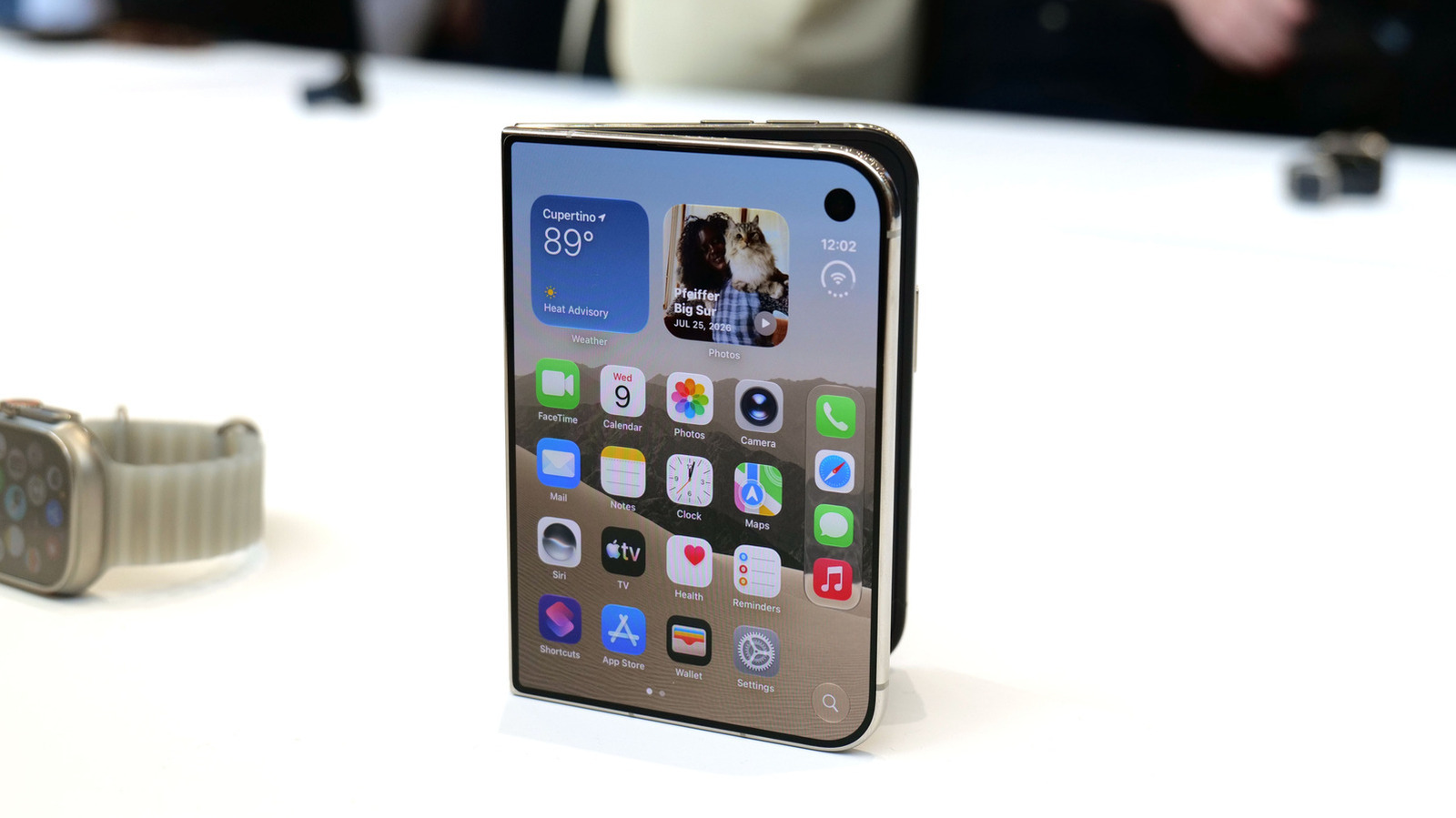
Apple iPhone Duo: A Daring Debut with Notable Compromises
Apple's highly anticipated iPhone Duo, priced at $2,000, has gone on pre-order. While hailed as "Apple's most exciting device in a decade" for its innovative foldable design and immersive display, it comes with significant drawbacks like the absence of FaceID and a premium camera.