
Human Vapor: Netflix's Sci-Fi Thriller Smokes the Remake Trap
Netflix's *Human Vapor* successfully reinterprets a 1960 Toho cult classic, forging a new identity as a gripping sci-fi mystery. It avoids the pitfalls of uninspired remakes by expanding its premise and blending diverse genres, offering a fresh take on a familiar idea.
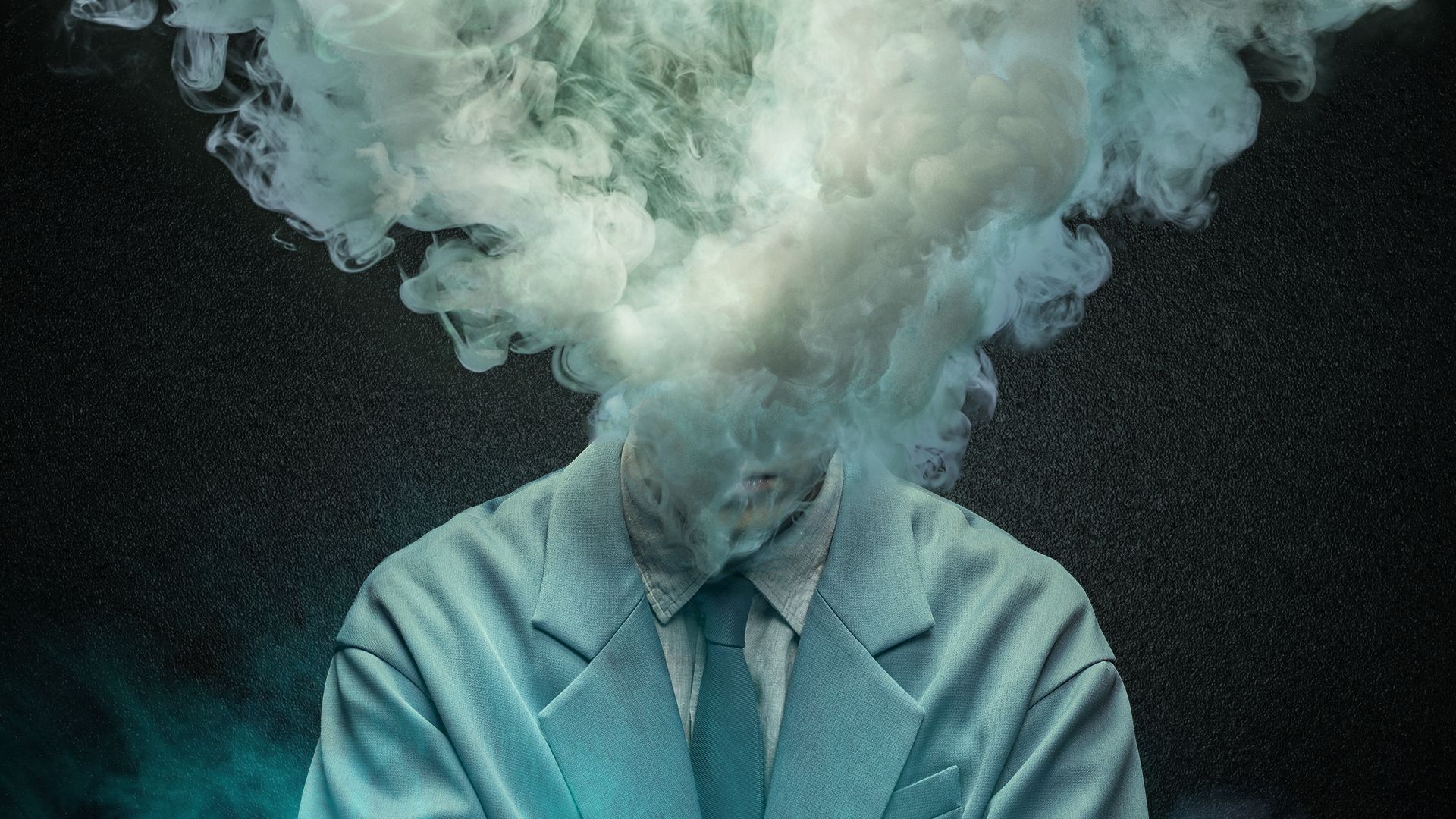
Look, we've all been there. Another week, another beloved classic dragged out for a "modern reimagining" that often feels less like an homage and more like a hollow echo. Disney’s notorious for it, but even cinematic legends like Steven Spielberg (remember his West Side Story?) and Spike Lee have stumbled into the legacy reboot trap, delivering films that, while technically proficient, struggle to find their own pulse. So, when Netflix announced it was tackling Toho’s cult classic The Human Vapor, my internal alarm bells were blaring louder than a kaiju battle.
After all, Netflix has a mixed track record with adaptations, sometimes missing the point entirely (Death Note, anyone?). My worry was that this tokusatsu gem, an early ancestor of practical-effects-driven Japanese sci-fi like Godzilla, would suffer the same fate. But holy smokes, did Human Vapor prove me wrong. This isn’t just a faithful retread; it’s a confident, ambitious expansion that treats its 1960 predecessor as a launchpad, not a straightjacket. And honestly? It’s all the better for it.
A Classic Premise, Vaporized and Reborn
The original Human Vapor film, directed by Ishirō Honda and written by Takeshi Kimura, was a crime melodrama with horror undertones. It centered on a tragic science experiment turning a down-on-his-luck bank robber into a man who could transform into gas. The new Netflix series, helmed by writers Yeon Sang-ho (Train to Busan, Hellbound) and Ryu Yong-jae (Parasyte: The Grey), with Shinzo Katayama directing, takes that fantastic core concept and blows it open into a sprawling, serialized mystery. Instead of just the horror of the condition itself, the show delves into the chilling web of institutions, personal motives, and hidden agendas that unfurl around it. It keeps that unique genre blend from the original but applies it in fresh, compelling ways that feel entirely its own.
Explosive Beginnings and Shifting Dynamics
The series doesn't waste a second, kicking off with a literal and metaphorical bang. During a live TV interview, environmental expert Professor Sano (Morley Robertson) gruesomely explodes into a cloud of blood and organs, a rogue smoke cloud billowing from his trousers. While the visual effects work, particularly the professor floating mid-air or some of the smoke effects, can sometimes feel a touch artificial, it absolutely nails the shock value and signals that this iteration of Human Vapor is playing by new, visceral rules.
From this horrifying opening, we're introduced to our primary investigators: the fiercely determined Japan News Television journalist Kyoko Kono (Yu Aoi) and detective Kenji Okamoto (Shun Oguri). The two share a palpable, unspoken romantic history that adds a fascinating layer to their separate investigations. Kenji pores over broadcast footage, searching for external triggers or gas leaks, while Kyoko, prompted by a mysterious empty box delivered to the newsroom, uncovers a secret recording from the perpetrator himself – who aptly identifies as the “Human Vapor.”
The Ethereal Threat and Unlikely Heroes
Uta Uchida, a Japanese model making his acting debut, delivers an absolutely unsettling performance as the titular Human Vapor. His dialogue is delivered in a soft, slow, almost hypnotic monotone that makes him genuinely eerie and unpredictable. The show masterfully uses lingering wisps of smoke – from a car exhaust, a cigarette, a campfire – to create an omnipresent sense of dread, keeping both characters and audience on edge, never quite knowing where the Vapor might strike next.
As the mystery deepens, the series brings in the sibling live-streamer duo, Kaho (Suzu Hirose) and Fujita (Kento Hayashi). Initially, their vlogging antics feel a bit tonally dissonant, almost cringey, compared to the grounded investigative work. However, Hirose and Hayashi's natural, believable chemistry quickly makes their sibling banter feel authentic. They become crucial audience surrogates, ordinary people drawn into this extraordinary spiraling mystery, and it’s fitting that this most unlikely pair stumbles upon some of the most critical pieces of the puzzle.
A Sprawling Conspiracy Woven Seamlessly
One of Human Vapor's standout achievements is its confident integration of a yakuza storyline, led by the criminal-turned-businessman Yasutoshi Mori (Yutaka Takenouchi) and the Kurose-gumi syndicate. Instead of simply making organized crime a convenient obstacle, the show folds the underworld into the larger conspiracy with impressive restraint and intelligence. The Kurose-gumi becomes another powerful institution vying for information and control, their motivations colliding with the police, the media, and the elusive Human Vapor. Every new faction introduced genuinely expands the world, making the central mystery feel sprawling and intricate without ever becoming overwhelming or distracting.
A Masterclass in Genre Fusion and Tokusatsu Spirit
It’s rare for a series to successfully juggle so many genres – sci-fi, noir, crime drama, romance, political conspiracy, and body horror – without losing its footing. Yet, Human Vapor triumphs by making all these disparate elements feel like they organically belong together. The show also embraces its tokusatsu roots with ambitious visual effects, delivering nail-biting action sequences involving the Human Vapor and large-scale destruction across varied Japanese landscapes, from mountains and coastlines to quiet rural towns. This wider sense of place imbues the mystery with a grander scope, making the country itself feel like another character ensnared in the Human Vapor’s ever-expanding web.
In an era saturated with uninspired reboots, Human Vapor is a breath of fresh, albeit smoky, air. It succeeds precisely because it respects Ishirō Honda’s 1960 classic enough to build something truly new and compelling upon its foundation. This confident expansion of a fascinating premise, one that trusts its characters and narrative to forge a distinct identity, is a blueprint for how to revisit forgotten classics. If this is the path forward for Toho’s rich back catalog – beyond just the kaiju spectacle of Godzilla – then consider me excited for what comes next.
Human Vapor releases on Netflix July 2.
FAQ
Q: What is Human Vapor about?
A: Human Vapor is a Netflix sci-fi thriller reimagining a 1960 Japanese film. It follows a journalist and a detective investigating a series of explosive deaths caused by a mysterious entity known as the "Human Vapor," unraveling a complex conspiracy that intertwines various institutions and personal motives.
Q: Is the Netflix series a direct remake of the original Toho film?
A: No, while the Netflix series takes inspiration from the original film's core concept of a person who can turn into gas, it tells an entirely new and different story, expanding the premise into a serialized mystery rather than a direct beat-for-beat remake.
Q: When and where can I watch Human Vapor?
A: Human Vapor releases globally on Netflix on July 2.
Related articles

TCG Pocket Responds: A Much-Needed Pace Shift for Pokémon Fans
Pokémon TCG Pocket is rolling out a major update for its second anniversary, primarily addressing player concerns about overwhelming content releases by shifting to a six-week set schedule. This aims to curb player decline and improve overall engagement by giving trainers more time to collect and strategize. The update also adds new collection methods, improved deck-building features, and enhanced trading functionality.

Kojima Compares Divisive New Film 'Digger' to MGS2's Prescient Vision
Gaming icon Hideo Kojima has praised the divisive 2026 film *Digger*, drawing intriguing parallels to his own prophetic game, *Metal Gear Solid 2*. Both works, he explains, uniquely explore the dangers of misinformation and a fragmented digital reality, anxieties he shares with *Digger*'s director, Alejandro González Iñárritu.

Ubisoft Proposes German Studio Workforce Reduction Amidst
Ubisoft is planning a voluntary departure program for about 100 employees across its Düsseldorf, Berlin, and Mainz studios in Germany. This move is part of a larger, ongoing cost-reduction and restructuring effort by the publisher, aiming to better position its studios for future projects.

TGS 2026: These Forward-Looking Cosplays Are Already Living in the
Tokyo Game Show 2026 showcased incredible cosplay, with many fans embodying characters from unreleased games like *Blast Blade* and *Mononoke No Kuni*. This gallery highlights the community's foresight, alongside debut *Palworld* cosplay and refreshed takes on classics. It’s a testament to the passion that brings gaming's future to life.

Netflix is laying off around 1,000 employees: Layoffs — Key Details
Netflix is laying off approximately 1,000 employees, or six percent of its global workforce, in its largest-ever job cut. This move targets product, tech, HR, and legal teams to reduce costs and re-prioritize investments despite recent financial growth.

Beyond the Bugs: Conquering Studio Headaches in Indie Dev
This guide, part three in a series on running an indie studio, tackles the crucial but often overlooked aspect of dealing with non-development related issues. It introduces creating a shared 'studio backlog' for collective problems and using the IDS (Identify, Discuss, Solve) framework to address them constructively. The core message is to build powerful habits that keep studios from getting quietly derailed by lingering challenges.