
How to Understand Why the Honda CR-V Outsold the Ford F-150 in Early
Welcome to this guide on understanding a significant shift in the automotive market. For the first time in 44 years, a non-F-Series vehicle, the Honda CR-V, outsold the Ford F-150 in the first half of 2026. This guide
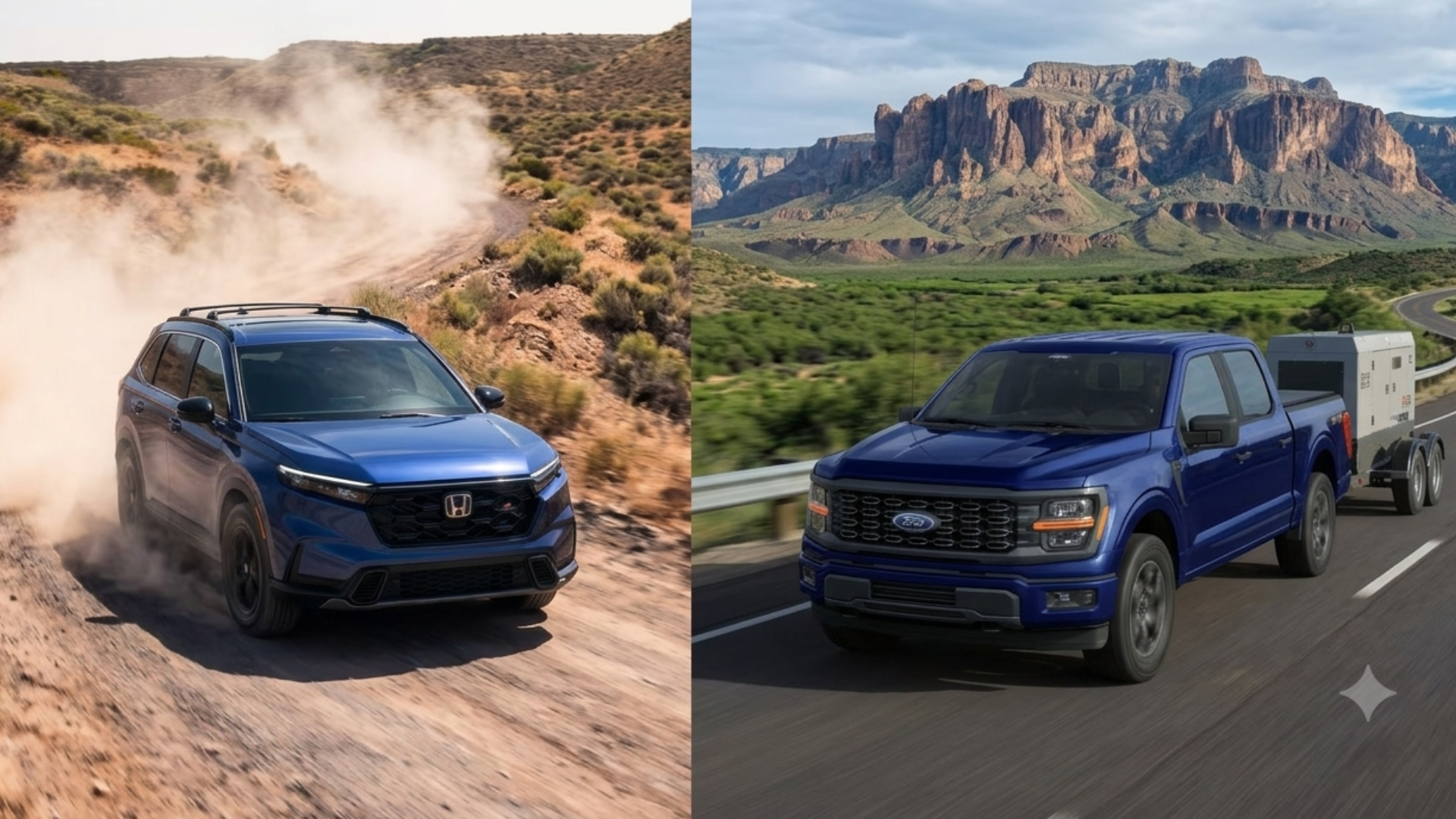
Welcome to this guide on understanding a significant shift in the automotive market. For the first time in 44 years, a non-F-Series vehicle, the Honda CR-V, outsold the Ford F-150 in the first half of 2026. This guide will walk you through the three primary factors that contributed to this remarkable event.
What You'll Accomplish
By following this guide, you will gain a clear understanding of the complex interplay of consumer demand, supply chain challenges, and strategic marketing that led to the Honda CR-V's temporary sales triumph over the long-reigning Ford F-150. You'll learn the specific economic and logistical reasons behind this historical change, empowering you to better analyze automotive market trends.
Prerequisites
To get the most out of this guide, you simply need an interest in the automotive industry and a willingness to understand how various market forces can influence vehicle sales. No prior technical knowledge is required.
Step 1: Analyze Shifting Consumer Preferences Towards More Affordable Vehicles
One of the most significant drivers behind the CR-V's sales surge is the evolving landscape of consumer purchasing power and preferences. The average transaction price for a new vehicle in the current market hovers around $50,000, setting a new historical high. This makes it increasingly difficult for many buyers, even those with substantial incomes, to manage the total cost of vehicle ownership.
The Value Proposition of Midsize SUVs
Midsize SUVs like the Honda CR-V present a compelling value-for-dollar proposition in this economic climate. The 2026 Honda CR-V LX, for example, starts at an approximate price of $30,920. Even its highest trim level, the Sport Touring Hybrid, remains well below the national average new vehicle price at roughly $42,550. In stark contrast, while certain F-150 trims (like the XL, STX, and XLT) can be found under the $50,000 national average, the price of a Ford F-150 can quickly escalate with added options and premium packages, often pushing it significantly higher.
Beyond the initial sticker price, vehicles like the CR-V offer superior fuel economy, which translates to lower ongoing operational costs. Modern midsize SUVs also boast ample cargo space and integrate the latest safety technologies, ensuring that buyers don't feel they are making significant compromises by choosing an SUV over a full-size truck. This combination of lower upfront cost and reduced running expenses makes the CR-V an attractive option for families and individuals seeking an economical yet capable vehicle.
Impact of Financing Trends
Another critical factor is the prevailing trend in vehicle financing. Historically common 48-month and 60-month loan terms are now less prevalent. Many buyers are resorting to longer financing periods, such as 72- or even 84-month loans, to keep their monthly payments manageable. Financing a vehicle with a lower initial price point, like the Honda CR-V, becomes a more financially realistic endeavor for a broader segment of the population compared to purchasing a more expensive full-size pickup like the F-150. This accessibility in financing further bolstered the CR-V's appeal.
Step 2: Understand Ford's Production Struggles Due to Supply Chain Disruptions
The F-150's second-place standing in the first half of 2026 was not solely a matter of shifting demand but was heavily influenced by Ford's inability to meet its production targets. A major setback for Ford came in the form of two fires at the Novelis aluminum plant in Oswego, New York.
The Novelis Plant Fires
The first incident occurred on September 16, 2025, followed by a second fire on November 20, 2025, in the same area while repairs were underway. These events had catastrophic consequences for the plant's hot mill, which remained offline until late May 2026. Given that the Novelis facility is a crucial supplier, providing approximately 40% of the sheet aluminum used by the U.S. auto industry, its prolonged shutdown created a brutal supply-chain crunch for Ford, a company that utilizes aluminum bodies for its F-150 trucks. This disruption is estimated to have cost Ford around $2 billion.
Uneven Impact on Manufacturers
While Ford grappled with this severe inventory bottleneck through the spring of 2026, other manufacturers faced their own challenges. For instance, Toyota's RAV4, which was the best-selling vehicle for the entire calendar year in 2024, also experienced inventory hurdles. The RAV4 transitioned to hybrid-only for the 2026 model year, and the production changeover at its plants in Japan and North America caused inventory bottlenecks throughout the winter months, leading to a 36% drop in sales and placing it fourth by mid-year.
In contrast, Honda's CR-V plants operated at full capacity, allowing the automaker to maintain a consistent supply of vehicles to dealer lots. This steady availability was a critical advantage, as consumers could purchase a CR-V without significant delays or limited choices, while competitors struggled to stock their popular models.
Step 3: Recognize Honda's Strategic Pricing and Aggressive Incentives
Beyond having a consistent supply when key competitors did not, Honda effectively leveraged its inventory with a highly strategic pricing and incentive program for the CR-V, designed specifically to attract buyers.
Aggressive Pricing Strategies
According to market analyses, the real-world transaction price for the Honda CR-V averaged about 3% below its Manufacturer's Suggested Retail Price (MSRP). This translated to an average savings of approximately $1,300 for buyers. Specific trims, such as the Sport Touring Hybrid, were even more aggressively discounted, providing further enticement for consumers.
Enticing Financing and Special Offers
Honda didn't stop at just discounting the sticker price. They also backed the CR-V with competitive financing options, including attractive Annual Percentage Rates (APR) as low as 3.74 percent. Furthermore, the company offered standard cash incentives for specific buyer demographics, such as students, recent graduates, and military members, broadening the appeal and making the CR-V more accessible to a wider audience.
Ford's Limited Capacity for Incentives
The stark reality for Ford was that the aluminum shortage severely restricted its F-150 inventory. With limited trucks available, Ford was simply unable to implement a comparable incentive push. When supply is constrained and demand remains relatively high, manufacturers have little need to offer significant discounts or low APR financing. This created a scenario where Honda could aggressively price and market the CR-V, while Ford was largely on the defensive, unable to respond with similar offers due to its production woes.
Key Takeaways for Automotive Market Observers
Understanding this market event provides valuable insights for analyzing future automotive trends:
- Interplay of Supply and Demand: This scenario highlights how critically intertwined supply chain stability and consumer demand for affordability are. Even highly popular models can be dethroned if production cannot meet market needs.
- Impact of External Shocks: Unforeseen events like factory fires can have widespread, costly, and long-lasting effects on even the largest automotive manufacturers and their best-selling products.
- Power of Strategic Marketing: When conditions allow, aggressive pricing, appealing incentives, and consistent inventory can effectively capture market share, even against historical leaders.
Troubleshooting Common Misconceptions
- F-Series vs. F-150: It's important to differentiate between the broader "F-Series" (which includes heavy-duty trucks up to F-600) and the specific F-150 model. While the F-Series has been America's best-selling vehicle for 44 consecutive years as a collective nameplate, the F-150 alone has had its individual lead interrupted a few times, as seen with the Toyota Camry in 2009 and the Toyota RAV4 in 2024.
- Mid-Year vs. Full-Year: The CR-V's sales lead was observed during the first half of 2026. This is a mid-year snapshot and does not guarantee it will maintain the lead for the entire calendar year.
Next Steps and Related Topics
- Monitor Second-Half Sales: Keep an eye on automotive sales data for the latter half of 2026. With Novelis's plant returning to full production and Toyota's Kentucky plant increasing RAV4 output, the competitive landscape is expected to intensify again.
- Research Supply Chain Resilience: Explore how major automakers are investing in supply chain diversification and resilience strategies to mitigate future disruptions.
- Analyze Consumer Spending Trends: Continue to observe how economic conditions and evolving consumer priorities influence vehicle purchasing decisions, especially concerning affordability and vehicle segments like SUVs versus trucks.
FAQ
Q: Is the F-150 no longer the best-selling vehicle in America? A: Not necessarily for the full year. While the Honda CR-V outsold the F-150 during the first half of 2026, this was largely due to specific production challenges faced by Ford. Ford expects F-150 output to normalize in the second half of the year, and it remains possible for the F-150 to regain its lead for the entire year.
Q: Did other factors contribute to the CR-V's success? A: Yes, a combination of factors, as detailed in this guide. Beyond Ford's supply issues, consumer demand for more affordable vehicles with good fuel economy, ample cargo space, and modern safety features, coupled with Honda's aggressive pricing and attractive financing options, all played significant roles.
Q: Will the CR-V maintain its lead for the rest of 2026? A: It's possible but considered unlikely. The source indicates that the Novelis aluminum plant has resumed full production, allowing Ford to normalize F-150 output. Additionally, Toyota's Kentucky plant began building the new RAV4 in June, which is expected to add a substantial number of units to the market before year-end. These factors suggest a highly competitive second half of the year.
Related articles

Ditch Merge & Center: The Better Way to Align Text in Excel
Learn to use Excel's "Center Across Selection" to align text across cells without merging, avoiding common data manipulation issues. This guide provides steps to utilize this newly accessible feature and add it to your Quick Access Toolbar.

Stop Android Auto Battery Drain: Essential Features to Disable and
Android Auto offers unparalleled convenience, bringing your phone's most useful features directly to your car's display. From navigation and calls to messages and music, it keeps you connected without distracting you

Turn Your Android Phone into a Powerful Desktop Replacement
Learn how to transform your Android phone into a full-fledged desktop computer using external displays and accessories, providing a cost-effective and integrated alternative to new Googlebooks.

howto: Four Ways the Fitbit Edge Is Better Than the Charge 6, and Two
Learn the key differences between the Fitbit Edge and Charge 6, including four advantages of the Edge and two areas where it falls short, to help you choose the best fitness tracker for your needs.
How to Connect Your Googlebook to a Printer - Print Documents with
Learn to quickly connect your Googlebook to a printer via Wi-Fi, USB, or Bluetooth and print documents in minutes. This guide covers direct printing, app-specific connections, troubleshooting, and even printing screenshots as a workaround.
How to Debloat Windows 11 for a Faster, Cleaner PC
Learn to reclaim your Windows 11 PC's performance by removing bloatware, disabling ads, and optimizing startup processes in five easy steps.