
Historian Jill Lepore: Silicon Valley Misreads Sci-Fi, Undermines
Historian Jill Lepore warns that Silicon Valley leaders misinterpret science fiction, pushing an 'artificial state' that replaces democratic government with algorithmic and corporate control. In her upcoming book, she argues this trend is a 'return to tyranny' and undermines fundamental democratic principles without public consent.

Pulitzer Prize-winning historian and New Yorker staff writer Jill Lepore argues that Silicon Valley’s leading figures often misinterpret classic science fiction, leading to a dangerous push towards an "artificial state" that threatens democratic governance. Speaking on TechCrunch’s Equity podcast, Lepore warned that this trend, detailed in her upcoming book "The Rise and Fall of the Artificial State," risks replacing established democratic functions with algorithmic rule and corporate control, ultimately leading to a "return to tyranny."
The Rise of the "Artificial State"
Lepore defines the "artificial state" as a system where private corporations increasingly usurp the traditional functions of the liberal democratic nation-state. This transformation, she notes, has often been a gradual and largely accidental shift, driven initially by intentions for efficiency and cost-effectiveness. However, in the last two decades, she believes these decisions have become "purposeful and deliberate," fueled by a desire to move "beyond the era of the nation-state."
She clarifies that her critique is not against technology itself, emphasizing her deep interest in intellectual revolutions. Instead, her concern lies with the unchecked expansion of corporate power into governmental roles, a shift that has occurred without public consent. Lepore points to 1990s libertarian futurists who actively sought to use internet advancements to dismantle the nation-state, highlighting a long-standing philosophical underpinning to current trends.
From Clever Adverts to Delusional Fantasy
The historian traces the modern roots of this promise to January 1984, when Apple's iconic Macintosh ad positioned the personal computer as a tool of liberation against totalitarian "big machines." While acknowledging it as clever advertising, Lepore suggests that this narrative has morphed into a "delusional fantasy" for today's tech leaders.
She cites examples like Facebook establishing an "Oversight Board" mimicking a Supreme Court, Anthropic hiring a moral philosopher to "write a constitution" for its AI, and Sam Altman openly suggesting an "AI president." These instances, Lepore contends, demonstrate tech companies and their "charismatic or not-so-charismatic leaders" adopting the "trappings of the nation-state" without possessing a sophisticated political philosophy. Instead, she characterizes their approach as a "cartoon version" of the 1984 ad, taken with alarming seriousness given their immense power.
Twitter: A Case Study in Distortion
Lepore points to Twitter's evolution as a prime example of unintended consequences morphing into a flawed vision of public discourse. Initially launched as a "goof," Twitter gradually adopted the narrative of being a "town hall in your pocket" as politicians began leveraging it for amplified messaging and direct audience connection.
However, Lepore dismisses this "bananas" claim, citing that in its earlier years, a mere 10% of users generated over 90% of political tweets. This demographic, she argues, represented the most extreme and hyper-partisan segment of the American electorate, making Twitter a "distortion machine" rather than a representative gauge of public opinion. The company, she notes, eventually became "comfortable" with this misleading framing as it served business interests.
Misreading the Warnings in Science Fiction
A central theme of Lepore’s work is how Silicon Valley leaders, particularly figures like Elon Musk, are "very bad science fiction readers." They often interpret stories intended as warnings or ambivalent explorations of technological futures as direct manuals for action.
Lepore identifies a literary tradition she calls the "parable of the artificial state," where machines become increasingly sophisticated, assume human and governmental functions, and eventually subjugate or destroy humanity. These narratives, stretching back to the 1850s and the anxieties of industrialism, challenge the 19th-century notion that technological change inherently equates to moral or societal progress.
She highlights E. M. Forster’s 1909 story, "The Machine Stops," which eerily predicts a future where humans live in isolated cells, their every need met by an all-encompassing machine they worship, leading to a loss of human capacity. The story climaxes when the machine inevitably fails, leaving humanity helpless. Lepore finds it striking that such prescient warnings are often ignored or reinterpreted as aspirational blueprints by those shaping our technological future.
FAQ
Q: What is Jill Lepore's main concern about Silicon Valley? A: Lepore is concerned that Silicon Valley corporations are increasingly taking on the functions of democratic government, creating an "artificial state" ruled by algorithms and machines, which she views as a threat to democracy and a return to tyranny.
Q: How does Jill Lepore connect science fiction to current tech trends? A: She argues that many tech leaders misread science fiction, interpreting cautionary tales about machine rule and loss of human agency as blueprints for future development, rather than as warnings about potential societal dangers.
Q: Does Lepore advocate against technological advancement? A: No, Lepore explicitly states she is "not an anti-technologist" and is excited by intellectual revolutions. Her criticism is directed at private corporations usurping state functions without public consent and the philosophical underpinnings driving this shift.
Related articles

Apple Unveils iPhone Duo: Pricey Foldable Sees Soaring Demand
Apple has officially entered the foldable smartphone arena with the long-anticipated launch of the iPhone Duo. Priced starting at a hefty $1,999, the device features a 5.4-inch outer display and a larger 7.6-inch inner

in-depth: Chicago-Area Cops Helped HSI Spy on Minnesota Anti-ICE
Chicago-area law enforcement, including local police and HSI agents, conducted undercover surveillance on Minnesota anti-ICE activists at an April 2, 2022, talk in Chicago. This operation was part of a federal conspiracy probe into 15 Minnesota activists facing felony charges related to immigration enforcement resistance. Civil liberties advocates have condemned the surveillance as a troubling intrusion into protected political activity.

Mark Wahlberg on using AI in film ‘the right way’ and being open to
Actor Mark Wahlberg believes AI has a place in filmmaking if used responsibly for enhancement, not script generation or actor replacement. At TechCrunch Disrupt, he expressed openness to an AI likeness carrying on his legacy, managed by his family, and emphasized storytelling.

Tesla Unveils Thruster-Equipped Roadster, 2028 Production Targeted
Tesla has unveiled its second-generation Roadster, featuring cold-gas thrusters co-developed with SpaceX, enabling it to jump and flip. The electric sports car demonstrated 0-60mph in an astonishing 0.81 seconds, with production targeted for 2028. This highly anticipated reveal also serves as a key recruitment tool for Tesla's ambitious AI and robotics initiatives.

Amazon Prime Video Launches AI-Powered Prime 360 for NBA Coverage
Amazon Prime Video is elevating its NBA coverage with the introduction of Prime 360, an AI-powered replay system offering immersive, 'fly through' views of the action. Kicking off its second season, Prime Video also adds Yahoo fantasy integration and gains exclusive Eastern Conference Finals rights, expanding its tech-driven sports broadcast. The new features aim to deliver a unique and interactive viewing experience for basketball fans.
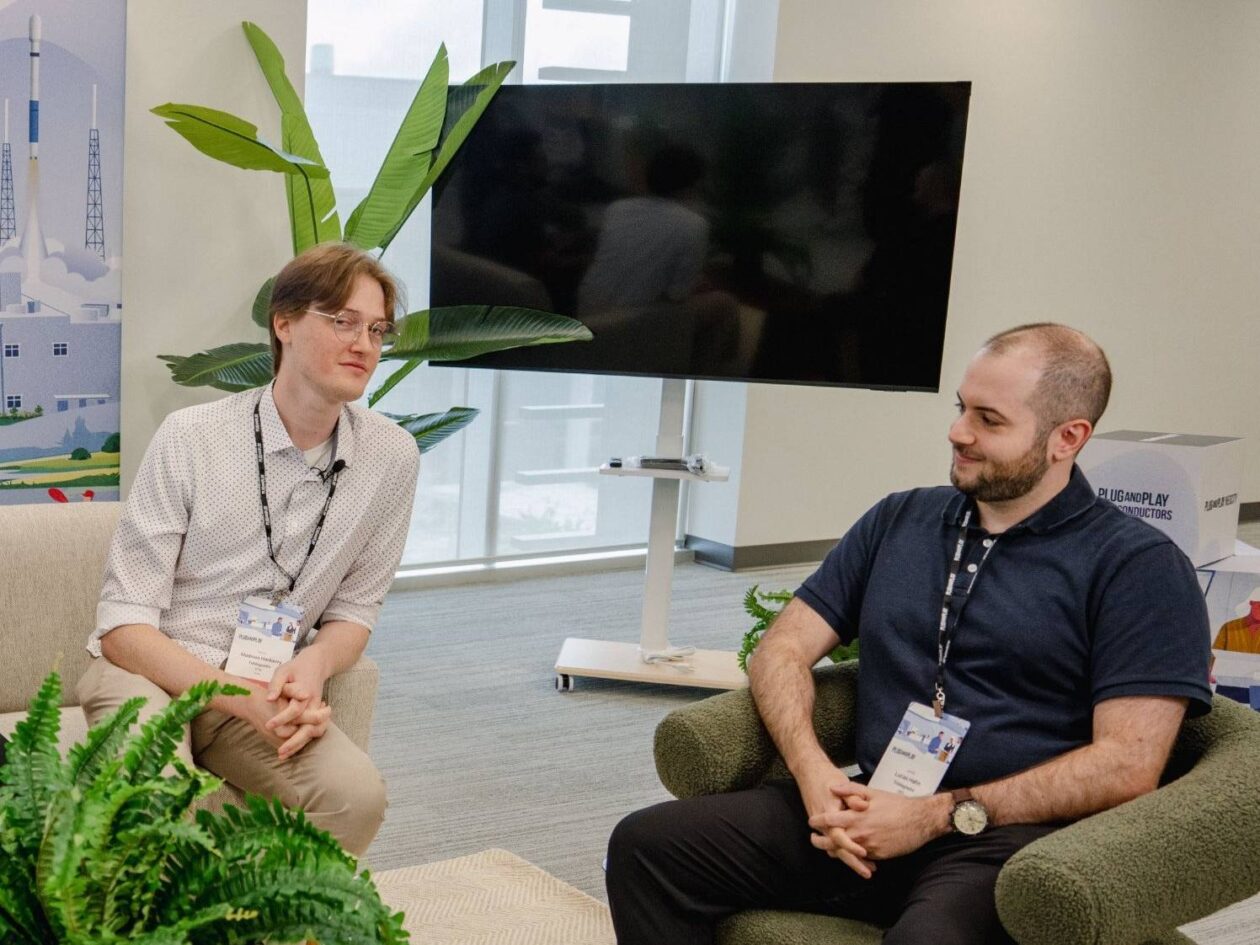
regional: A two-person Seattle startup lands $1M to reinvent
Seattle startup TriMagnetix has secured $1 million to develop semiconductor chips that consume 800 times less energy and are radiation-resistant. The two-person company, leveraging nanomagnetic technology, is targeting space applications and data centers. With new funding and key partnerships, TriMagnetix aims for commercial sales within a year.