
Gunnir B70 Workstation Review: A Dual Arc Powerhouse for AI
Quick Verdict The Gunnir B70 workstation is an intriguing and powerful system, packing two Intel Arc Pro B70 GPUs and 64GB of ECC GDDR6 VRAM, all powered by Intel's Ultra 200HX processor and cooled by an advanced liquid
Quick Verdict
The Gunnir B70 workstation is an intriguing and powerful system, packing two Intel Arc Pro B70 GPUs and 64GB of ECC GDDR6 VRAM, all powered by Intel's Ultra 200HX processor and cooled by an advanced liquid system in its larger configuration. This machine is clearly targeted at professional users with demanding AI inference and parallel processing workloads, offering substantial graphics memory and compute power in a remarkably compact design. However, without crucial details like pricing, availability, and real-world performance benchmarks, it remains an exciting but speculative prospect. Its Intel-exclusive architecture also means no AMD alternatives are on the horizon, narrowing its appeal to those committed to Team Blue's ecosystem for workstation tasks.
Introduction: Doubling Down on Arc for Workstations
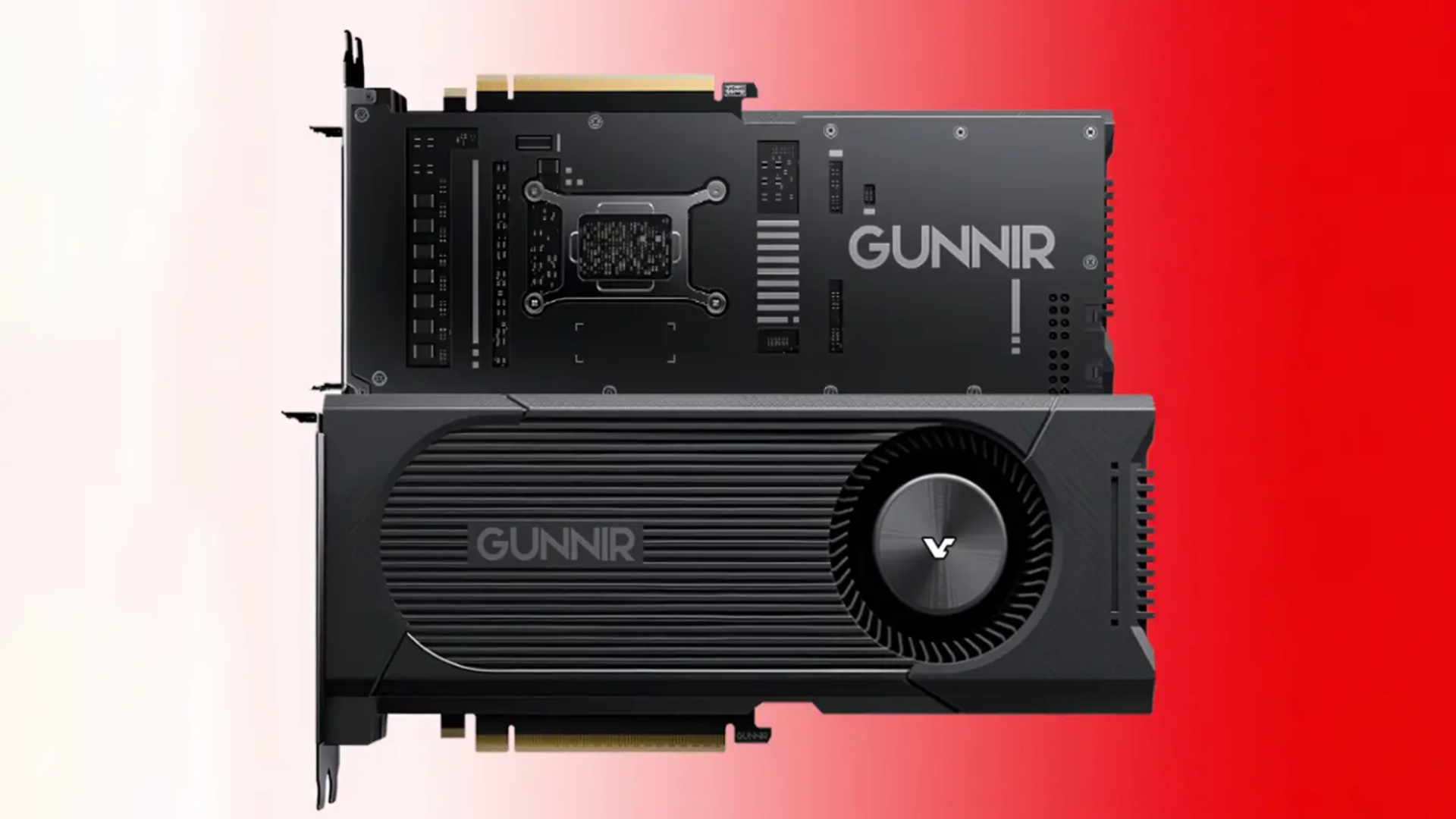
At the recent Intel Connection 2026 event in China, hardware manufacturer Gunnir unveiled a workstation that immediately caught our attention: a compact system housing not one, but two Intel Arc Pro B70 graphics processing units. Paired with Intel's latest Core Ultra 200HX Arrow Lake-HX processors, this machine, and its variants, signify a clear push by Gunnir and Intel into the professional workstation market, particularly for AI inference and complex parallel processing. What’s perhaps most notable is the complete dedication to Intel hardware – you won't find any AMD silicon here, either for the CPU or graphics.
The larger of the two systems demonstrated is a testament to engineering prowess, managing to fit these dual GPUs into a compact chassis while utilizing liquid cooling to manage the considerable heat output. For those who demand serious compute power and substantial video memory without occupying a full-size tower, the Gunnir B70 workstation presents a compelling, if currently mysterious, option.
Key Specifications and Performance Potential
At the heart of the Gunnir B70 workstation are its two Intel Arc Pro B70 graphics cards. Each of these professional-grade GPUs is built on Intel's larger BMG-G31 Battlemage GPU, featuring 32 Xe cores and 256 XMX engines, capable of delivering up to 367 INT8 TOPS of performance. When combined, this offers a substantial amount of raw compute power for compatible applications.
Memory is another key highlight. Each Arc Pro B70 card comes equipped with a generous 32GB of GDDR6 ECC (Error-Correcting Code) graphics memory. This translates to a total of 64GB of VRAM within the dual-GPU workstation. It’s important to note, however, that this 64GB is spread across two separate graphics processors, rather than being a single, unified pool. For applications that can effectively distribute workloads across multiple GPUs, this configuration offers immense potential, especially for large datasets in AI inference or scientific simulations. Intel's oneAPI framework is specifically designed to support computation across multiple devices, allowing compatible software to leverage these separate memory pools efficiently.
Each B70 card also boasts a memory bandwidth of 608GB/s, meaning the dual-GPU setup essentially doubles this potential for parallel tasks. Power consumption for partner boards like Gunnir's can range from 160W to 290W, a wider spread than Intel's reference 230W, suggesting optimization for various form factors and cooling solutions. While the B70 graphics card itself launched earlier this year with a suggested starting price of $949, the overall cost of the full workstation remains undisclosed.
Underpinning this graphics power is an Intel Core Ultra 200HX Arrow Lake-HX processor, ensuring that the CPU side of the equation is also robust enough to handle demanding professional applications.
Design, Cooling, and Workstation Variants
The Gunnir B70 workstation embraces a compact design philosophy, particularly impressive given the high-performance components it houses. The larger, dual-GPU system utilizes a sophisticated liquid cooling solution, which is crucial for maintaining optimal temperatures and sustained performance from two powerful GPUs within a limited space. This commitment to advanced cooling underscores the workstation's intent for heavy, continuous workloads.
Beyond the flagship dual-GPU model, Gunnir also showcased a smaller workstation. This variant likely features a single B70 GPU, and opts for a vapor chamber cooling system to manage thermals in an even more constrained form factor. The use of vapor chambers is a smart choice for compact, high-power systems where traditional air cooling might struggle, offering an efficient heat dissipation method without the bulk of liquid cooling reservoirs and pumps.
Further demonstrating their focus on space-saving solutions, Gunnir also presented MXM graphics modules utilizing B50 and B65 chips. These smaller, standardized form factors are ideal for embedding discrete graphics into ultra-compact systems where standard PCIe expansion cards are simply too large. While specific details on the performance, memory, or pricing of these MXM modules were not provided, their existence signals Gunnir’s broader strategy to cater to various workstation needs, from desktop-replacement-style compact PCs to embedded industrial solutions.
The inclusion of ECC memory across the Arc Pro B70 lineup, including the separately sold Gunnir Arc Pro B70 TF 32G with a blower cooler, reinforces the workstation-grade nature of these components. ECC memory is critical in professional environments where data integrity is paramount, making these systems suitable for scientific computing, financial modeling, and other error-sensitive tasks.
Pros and Cons
Pros:
- Dual Intel Arc Pro B70 GPUs: Offers significant parallel processing power for AI and professional applications.
- 64GB ECC GDDR6 VRAM: Ample error-correcting graphics memory (32GB per GPU) for large datasets and critical workloads.
- Compact Design: Manages to house powerful components in a relatively small footprint.
- Advanced Cooling: Liquid cooling (dual GPU) and vapor chamber cooling (smaller variant) ensure thermal management for sustained performance.
- Intel oneAPI Support: Designed to leverage multi-GPU setups effectively for compatible software.
- Professional Features: ECC memory is a strong advantage for workstation environments.
- Intel Ultra 200HX CPU: Ensures robust CPU performance for demanding tasks.
Cons:
- No Pricing or Availability: Crucial information missing, making purchasing decisions impossible.
- Divided VRAM: While 64GB is impressive, it's two 32GB pools, not a single 64GB pool, which can be a limitation for some specific workloads.
- Intel-Exclusive Platform: No AMD CPU or GPU options, limiting choice for users preferring or requiring AMD hardware.
- Niche Focus: Primarily for AI inference and parallel processing; not a gaming machine.
- Unknown Performance Relative to Competitors: Without benchmarks, its competitive standing against established professional GPUs from Nvidia is unclear.
Comparison to Alternatives
The workstation market features a diverse range of powerful machines, and the Gunnir B70 enters a space where it will inevitably be compared to offerings from industry giants. While the source mentions several other high-end workstations like Nvidia's RTX Pro 5500 with its massive 84GB GDDR7 memory, GMKTec's Neo-X1 with a laptop CPU and desktop RTX 5070, and even supercomputers like the Asus GB300 DGX or Supermicro Gold Series GPU AI Station (costing $91,100 to $120,000), these are not direct, like-for-like alternatives to the Gunnir B70 workstation.
The comparison is challenging for several reasons: the mentioned alternatives span different architectures (Nvidia, AMD, various Intel chips), significantly different price points (from sub-$1000 GPUs to six-figure workstations), and often target varying tiers of extreme performance. For instance, the Nvidia RTX Pro 5500 is a single GPU with a unique memory configuration, and the DGX stations are enterprise-grade AI supercomputers, not compact desktop workstations.
Therefore, creating a direct comparison table for the Gunnir B70 workstation with these other systems would be misleading given the limited data on the Gunnir product and the vast differences in the alternative products' scale, cost, and design philosophy. The Gunnir B70, with its dual Arc Pro B70s, occupies a unique niche, aiming to deliver substantial AI and parallel processing capabilities in a compact form factor, exclusively within the Intel ecosystem, at what is likely a much more accessible price point than the extreme high-end systems cited.
Its true competition, once pricing is revealed, will likely be mid-range to high-end professional workstations featuring single or dual GPUs from Nvidia or even AMD's professional line, which offer similar (or sometimes unified) VRAM capacities and compute performance, but perhaps without the same emphasis on a compact, liquid-cooled dual-GPU Intel Arc solution.
Buying Recommendation
As it stands, offering a definitive buying recommendation for the Gunnir B70 workstation is impossible due to the complete lack of pricing, shipping dates, or availability information. This product is currently more of a showcase of engineering capability and Intel's growing presence in the workstation GPU market than a consumer-ready device.
However, if and when it becomes available, the Gunnir B70 workstation would likely be an excellent fit for:
- AI/ML Developers and Researchers: Especially those working with local AI inference models and training that can leverage large amounts of VRAM and parallel processing.
- Professional Workstation Users: Engineers, designers, or scientists whose applications benefit from multi-GPU acceleration and ECC memory for data integrity.
- Intel Ecosystem Advocates: Users who prefer to stay within Intel's hardware and software stack, particularly with support for oneAPI.
- Space-Conscious Professionals: Individuals needing high performance in a compact form factor, especially with the liquid-cooled dual-GPU option.
It would likely not be suitable for:
- Gamers: This is explicitly designed for workstations, not gaming.
- Budget-Conscious Buyers: Given the dual professional GPUs, advanced cooling, and high-end CPU, this will undoubtedly be a premium product.
- Users Requiring a Single, Large VRAM Pool: The 64GB is split, which might not suit every highly specific workflow.
- AMD Loyalists: The system is entirely Intel-based.
In conclusion, the Gunnir B70 workstation represents an exciting development in the professional PC space. If it hits the market at a competitive price, its combination of dual Arc Pro B70 GPUs, abundant ECC VRAM, and compact, advanced cooling could make it a compelling choice for a specific segment of professional users. Until then, it remains a tantalizing glimpse into future workstation possibilities.
FAQ
Q: What is the primary use case for the Gunnir B70 workstation? A: It's designed for local AI inference and parallel processing workloads that can leverage multiple GPUs, supported by Intel's oneAPI framework. It's not intended for conventional gaming, but rather professional computing tasks requiring significant graphical compute power and large amounts of VRAM.
Q: Is the 64GB of RAM a single pool for both GPUs? A: No, the 64GB of GDDR6 ECC memory is spread across two separate Arc Pro B70 GPUs, with each card carrying 32GB. While supported software can distribute workloads between them for parallel processing, it is not a unified memory pool.
Q: When will the Gunnir B70 workstation be available and what will it cost? A: As of its unveiling, no specific shipping date, price, or release window has been provided for either workstation variant. The individual Arc Pro B70 GPU has a suggested starting price of $949, but the total system cost is currently unknown.
Related articles

Android Auto Signal Bars: A Long-Awaited Return
Quick Verdict After months of user frustration, Android Auto’s cellular signal strength indicator is finally making its comeback to dashboards. This isn't a groundbreaking new feature, but rather the restoration of a

Kindle Colorsoft Bundle Review: A Colorful Steal for Avid Readers
Quick Verdict The Amazon Kindle Colorsoft Essentials Bundle, now available for an impressive $202 – a saving of $145 – presents a compelling opportunity for dedicated readers. While it's the previous generation ahead of

Lyft's Driver Settlement: A Win, But How Big
Quick Verdict: A Significant, Yet Incomplete, Victory Lyft has reached a landmark $272.5 million settlement in California, addressing allegations that it improperly classified its drivers as independent contractors

ChatGPT Scam: Malware Trap Identified - A Critical Warning
Quick Verdict In an increasingly sophisticated digital landscape, a new ChatGPT-themed scam has emerged, posing a significant threat to unsuspecting users. This elaborate trap, leveraging sponsored Google search

Google Wallet on Pixel: Tap-to-Pay Troubles Persist
Google Wallet's tap-to-pay feature is failing intermittently or completely on many Pixel phones, including Pixel 9 series and later, despite Wallet's expanded utility. Google has not acknowledged the bug, but user-reported fixes like restarting, clearing cache, or using a smartwatch offer temporary relief for this frustrating reliability issue.

Agentic AI in Financial Services: Unseen Workflow Risks
This review analyzes the risks of agentic AI in financial services, highlighting the 'black-box journey flow' problem and lack of accountability. It stresses the need for robust governance, end-to-end visibility, and effective human oversight to scale AI responsibly.