
Google's AI Dev Tools: A Forced Migration from Firebase Studio
Google is making a significant shift in its developer ecosystem, phasing out Firebase Studio by March 22, 2027, and nudging its user base towards its newer, AI-centric platforms: Google AI Studio and Antigravity. As an
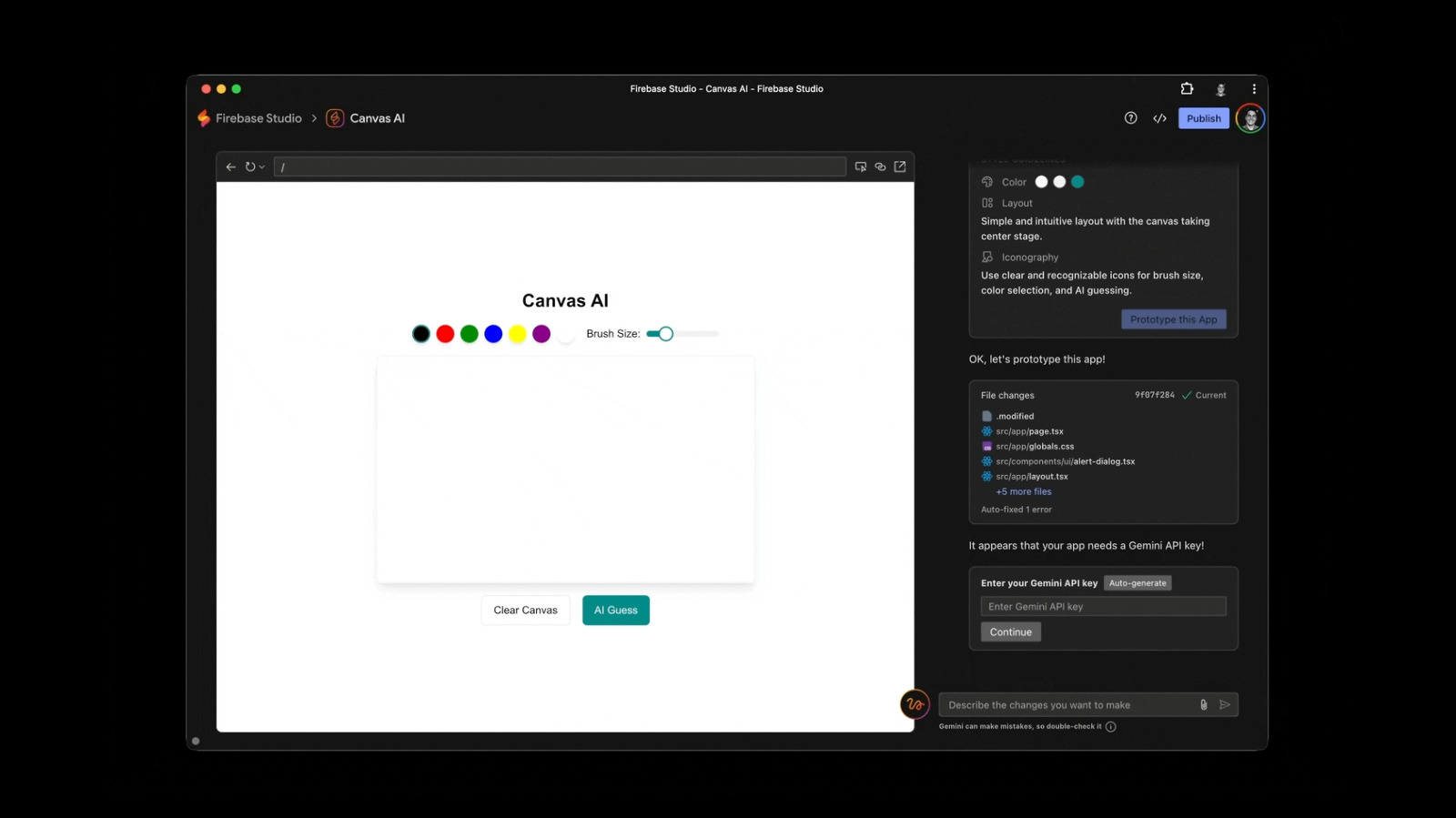
Google is making a significant shift in its developer ecosystem, phasing out Firebase Studio by March 22, 2027, and nudging its user base towards its newer, AI-centric platforms: Google AI Studio and Antigravity. As an experienced tech reviewer, this move raises critical questions about developer autonomy, workflow evolution, and the increasing integration of artificial intelligence into software development.
The Quick Verdict
Google's decision to sunset Firebase Studio is less about the tool's inadequacy and more about a strategic push towards a GenAI-first development paradigm. For developers already leaning heavily into AI, this transition might feel like a natural evolution. However, for those who appreciated Firebase Studio's more traditional, code-editing focus with optional AI assistance, it represents a forced migration that demands learning new interfaces, adapting workflows, and potentially incurring new costs. While the new tools promise efficiency through AI, the immediate future involves a period of adjustment and careful consideration of alternatives.
What's Happening to Firebase Studio?
Launched in 2025, Firebase Studio was conceived as an online integrated development environment (IDE) specifically designed to connect with Google's Firebase backend services. It aimed to streamline development by offering features like databases and web hosting, with an early vision for AI agents to assist in coding tasks. However, its core functionality remained rooted in direct code editing, complemented by an AI chatbot capable of prototyping and minor tweaks.
Fast forward to March 2026, and Google announced the "sunsetting" of Firebase Studio. The ability to create new workspaces and sign up ceased on June 22, 2026. Existing users now have until March 22, 2027, to export all their projects and data before the platform is completely shut down and all remaining information is deleted. This gives developers a tight window to adapt and migrate.
Why the Shift? Google's AI-First Vision
Google's rationale for retiring Firebase Studio is clear: a strategic consolidation to "streamline your workflow and make it clearer where you should start building." This statement underscores Google's broader commitment to its Gemini AI initiative, repositioning AI from an assistant feature to the central pillar of the development process. The company observes a growing trend of coding projects beginning with AI prompts, with some developers opting for "vibe coding"—an approach where direct interaction with raw code is minimal or even bypassed entirely.
In this new paradigm, an IDE primarily focused on code editing, even with an integrated AI chatbot, no longer aligns with Google's vision of future development. The backend services of Firebase itself are not going away; rather, Google is ensuring that the front-end development experience is deeply integrated with its advanced AI capabilities.
Google's New AI-Centric Alternatives
For developers looking to remain within Google's ecosystem, the company offers two primary alternatives:
-
Google AI Studio: This web-based tool is pitched as "the fastest path from prompt to full-stack production app." Its interface heavily emphasizes conversational interaction with AI, where prompts guide the development process. For those embracing a prompt-first approach, this could be a highly efficient environment.
-
Antigravity: In contrast, Antigravity is a desktop application designed for local execution. It caters to developers who still prefer direct interaction with their code but want to leverage the power of AI. A key differentiator here is its ability to direct multiple AI agents, working autonomously, and its support for a variety of AI models, not just Google's own. This offers more flexibility for developers who might be working with different AI frameworks.
Both tools mark a departure from Firebase Studio's approach, pushing AI to the forefront of the development lifecycle, whether through prompt-driven creation or multi-agent assistance.
Comparison: Firebase Studio vs. Google's AI Tools
To better understand the shift, let's look at how the retiring Firebase Studio stacks up against its intended successors:
| Feature | Firebase Studio (Pre-Sunset) | Google AI Studio | Antigravity |
|---|---|---|---|
| Type | Online IDE | Web-based (IDE-like) | Desktop Application (IDE-like) |
| Core Philosophy | Code-centric, AI chatbot | Prompt-first, AI chat for full-stack | Code interaction, AI agents, local run |
| AI Focus | AI chatbot assists | Central, "prompt to full-stack" | Directing multiple AI agents |
| Platform | Web | Web | Desktop (Local) |
| AI Model Support | Google AI (implied) | Google AI (implied) | Supports Google & other AI models |
| Migration Required | N/A | Yes (from Firebase Studio) | Yes (from Firebase Studio) |
| Status | Sunsetting by Mar 2027 | Active, Google's preferred tool | Active, Google's preferred tool |
Beyond Google: Other AI Coding Tools
Developers are not strictly confined to Google's offerings. Several other players in the market provide AI-focused coding tools that could serve as alternatives:
- Cursor: Now owned by SpaceX, Cursor is a popular choice for its desktop prompting interface, emphasizing AI assistance within a familiar coding environment.
- Claude Code (Anthropic): From AI research company Anthropic, Claude Code offers another AI-centric development experience, leveraging the capabilities of their Claude AI model.
- Codex (OpenAI): OpenAI, known for its groundbreaking AI models, also provides Codex, a powerful tool designed to translate natural language into code, making it highly effective for AI-driven development.
Choosing among these will depend on a developer's preference for interface, AI model capabilities, and integration with existing workflows.
The Elephant in the Room: Costs
One significant aspect of migrating to AI-focused development tools is the potential for associated costs. Unlike traditional IDEs, which are often free or have fixed subscription models, AI tools can involve additional expenses. These may come in the form of subscriptions for advanced features, or usage-based fees (paying for "tokens" consumed by AI interactions). Developers must factor these potential new costs into their project budgets, as they could significantly impact the overall expense of development.
Pros and Cons of Google's AI Shift
Pros:
- Embraces Modern AI Workflow: Aligns with the growing trend of AI-driven development, from prompt-first coding to multi-agent assistance.
- Streamlined Ecosystem: For new projects or developers fully embracing Google's AI vision, the new tools offer a direct path to leveraging Gemini.
- Innovation Potential: The focus on AI promises faster prototyping, code generation, and potentially more efficient development cycles.
- Antigravity's Flexibility: Support for non-Google AI models offers choice for specific use cases.
Cons:
- Forced Migration: Existing Firebase Studio users face a mandatory and potentially disruptive transition.
- Learning Curve: Adopting new tools and shifting to an AI-centric workflow may require significant time and effort for developers accustomed to traditional IDEs.
- Loss of Familiarity: Developers who preferred Firebase Studio's code-focused environment might feel alienated by the prompt-heavy interfaces.
- Potential for Increased Costs: AI tool usage often comes with subscription or token-based pricing models that can add to development expenses.
- Vendor Lock-in (for Google AI Studio): Sticking purely to Google AI Studio might limit exposure to other powerful AI models.
Buying Recommendation
For developers currently using Firebase Studio, the immediate recommendation is clear: begin your migration strategy now. Do not wait until the last minute. Evaluate your projects and decide whether Google AI Studio or Antigravity better suits your workflow. If you primarily work with prompts and appreciate a web-based interface, Google AI Studio is a logical step. If you prefer a local desktop environment, direct code interaction, and the flexibility to use various AI models, Antigravity is the stronger choice.
For those uncomfortable with the forced AI-centric shift or seeking more diverse options, exploring third-party alternatives like Cursor, Claude Code, or Codex is advisable. Carefully consider the financial implications of each tool, weighing upfront costs against potential productivity gains. The future of development is undeniably AI-assisted, but the path you take to get there is still yours to choose.
FAQ
Q: What is the hard deadline for migrating off Firebase Studio? A: Google will completely shut down Firebase Studio and delete all remaining data by March 22, 2027. New workspaces and sign-ups were already discontinued on June 22, 2026.
Q: Are Firebase backend services also being discontinued? A: No, only Firebase Studio, the integrated development environment, is being retired. Firebase backend services (like databases and hosting) will continue to be available and can be integrated with Google AI Studio, Antigravity, and other development tools.
Q: Will migrating to Google's new AI tools necessarily increase my development costs? A: Potentially, yes. While some AI tools may offer free tiers, advanced features or extensive usage often incur subscription fees or charges based on AI "token" consumption. It's crucial to research the pricing models of Google AI Studio and Antigravity, as well as any third-party alternatives, to understand the financial implications for your projects.
Related articles

Gemini Memory Summary: Essential User Control
Google Gemini, like many advanced AI systems, aims to personalize your interactions by remembering details about you. While this can enhance your experience, it also brings up natural privacy concerns regarding what

Android XR Smartglasses: Display-less Specs Redefine AI Wearables
For years, I've approached smartglasses without integrated displays with a healthy dose of skepticism. My thinking was simple: if I can't see augmented reality overlays or discrete notifications right in my line of

Humble Bundle's "Vibe-Coded" Revamp: Security Stripped, Trust Shaken
Humble Bundle's recent redesign, described as 'vibe-coded,' has introduced critical security flaws, including the removal of two-factor authentication and inadequate password/email change verification. Users are also facing significant quality-of-life regressions like poor library sorting and forced frequent logins. Gamers are advised to remove payment info until issues are resolved.

CNET's Wordle #1972 Guide: A Solid Daily Puzzle Companion
Quick Verdict CNET's daily offering of Wordle hints, answers, and strategic help for puzzle #1972 is a robust and reliable resource for both casual players and those seeking to refine their game. While the concept of a

Pixel's Android Auto Gemini AI: A Proactive Leap Rivaling Siri
Pixel's Android Auto Gemini Intelligence: A Proactive Leap Rivaling Siri Quick Verdict: The latest Android Auto update brings Google's advanced Gemini Intelligence to eligible Pixel users, delivering a profoundly

PlayStation Pulls the Plug: Fairgames Joins the Live-Service Graveyard
PlayStation has officially canceled Fairgames, the live-service PvP shooter from Haven Studios, after mixed playtest feedback and retention issues. This marks another setback for Sony's ambitious live-service push, though Haven Studios' staff will be retained to support other PlayStation projects.