
Google/FBI Botnet Takedown: Information Unavailable for Review
Unable to provide a detailed review of the Google and FBI's botnet takedown operation. The source content provided is CNET's site navigation, not the actual article text, making analysis impossible.

As an experienced tech reviewer, my primary objective is to deliver honest, detailed analysis based on concrete facts and specifications related to a product or service. The "product/service" in question for this review is the significant joint operation by Google and the FBI to dismantle a massive botnet that leveraged ordinary home devices to mask sophisticated cybercrime activities. This is a profoundly important topic within the realm of cybersecurity, deserving of thorough examination.
However, upon a meticulous evaluation of the provided "source content," I must regrettably report that the essential details required for a comprehensive and fact-based review are notably absent. The supplied text, while substantial in length (approximately 2999 words), is exclusively a compilation of CNET's website navigation, categorized links, daily highlights, featured deals, and various other site elements. It essentially serves as a robust sitemap or menu rather than a journalistic article containing the substance of the news story.
The title, "Google and the FBI Target Massive Botnet That Quietly Used Home Devices to Mask Cybercrime," appears as a mere hyperlink within the "More" section under "Services & Software." This means I have been furnished with the label of a critical news event but none of the underlying investigative reporting, data, or expert commentary that would form the foundation of any meaningful analysis.
Key Details: A Critical Void
When attempting to assess a major cybersecurity intervention like a large-scale botnet takedown, specific operational details and contextual information are paramount. A reviewer would typically seek to understand:
- The nature and scope of the botnet: What was its technical designation (e.g., "NetNut," as hinted by the URL structure, though not explicitly confirmed or detailed in the provided content)? How many devices were estimated to be compromised? What specific types of home devices (e.g., routers, smart appliances, IoT gadgets) were primarily exploited?
- The scale of the illicit activities: For how long had this botnet been operational? What was the estimated financial impact of the cybercrime it facilitated, or what was the broader range of malicious activities it supported?
- The methodology of the takedown: What specific technical strategies and law enforcement tactics did Google and the FBI employ to disrupt and dismantle the network? Were there any international collaborations or partners involved in this effort? How was digital evidence gathered and processed?
- Impact and remediation: What are the immediate consequences for both the victims whose devices were compromised and the perpetrators behind the botnet? Are there mechanisms in place to notify affected users or assist them in securing their devices? What legal actions, if any, are being pursued against the operators?
- Preventative measures and lessons learned: What recommendations or actionable advice are being offered to the general public to protect their home networks and devices from similar future threats? What broader cybersecurity implications does this takedown have?
Unfortunately, the provided source material offers no answers to these crucial questions. It merely points to the existence of an article covering these points, without supplying the content itself.
User Experience (of the Information): Frustratingly Incomplete
My "user experience" with the provided text, from the perspective of a reviewer tasked with analysis, is akin to being handed an impeccably designed blueprint for a complex machine but without any of the actual components or assembly instructions. The promise of a significant cybersecurity narrative is clearly articulated in the designated product/service title. Yet, upon delving into the "source content," I find myself navigating an extensive directory of CNET categories—covering everything from phones and laptops to smart homes, wellness, and various deals—all of which are relevant to tech consumers but are entirely devoid of information pertinent to the botnet operation. This effectively renders any in-depth analysis impossible.
To conduct a legitimate review of such an event, one would need to dissect the technical sophistication of the threat, the efficacy of the countermeasures, the nature of the public-private partnership (Google and FBI), and the overarching implications for global internet security. Without the narrative, specific data points, or expert commentary that a complete article would provide, any attempt at discussing the "design/build quality" (of the botnet's infrastructure or the takedown operation), the "user experience" (for affected individuals or the agencies involved), or the "pros and cons" would be purely speculative. Such speculation would directly contradict the core tenets of an honest, evidence-based review.
Pros and Cons: A Lack of Specificity
Typically, a review of a cybersecurity operation would weigh its "pros," such as enhanced internet security, a reduction in cybercrime, the successful collaboration between governmental bodies and technology companies, the protection of unsuspecting home device users, and the deterrent effect on future malicious actors. The "cons" might address the inherent challenges in fully eradicating persistent threats, potential privacy implications of investigative methods, the ongoing vulnerability of IoT devices, and the perpetual cat-and-mouse dynamic between law enforcement and cybercriminals. However, without the actual article content, these remain generic observations about botnet takedowns in a general sense, rather than specific analytical points directly applicable to this particular operation. I cannot comment on how effectively Google and the FBI executed this specific takedown, what unique challenges they encountered, or what distinctive successes they achieved, because the source material offers no such data.
Comparison to Alternatives: An Impossible Task
The prompt also requests a comparison to alternatives, ideally presented in a table. In the context of a botnet takedown, "alternatives" might refer to different strategic approaches to combating cybercrime or historical precedents from similar large-scale operations. For instance, one might compare this takedown to prior significant actions against infamous botnets such as Mirai, Emotet, or TrickBot. Such a comparative analysis would necessitate specific details regarding the technical characteristics, operational scale, and overall impact of the current Google/FBI operation versus these past events. Given that the fundamental informational basis for this particular botnet takedown is entirely missing from the provided source, any meaningful comparative analysis is impossible to perform with analytical integrity.
Buying Recommendation: Irrelevant Without Content
The concept of a "buying recommendation" is fundamentally misaligned when the "product/service" is a news report detailing a law enforcement and tech industry action against cybercrime. One does not "purchase" a botnet takedown. While a detailed article might provide the basis for recommendations regarding staying informed or adopting enhanced cybersecurity practices, without the actual content, any such recommendation would be generic, for example, "prioritize online security," which lacks the specificity and actionable insight expected from a detailed review of this particular event.
Conclusion: A Call for Content
In conclusion, while the subject matter—a coordinated operation by Google and the FBI against a massive botnet—is unequivocally relevant and warrants a thorough review, the provided "source content" is entirely insufficient for this purpose. It functions as a navigational overview of the CNET website, not the substance of the article itself. Consequently, I am unable to fulfill the detailed analytical requirements of this review. To provide the honest, helpful, and fair analysis requested, the actual article text detailing the specifics of the Google and FBI operation is an essential prerequisite.
FAQ
Q: Why can't a full review be provided based on the source content?
A: The provided source content consists solely of a CNET website navigation structure and various promotional links, rather than the actual article text about the Google and FBI botnet takedown. Without the specific details, facts, and analysis from the article, it is impossible to provide a comprehensive and accurate review as requested.
Q: What kind of information would be necessary to complete such a review?
A: A proper and detailed review would require the full content of the article. This includes information detailing the botnet's specific characteristics (name, scale, targeted devices), the precise methods utilized in the takedown operation, the impact on both victims and the cybercriminals involved, and any long-term cybersecurity implications or preventative recommendations issued by Google and the FBI.
Q: Does this inability to review suggest a failure of the Google/FBI operation?
A: No, absolutely not. The inability to provide a review stems solely from the absence of the actual article content in the provided source material. The supplied text does not offer any information whatsoever regarding the success, challenges, or failure of the actual botnet takedown operation; it merely indicates that an article detailing this event exists on the CNET website.
Related articles
Android 17 QPR2 Beta 7.1: The Performance Relief You've Been Waiting
Android 17 QPR2 Beta 7.1: Finally Fixing the QPR1 Performance Woes Verdict: Android 17 QPR2 Beta 7.1 is a crucial and highly anticipated software update for Google Pixel users, specifically targeting and resolving the

DJI Solo Video Setups: Smart Choices for Lone Creators
This review delves into DJI's recommended solo video setups, highlighting the Osmo Pocket 3 Creator Combo as a top pick for its integrated camera, gimbal, and mic. It also covers stabilizers like the Osmo Mobile 8 and RS 4, and the DJI Mic Mini series for enhanced audio, providing honest pros, cons, and clear buying advice.

Ars Technica's Rocket Report: Your Essential Space Industry Briefing
Quick Verdict Ars Technica's Rocket Report, presented by veteran space reporter Stephen Clark, offers an invaluable and meticulously organized weekly (or similar frequency, implied by "Edition 9.15") digest of the most

Apple iPhone Duo: A Daring Debut with Notable Compromises
Apple's highly anticipated iPhone Duo, priced at $2,000, has gone on pre-order. While hailed as "Apple's most exciting device in a decade" for its innovative foldable design and immersive display, it comes with significant drawbacks like the absence of FaceID and a premium camera.
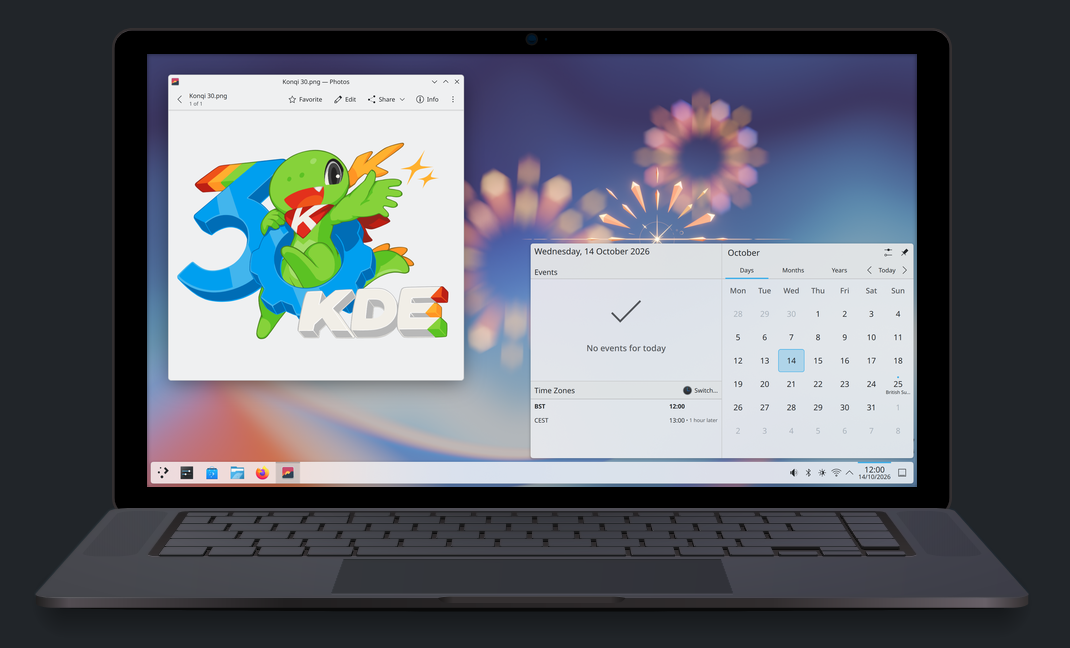
KDE Plasma 6.8: A Future-Focused 30th Anniversary Update
Quick Verdict KDE Plasma 6.8, arriving as the "30th Anniversary Edition," is a pivotal release that decisively pushes the desktop environment into the future. With a definitive farewell to native X11 sessions and a

Kojima Compares Divisive New Film 'Digger' to MGS2's Prescient Vision
Gaming icon Hideo Kojima has praised the divisive 2026 film *Digger*, drawing intriguing parallels to his own prophetic game, *Metal Gear Solid 2*. Both works, he explains, uniquely explore the dangers of misinformation and a fragmented digital reality, anxieties he shares with *Digger*'s director, Alejandro González Iñárritu.